
Vintage dresses, ornate gifts: JoCo exhibit traces the rise of lavish weddings
AI-generated summary reviewed by our newsroom.
- Johnson County Museum exhibit explores post-WWII rise of elaborate weddings.
- Display features vintage dresses, bridal gifts and domestic literature from 1945 to 1963.
- Curators seek more diverse artifacts to reflect wider community wedding traditions.
In the wake of World War II, consumer culture came to life across the U.S., making waves in many industries. A new exhibit in Johnson County explores one that still resonates today: weddings.
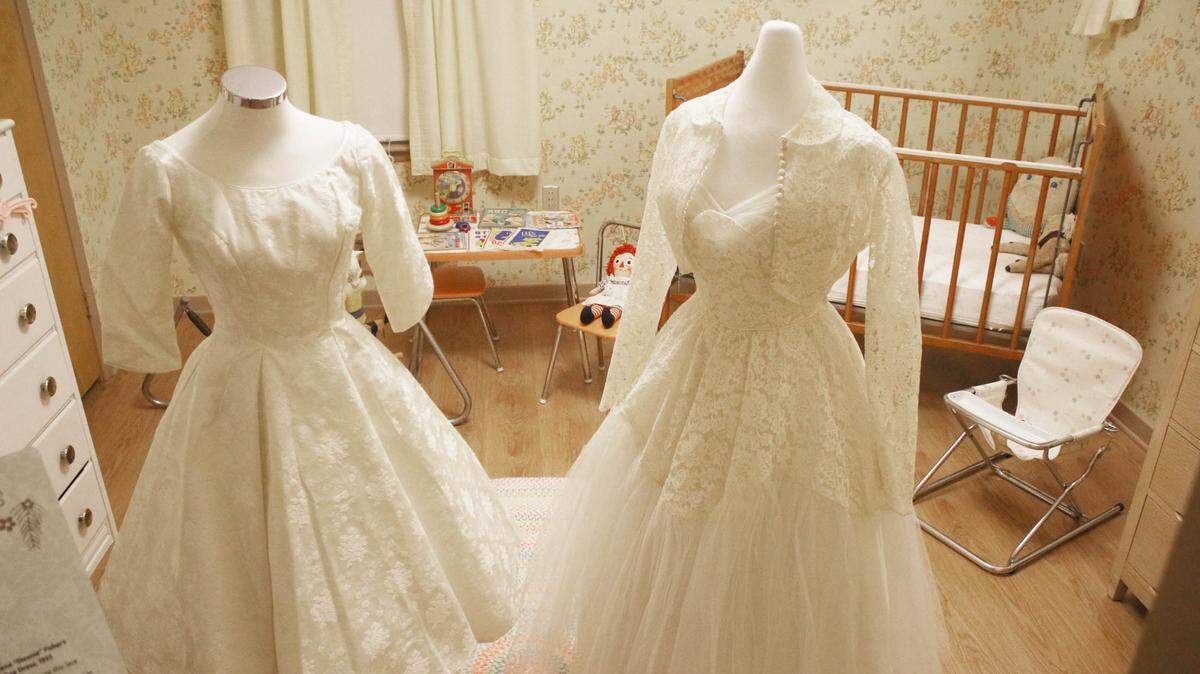
“The White Wedding: A New Postwar Tradition” at the Johnson County Museum features dresses, presents and other features that became more elaborate after years of more sparse celebrations.
Andrew Gustafson, curator of interpretation, said the museum already had a “robust collection” of wedding dresses from local weddings of the era. He hopes that people will be able to reminisce about their post-war weddings, their parents’ weddings or even get ideas for vintage celebrations of their own.
Before 1945, “it would have been pretty common to get married at your parents’ house or a church and have a small family and close friends meal at your home afterwards. The large wedding and reception and all of it would have been a rare thing, mostly for people who were pretty wealthy,” he said.
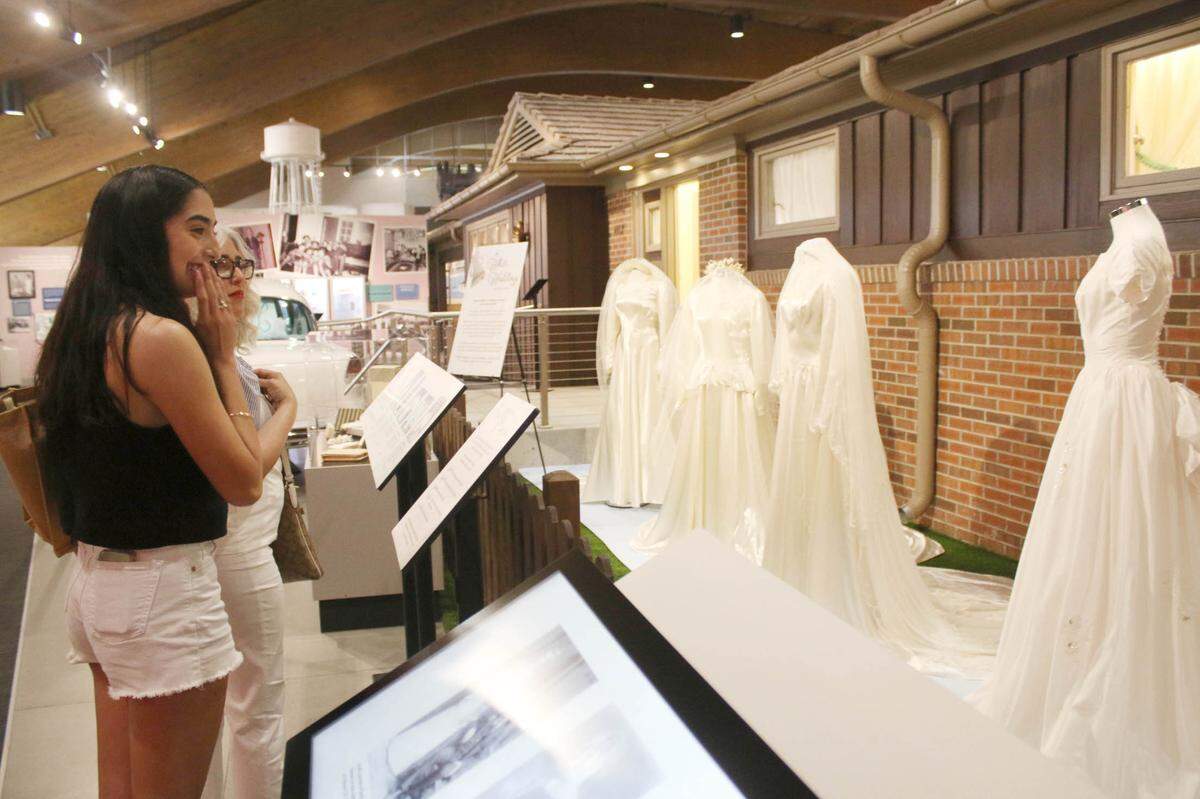
The 10 dresses on display show a variety of styles worn from 1945 to 1963. Gustafson notes that these dresses have a lot more fabric for sleeves or trains than would have been common during the Depression or with clothing rationing.
“Those sorts of things were sort of a real novelty again after about a 15-year period where that would have been a real rarity, at least for middle class and working class weddings,” he said.
Some of the women who wore the dresses have actually been to see them on display.
Though wedding announcements of the time refer to the dresses as white, many of them are now more of a champagne color because the natural fabrics have discolored with time.
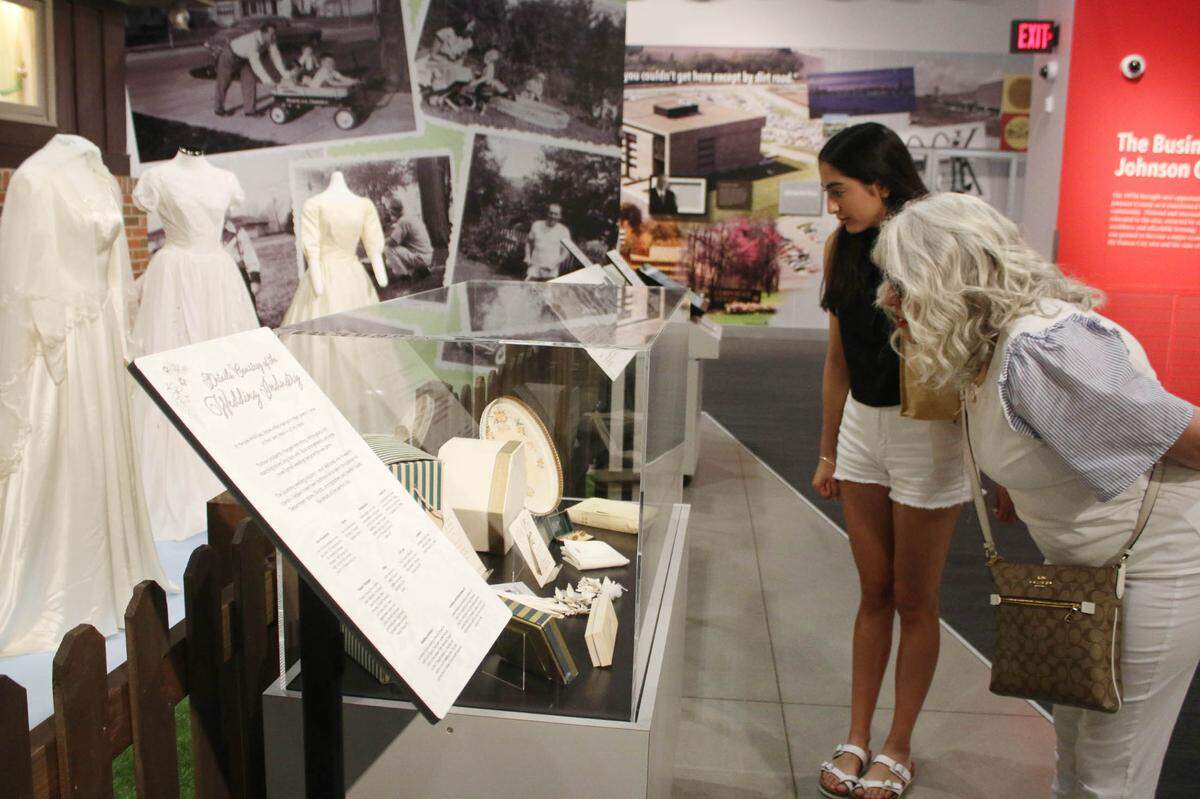
Overland Park resident Karina Canales, a recent museum visitor, said she was excited to see so many styles and especially to get a look at the embroidery on the vintage dresses.
“It’s so romantic, and it’s never out of style. I just hope these trends come back,” she said.
There’s more to the exhibit than dresses, however. A gift register shows a list of presents from a bridal shower with the giver’s name and the date the bride sent a thank-you note. Examples of some of those gifts, such as a waffle maker, fancy tableware and towel sets, are also on display.
Pamphlets, cookbooks and other written material show the ideas that companies and society at large were reinforcing about how to behave and what you should strive to do or have in your life.
“They’re writing literature to explain to brides this ‘new tradition’ of the white wedding, what you need to do as a bride in order to have this big, fancy American wedding … and then literature about once you’re married, what that means, the more traditional roles,” Gustafson said.
This push into traditional housewife and breadwinner roles came after many women had been working outside the home during the war in jobs usually held by men.
“There are perceptions that that is patriotic,” Gustafson said. “You’re partaking in the national economy, the capitalist economy. You’re shopping at local stores and also national stores. You are declaring you have faith in this American tradition of marriage and for some, the church, and that you are going to continue the institution of the family in the United States.”
He acknowledges that the exhibit is not representative of everyone in Johnson County at the time. Most of the objects are from white, Christian weddings, although there are two Jewish weddings represented.
“We know that there are weddings happening in the Black community in Johnson County,” Gustafson said. “We know that there are Latinos, mostly Mexican and Mexican-American community members, who are getting married here, but we don’t have the objects, the stories, the photographs in order to tell those stories.”
He said he’d love to add these things to the museum’s collection. Since 2019, they’ve been trying to increase the Latino presence through documents, objects, stories and photos in their archives.
The exhibit will be open until Oct. 11 and is included with regular museum admission.
The Johnson County Museum, 8788 Metcalf Ave. in Overland Park, is open 9 a.m. to 4:30 p.m. Monday through Saturday, and admission is $4 for children 1-17, $5 for seniors and students over 18, and $6 for adults.
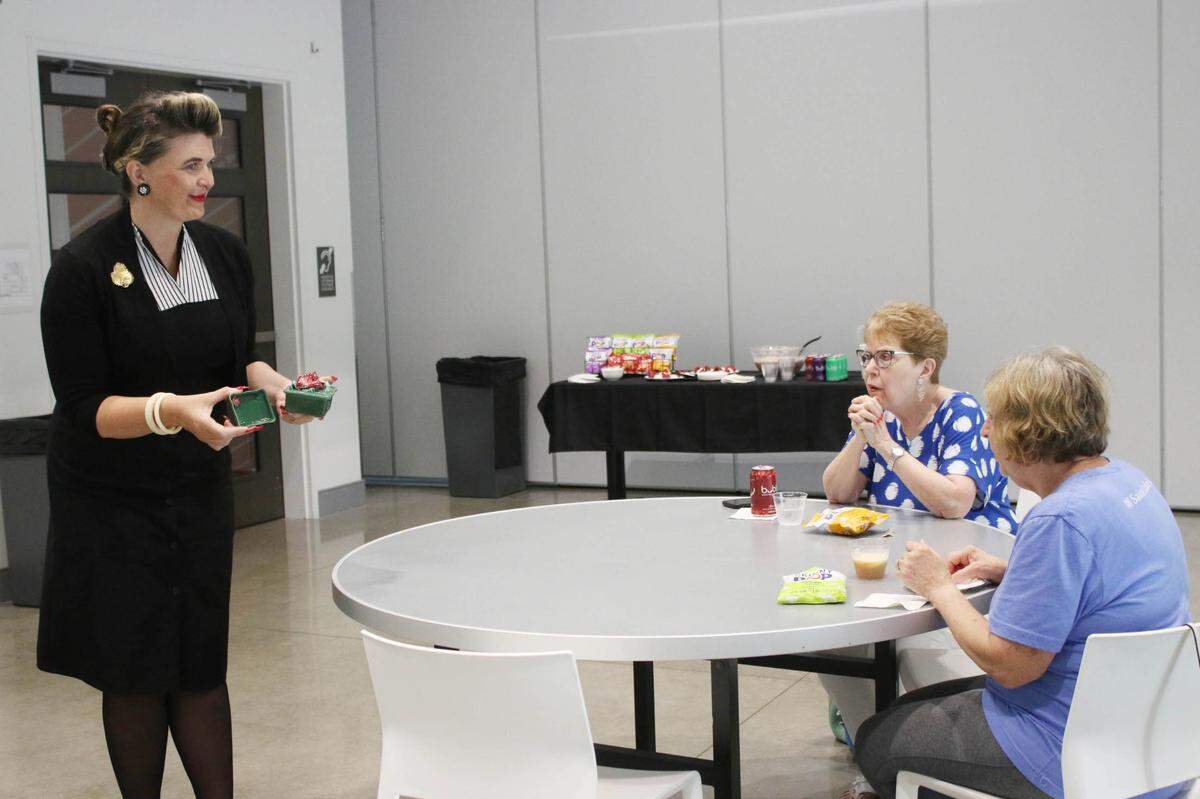
At noon on Sept. 25, there will be a related lunch and learn event, “To Have and To Hold: Army Wives, Weddings, and the Cold War Home Front.” Participants should bring a packed lunch for themselves.