
Johnson County Museum exhibit makes ‘Ripples’ about our understanding of water usage
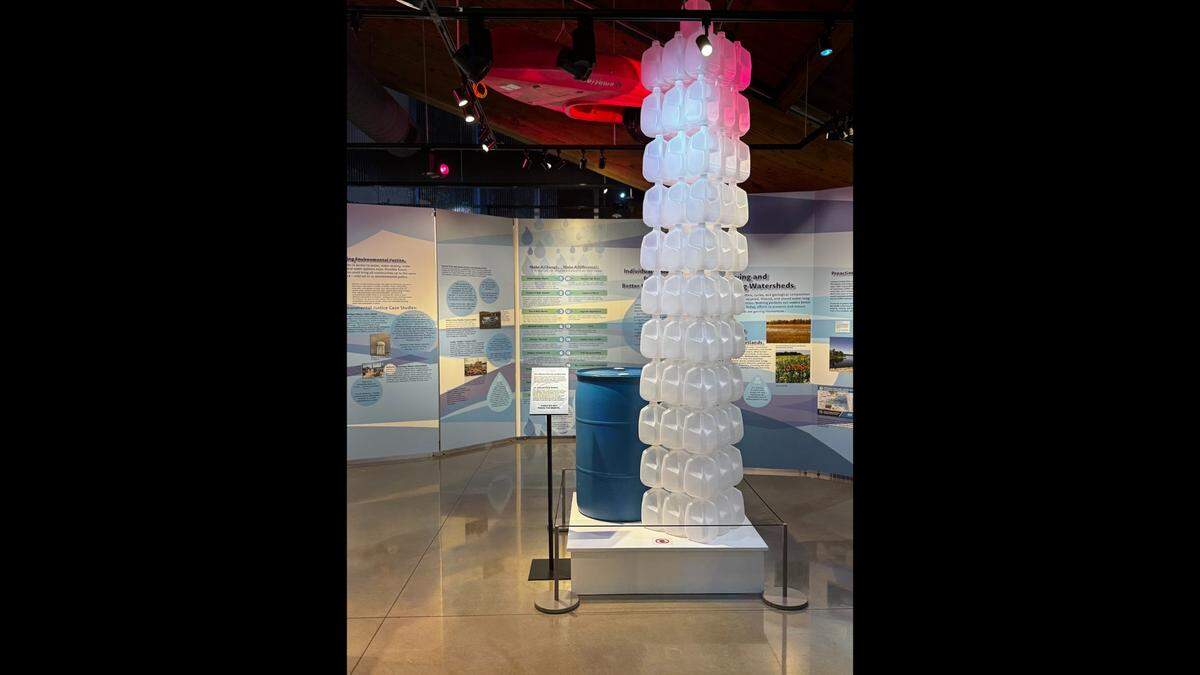
A tower of 100 empty plastic gallon jugs might seem an unlikely object in a museum exhibit.
But the tower presents an effective monument, making the often invisible clear to see: the importance of water in our history and everyday lives.
“Ripples. Water, Community and You” will be on display at the Johnson County Museum through Jan. 10.
“One of the most powerful things about Ripples is how personal it feels to people,” said Mary McMurry, director of the Overland Park museum. “Water is something we all share, but we rarely stop to consider its journey: where it comes from, where it goes, and how our choices shape its future.
“Through hands-on experiences and incredible local stories, this exhibit makes people feel connected to water, and their role in its future, in an entirely new way.”
For example, the tower of plastic jugs represents the fact that the average Kansan uses between 80 and 100 gallons of water daily.
The idea for an exhibit on the powerful resource of water came from a panel discussion called Legacies of Redlining: The Blue River Watershed, for the museum’s 2022 exhibit “REDLINED: Cities, Suburbs, and Segregation,” said Andrew R. Gustafson, curator of interpretation at the Johnson County Museum.
It became clear how waterways have been impacted by human development, projects and needs, Gustafson said.
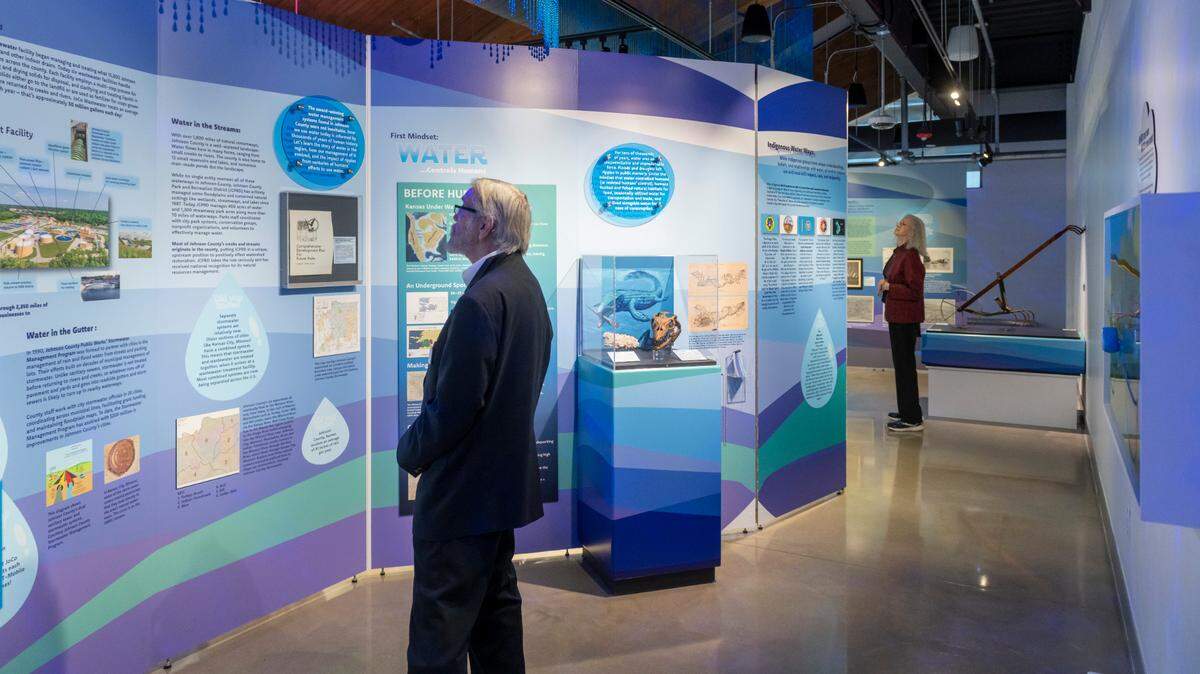
The exhibit is framed through three mindsets: “how water controls humans”; “how humans try to control water” and “water and humans together.”
Organizing the exhibit this way made sense, Gustafson said.
“There are different ways of interacting with water and it’s not always chronological,” Gustafson said. “It’s not just the amount of information, it’s the amount of important information. Putting it in chronological order didn’t make sense. It would get too lost.”
Because the exhibit is story based, the exhibit has numerous interactive elements. For example, exhibit attendees can add up how much water they use with an abacus.
“Definitely interactive elements are a great way to get young people into the exhibit,” Gustafson said.
Included in the how water controls humans section is information about the Western Interior Seaway, which placed Kansas under water about 60 to 100 million years ago.
And in the section about how humans try to control water is information about environmentalism, creating shipping channels with rivers, engineering responses to historic floods, and the Pick-Sloan Missouri Basin Program, a massive water management project in the 1940s.
Water and humans together has information about water quality, water policies, water regulation, water rights, conservation and pollution, and preserving and restoring watershed.
Gustafson said the museum is working on offering several events tied to exhibit.
The first one will be a lunch and learn program called “Rediscovering the Arkansas River,” from noon to 1 p.m. March 27. The presentation will include how the river’s role in shaping communities and industries.
To register for the program, go to go to jcprd.com/1836/Museum. Ripples is included in the admission to the Johnson County Museum, 8788 Metcalf Ave., Overland Park.
This story was originally published March 19, 2025 at 5:00 AM.