
The secret garden: The bounty from this land goes to help those with food insecurity
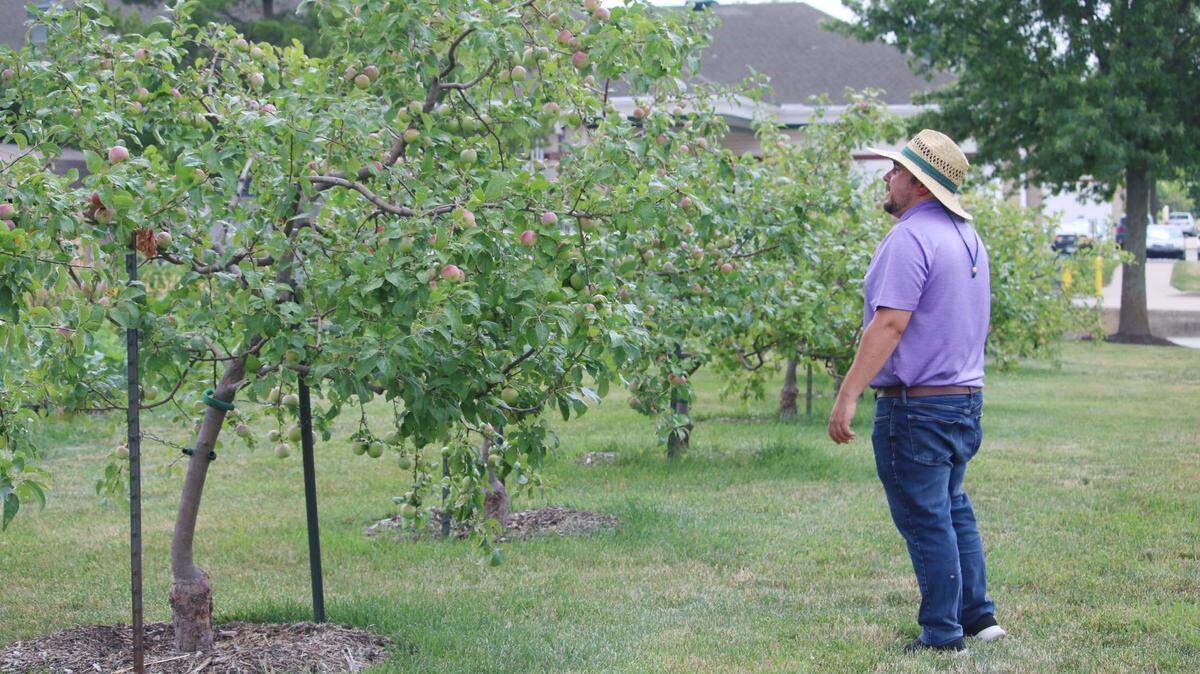
Through the Sunset Community Garden, Johnson County Extension was able to give 4,000 pounds of produce to those with food insecurity last year. And the garden is such a well-kept secret that even people working next door don’t know it’s there.
The quarter-acre garden, at 11875 S. Sunset Drive in Olathe, started in 2013 as a WIC garden, providing food for those on the Special Supplemental Nutrition Program for Women, Infants and Children in Johnson County.
“The idea was to have county staff and the clients working out there in the garden together,” said Anthony Reardon, horticulture small farms extension agent for Johnson County Extension. “That model was good, but it didn’t quite work, because they were women with infants, so it was hard for them to be out in the garden and also caring for their children.”
That’s when the extension service got involved. Now the garden’s bounty goes through the county department of health’s food pantry to get to the people who need it.
“It’s addressing food insecurity and basically providing fresh and nutritious produce to people that may not have access to it, or it may be a cost barrier. It may be they’re within a food island in Johnson County and can’t get to it readily. Whoever needs it has access,” Reardon said.
Reardon, along with a crew of 10 to 12 volunteers, maintains the garden. Volunteers come every Tuesday morning for two to three hours from March through November.
Because it isn’t well-known, it’s “a blessing and a hindrance. It keeps away vandalism, but people need to know about it to be able to volunteer for it,” Reardon said.
Although anyone can volunteer, the timing means that it’s mostly retirees. Reardon said he’d love to see some younger people, like stay-at-home parents or family groups, join in the garden work.
“There’s no training involved in being a volunteer beforehand. They come by, and they learn something. A lot of people, they’re like, ‘Well, I want to do a vegetable garden in my backyard, but I have no idea where to even start.’ Gradually, as they’re helping out with these harvests and the planting, and the maintenance and the care, they’re learning all these practices through hands-on learning experience.”
When Lenexa resident Cherie Ziegler retired two years ago, she volunteered, because she’d always liked gardening at home.
“I did not go into it with any expectations other than I could spend a couple hours a week in the wonderful outdoors, even when it’s hot and humid, growing plants,” she said.
Ziegler said she’d love to have even more volunteers join her, because not everyone is able to come every week.
“I like the camaraderie of the fellow volunteers, learning things from them, what works in their garden. I don’t know if they learn anything from me, but I share what happens in my yard,” Ziegler said.
Not everyone has to be on weeding duty, Ziegler said, noting opportunities like washing the produce before it goes to the pantry.
This spring, Reardon had local sixth-graders helping out by planting onions. He’s also had groups from the corrections department on community service help during a specially scheduled work session.
Unlike many community gardens, this one isn’t made up of individual plots. Because all the food goes to one place, it’s organized more like a super-sized version of a home garden, with all of one type of crop along the same row.
“We’re trying to use it not only as a tool for producing produce for people but also as an educational tool,” he said.
One challenge is growing produce that people want to eat. Reardon said some things, such as kale, have gone in and out of fashion, depending on the year. Temper that with what’s growing well this season and what people know how to cook, and it can be hard to strike the right balance.
“We could grow a bunch of gorgeous kohlrabi or something along those lines, but people may not know what it is and how to use it. We try to go for more well-known types of food,” Reardon said.
He prioritizes plants that grow quickly and produce a lot. Garlic, squash, tomatoes, peppers and beans have all been successful crops. Reardon hopes to be able to expand the garden soon.