
These award-winning JoCo teachers have this in common: They bring history to life
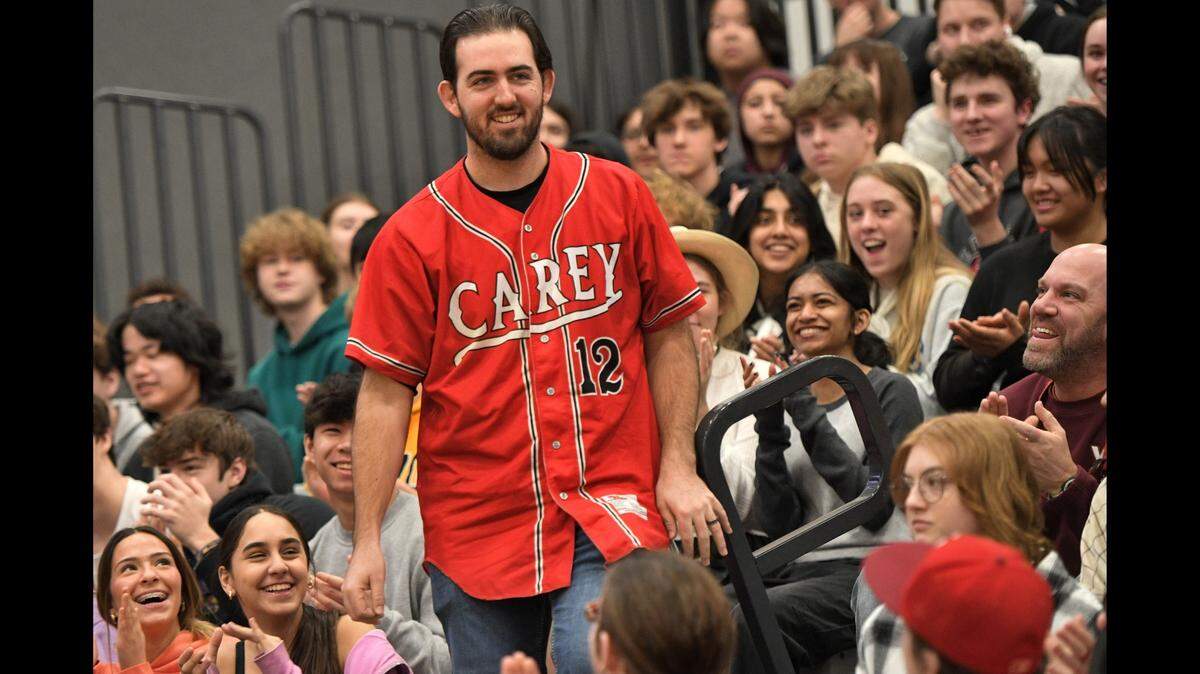
Alex Lahasky and Matthew Mayeske have a lot in common. They both teach high school at their alma maters. They both have a passion for teaching history. Finally, they’re the only two educators in Kansas to receive this year’s Milken Educator Awards.
The Milken Educator Awards, created by Lowell Milken in 1987, reward excellence in the world of education by honoring top educators around the country. Each comes with an unrestricted $25,000 prize, as well as a trip to Los Angeles in June to network with other educators and prize winners.
The Milken Family Foundation doesn’t publicize how it chooses its award recipients, so neither Lahasky nor Mayeske know exactly how they came to the foundation’s attention.
All Lahasky knows for sure is that the Foundation contacted a few other teachers at the school about him before giving him the award. He suspects that they found some of the musical parodies he wrote for his students.
“My first year teaching AP U.S. history, I wrote a parody of ‘American Pie’ that basically covers the span of our curriculum. I wrote it as a cheeky review song for my students and performed it for them at the end of the year,” Lahasky said.
At Blue Valley West, Lahasky teaches regular and Advanced Placement U.S. history as well as a cross-curricular class with the English department. He’s been there for his entire eight-year career.
Videos are an important part of how he teaches. As a result of remote and hybrid learning, Lahasky recorded the lectures he would normally give in class. Now, he assigns those to watch as homework and uses class time for other things, like developing skills in constructing arguments and using evidence to support those arguments.
“We read really difficult primary source texts. We wrestle with conversations that don’t have easy answers. We try to explore historical topics that shed light on why the United States is the way the United States is today,” Lahasky said.
“I don’t know that there’s anything especially innovative about what I do on the day to day, other than I try to teach my students how to think. I try to help them grow into better people along the way.”
He and the other teachers had gotten notice that there would be some visitors at their recent assembly and suspected someone was getting recognition, but Lahasky had no idea that he was the focus.
“I was wearing a baseball jersey that day, and that’s not my usual M.O.,” he said. “The assembly fell on our Sweetheart Dance spirit week. So, all I remember thinking of is, ‘I can’t believe I’m dressed like this.’”
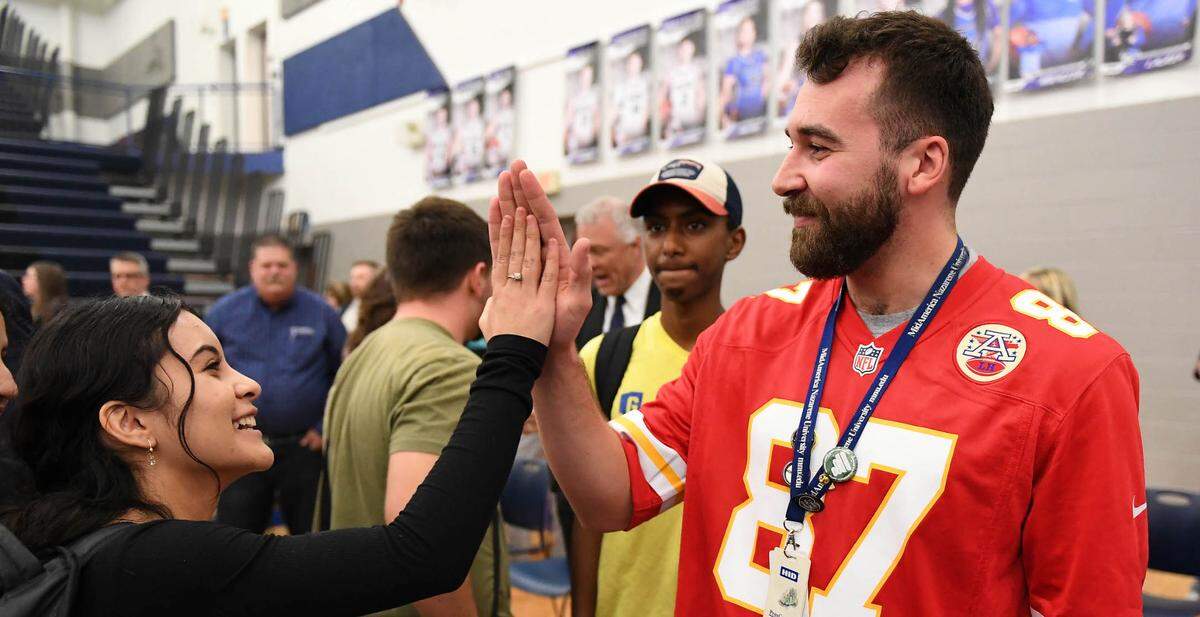
Mayeske teaches regular and honors world geography as well as world history to freshman and sophomores at Gardner Edgerton High School. He’s been there for all six years of his career.
Initially, he felt peculiar teaching at his alma mater. But like Lahasky, he quickly adjusted to having his old teachers as peers.
“At first, I couldn’t stop calling all my old teachers by their Mr. and Mrs. so and so. Eventually, they all collectively went, ‘Matt, you’re one of us now,’” he said.
Step into Mayeske’s classroom, and you’ll find students engaging in role playing games on topics such as pre-World War I imperialism or the impact of industrialism on world development.
“By pouring their own emotions into how history would have operated, they can remember it better,” he said. “My worst fear is that history be boring, because history was always fun to me. I try to make it fun. I try to make it engaging. I try to get every kid involved.”
For each unit, he takes a few classes to discuss what life would have been like at that point in time for different people and what was going on in the world. Based on that information, he has students create their own characters.
“Then they have to play through events as if it were a board game. It’s so much fun,” Mayeske said. “The kids become a peasant, a scholar, a knight. They interact with the historical narrative we might talk about in a way that puts them in the shoes of the people.” .
Mayeske had planned to take the day of the assembly off, but mentioned it to his boss, who suggested that he show up. Once the assembly started, he quickly figured out why.
“As Mr. Milken comes up, and he introduces himself and says what he’s doing there, I start sinking in my chair. I have a hunch he’s going to call my name. Why else would you ask a teacher to be there for it? And then he did,” Mayeske said.
Both Mayeske and Lahasky said they were humbled to receive the award in front of other teachers, who they felt were equally as worthy.