
Reenactors help visitors understand that for veterans, fundamentals haven’t changed
.jpg "Pat Folk and Mary L. Schmidt play out a scene discussing the Woman’s Land Army as part of a Veterans Day event at Shawnee Town 1929.")
Concerns about veterans’ health and benefits are nothing new, as visitors to Shawnee Town 1929 discovered during the “In Their Footsteps: A Lantern Walking Tour” event Nov. 11.
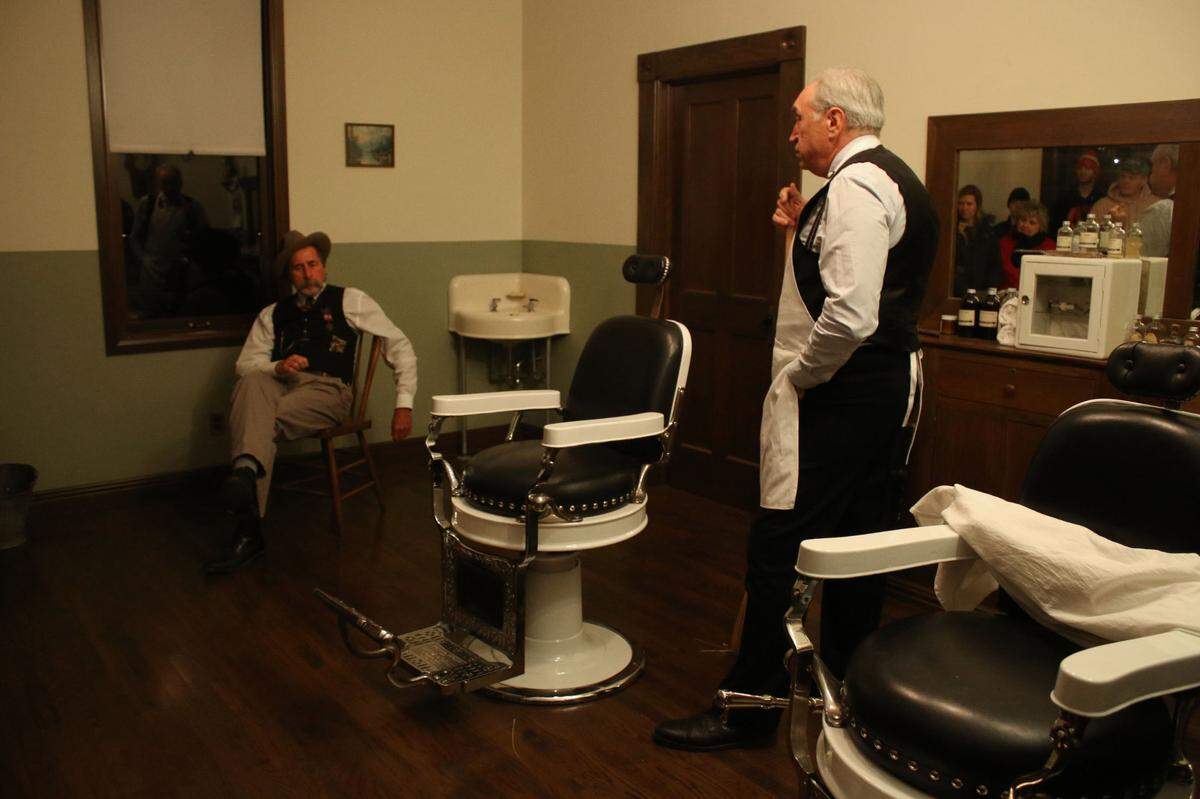
Groups of about 15 to 20 people moved from place to place around the historic site’s buildings, watching reenactors perform slice of life scenes related to World War I and its veterans.
Hannah Howard, curator of education for the open-air museum, said it came about because the staff has been doing research and trying to bolster their World War I exhibits.
“Shawnee is just a wonderful example of what life would have been like for a lot of Americans,” Howard said.
One scene featured a member of the American Legion having a heated exchange with a veteran suffering from PTSD. Another saw a woman telling two little boys about her brother, who had died of the flu in Europe.
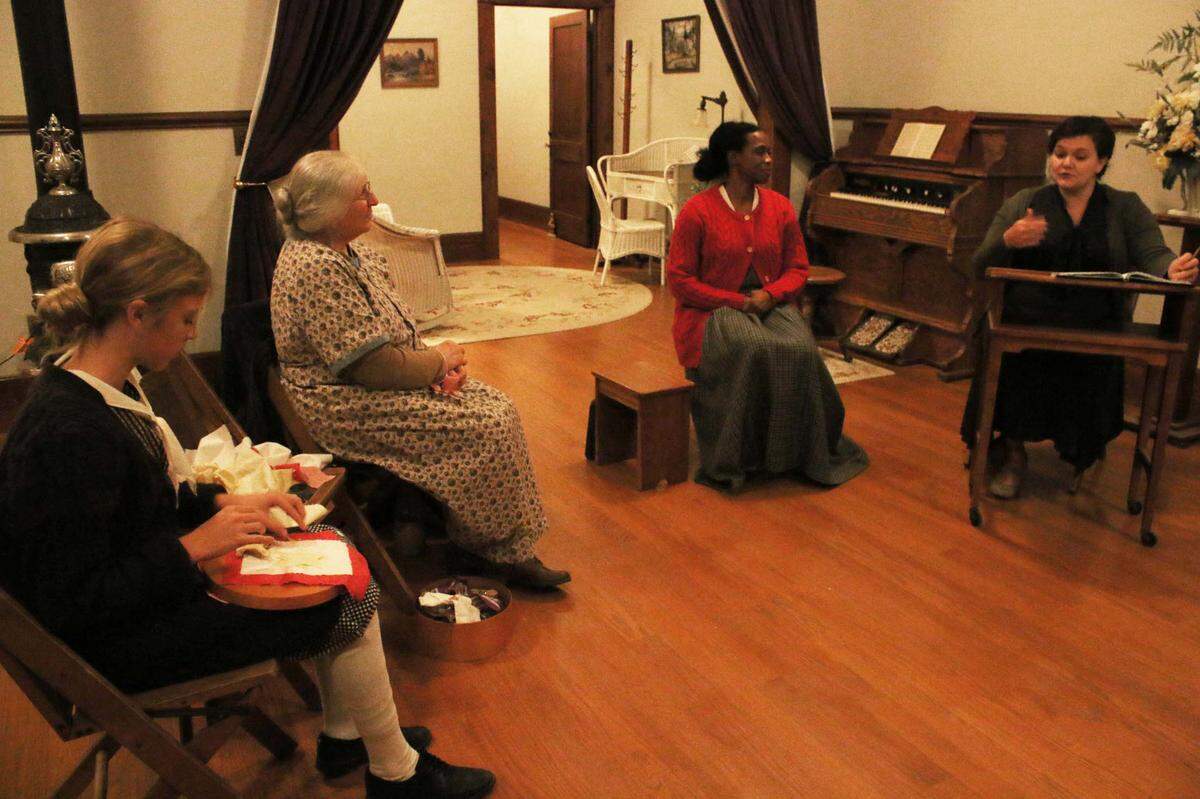
A different scene showed a group of Gold Star mothers who lost their sons in the war listening to a mother discuss her experience as an African-American woman going to visit her son’s grave in France.
The idea was to capture a moment in time, roughly 10 years after the war, when issues such as veterans reintegrating into society, economic strains and lasting grief were all very much present.
To construct those scenes, staff at Shawnee Town delved into the historical record, using the stories of real Shawnee residents of the 1920s.
“The Great War still was lingering and it was in a lot of people’s experience and affected their families. So we wanted to know more, and we found so many really engaging stories, compelling stories of the veterans that lived here — those that made it home, those that died in service,” Howard said.
Bessie Stumpff Bukowski was the woman grieving her brother, Delbert, telling his story to a little cousin born a month after her brother died.
That scene ended up with the little boys handing out samples of strawberry shortcake, because Delbert had written a letter about how much he looked forward to coming home and having the dessert.
More of her story is on the record because Bukowski’s daughter, June, recorded an oral history with the museum talking about it.
Liz Indellicate, of Shawnee, brought her three elementary-aged daughters to the event.
“I think that putting out people’s stories makes it memorable for kids. This is more interesting than just reading about it in a history book,” she said.
Research on many of these Shawnee residents started with census data to build a picture of the lives of their families. For some, the museum is lucky enough to have photos donated by the families.
“We’re trying our best to take the details that can seem clinical and two-dimensional in the record, and it’s our job to bring those into the imagination of the visitors coming through,” Howard says.
The goal is to make those visitors realize what real people were going through in the early 1900s, and feel their emotions.
When the event premiered last year, it attracted both veterans and active service personnel.
“Talking after the program around the bonfire, hearing how much it resonates with them and what they experience even in modern day — it feels like it’s so far away, 100 years ago. But the experiences you go through, the fundamentals haven’t changed,” Howard said.
Howard hopes that the program made people think about everything that led to the creation of support programs like Veterans Affairs.
“All of that doesn’t happen without people being moved to action, and we’re so used to these institutions being part of our lives, we forget they had to start at some point,” she said.
“And it starts because people see a need, and they step forward and advocate for that need to be filled.”