
The grand tradition lives on at the American Royal
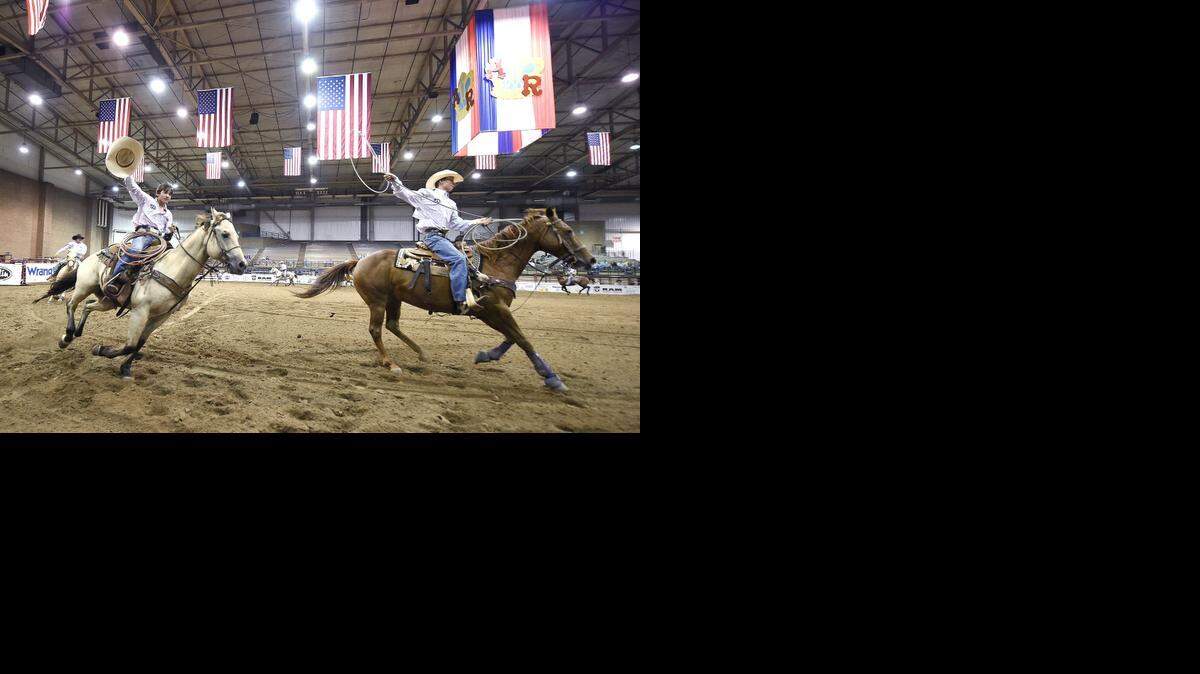
Rodeos will likely come to mind, as will horse shows and certainly barbecue.
But if you truly want to know what the American Royal is all about, visit Kemper Arena on one of the elementary school visit days.
Watch little Tori Payne from Rosehill Elementary in Lenexa go wide-eyed at the sight of a horse cantering around a ring. Study the look of concentration on the face of Kerry Robinson, a student at Academie Lafayette in Kansas City, as mobile dairy classroom instructor Callie Unruh demonstrates on Miss Tiny how milk moves from cow to cup.
Or laugh at the sight of the students from Chinn Elementary in Kansas City, North, as they reach through the pens to touch everything from donkeys to fainting goats at the petting zoo.
This year, around 4,000 schoolchildren visited Kemper for the tours, and watching those excited kids is one of the highlights of Bob Petersen’s days during the 2½-month-long event, which began in early September and runs through mid-November.
“They’re so wonderfully enthusiastic and interested in everything from spinning wool to how wheat is changed into bread, or how bees work together,” says Petersen, who was named president and CEO of the American Royal in 2011 after serving in an interim role since 2010.
“As people get further removed from their rural roots, this becomes so important,” he said.
This is the 115th year of the American Royal, which started with a gathering of people showing the best in cattle breeds and, soon after, horses.
So far this year, the American Royal has featured horse shows, rodeos, a parade and many other events. Last week, the country’s largest barbecue drew more than 70,000 people. What started as a small gathering of enthusiasts in a parking lot, the American Royal’s World Series of Barbecue picked up steam — and smoke — in the ’90s and now draws much of the revenue for the Royal.
Still to come: several horse and livestock shows, including the National Championship Saddlebred Horse Show.
The proceeds of those events help the nonprofit organization further a goal Petersen says many people overlook.
“A big part of what we do is help educate kids and raise awareness of our agrarian roots,” he says.
In addition to school tours, the organization offers a range of college scholarships, along with training for vet students during Royal events.
Although the future of Kemper Arena is in flux — the Royal would like to tear it down and replace it with a much smaller 5,000-seat arena, but other plans are being discussed as well — Petersen wants to make it clear that the American Royal is in much better shape than the building that houses it. The Royal is drawing more crowds and brings in more revenue than ever, he says.
“People should not mistake the decaying nature of Kemper with this event, because the American Royal is thriving,” Petersen says. “We’ve been on a strong uptick in attendance and revenue.”
The Royal, Petersen notes, has set a record for the number of people who are American Royal governors, or strong supporters of the event. “Rodeos are selling out, and the barbecue continues to be strong.”
And the event makes a huge impact on the economy of Kansas City, he says.
“There are people coming to the city with a horse or two, and they’re staying in our hotels and eating in our restaurants,” he says. “There are people who plan their vacation around the American Royal.”
For Petersen, the rewards of his many years as leader of the organization are many.
“It’s walking among the youngsters at the tour, or standing in Hale Arena at the rodeo and listening to the crowds cheer,” he says. “It’s watching all our hard-working volunteers, or looking out my office window and watching someone on horseback trot by, or it’s taking in the smell of barbecue smoke.”
It’s why the theme of the event is: “Kansas City’s Most Authentic Asset,” he says.
“There’s really nothing out there like it,” Petersen says. “It’s part of what makes Kansas City stand out.”
Make no mistake — the American Royal’s roots sink deep in the agrarian world.
Although cattle were the first focus of the event, it wasn’t long before horses trotted in, becoming an instant hit with the crowd. In the early 1900s, when racism was rampant, it was an unlikely character who brought equestrian events to the Royal.
Nobody discusses the history of Tom Bass better than storyteller John Anderson, known in the greater Kansas City community as Brother John. After learning from a cousin that Bass was his ancestor, he dug in to learn all he could about the famous equestrian.
For everyone from children to seniors, Anderson travels around at storytelling events portraying his ancestor in a one-man show.
“He was born a slave, but after the Civil War, became a famous equestrian, and started a horse show that became the American Royal,” Anderson says.
“Tom wasn’t a traditional cowboy,” Anderson says. “He found a way to be gentle to his horses, and was known as the high-hatted horseman for his gentleman skills in and out of the arena.”
Bass, the son of a young black slave and a white man, was born a slave in 1859 in Columbia. After gaining freedom after the Civil War, he moved to Kansas City.
Anderson discusses the business leaders and presidents who came to respect the horseman, who held his head high in a time during the years shortly after slavery was abolished.
“It gives me gooseflesh to tell his story,” Anderson says. “It’s an honor to channel his story, and tell the tale of the high-hatted horseman — a founder of the American Royal.”
Many of the sights and sounds near the stables behind Hale Arena would puzzle Tom Bass, were he to come back to life on a sunny afternoon in mid-September. A speaker blares country music — a baritone singing something about pretty little country queens. Young women in tight jeans and rhinestone-studded shirts pace up and down neat rows of stalls.
But the famous horseman would recognize the sharp scent of horse and hay, and he’d quickly understand that no matter what they’re wearing, the equestrians preparing to head into the arena to compete have a passion that transcends the years.
He’d spot Lauren Johnson as she pauses to hug her horse and plant a kiss near his muzzle, and he’d feel that bond between horse and human.
Lauren, a 14-year-old who attends South Valley Middle School in Liberty, is about to compete in Western Pleasure.
“I love this horse so much,” she says of Zip, the third horse she’s leased over the years she’s been riding. “We really understand each other.”
The petite rider sits tall in her saddle as she guides her quarter horse through various gaits. And though her expression has been one of intense focus leading up to the competition, she breaks into a broad grin when awarded a fourth-place win.
Lauren’s mom, Jennifer, says she’s watched her daughter gain self-esteem and perseverance since she started riding as a young girl.
“She’s learned so much from this,” says Jennifer Johnson, who is cheering on her daughter, along with Lauren’s father, sister and trainer. “It takes a lot of effort to care for an animal, to clean and scrub. I’d rather have her engaged in this than be glued to a TV.”
Stephanie Henley, who trains several of the children, teens and adults who will compete on this warm September afternoon, points out one other critical life skill that equestrians learn.
“They learn to deal with disappointment,” says the owner of Henley’s Rockin H in Holt, Mo. “You learn to be gracious in defeat, and you learn to be a gracious winner.”
Another of Henley’s clients, 22-year-old Leah Kemble of Parkville, notes that she won second place in versatility the day before, but she leaves this competition with her horse, Face It, I’m Fun, without a medal in the Western Pleasure competition for adults.
The bond between Henley’s clients becomes clear during the hour before the competition. Kemble is clearly beloved by the other riders, who look to her for help with everything from adjusting straps to hair mishaps.
It’s her sense of humor, as much as her experience, that draws the others, says Leah’s mother, Laurie Kemble.
Her sense of humor is illustrated the moment the young Mizzou grad explains her love of horses.
“Where else can you go and tell a 1,200-pound animal what to do?” Leah Kemble asks. The group drawn around her laughs. And her training will help her in goal, she says.
“I’m going into medical school,” she says, then breaks into a broad grin. “I’ve learned everything a doctor needs to know. I know how not to break into a sweat when I get a little dirty.”
Though she may be a little disappointed not to have a win in the competition, she takes it in stride.
“He’s not a pleasure horse, he’s an English horse,” says Kemble, an American Quarter Horse Association Novice Championship qualifier. “He’s also a giant wuss. If he could sit in your lap, he would.”
In another row, a round of “congratulations” rings out from all around as Elise Tremonti walks by, blue ribbon in hand.
The 14-year-old, who attends St. Ann’s Catholic School in Prairie Village, says she spends as much time in the barn as she can with her horse, who she describes as “kind of sassy.”
Her mother, Susan Tremonti, said she leased a horse for her daughter after the teen came back from a horseback riding excursion with a friend.
“It brings her sheer happiness,” says Susan Tremonti. “The people in this community are very close; we’re like family.”
And riding together is a great way to bond with her daughter, Susan Tremonti says.
“My sister goes with us, too, and we say it’s great therapy,” she says, then pauses to tuck a strand of hair behind her daughter’s ear.
“We all like to say, ‘My therapist lives in the barn.’”
What child wouldn’t love this combination? A milking station with a real live cow, a hive of buzzing bees, a dog that chases sheep, a petting zoo — and a rodeo, all wrapped up in one fun-filled day. And that’s only touching on what kids visiting Kemper Arena see during American Royal school visits.
It’s hard to say what her students enjoy the most, says Kim Mann, math teacher at Rosehill Elementary School.
“We take third-graders here every year,” says Mann, one of the Belles of the American Royal, a group that fosters civic involvement in the American Royal and promotes volunteerism. “A lot of them have never even seen farm animals.”
Representatives from such organizations as the Soybean Council and Kansas City Community Gardens are ready to offer kids information on everything from how seeds sprout to how a queen bee is pampered.
The petting zoo is, of course, a favorite. A young pot-bellied pig soaks up a lot of attention. Camels, fainting goats, a mini-horse and a donkey vie for feed from young outstretched hands. Henry the bull sits placidly every year, allowing kids to give him affectionate pats and rubs.
But the temperament of the bulls they see at the youth rodeo is far different from that of Henry. Youth from 13 to 18 compete in Junior Rodeo, which includes bull riding and barrel racing, two of the most popular sports with the cheering crowd.
Maverick Griffin, 17, is one of the local contenders in this national competition. The Lee’s Summit teen rides bareback and bulls, and he’s as practical as any aspiring rodeo star can be when he talks about his passion for the sport.
“It’s taught me that no matter how hard it gets, you ride it out,” he says. “Bareback is an adrenaline rush, but riding bulls is part of my legacy.”
“Adrenaline” is a word you hear a lot when you wander through the ranks of young riders. Many sport braces on legs or have limbs wrapped for support.
Shea Russell, a 17-year-old from Brumley, Mo., ticks off all the bones he’s fractured and ribs he’s cracked since he took up the sport at 13. But the young man, who helps younger kids learn the ropes, says that adrenaline keeps drawing him back.
“I just love it, and the money’s not bad either,” says the young man, one of the youngest to be heading to the adult professional ranks.
Hannah Williams from Odessa, Mo., competes in barrel racing and roping. The 16-year-old says her dad got her a pony when she was little and she’s been in love with this world ever since.
Sitting regally on her horse, she sweeps her hand around the arena, echoing a statement heard by many.
“It’s just fun,” she says. “And everyone here is like family.”
Ask Bob Petersen what makes the American Royal succeed, and he’ll tick off three quick answers: the enthusiasm of those in Kansas City and the surrounding area who take pride in the event; the volunteers; and support from the business and civic community.
The community pride is evident in the crowded arena at the American Royal PRCA (Professional Rodeo Cowboys Association) Rodeo on Sept. 26. The rowdy crowd hushes while the announcer pays tribute to the nation’s armed forces and offers a prayer. The moment the first riders enter, the volume of the cheering group seems to shake the bleacher seats high in the arena.
Brad Morris has been a volunteer for six years, and he’s seen this crowd from both sides.
These days, he’s helping contestants ensure they have a clean stall for their animals.
“You might say I’m in charge of hospitality for horses,” he says with a laugh.
The financial adviser, who lives in Lenexa, grew up in Montana and was a bull rider for 10 years. The road from bull rider to businessman is one he says is a tale too long to tell, but for now, he’s happy to be a volunteer at the American Royal, where he was once a contestant.
“It’s my one time of year to play cowboys and get back to my roots,” he says, adjusting his classic cowboy hat.
For a group that’s about to enter center stage at Hale Arena, it’s a little unnerving to be on the backside of a bull — even if not sitting atop one.
The Businessman’s Steer Challenge is a new event — and one the crowd adores. The premise is simple, says John Mitchell Jr., chairman-elect of the board of directors for the American Royal. He and his partner in this event, Rick Norden, will compete with other esteemed businessmen in a noble contest.
Both members of the team will race across the arena, one will hold a bull down, and the other will tie a ribbon on its tail, before both race back to the finish line.
“Basically, I think the idea is to embarrass the businessmen a bit,” Mitchell says, laughing before the event begins.
The president of Merriam-based Treat America Food Services is in good company in keeping a sense of humor about the event. It may be just a way to get the crowd to recognize some of the biggest sponsors of the American Royal, but it brings loud applause and cheers from the stands.
Byron Moore and Brad Carey, both representing Cerner, are nearly unanimous when asked about their goal for the evening, moments before the gate opens.
“We’re going to win this,” they both say.
“It’s our duty to our city, and the Royal,” Moore says, then a grin erupts. “Oh, and my wife took out an extra life insurance policy for me.”
And in fact, their determination pays off, as the duo bring home first place later in the evening.
No need for life insurance — the bulls are young, to the relief of the 22 individuals in 11 teams. But unlike the pros in the rodeo, this group doesn’t seem to much care who wins and who loses.
“I love every bit of this event,” says Mariner Kemper, chairman and CEO of UMB Financial Corp. He’s teamed up with Joe Bichelmeyer, owner of Bichelmeyer Meats and a longtime American Royal supporter.
Kemper is ready to hold down that bull — or tie that ribbon. He’s not quite sure which end of the animal he’ll be dealing with, but the outspoken advocate for demolishing family namesake Kemper Arena and putting up a new facility is ready to get the job done.
“What’s not to love?” he says, gesturing to the cowboy boots gracing the feet of the eager businessmen.
“I love the boots, I love the patriotism you feel here,” Kemper says. “I love the energy from the crowd.
“There are a whole lot of good memories of Kemper Arena, and we’ll keep this energy going for the next 115 years.”
This story was originally published October 7, 2014 at 4:34 PM with the headline "The grand tradition lives on at the American Royal."