
Through cold and ice, Leawood veterinarian cares for huskies during Alaska’s Iditarod
Kansas City has been enjoying a beautiful spring, with the arrival of mild temperatures, flowers blooming trees.
For Vernon Otte, a retired veterinarian from Leawood, it’s a welcome weather pattern, given he recently spent nine days in the snow and ice of Alaska as part of the 47th Iditarod Trail Sled Dog Race.
Otte was part of the veterinary team caring for the dogs running in the historic race. This marked his 11th year as a member of veterinary corps serving along the 25 checkpoints on the route.
The 938-mile race began in early March in Willow, just outside of Anchorage, and finished to the west in Nome. The winning team finished in nine days, 10 hours.
Otte, who owned State Line Animal Hospital until he sold it six years ago, drew from his 45 years of experience to serve as a race veterinarian. The Iditarod relies on veterinarians like Otte to oversee the health of the dogs before, during and after the race. More than 10,000 exams take place during the course of the Iditarod. The veterinarians also look after dogs living in communities along the trail.
“We listen to the heart, lungs and check the joints out, and that the dogs maintain weight because they are going to lose some weight along the run,” Otte said. The dogs require about 10,000 calories a day to keep them fit and running. Digestive issues can crop up as well.
When the teams come into a checkpoint, it’s up to Otte and the five additional veterinarians stationed there to look over each dog and make sure they are OK to continue on after they eat and rest. Sometimes they will pull a dog that’s not doing well.
“Most of the time the reason a dog is left behind is for lameness and mostly a front leg because they are pulling hard,” Otte said. “Once I saw a dog with a broken leg but that’s out of 10,000 dogs. Shoulder lameness is not unusual. Usually we pull them off and give them a few days’ rest. We take care of dogs left behind.”
Veterinarians care for those dogs at the checkpoint until they can be flown back to Anchorage. At that point, dogs are either sent back to kennel, women’s prison (“they love the job” said Otte), emergency clinics or a musher’s vet, depending on the condition of the animal. Post-race, the dogs’ owners pick them up in Anchorage.
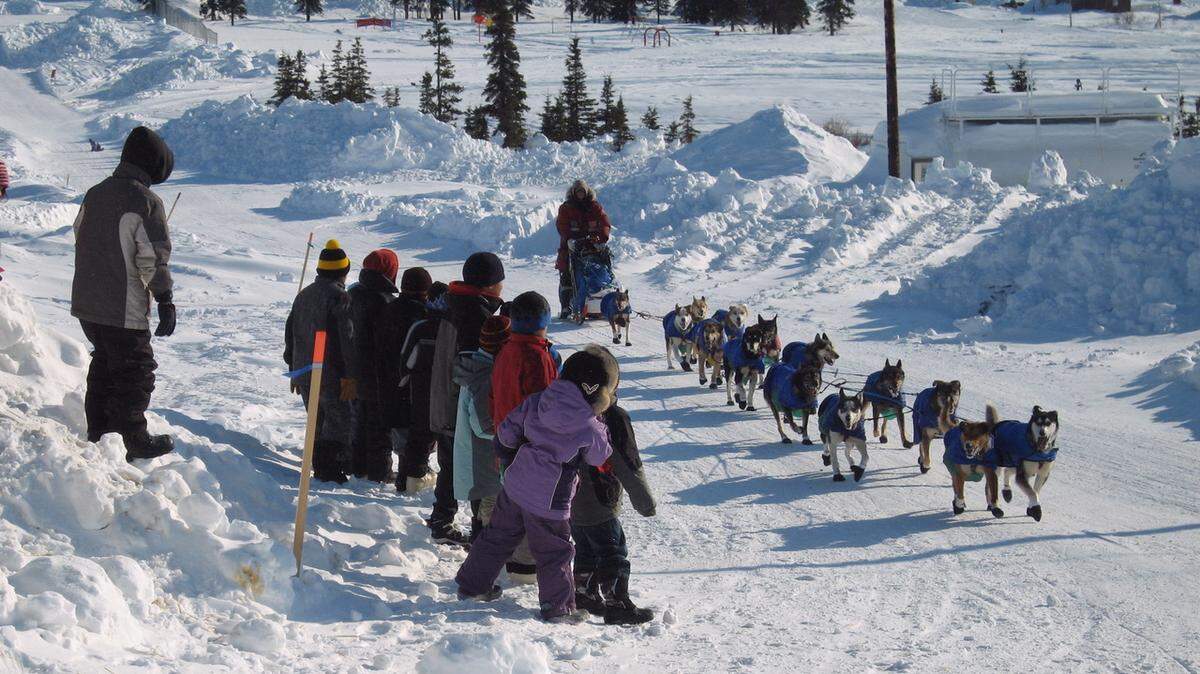
The Iditarod teams run with an average of 14 dogs. With the cold and mountainous territory, most of the dogs run wearing specially designed booties to keep snow from packing in their paws and ice crystals from cutting them.
Otte said the dogs in the race are tough and spirited. Teams use Alaskan huskies, a mix of the old Eskimo dog used for 1,000 years bred with the Siberian husky.
“They love to run and have endurance,” he said.
Race checkpoints are 30 to 60 miles apart; in the early stages, teams come in close together and it is hectic for the veterinarians. In later stages of the race, Otte said it could be several days before seeing a team.
“It’s a 24-hour operation and we have six vets, and we need all six because we’ll have 50 teams that will come through,” Otte said. “We will rotate up to another checkpoint.
“You might see a team repeatedly. Two years ago, I was in one place for six days, but they couldn’t get a plane in to take me out. You have to be very flexible when you’re out there because of the weather.”
This year was different for Otte. Rather than being out on the trail, Otte was stationed at the end of the race.
“I took care of the dogs when they came back into Anchorage and (the dogs) who didn’t finish the race and got left behind for some reason,” he said. “It was my job to make sure they were OK before they went back to the owners.”
Otte missed being out at a route checkpoint.
“It’s not nearly as much fun as being on the trail and interacting with them,” he said. “The good news is I got a warm bed and shower every night.”
Veterinarians are paid a stipend for their service, based on the number of days out on the race route and years they have served. They are provided with lodging but must pay their own travel expenses to get to Alaska.
Otte’s passion for animals goes back to his childhood growing up on a farm in Great Bend, Kansas.
I always had my dog with me, and he was a friend,” Otte said. “Never been without a dog.”
A stint in the U.S. Army with a medical platoon changed his plans of returning to Great Bend to run the family farm.
I decided I wanted to pursue vet medicine,” he said. Otte attended Kansas State University earning his veterinary degree.
“Being in vet medicine, I got the best of everything: working with people, pets and medicine,” he said.
Otte later served in the military reserves for 37 years, during which he was part of numerous medical missions in underdeveloped countries. Upon retiring from the reserves, Otte found he missed the missions’ work, “and someone suggested I look at the Iditarod. I went online and signed up.”
After completing all the necessary paperwork, including obtaining a temporary veterinary license in Alaska, Otte became part of the Iditarod veterinary crew.
Otte enjoys many aspects of being part of the Iditarod team.
“I love to see the teams come in. The dogs are happy and the people are happy,” Otte said. “You are out in a part of Alaska that most people don’t see. It’s beautiful and clean. It’s great to see the people once a year and catch up.”
Will Otte go back next year? The jury is still out on that, Otte said.
“Probably. I haven’t decided yet,” he said. “I don’t like being cold.”
This story was originally published April 28, 2020 at 7:00 AM with the headline "Through cold and ice, Leawood veterinarian cares for huskies during Alaska’s Iditarod."