
What’s next for historic Platte County cabin?
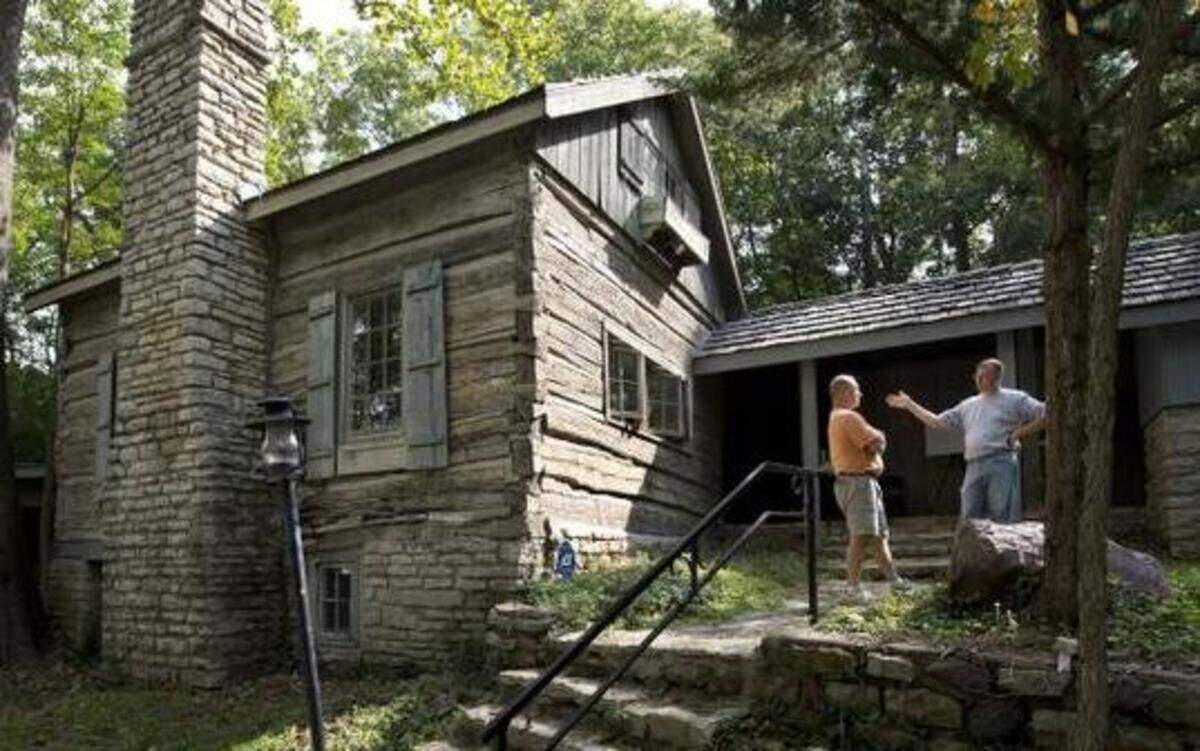
Surrounded by modern development in the heart of Platte County is a historic log cabin that represents an era when natural resources such as a spring for drinking water played a part in selection of a home site.
Platte County purchased the cabin, which is believed to be one of the oldest in the county, with plans to preserve and restore it for future generations to learn about the life of the early settlers and the property’s natural surroundings.
The county purchased the 2.75-acre property at 4727 Green Hills Road in Parkville in 2002 from Dorothy Day for $177,500. The property is now part of the Green Hills of Platte Wildlife Preserve, most of which lies across the street.
The house is believed to have been constructed between 1840 and 1855 and is typical of those built during the first wave of settlement of the area by non-native people, said Sally Schwenk, historic preservation consultant to the county.
“The house is one of the oldest remaining structures in the county,” said Schwenk, of Sally Schwenk Associates, LLC. “Despite the additions done in the mid-20th Century, the house can still communicate its time period and craftsmanship and building type of that time.”
The county Parks and Recreation Department held an open house Saturday to hear the public’s ideas on how to interpret or show the historical significance of the property to park visitors.
The property is part of the county’s park master plan, which voters endorsed with a half-cent sales tax in 2000.
Some residents who toured the house said they would like to see the county use the property as a nature center. Others said they would like it to become a nature refuge from the fast-paced modern world that surrounds the property.
The original one-room cabin is about 390 square feet, but the additions that appear to have been built in the late 1950s increase the size of the building to about 1,362 square feet, said Angie Gaebler, principal architect with Susan Richards Johnson & Associates, Inc., an area preservation architecture firm hired to take charge of the master planning and interpretation effort.
“We would like to seek the public’s input and opinion of what the citizens of Platte County would like to see at the site,” said Brian Nowotny, director of the Platte County Parks and Recreation Department.
“The cabin … is a unique opportunity … to preserve a piece of our county’s past,” he said. “It is important to save our historical assets to pass along learning opportunities to future generations.
“In this respect the cabin is even more unique, in that its location was selected by early settlers for its abundant natural resources; the same resources that are celebrated today as a wildlife sanctuary and public park. These include the Missouri River, Burlington Creek and the hardwood forest full of native Missouri trees, shrubs and flowers.”
He said some ideas for the site include nature trails, outdoor classrooms and an indoor meeting facility for family gatherings or to use as a classroom.
As part of the sale of the property, the county agreed that Day be allowed to live in the house until she moved out, he said. She did so in the fall of 2011.
Schwenk said the Day family purchased the property in 1912. Three generations of Days lived in the house.
Day preserved much of the original character of the log house. The narrow hallways and stairs, the small window in the upstairs bedroom and the low ceilings convey that character.
The property has a root cellar or cold pantry built into the side of the hill believed to be contemporary with the original cabin, Gaebler said. A cistern, under one of the covered porches, presumably collected rainwater from the downspout at one time.
Still remaining is a natural spring coming out of the hillside with a little stone grotto, she said. This may have been one of the reasons the original settlers chose to build the cabin there.
Schwenk said the absence of first growth trees, showing the land was cleared for cultivation, was one way she was able to date the house. Also, based on the history of the fur trapping trade and what is known about the permitting process of that time, it was not likely the house was constructed in an earlier era by a fur trapper.
She said the house was probably erected as a home for “subsistence living and some sort of farming.”
At the open house, Platte County resident Mary Nemecek said that the cabin was a “wonderful treasure” of craftsmanship with its hand-hewn timbers. Still remaining, she said, is the “original feel of the cabin with its small rooms and tight quarters.”
“I’d like to see it become a nature center. We don’t have one in Platte County,” Nemecek said.
Another county resident, David Raffel, said the house is historically significant because it shows “what life was like 150 years ago — so different from today.”
He said the house could provide educational opportunities for future generations.
County resident Barry Barnes said he would like the property to be used in a way that honors Day’s wishes — to establish it as a “center of natural calm amidst the swirl” of modern life that surrounds it.
Schwenk said the land is a “very fragile ecosystem” that meets the federal park service criteria of a “cultural landscape with both native and man-made” components.
Platte County Commissioner Beverlee Roper is a member of a steering committee that will take the public’s comments and refine them into a plan to present to the park board. The board will recommend a plan to the county commission, which will make the final decision.
Roper said the house is significant because it will help provide people a historical “sense of the place” about the area in which they live.
The county plans to provide a link on its website to collect more comments about the property.