New clinic for children with autism opens to meet growing need in KC’s Northland
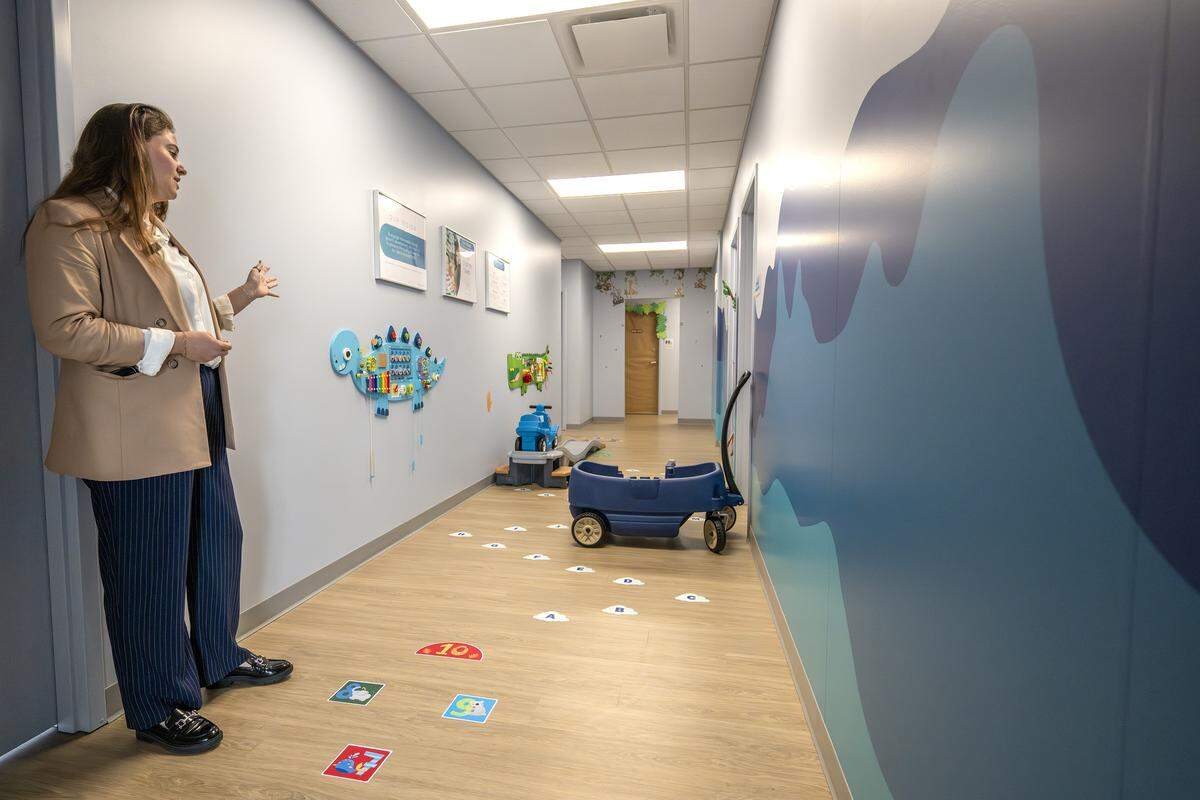
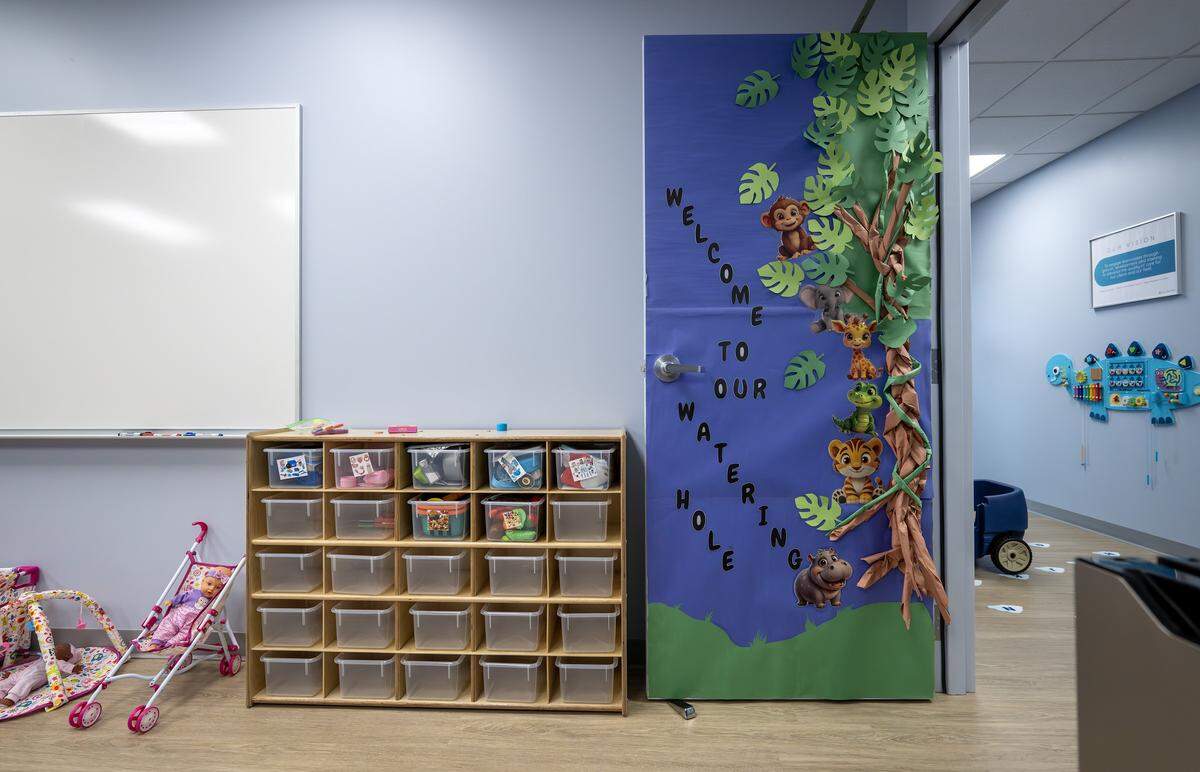
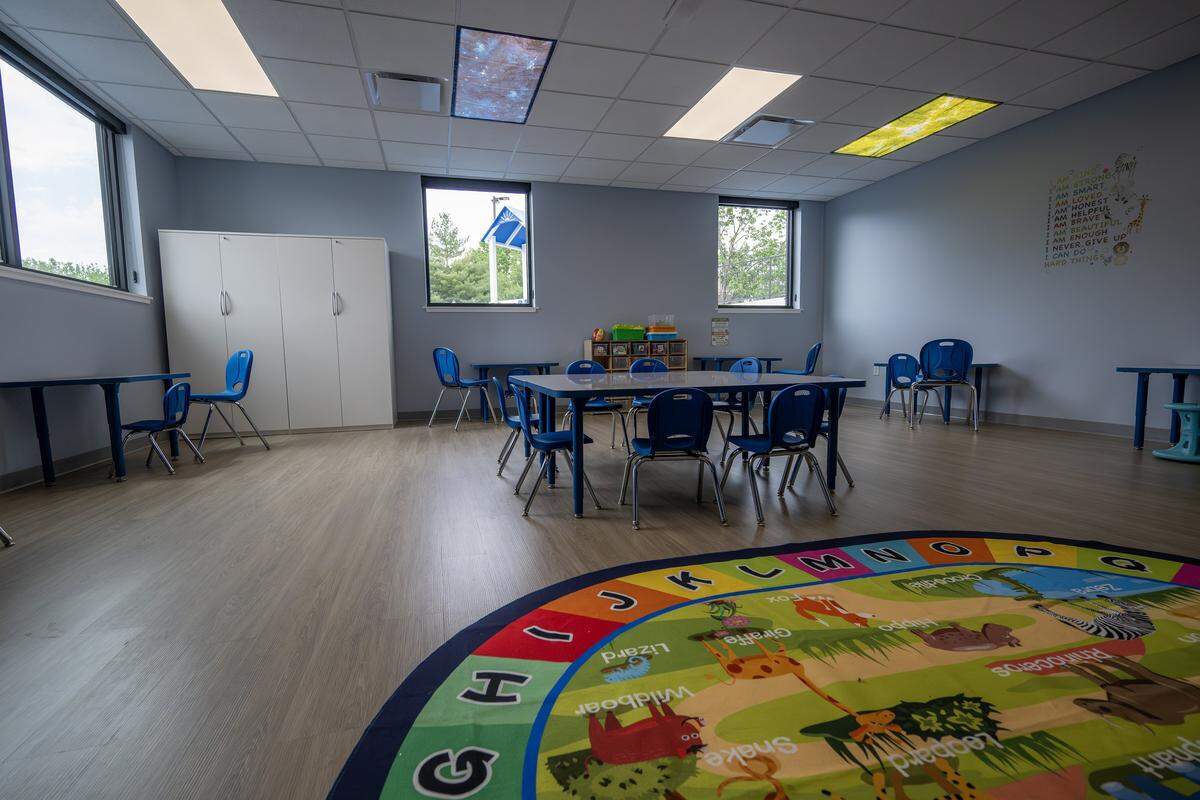
Inside the Northland’s newest therapy clinic for children with autism, hopscotch squares in the shape of a rocketship line the hallway, space-themed covers dim the lights, kid-sized kitchen sets sit in classrooms and tables and chairs are placed precisely.
The brand new Caravel Autism Health clinic in Liberty is colorful where it needs to be, bare-walled where focus is priority, quiet in certain areas and full of fun activities in others.
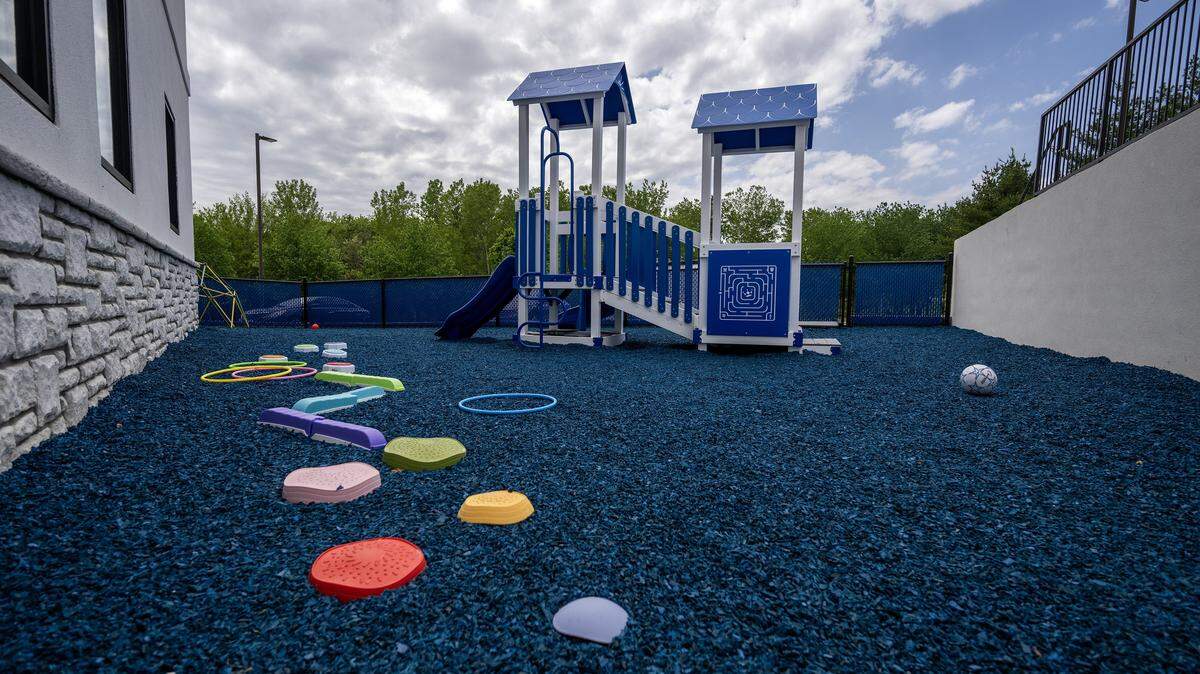
Every inch of the space was designed with purpose, according to clinic director Sara Scheible, from the toys available in each room to the type of flooring used under the jungle gym outside.
“Every single thing was done very intentionally,” Scheible said.
After months spent working to create the perfect space, the clinic at 560 Rush Creek Parkway officially opened earlier this month, offering play-based, one-on-one therapy to help children with autism aged 18 months to 6 years learn new developmental skills, build connections and prepare for kindergarten.
They’re aiming to meet a growing need and a shortage of services in the metro.
According to Caravel, one in 31 children is on the autism spectrum, yet families around Kansas City have struggled to find resources, many encountering lengthy waitlists up to 24 months for evaluations and therapy programs.
“Families shouldn’t have to wait months or years to get answers and support,” Scheible said.
Built with intention
Caravel Autism Health utilizes Applied Behavior Analysis therapy, also known as ABA therapy, to use positive reinforcement to help children with autism improve a wide range of skills including communication and social skills.
And every item in the clinic serves a specific purpose to build those skills.
The hopscotch squares and sensory boards in the hallways are intended to help children transition from room to room. Each chair is equipped with an exercise band around the legs to allow children to kick and fidget safely while sitting. Scheible even hung covers on the overhead lights so the room is “soft on little eyes” and provides a more calming environment.
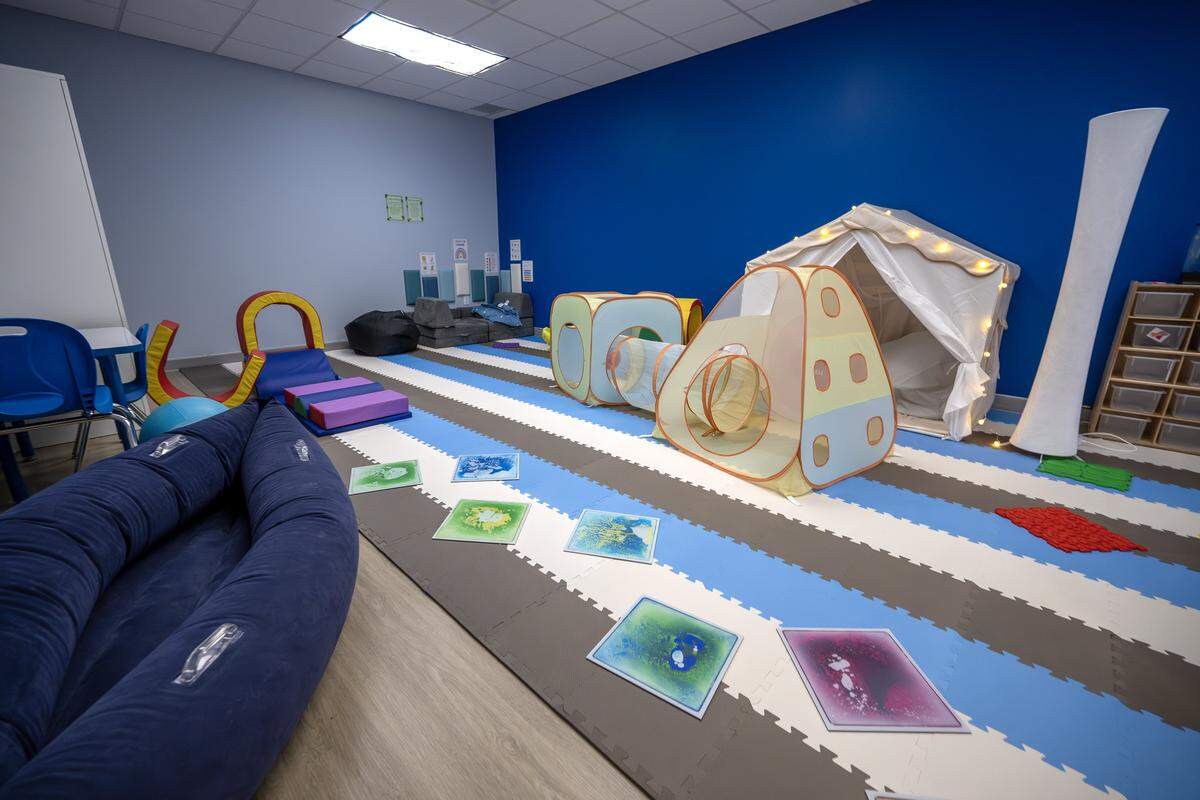
Inside the sensory room, Scheible placed weighted blankets, sensory mats, color changing lights, tunnels and mirrors to help children decompress, reduce anxiety or regulate their sensory needs.
Down the hall, another room, dubbed the “pretend play” room, features a kitchen set, a grocery store set, a work bench with toy tools, a small washer and dryer, and baby dolls, where children can learn about things commonly found in their own homes, practice going to the grocery store or prepare to become older siblings.
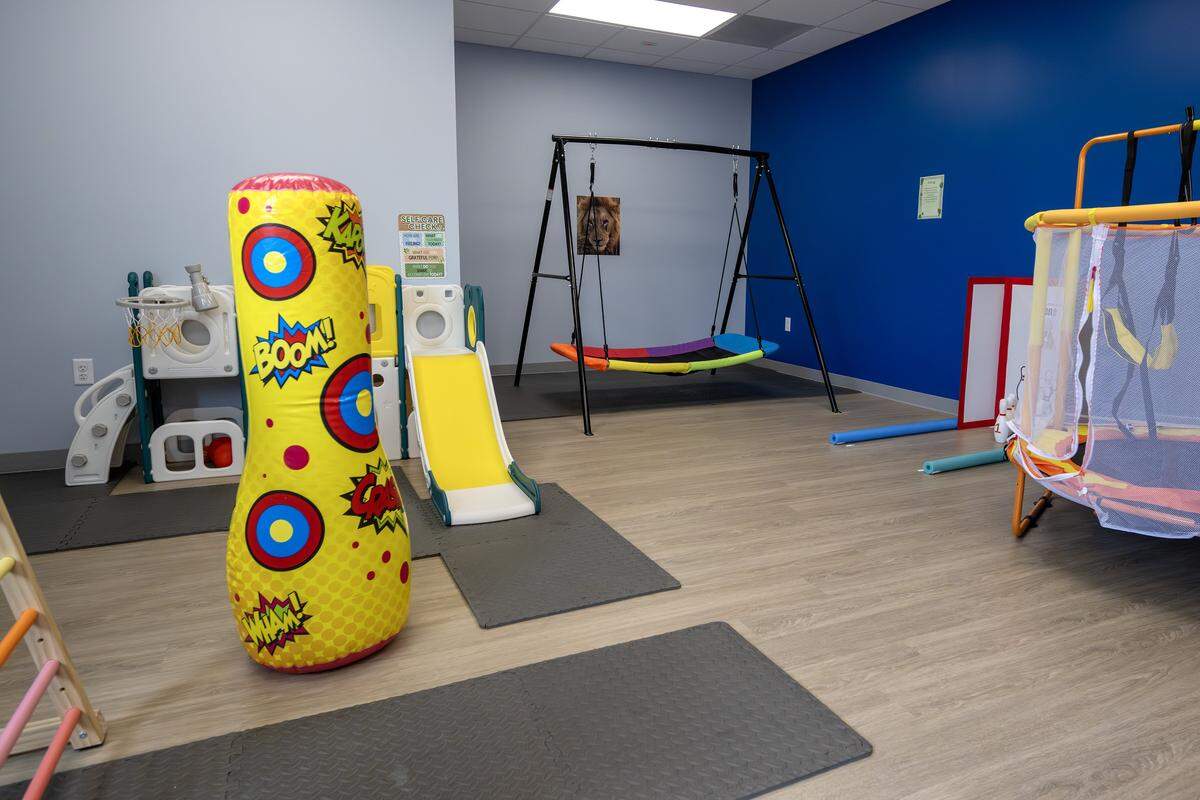
The clinic even features a room dedicated to refining gross motor skills, where children can jump on a mini trampoline, dangle from gymnastic rings, play in a ball pit, climb on a small rock wall, swing on a hammock-like swing set, ride a tricycle or knock down small bowling pins.
Even the photos of giraffes, monkeys, lions, hyenas and rhinos hanging on the walls of the classrooms were selected intentionally — and add a personal touch to the space for Scheible. The photos were taken by her grandfather on an African safari two years ago.
Now, to see the clinic finally open and in use after spending 10 months researching, designing and building has been fulfilling for Scheible, she said.
“It’s the most rewarding feeling,” she said. “Being able to design my own clinic as a clinic director, and then have kids enjoy it, and my own son enjoy it, it’s really been full circle for me. I couldn’t be more blessed with the experience that I’ve gotten.”
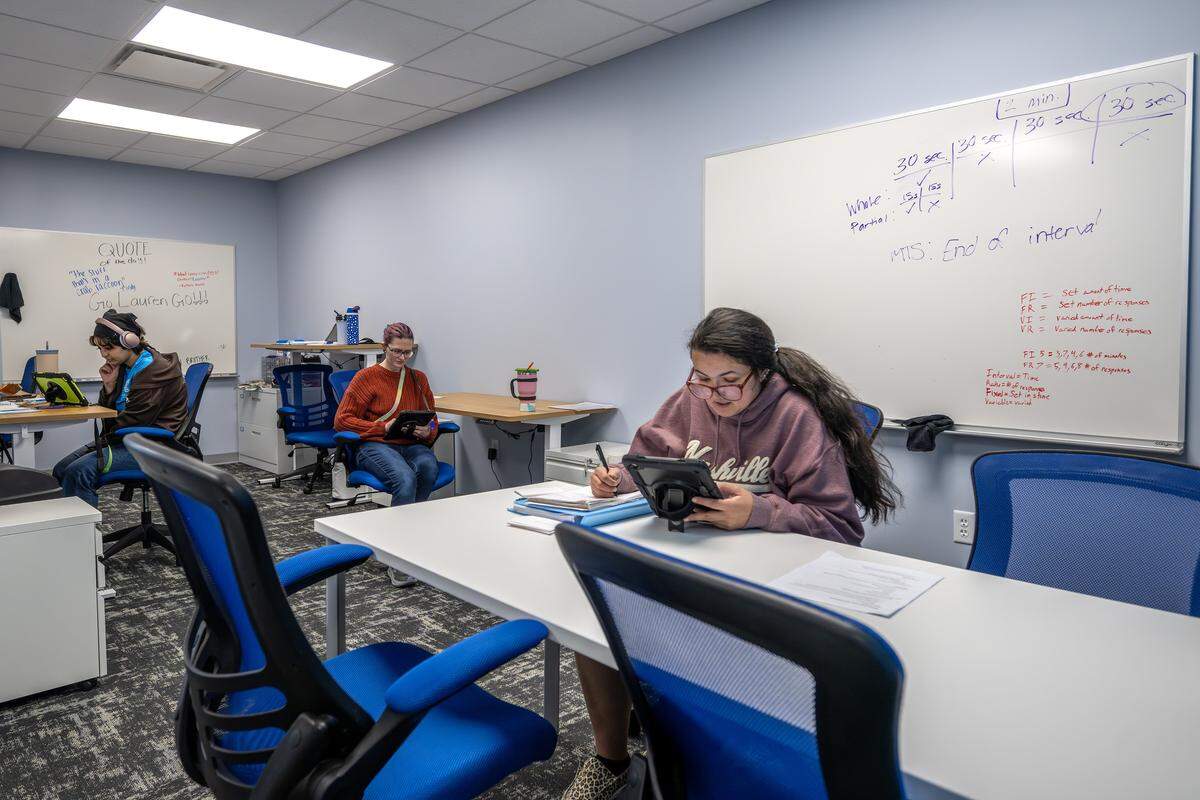
Throughout the day, children work one-on-one with a registered behavior technician, who implements their treatment plans, written by a board certified behavior analyst, during each activity. If, for example, a child is resistant to the idea of becoming an older sibling, the technicians can introduce them to babies by playing with baby dolls, teaching them how to hold and care for a baby.
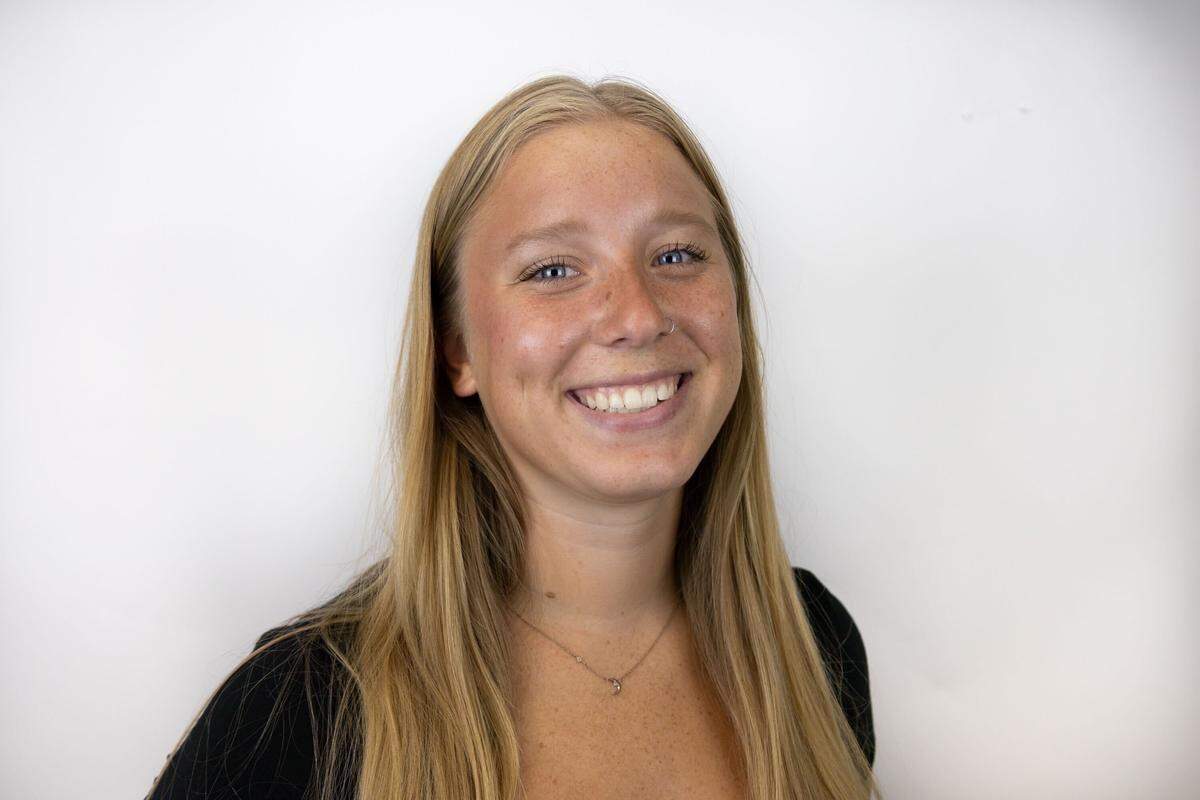
“I’m pretty much just playing with kids and also implementing their different treatments while we play,” said Lauren Taylor, an elementary education and psychology major at William Jewell College who works as a registered behavior technician at the clinic.
By the time kids leave the clinic and head off for school, Scheible hopes they feel more ready to be inside a classroom setting, face challenges, build connections with others and regulate their emotions.
Growing need for services
Currently, one child attends the clinic in Liberty, but Scheible expects to have around 20 children in the clinic each day by June based on the number of sign-ups and level of interest so far. Families can connect with the clinic directly, however, Scheible said most children are referred by doctors.
The growing need for therapy services for autistic children was one of the reasons Caravel Autism Health decided to open in Liberty.
Caravel currently operates two clinics across the Kansas City metro, including the new Liberty location and another in Shawnee. The nationwide company plans to open two more locations in the area in Olathe and southern Kansas City this summer.
“Our mission at Caravel is to change lives,” Mike Miller, the CEO of Caravel Autism Health, said in a news release. “Children with autism achieve the best possible outcomes when they begin ABA therapy early in life, but families in the Kansas City metro have struggled to find providers with capacity. We’re opening new clinics to close that gap.”