
Every day is a feast day at the Kansas City Zoo
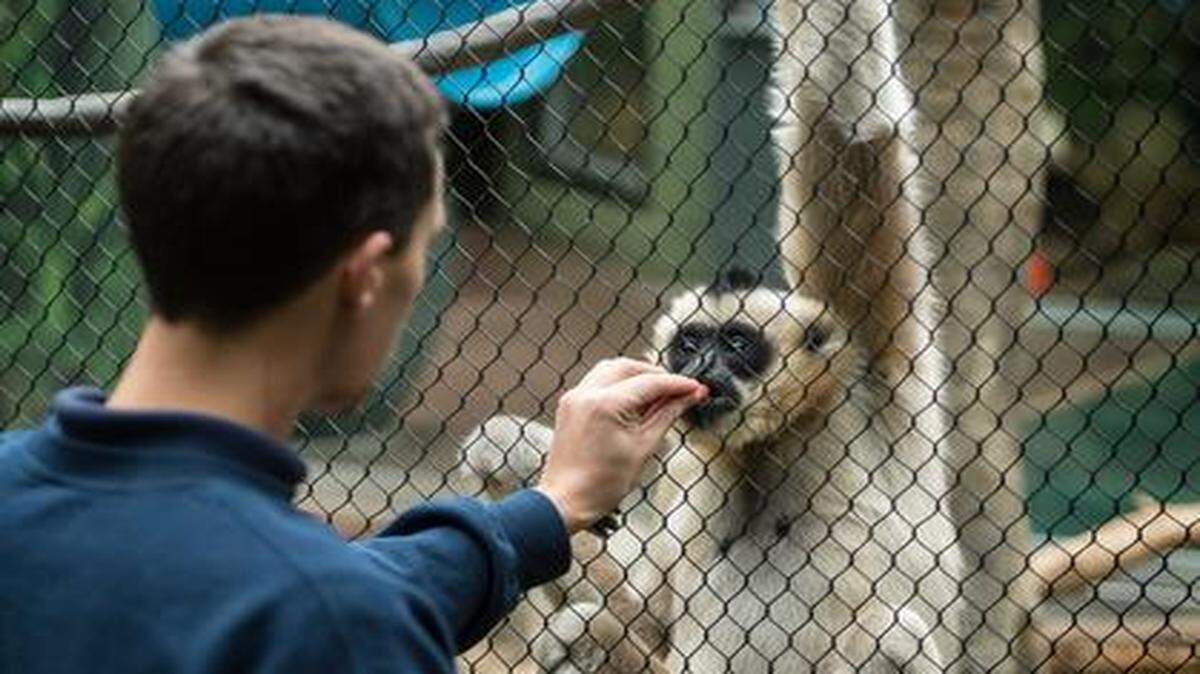
As you’re carving the turkey and mashing the potatoes this Thanksgiving, be thankful you don’t have to round up a mess of live crickets or serve a big hunk of lard.
For as large and finicky as your extended family may be, feeding them does not come close to meeting the daily demands of more than 1,100 animals from about 215 species.
The Kansas City Zoo spends roughly $500,000 a year on food, the biggest chunk of which is more than $88,000 for produce.
“We have a specific diet for every single animal that we have,” said Sean Putney, director of living collections at the zoo. “Some of them are more stringent than others, but they are all very carefully calculated.”
That’s why the zoo doesn’t want visitors tossing food to the animals. Cheetos do not occur in nature.
Making sure the animals get the proper food is one of the biggest factors in keeping them healthy.
“The diet of the animals forms the basis for every aspect of their well-being,” said zoo veterinarian Kirk Suedmeyer. “Their immune system, their coat, their attitude, their behavior, their body condition, their stool quality — all start with diet. Some aspects of reproduction have a basis in the diet.”
Zookeepers monitor what each animal eats to make sure they are all getting enough and are not being shut out. Suedmeyer said he reads the zookeeper reports for every animal.
A chimpanzee at the zoo died in 2011 after more dominant apes would not allow him access to food. Now the chimpanzees are fed individually in the morning and evening. Some food also is scattered in their exhibit during the day.
The zoo raises its own mealworms and beetles for the birds and some other animals, but most of the rest of the food supply is delivered.
Hay and alfalfa for the elephants and hoof stock — more than $63,000 worth — is trucked in by a farmer near Wichita.
The zoo’s six elephants collectively consume 800 pounds of hay per day, 150 servings of fruit and vegetables per week and 11 tons of grain per year.
Each of the 59 penguins at the zoo consumes about 5 pounds of herring, trout and smelt every day. That adds up to about 55 tons of fish a year. The birds are hand-fed so keepers can spot changes in behavior.
As prey in the wild, penguins don’t like to show any form of sickness because it makes them more vulnerable, said animal supervisor Andrea O’Daniels.
“If they’re sick, one of the things they do is stop eating,” she said. “On the other side, if they start eating a lot of fish we know they’re probably getting ready to molt.”
Some animals require special preparation of their food. The sea lions, for example, receive vitamins inside their fish. The lorikeets require a lot of nectar, which zookeepers make by mixing water with a powder concentrate.
About that lard. Nikita and Berlin, the zoo’s two polar bears, eat more than 800 pounds of it per year. It comes in 1-pound packages from a local grocery. The bears also get 30 pounds of prepared chow per week, as well as fish.
They also get rewarded with vegetables, melons and other fruits, which are not abundant in their natural habitat. They get carrots every day.
“Berlin’s favorite fruit is pears,” O’Daniels said. “Nikita really likes cantaloupe and watermelon.”
The zoo’s nine lions collectively eat 45 pounds of meat per day. It’s horse meat and it comes from Milliken Meat Products in Canada. They also go through 2 tons of lion chow a year.
The zoo’s two tigers consume even more meat, about 15 pounds each per day.
Even the meerkats eat meat. The zoo has 13 of them, and they go through 180 pounds per year. They also consume 10 pounds of fruit and vegetables per week, and that still doesn’t fill them up. The meerkats also get more than 800 mealworms and crickets per week, or about 43,000 a year.
Those crickets are delivered weekly to the zoo from an insect supplier, Millbrook Cricket Farm in Mississippi. They have to be kept alive to be fed not only to the meerkats but also to birds and amphibians. That means the zoo has to feed the crickets, too. They get dried, ground-up corn as well as vegetables.
“The better the crickets eat, the better our animals benefit from eating the crickets,” Putney said.
To reach Matt Campbell call 816-234-4902 or send email to mcampbell@kcstar.com.
This story was originally published November 23, 2014 at 7:26 PM.