Video of Olathe ICE incident reignites debate over Kansas ‘unlawful approach’ law
AI-generated summary reviewed by our newsroom.
- Leacox said an ICE agent shouted "25 feet" and wanted her to back up.
- The law makes it a misdemeanor to remain within 25 feet after a warning for safety.
- Critics warn the law could give officers broad discretion and prompt court challenges.
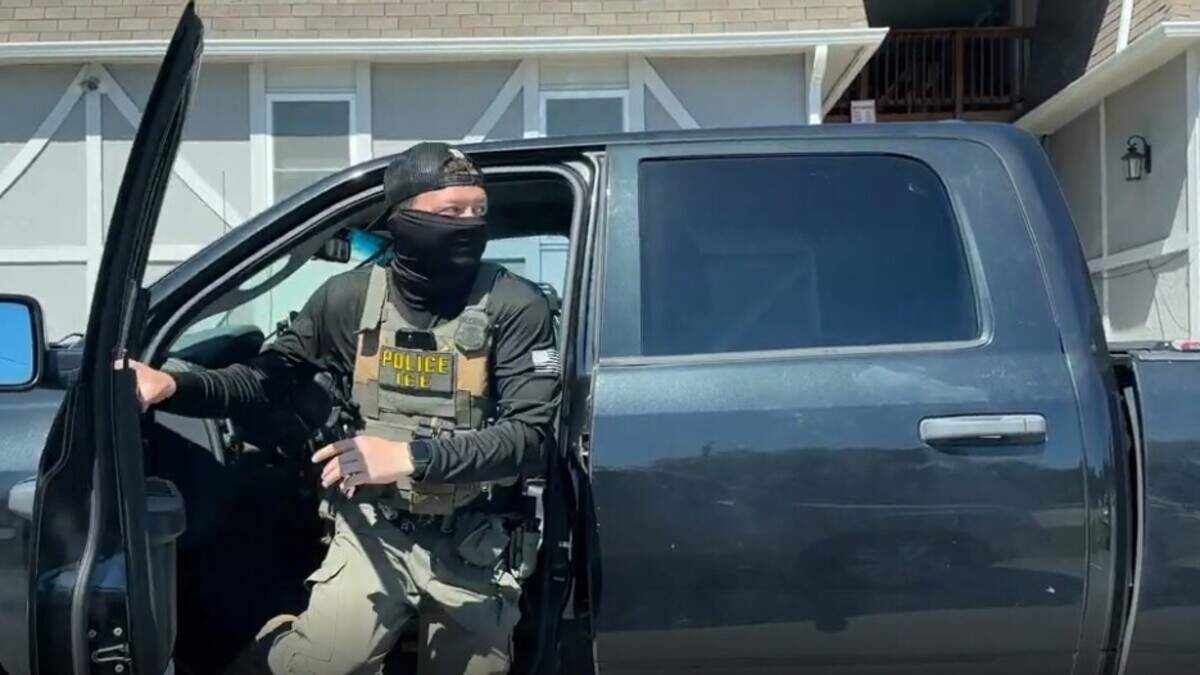
Shana Leacox was parked at an Olathe apartment complex to document what she believed was an immigration enforcement operation when an ICE agent approached her vehicle and shouted, “25 feet.”
Leacox said she couldn’t move her vehicle.
“They said, ‘25 feet, 25 feet,’” Leacox said. “It was pretty clear that they wanted me to back up when there was no room for me to go anywhere.”
Leacox said vehicles blocked her vehicle while agents ordered her to move. Worried that she might be arrested, Leacox said she began recording and sending short video clips to others.
The video Leacox recorded has circulated widely on social media and has highlighted Kansas’ newly enacted “unlawful approach” law, which critics warned could be used to discourage people from recording law enforcement activity.
The law took effect this month, making it a misdemeanor to knowingly approach or remain within 25 feet of a first responder, including federal officers, after receiving a verbal or visual warning to back up. The law says it can only be applied when an officer reasonably believes additional separation is necessary for safety and the person’s actions interfere with official duties.
Republican lawmakers said the measure was intended to protect first responders from interference while they perform their duties. Opponents argued that it gives officers broad discretion that could infringe on the public’s First Amendment right to record law enforcement officers.
Leacox said she had driven to Harrison Place Apartments after learning ICE agents were conducting an enforcement operation there.
She said a red pickup truck entered the parking lot before an ICE agent got into a vehicle and pursued it through the apartment complex parking lot.
She said ICE agents later flagged down Olathe police after the other vehicle attempted to leave the apartment complex. Leacox said she saw Olathe officers arrest the driver but does not know why that person was taken into custody.
ICE officials did not respond to requests for comment.
Has the law been enforced yet?
Several law enforcement agencies in Johnson County said they have not been asked to enforce the new buffer zone law on behalf of federal immigration authorities and have not used it themselves.
Sgt. John Moncayo, with the Olathe Police Department, said that his department has not been contacted by ICE or any other federal agency regarding law enforcement and has not implemented it since the statute took effect.
Moncayo said officers have been trained on the new law and understand that simply being within 25 feet of an officer does not violate the statute.
“We have to have more than just that,” Moncayo said,
Officers also must reasonably believe a person’s actions create safety concerns or interfere with official duties before the law could apply, Moncayo said.
Moncayo said the department has seen the same video circulating online but could not speak to how federal agencies interpret or apply the statute. The Kansas law specifies that only local or state officers actually have the authority to arrest someone for approaching a first responder.
“We don’t want to make bad case law, and we don’t want to be viewed as though we’re abusing that,” Moncayo said. “... It could be very subjective depending on the circumstances.”
First Amendment concerns
The encounter mirrors concerns raised by press freedom advocates before the law was enacted.
In testimony opposing the bill, the Kansas Press Association warned lawmakers that the measure would allow officers, including federal agents, to exercise broad discretion over whether bystanders recording police activity could be ordered away or charged with a crime.
The organization argued the law could infringe on the public’s First Amendment right to record law enforcement and invite constitutional challenges.
Similar “police buffer zone” or “halo” laws adopted in several states have faced constitutional challenges, particularly from news organizations and press freedom advocates.
Supporters argue the laws help protect officers and preserve public safety, according to the First Amendment Encyclopedia, published by Middle Tennessee State University’s Free Speech Center.
But critics say the laws burden the public’s First Amendment right to gather news and record police activity in public, creating a chilling effect.
Indiana’s 25-foot buffer law was struck down last year in a case before the 7th U.S. Circuit Court of Appeals. In that case, the court concluded the law was unconstitutionally vague because it failed to provide clear standards for when officers could order people to stay back.
Other challenges have also been brought against similar laws in Louisiana and Tennessee.