From World Cup stopgap to permanent jail? Lucas raises question as opening nears
AI-generated summary reviewed by our newsroom.
- Kansas City is finishing a $25 million temporary modular jail expected to open this month.
- Mayor Quinton Lucas suggested the facility could become the city’s long-term jail.
- The temporary jail will offer about 100 beds and hold detainees charged with ordinances.
As Kansas City works to finish a $25 million temporary jail, Mayor Quinton Lucas is now suggesting the facility could become the city’s permanent detention facility.
Lucas’ comments come as city officials say the modular jail at 7740 E. Front Street is expected to open by the end of the month. That’s months after it was originally planned to open and weeks after the FIFA World Cup has come and gone.
The facility was originally proposed to help Kansas City’s public safety efforts during the month-long international soccer tournament. The City Council even increased funding for the project and waived environmental building standards in January to speed up construction in hopes of completing it before the tournament kicked off.
The jail was also pitched as a multi-year stopgap solution until the city constructs a new permanent jail — a planned $151 million detention facility slated for the same location.
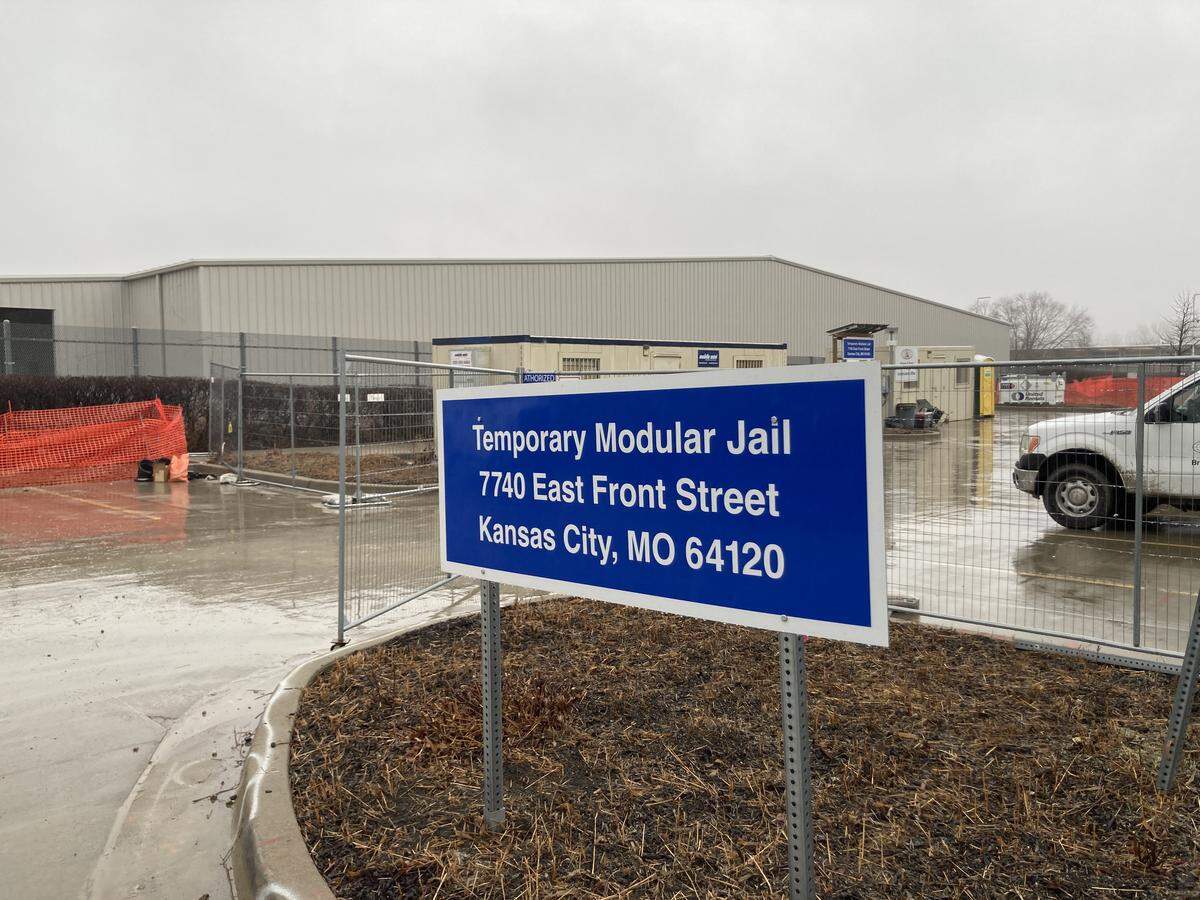
However, Lucas said this week on KCUR’s “Up To Date” that he suspects the temporary jail will eventually serve as the permanent facility. The idea was in response to a listener who suggested the city wasted funds to construct the temporary facility that was not ready for the World Cup.
Lucas responded by saying the facility may not be temporary at all.
“It’s not a temporary jail. It’s not a modular jail,” Lucas said. “It is a brick and mortar building, and it is a building that likely, I suspect, will become the jail long term.”
That’s seemingly in contrast to the city’s plan. Officials have said the modular jail will be used until a permanent detention and rehabilitation center is built.
Jackson Overstreet, a spokesperson for the city, said on Tuesday that it is still the plan.
“The Department’s goal is still to only use the modular jail as a temporary location while a more permanent municipal jail structure is built,” Overstreet said.
Lucas said a decision to make the temporary jail permanent would not be made by him, but could come after he leaves office next year and a new City Council is elected.
He said those future city leaders could consider building a larger permanent facility for hundreds of millions of dollars. But he touted the modular facility as an option and noted that it is more secure than the city’s previous jail, which closed in 2009.
“If the City Council of the future wants to spend $250 million or $300 million on a bigger permanent facility, all right, maybe that’s what they look to do,” Lucas said. “I think what you look at is that this facility actually does transition to a more permanent solution. SoFrom World Cup stopgap to permanent jail? Lucas raises question as opening nears
When asked for clarification, Megan Strickland, a spokesperson for Lucas’ office, said the city never intended for the temporary jail to be “disposable.” She said the temporary facility could be incorporated into the larger permanent jail project in the future.
“It is a well-built structure intended to serve the city for years to come,” Strickland said. “Any decisions about long-term use or expansion will rest with future mayors and councils.”
Current status of temporary jail
Meanwhile, the city is continuing work to open the temporary facility.
The new modular jail is expected to provide about 100 beds across cells and dormitory-like areas. It will be used to hold detainees facing charges for violating city ordinances — such as trespassing, theft, car break-ins, resisting arrest, assault and other offenses.
Overstreet said substantial construction of the facility is expected to be completed next week, and it could be approved for occupancy a week later. He said the city expects staff to move into the facility to begin working and training at the same time.
“In the meantime, the Department continues to recruit new staff, develop policy and establish the services needed for a municipal facility,” Overstreet said.
Kansas City has not had its own jail since 2009 and currently contracts out with other counties to hold detainees. City officials have long raised concerns about the arrangement, including over the treatment of people in facilities a long drive away from family, lawyers and the city’s limited oversight.
To address those concerns, voters approved extending a public safety sales tax that will be used to fund the construction of a 250-bed permanent detention center. The city anticipates that the permanent facility will be constructed in the next four years.