
Some fish were killed by algae bloom at Kansas City park pond. What happens now?
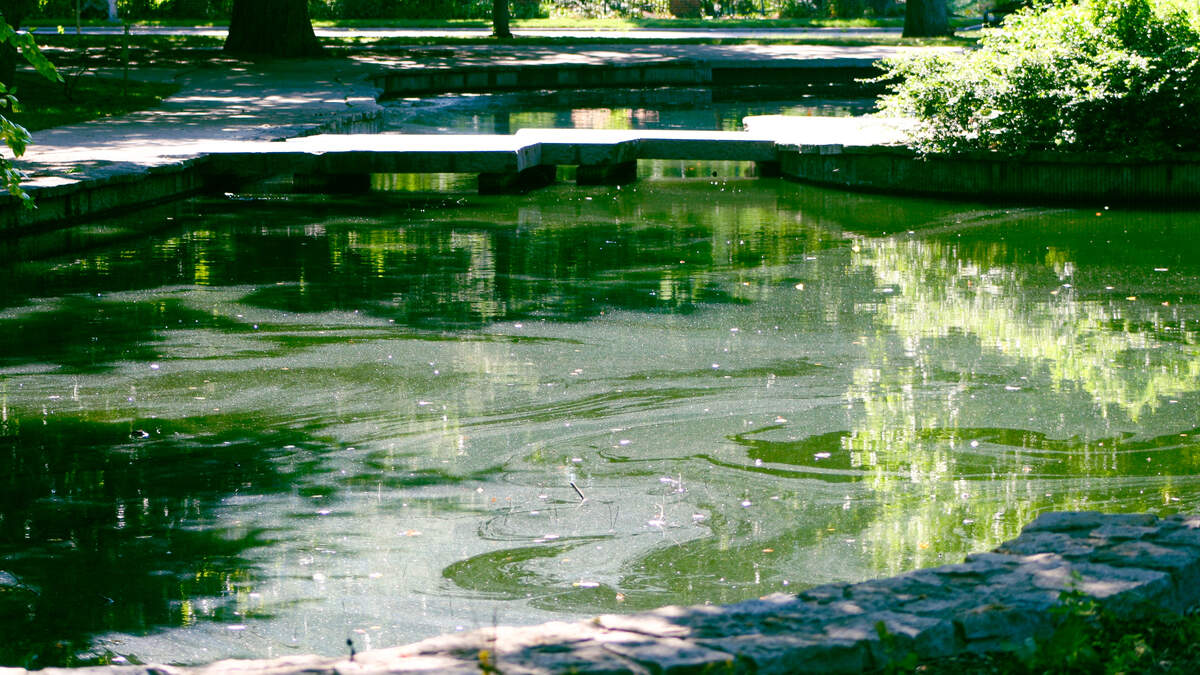
The Loose Park Pond is on its way to recovery after an algae bloom killed koi and green sunfish.
The circumstances of the fish kill and algae bloom are currently being investigated by the Kansas City Parks and Recreation team. The exact number of dead fish is not confirmed, said Toni Zibert, a Parks and Recreation spokesperson.
Park staff removed the dead fish from the pond earlier this week, she said.
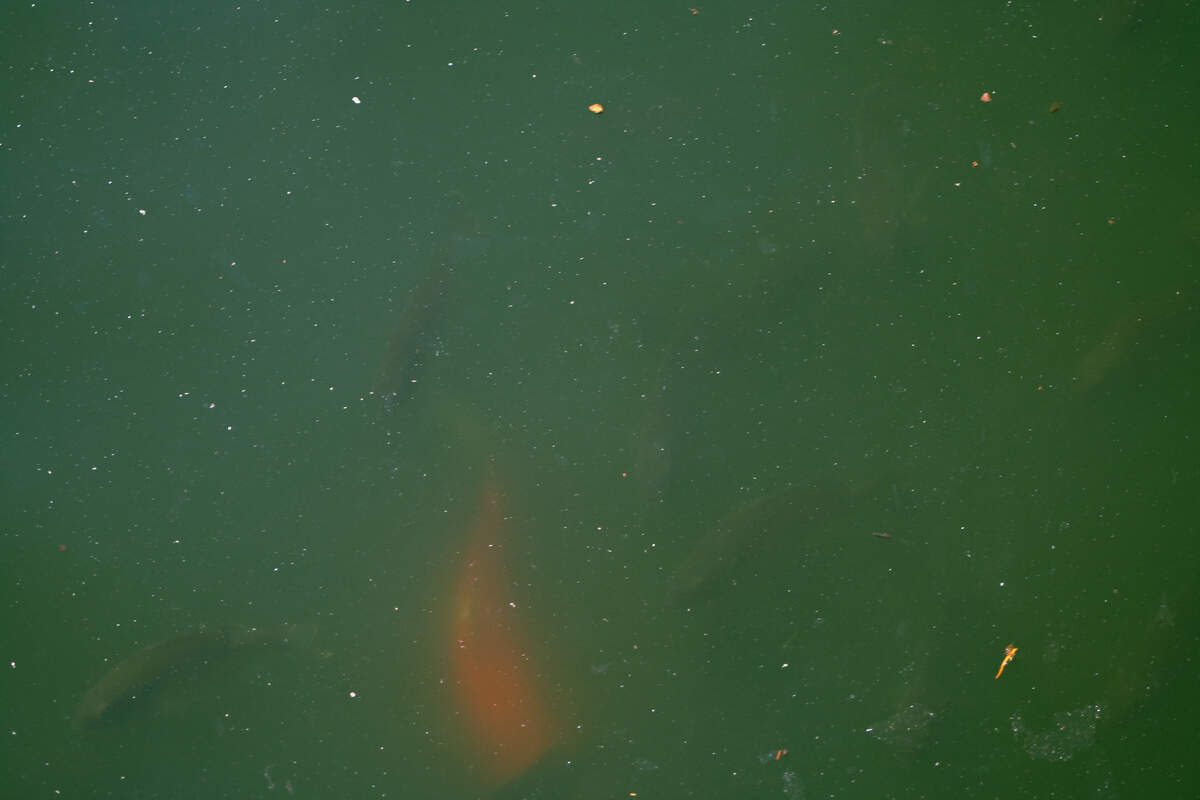
On Wednesday morning, the pond remained murky with some algae and debris visible on the surface of the water. The fish, although reduced in number, gather in schools, hiding beneath the surface and popping up for little bites of food. Turtles, ducks and other wildlife swim around the lake as well.
Maintenance staff will make any necessary adjustments to improve the pond ecosystem health, although there’s no true estimated recovery period, Zibert said.
“Caring for ponds is an ongoing process,” she said.
For now, the pond will continue to receive monthly treatments, which include phosphorus-binding agents, specifically made to help combat aggressive algae blooms, she said.
The pond is overstocked as a result of the fish naturally reproducing, Zibert said.
The large populations can increase the chances of events like this, Stephen Van Rhein, environmental manager at Kansas City Parks and Recreation, said in an email.
Moving forward, the pond will have a lower population of fish. There are no plans to restock and the low population will help maintain the health of the remaining fish, Zibert said.
Algae blooms and resulting mass death of fish populations, known as fish kill, are common occurrences in small ponds, Van Rhein said.
Algae blooms and resulting mass death of fish populations, known as fish kill, are common occurrences in small ponds, Van Rhein said.
Patrons of Loose Park can play a role in the pond’s recovery as well. She discourages anyone from feeding wildlife and fish because large amounts of fish food and bread create additional nutrients that feed algae growth, Zibert said.
The pond is treated annually for algae, and the treatment has been done this season. The three diffusers and two fountains, which the city assured were working properly, also help discourage algae growth.
The fountains and diffusers circulate water, increasing oxygen levels and spreading it around the pond for fish, native plants, and beneficial bacteria to improve pond health, according to SOLitude Lake Management.
The fish kills occur because oxygen levels plummet when algae overruns the pond and then quickly dies, a result of temperature changes, he said.
When the weather is hot, algae populations have the potential to increase because of high nutrients in the water, warm summers, still water and large fish populations, said Zibert.
When the weather cools down or is stormy, algae blooms die off, depleting oxygen that fish and other aquatic life need to survive, Van Rhein said.
“In the long run, the die-off will be beneficial by reducing fish populations,” he said.
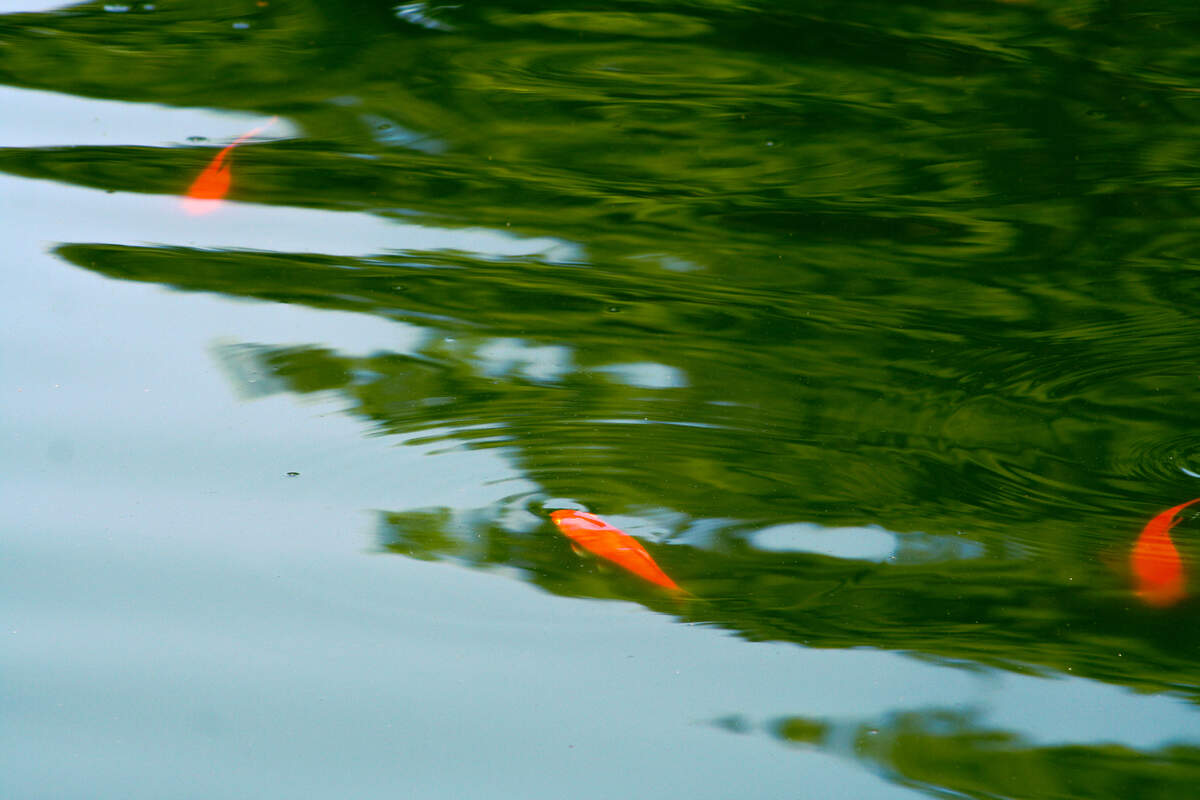
The strongest of the fish survived the lower oxygen levels, in turn being able to reproduce with stronger genes, strengthening the overall population.