No engine, weight issues found in Butler plane crash that killed 12: NTSB report
A preliminary report on an investigation into the crash of a skydiving plane that killed 12 people in Butler, Missouri, last month did not identify a cause of the crash. Investigators found no evidence of engine problems, fuel contamination or weight issues with the flight, the report said.
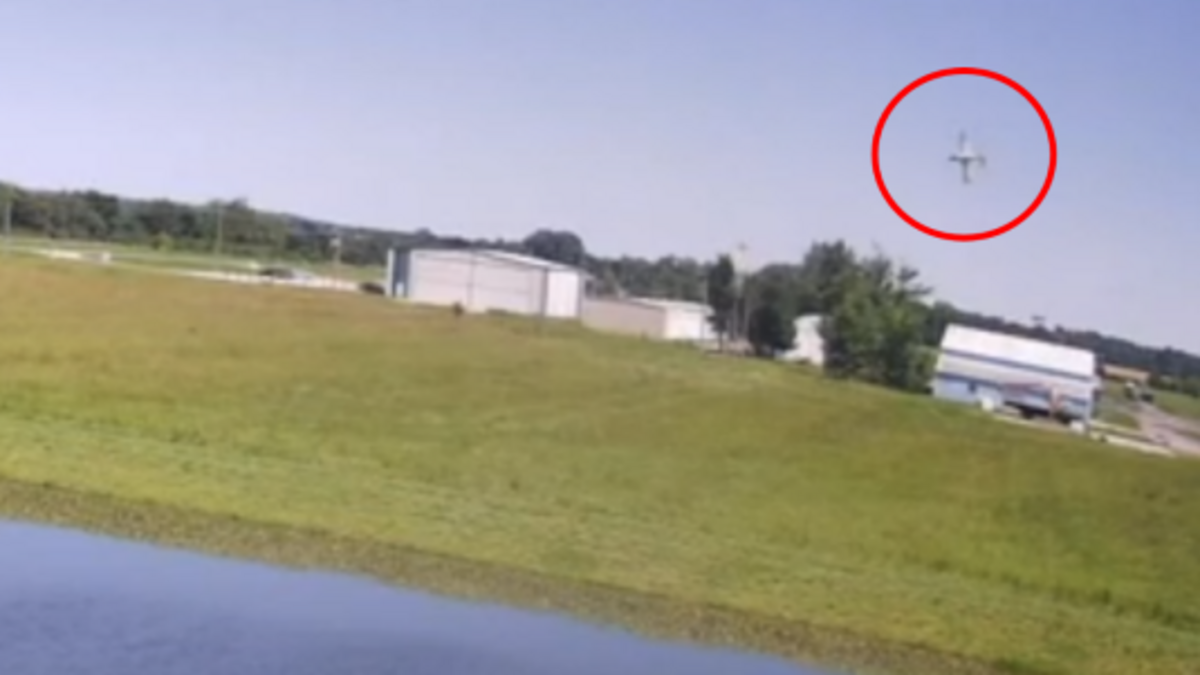
The plane took off from Butler Memorial Airport at 11:25 a.m. June 14, and security footage from an airport hangar showed the Pacific Aerospace Limited 750XL make a gradual left turn and then continue to turn to the point that its wings were nearly perpendicular to the ground, according to the report released Thursday by the National Transportation Safety Board.
The plane then slammed nose-first into a flat grass field near a barbed-wire fence on airport property and caught fire. All 11 passengers and the pilot were killed, and the fire consumed the wreckage, the report said.
Skydive Kansas City had planned eight skydiving flights out of Butler Memorial Airport that day, the NTSB said. Earlier that morning, the report said, the plane completed two successful flights. One, with nine passengers and the pilot, took off at 9:20 a.m., and the other, with 10 passengers and the pilot, took off at 10:32 a.m.
The plane refueled at 10:55 a.m., the report said.
The NTSB said all major structural components of the plane’s airframe were found at the crash site and investigators took cables used to control a plane’s roll to a lab for further examination. The plane’s propeller was destroyed on impact.
“There were no indications of any preimpact mechanical malfunctions or failures to any of the engine components that would have precluded normal operation,” the NTSB report said.
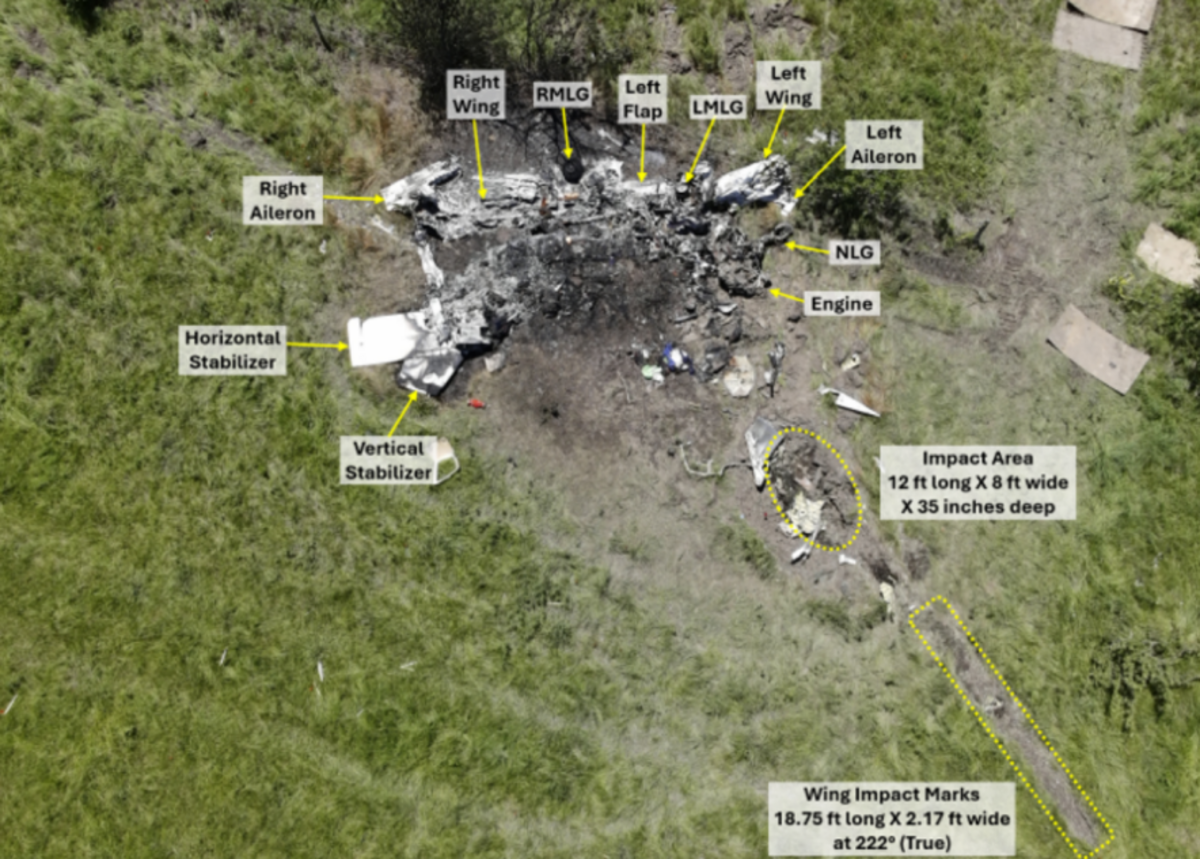
The NTSB reviewed management software that Skydive Kansas City, the flight operator, used and found that the plane, which had a weight limit of 7,500 pounds, met weight and balance restrictions. According to the operator, the pilot used a small clipboard to record load notes and fuel calculations, but that clipboard was not found in the wreckage, investigators said.
The plane had two seats in the cockpit and two benches in the cabin for the skydivers, the NTSB said.
“According to the operator, the parachutists would have sat rearwards, straddling their respective benches, with a latched restraint system (a lap belt),” it said.
The NTSB said the plane did not have a crashworthy voice or data recorder and wasn’t required to have any. Damaged GoPro cameras were recovered from the crash site and were taken to a lab for review.
The pilot had arrived around 7:30 that morning, the NTSB said, completed a pre-flight check and reported no issues. A Skydive Kansas City manager had obtained a fuel sample at 7:30 a.m. and found no sediment or debris.
A sample taken from Skydive Kansas City’s fuel truck after the crash found the fuel to be clean with no sediment or debris present, according to the report.
The NTSB said the pilot, who has been identified as 69-year-old Kurt John Roy, held a commercial pilot certificate and had more than 4,100 total flight hours.
Skydive Kansas City reported no concerns about the pilot and said he was “safety oriented, and he was also conservative with his decision making as a jump pilot,” the report said. It was the pilot’s second season to fly a plane for Skydive Kansas City, it said.
The others killed in the crash were Jen Sharp, 55; Marcus Miller, 30; Matthew Swope, 39; Michael Shanahan, 54; Dustin McKinney, 44; Dane Cordes, 26; Nick Nash, 40; William Fischer, 23; Blake Thacker, 25; Sai Karthik Varma Datla, 24; and David Hershberger, 54.
This story was originally published July 2, 2026 at 5:53 PM.