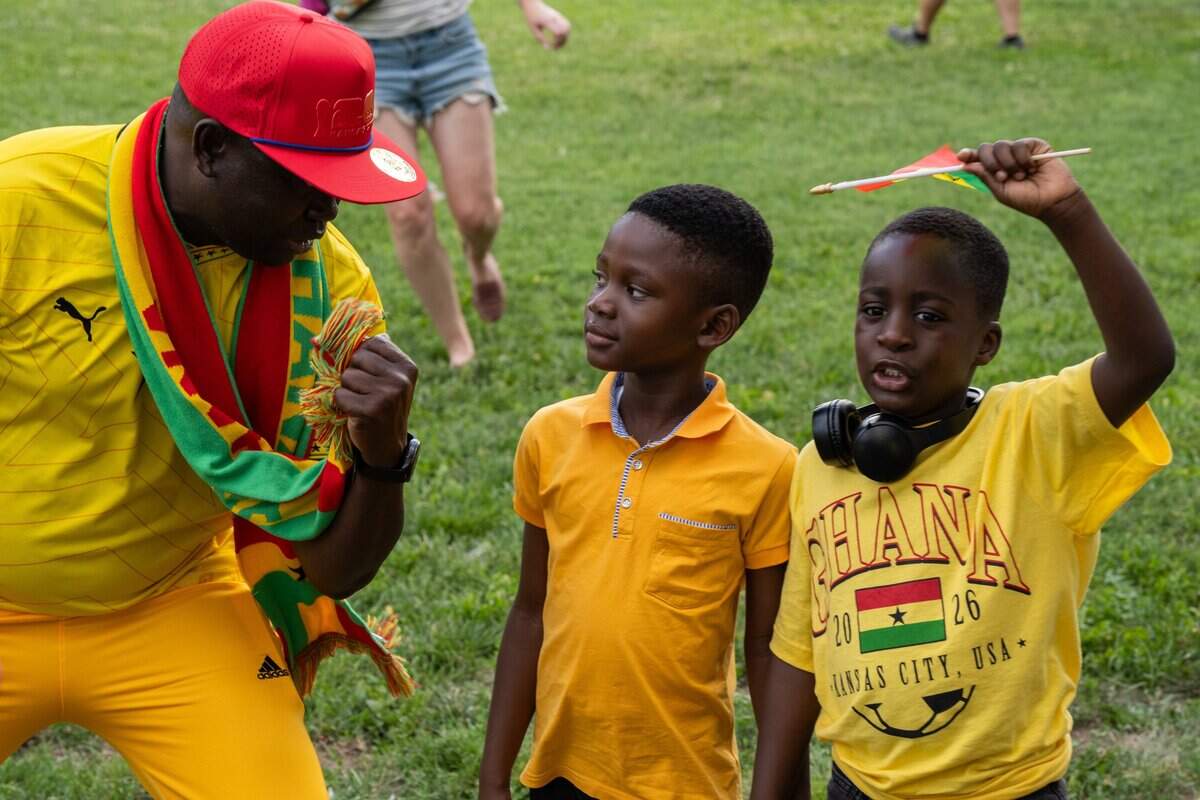
Black Star fans bring Jama tradition to World Cup in KC ahead of Ghana game
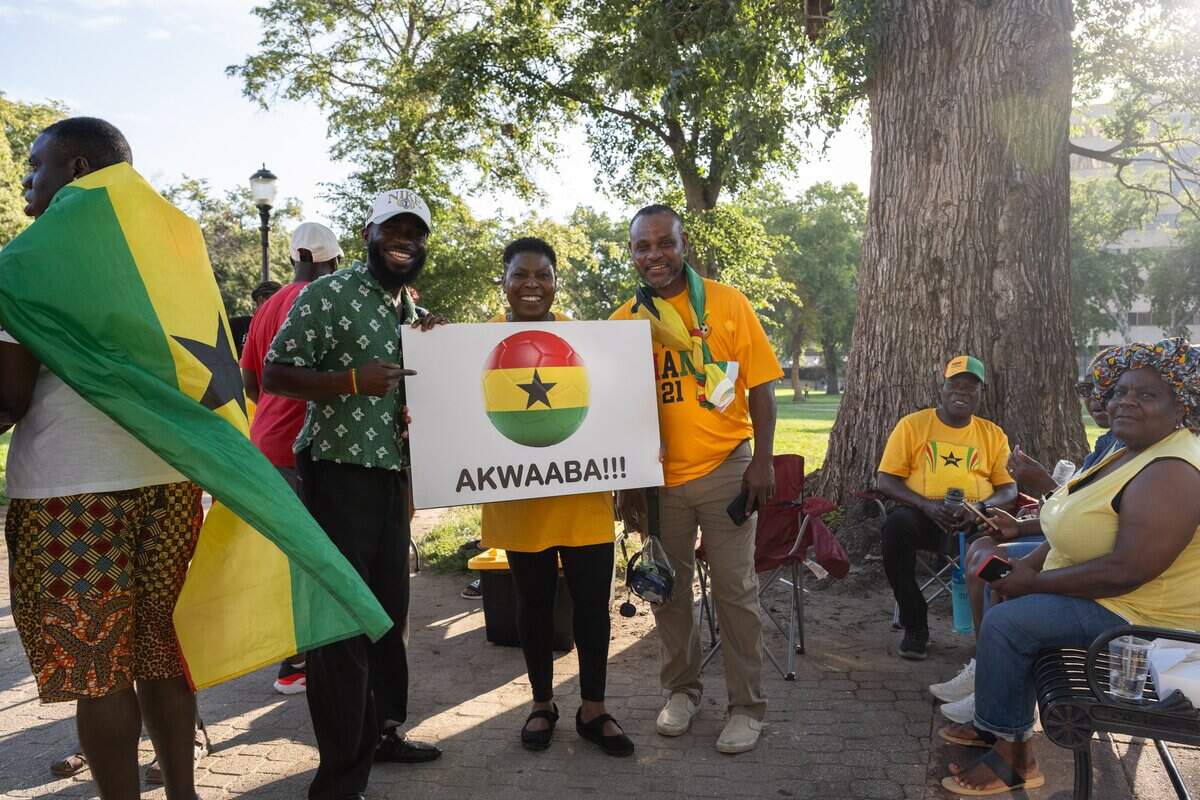
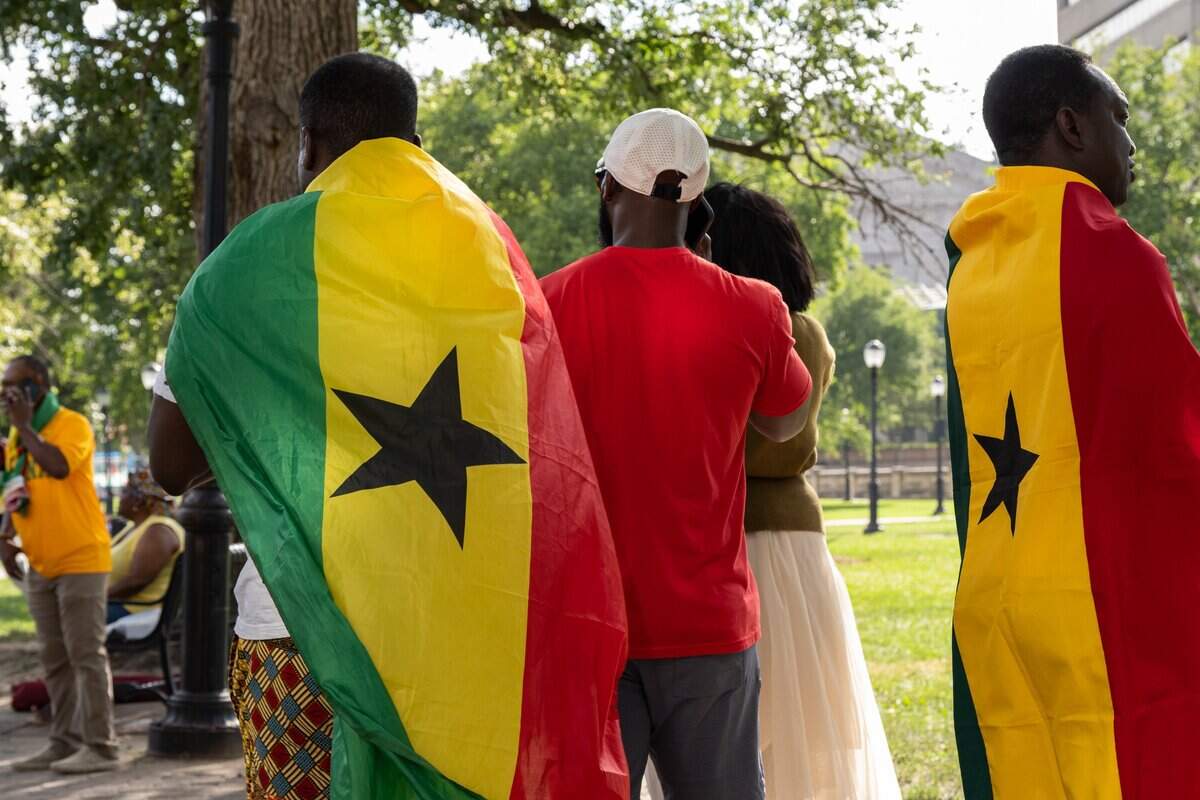
By 5 p.m. Thursday, only a handful of people had gathered at Washington Square Park in downtown Kansas City. A few supporters wore Ghana jerseys while others draped the country’s red, yellow and green flag across their shoulders.
Organizers greeted arrivals, tables of homemade Ghanaian food were set up and conversations centered on one topic: the Black Stars’ upcoming World Cup Round of 32 match against Colombia.
The gathering was never just about soccer. It was about reconnecting with fellow Ghanaians in a city where the community is smaller than in East Coast population centers.
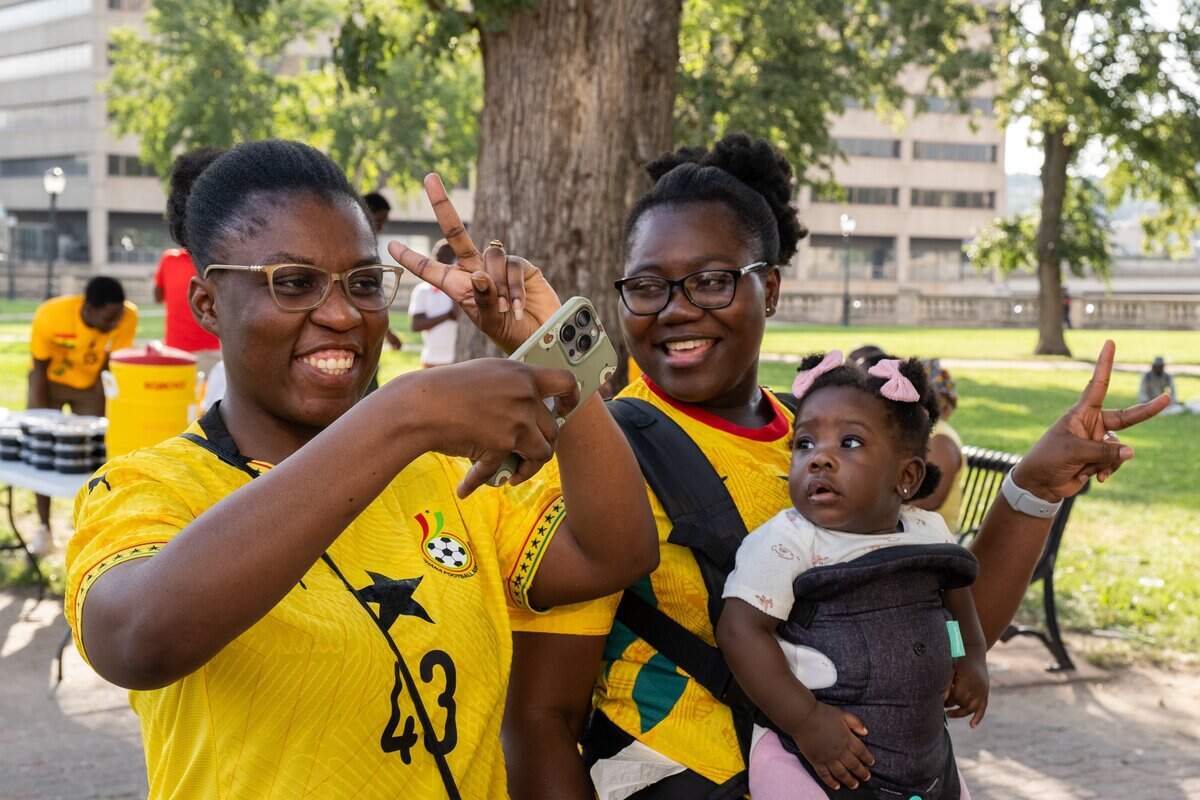
The event also gave Kansas City’s Ghanaian residents an opportunity to introduce others to Jama, the tradition of singing, chanting and dancing that has long been intertwined with Ghanaian soccer culture and community celebrations.
“I didn’t think much of the World Cup at first,” said Cobina Lartson, board chair of Ghanaians in Greater Kansas City, which organized the gathering. “I just thought about how good it would be for the city in terms of visitors, hotels, restaurants and the image of Kansas City. But when Ghana qualified to come here, it was like, ‘I’ve got some work to do.’ It was an exciting feeling to finally find out the Black Stars were actually coming to KC.”
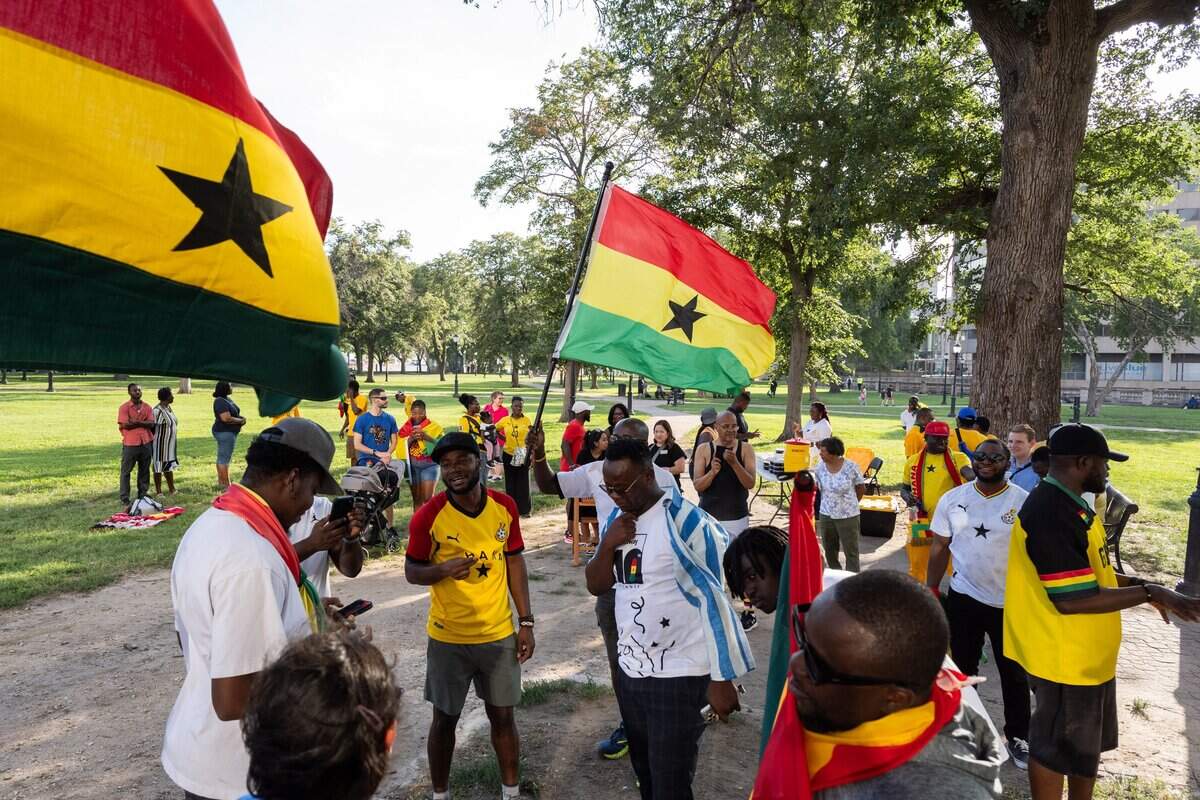
As the evening progressed, the crowd steadily grew. Families, students, longtime Kansas City residents and visitors from across the Midwest stopped by the gathering. They posed for photos, embraced old friends and welcomed strangers who shared a connection to Ghana. By sunset, the park had transformed into a celebration of national pride as supporters prepared to cheer on their country before Friday night’s match.
Lartson, who has lived in the Kansas City area for several years after spending nearly two decades in Colorado, said soccer has been part of his life since childhood. In Ghana, he said, the sport extends far beyond professional competition.
“Soccer is huge,” he said. “Our professional players go and play in Europe, and we have stadiums all over Ghana. It’s something that’s in the blood.”
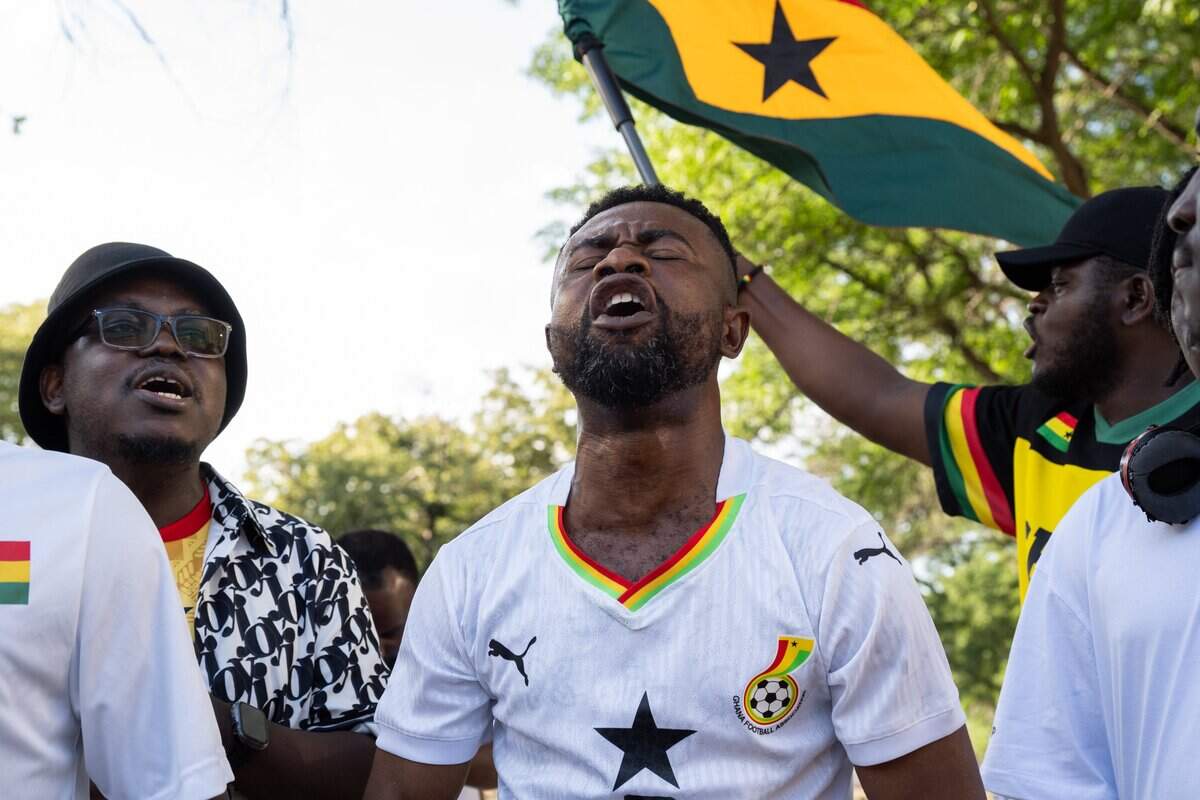
That passion was evident throughout the evening as supporters periodically broke into song. Jama chants echoed through the park while children danced alongside adults and passing pedestrians stopped to watch. Unlike traditional sports chants, Jama blends music, rhythm and movement into an expression of community that exists well beyond the soccer field.
Raymond Appiagyei, who moved to Kansas City nearly 12 years ago after living in the Washington, D.C., area, said the Black Stars playing in Kansas City carries special meaning because many Ghanaian immigrants traditionally settle on the East Coast rather than in the Midwest.
“You can imagine our team qualifying for the Round of 32 and then coming to a place you would normally never think they’d be coming to,” Appiagyei said. “I’m so excited. I see this as a special moment.”
Appiagyei described soccer as something nearly every Ghanaian grows up with because it is accessible to everyone.
“Everybody’s a coach,” he said with a laugh. “The great-grandmother is a coach. The great-grandfather is a coach. They’ll all tell the coach who should come out and who should go in. Soccer is something everyone in Ghana loves and understands.”
He also said Jama carries an emotional significance that goes beyond cheering during a match.
“It brings something special out of you,” Appiagyei said. “Growing up, the girls would be singing and mentioning your name before games, and you felt like you could do anything. You were just so energized. Jama is something like that.”
For John Duker, Ghana’s arrival in Kansas City represented two worlds coming together. Born in Ghana, he moved to Kansas City when he was 12 years old, later played soccer at Missouri State University and founded the Kansas City Black Stars youth soccer club.
“A lot of families in Kansas City already know who the Black Stars are,” Duker said. “To have my home country playing in my hometown, it’s been absolutely fantastic. It’s a dream come true.”
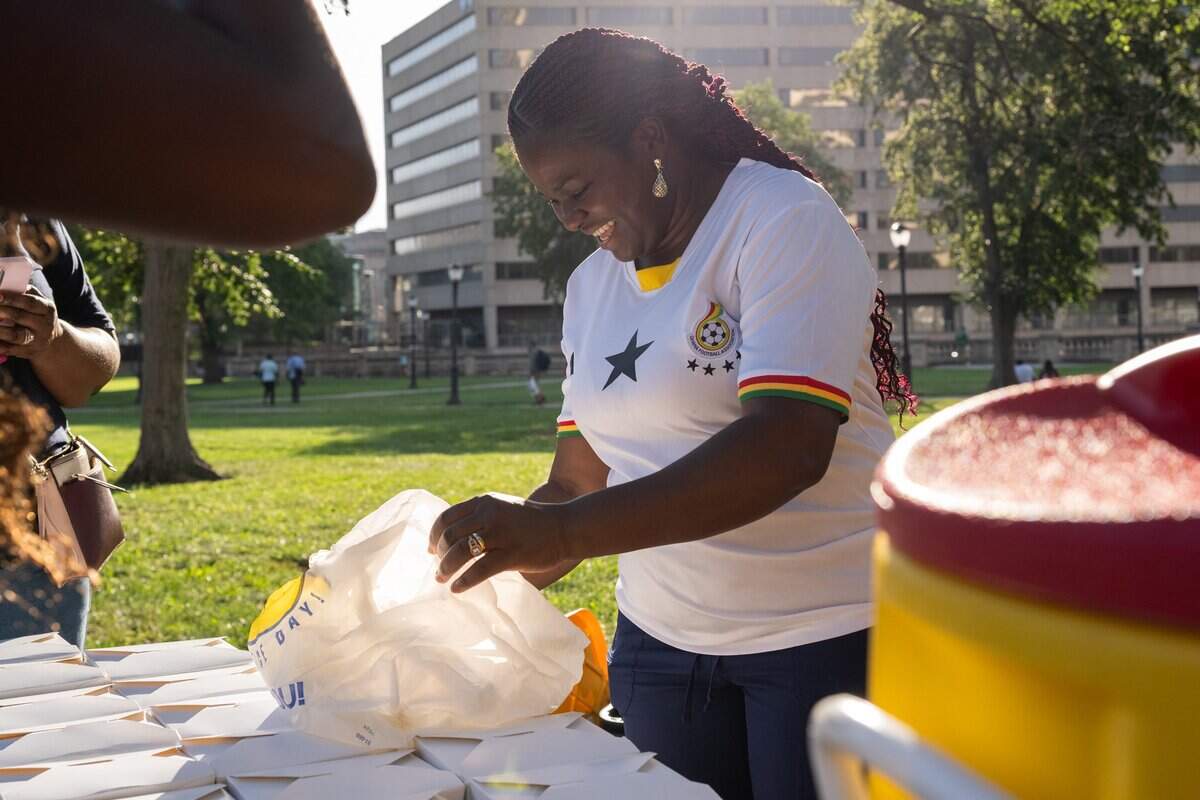
The gathering also highlighted another important part of Ghanaian culture: hospitality. Mercy Kwenortey spent the evening serving homemade bofrot, a fried dough snack sometimes called Ghanaian doughnuts, along with sausage for attendees.
She said she had waited decades for an opportunity like this.
“For 43 years of my life, this is my first time having an encounter with my people here,” Kwenortey said. “I’m here to support my people.”
Kwenortey, who moved from Accra more than 25 years ago, said the evening represented more than preparing for a soccer match. It was an opportunity to celebrate faith, family and community.
“We believe in God strongly,” she said. “Even if we don’t conquer, we still have faith in God that something good will happen.”
As darkness settled over Washington Square Park, supporters formed circles, waved Ghanaian flags and continued singing Jama into the evening. The gathering ended not with predictions about Friday’s match, but with music, dancing and embraces that reflected what many said the event meant most: bringing a community together.
“Showing love,” Kwenortey said. “That’s what matters.”