
Enjoyed a walk on the Riverfront Trail recently? You have these Missouri goats to thank!
Goats returned to the Berkley Riverfront recently with a job to do.
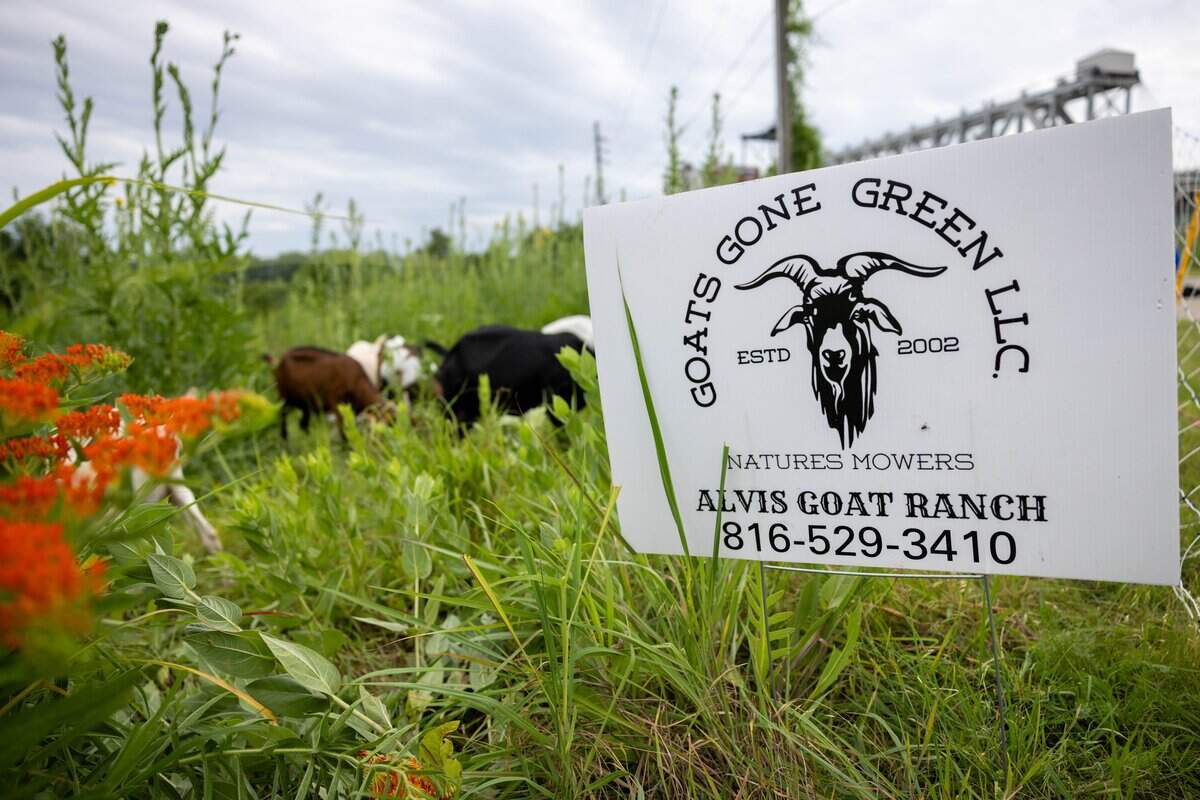
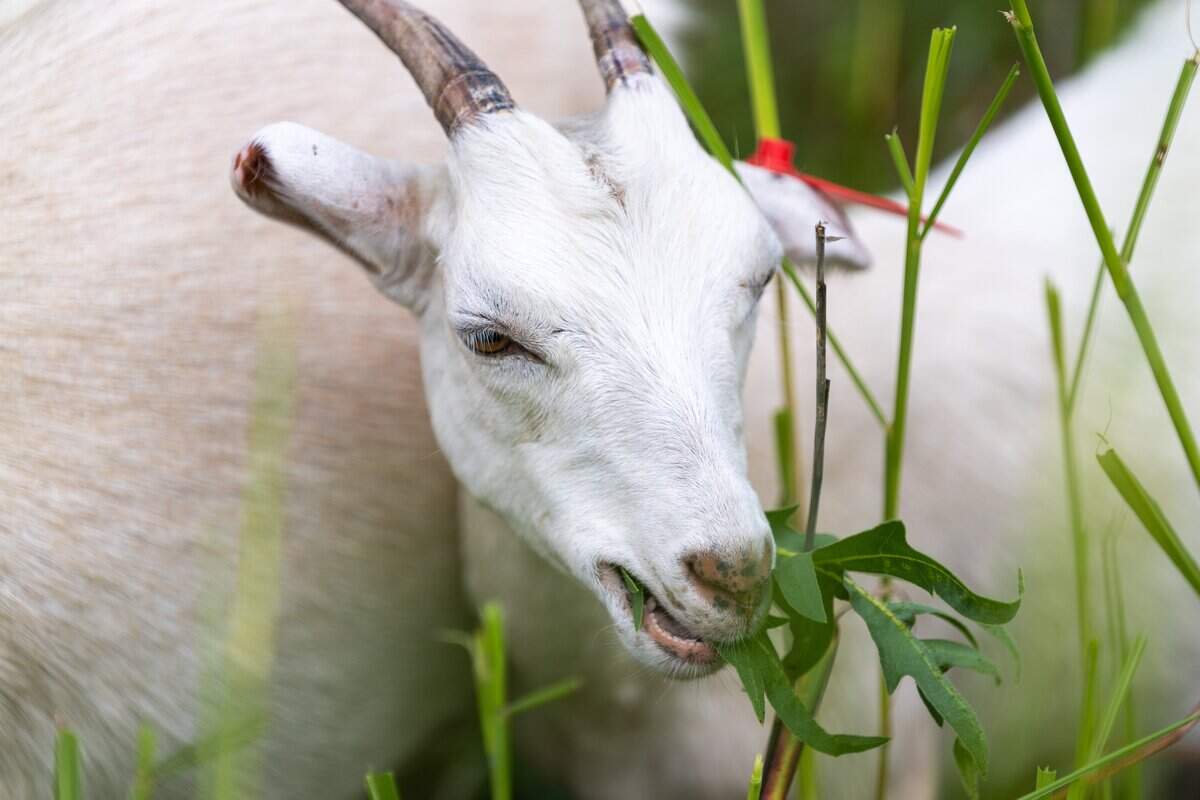
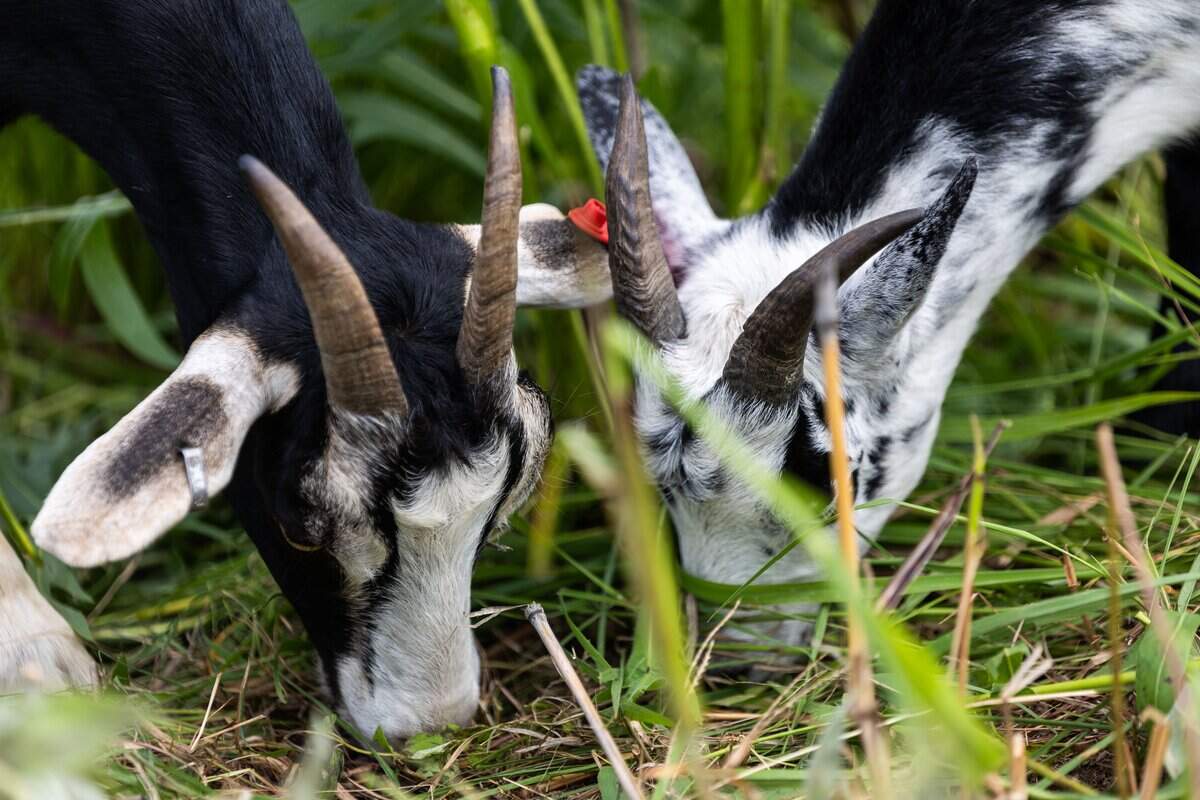
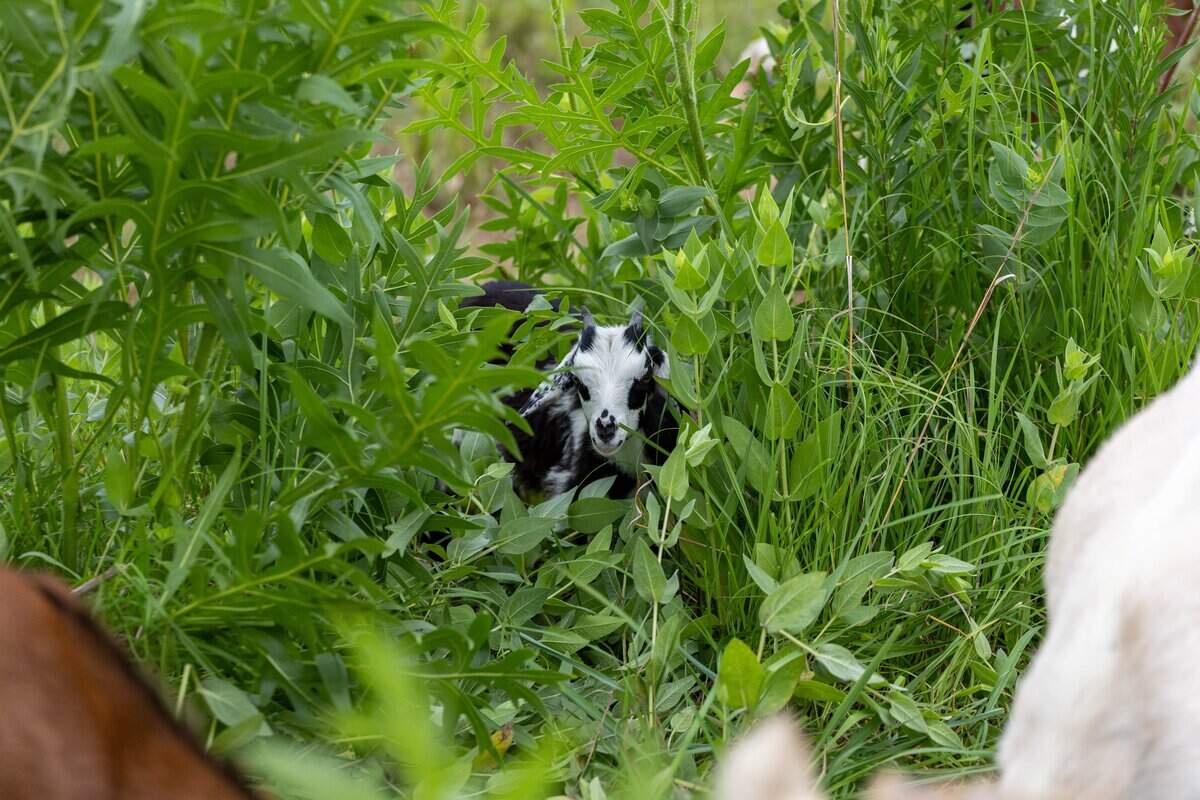
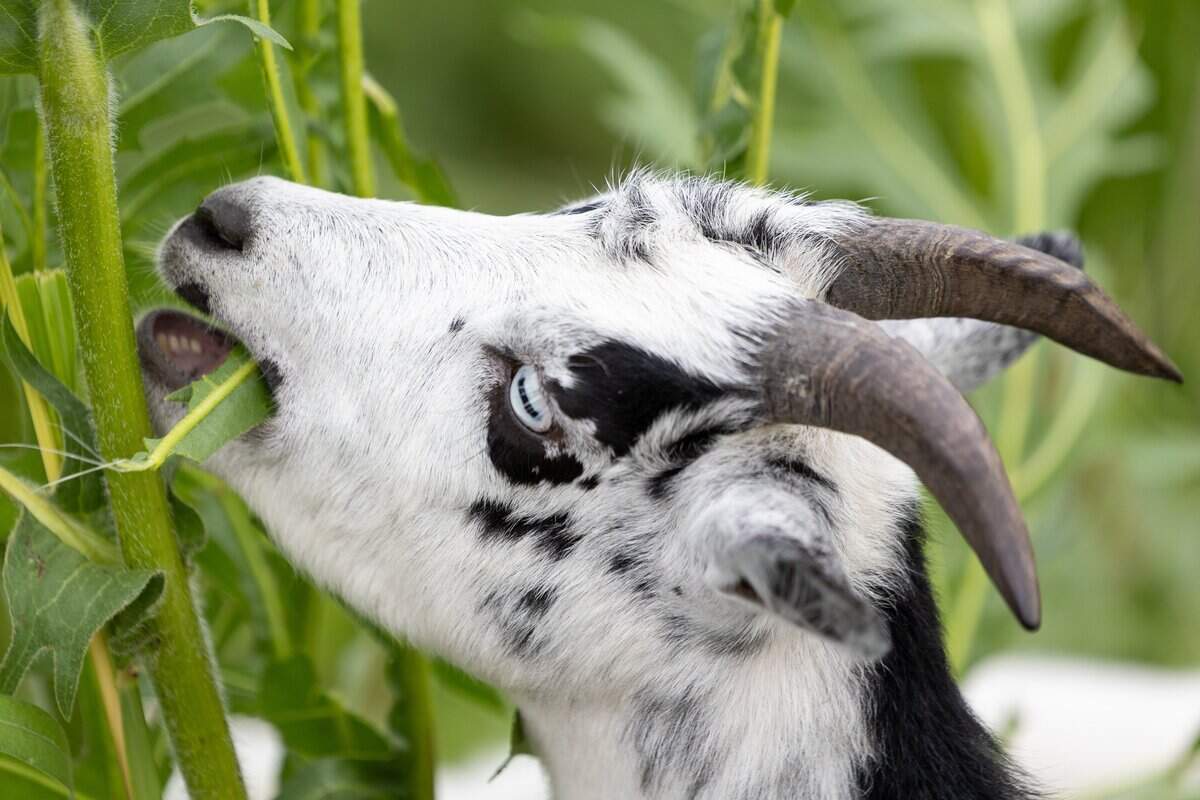
Along the Riverfront Heritage Trail, between the Heart of America Bridge and the Kansas Bridge, several dozen goats from Goats Gone Green moved through nearly two acres of overgrown land, eating weeds and invasive plants as visitors watched from the trail.
The project, organized by Port KC, uses goats as an eco-friendly way to clear brush along the riverfront without relying on chemicals, sprays or heavy machinery.
For people walking by, the goats may have looked like an unusual attraction along the Kansas City riverfront. For Kyle Alvis, owner and operator of Goats Gone Green in Garden City, Missouri, they were there for a practical purpose.
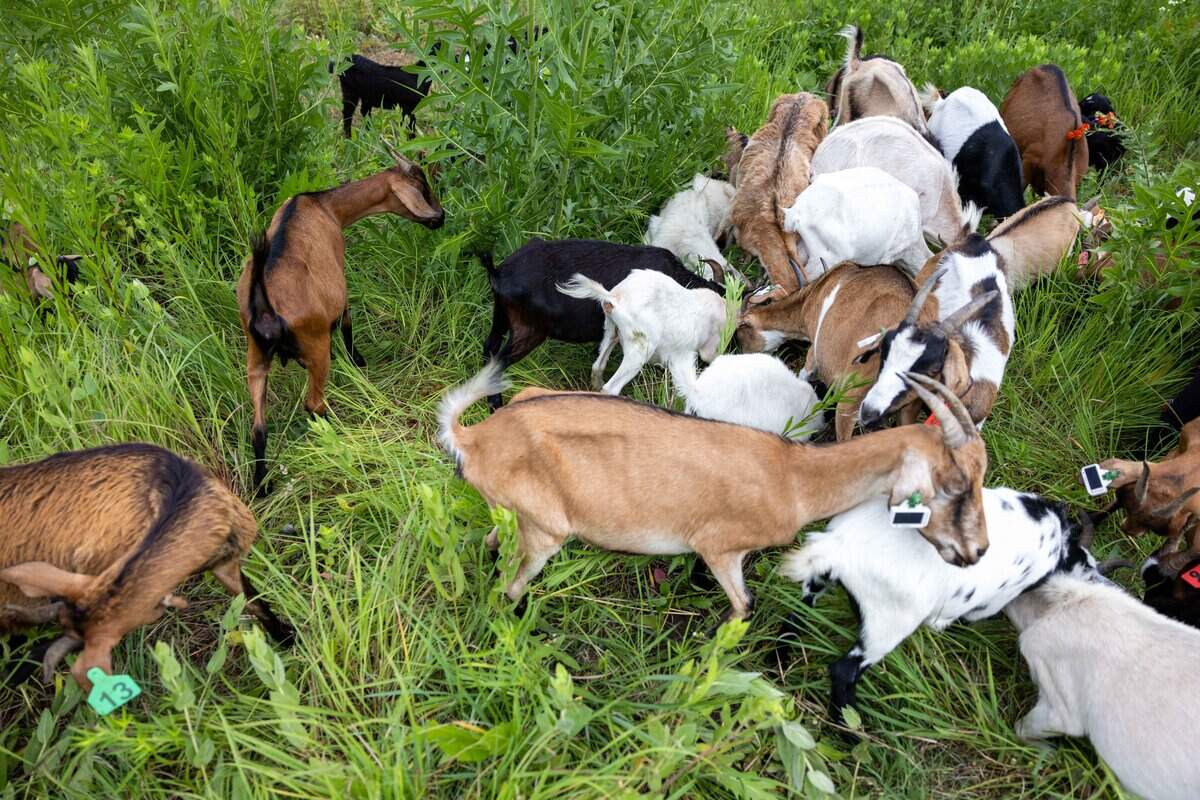
“We were down here to help with a safety issue,” Alvis said. “Helping eat the invasive plants, safety as far as people walking up and down the walkway. It’s more environmentally friendly to be in here than it is to be spraying all the harmful chemicals.”
The trail’s rough terrain is part of what makes the goats useful. The riverfront includes steep inclines, large rocks and uneven ground that can be difficult for workers or machinery to manage safely.
“Everybody knows goats like to climb on stuff,” Alvis said. “So the big rocks, the steep inclines and stuff, they handle walking up and down that a lot better than your average person.”
Instead of sending workers into hard-to-reach areas or using heavy equipment near the trail, the goats move through the landscape naturally. Their work helps clear the overgrowth while reducing the need for sprays that could affect the surrounding environment.
More than a business
But for Alvis, Goats Gone Green is not just a land management business. It is tied to the life he grew up around.
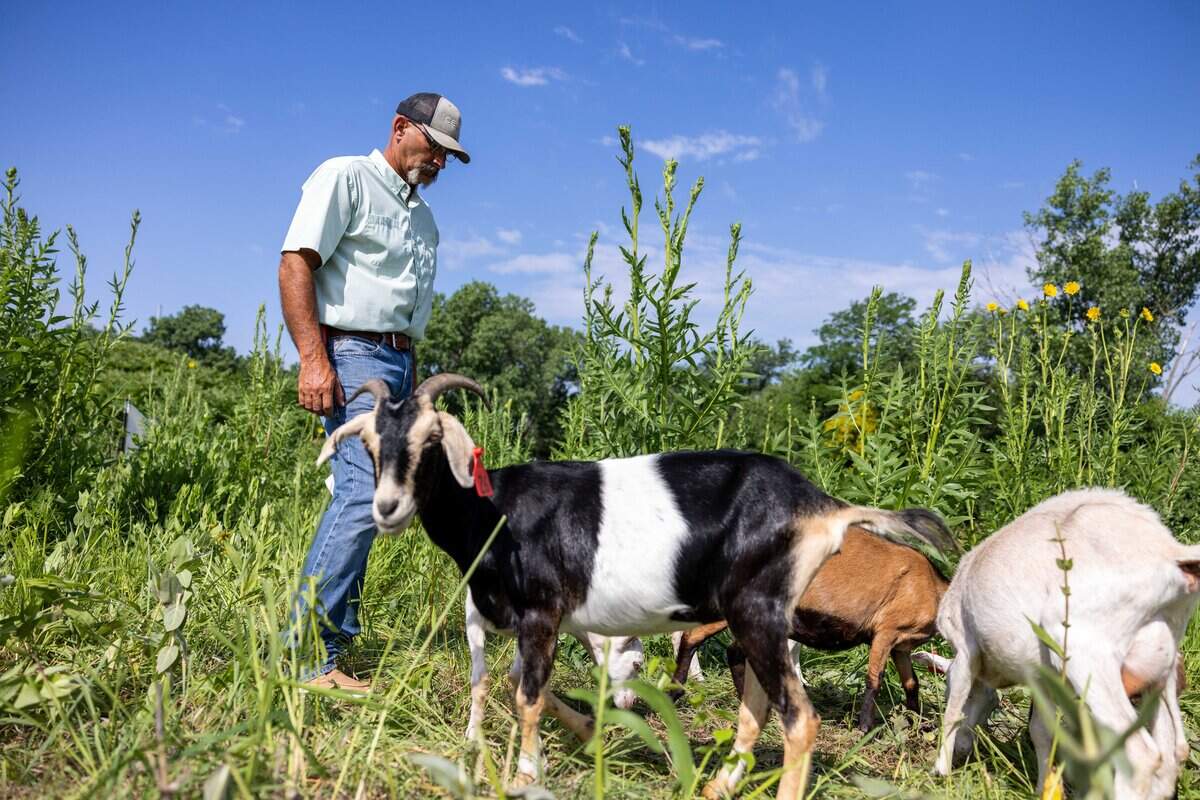
“I’ve always just loved animals and the farm life,” Alvis said. “Growing up on a farm, that’s what shaped me to be who I am now.”
Alvis is a third-generation farmer, and that background shows in the way he talks about the goats. He sees them not only as part of his business, but as animals that need care, attention and respect.
The idea for Goats Gone Green began on his own property, where weeds and honeysuckle had started to take over.
“We were having a lot of weeds at home, lots of honeysuckle and stuff. And so I started buying a few goats, said Alvis.
Over time, the herd grew, and so did the possibilities for what the animals could do. Alvis said the goats now take on a range of jobs, from small residential properties to work with cities and organizations looking for a different way to maintain land.
“We can do a service for the communities,” Alvis said. “We go anywhere from doing little bitty backyard jobs to working with municipalities.”
That service is what brought Goats Gone Green to the Berkley Riverfront. Alvis said he reached out to Port KC to offer his services, and the partnership has continued to give his goats a visible role in maintaining one of Kansas City’s public spaces.
“It means a lot,” Alvis said. “To be able to come and do this and partner with someone like Port KC, and we can make this trail safer for everybody. And at the same time, everybody can enjoy my animals and see how much they’re enjoying being here. It’s a win-win for everybody.”
‘They know what their job is to do’
The Port KC project gives the goats a job, but it also gives the public a chance to see them in an urban setting. For many visitors, the event is an opportunity to watch farm animals at work without leaving the city.
Alvis said that public connection is part of the value of the project. The goats draw people in, but they also show how animals can be used as part of a practical solution.
“They know what their job is to do,” Alvis said. “They’re here doing what they like to do. They’re getting to eat the weeds and help improve the safety and security around the Riverwalk.”
That idea is central to how Alvis wants people to understand his work. The goats are not just there as a novelty. They are working animals, and Alvis said their care is always part of the process.
“We do this and we do it with love,” Alvis said. “We take care of our animals. If we see one not doing well, we get it off the project, take it home.”
The animals’ well-being is part of the job, not separate from it. Alvis said he wants people to see the goats working outside, eating and moving through the kind of terrain they are naturally built for.
“The misconception of farming is that everybody thinks you’re abusing them,” Alvis said. “Well, come down here to see what we’re doing down here with them and see how much they’re enjoying getting to eat the weeds. And they’re not living in confinement.”

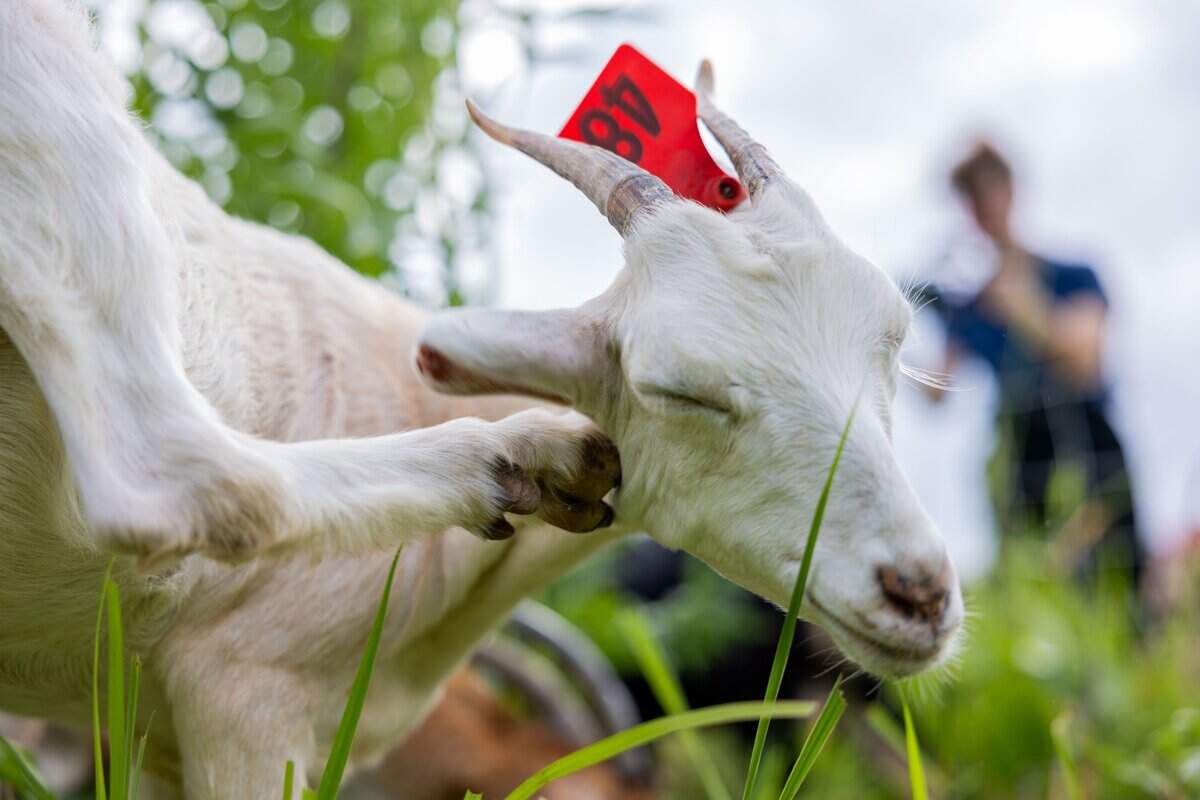
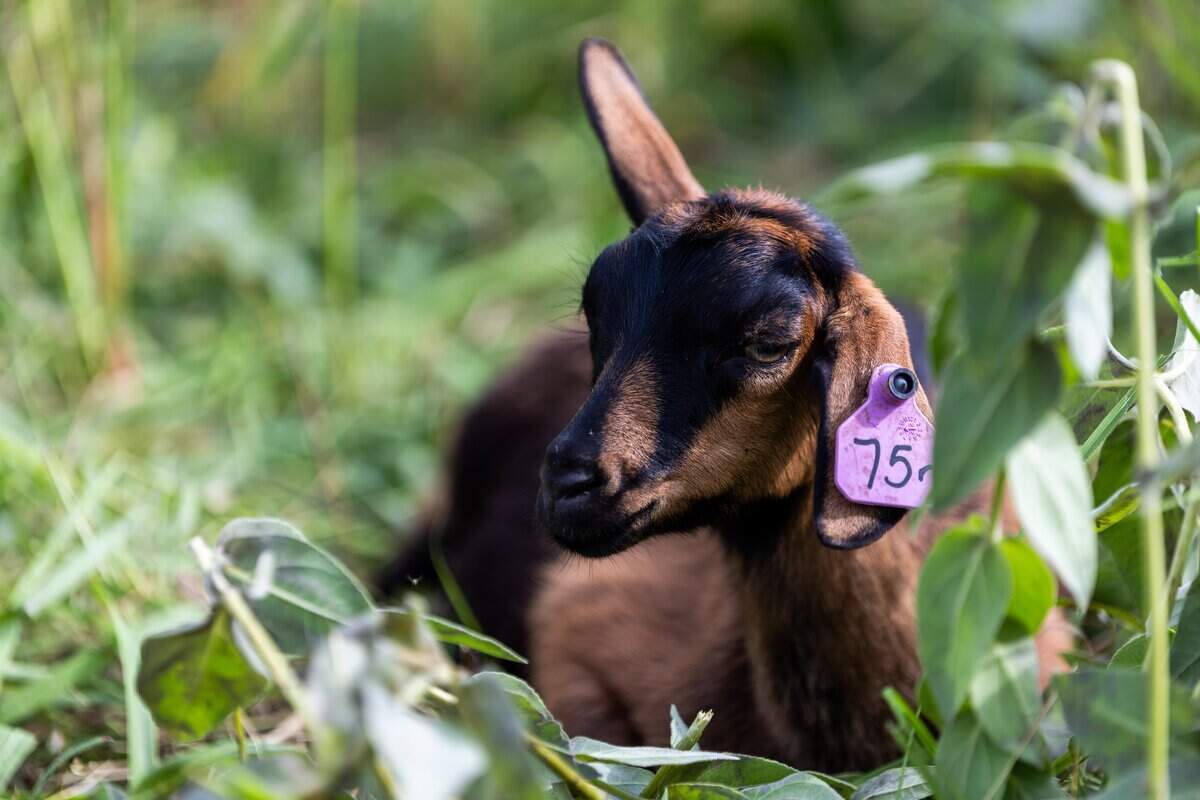
Another partner in the project, CERES Tag, has added a technology component to the grazing effort. The company’s smart tags can track animals during urban grazing jobs and provide information that may help with future trail maintenance.
Matthew Anderson, CERES Tag’s Kansas City sales lead, said the company’s partnership with Alvis is rooted in a shared interest in sustainability.
“We really value the sustainability aspect of what Kyle is doing down here at the Berkley Riverfront,” Anderson said. “Making sure that we don’t have to use any harmful chemicals or pesticides that might flow into the river.”
While the goats provide a natural solution on the ground, the tags add data that can help document how the animals move through and use the space. Anderson said Alvis’ approach aligns with the values CERES Tag looks for in its work with producers.
“He’s super passionate in what he does,” Anderson said. “He’s a great person to be able to work with because he shares a lot of the same values that we do.”
As Goats Gone Green continues to grow, Alvis is also looking at new ways grazing animals can be used in land management. He said the company is preparing to expand into sheep grazing, with hopes of working on solar fields as more are developed.
At the Berkley Riverfront, though, the focus remained on the goats. They moved through the brush, lowered their heads into the weeds and climbed over uneven ground as people watched from nearby.
For Alvis, that respect extends to the animals, the land and the community spaces the goats help maintain. The work combines the farm life that shaped him with a modern need for safer, more sustainable land management. Along the riverfront, the goats’ job was simple: eat the weeds, clear the overgrowth and help make the trail safer.
To Alvis, that simplicity is what makes the work meaningful. The goats are not just an attraction. They are problem-solvers and a reflection of the farm life that shaped him.