Missouri skydiving plane had arrived in Butler just 12 days before crash, records show
AI-generated summary reviewed by our newsroom.
- The replacement turboprop arrived in early June and couldn't make full power.
- The crash killed 11 skydivers and the pilot, totaling 12 victims.
- NTSB and FAA investigators were on scene investigating the Butler crash.
The single-engine turboprop plane that crashed in Butler, Missouri, soon after takeoff June 14 had just been brought in for skydiving flights 12 days before the deadly incident, The Star has learned.
A plane that Skydive Kansas City had previously used was sent on May 6 to a sister drop zone out of state, and another one — the Pacific Aerospace 750XL — had been brought to Missouri about a month later, flight records show. That plane, which is the one that crashed, was embarking on its 13th flight for Skydive Kansas City out of the Butler Memorial Airport.
“The plane literally had just arrived there like two or three weeks ago, from my knowledge,” said Charles Crinklaw, central regional director of the United States Parachute Association.
“I didn’t even know the pilot. I called around multiple other drop zones to find out who he was and how experienced he was. When they told me he was 69 years old, I’m going, ‘The guy’s got thousands and thousands of hours of piloting experience. He didn’t just start flying last week.’”
The crash, which killed 11 skydivers and the pilot, was among the deadliest U.S. skydiving incidents in decades. And it was the third in two years involving an aircraft used by Skydive Kansas City. The two previous crashes resulted in injuries, but no deaths.

Crinklaw said the plane that crashed was from the Chattanooga Skydiving Co. Records show its first flight in Butler was June 5. Photos of the plane on the flight tracking platform FlightAware show ChattanoogaSkydivingCompany.com on its side.
The Aviation Safety Network said the plane had been used for skydiving operations in other parts of the country.
“The aircraft had been operating for various skydiving centers in the U.S.,” the organization said. “It arrived at BUM (Butler Memorial Airport) on June 2.”
Records show that before coming to Missouri, the plane that crashed was in the Chicago area and hadn’t had any scheduled flights for nearly a month, from May 4 to June 2, when it arrived in Butler.
Dennis Jacobs, acting manager of the Butler Memorial Airport, said the plane had recently flown in the Indianapolis area. Records also show that it had been in Tennessee before that.
“They move planes around,” said Jacobs, who also serves as the Bates County Emergency Management director. “They lease them … all over the place. They have different opportunities. They might change planes, try different things out.”
It’s not unusual for skydiving planes to be moved to different locations, Crinklaw said.
“Things like that happen all the time,” he said.
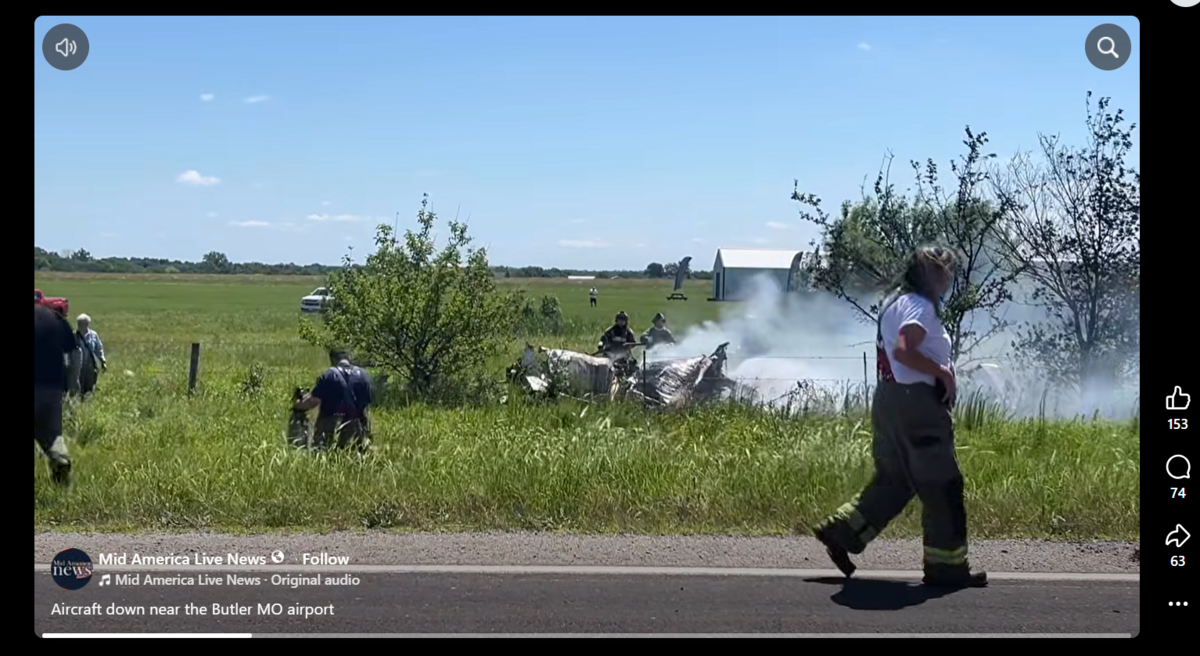
The crash at the Butler Memorial Airport was reported about 11:27 a.m. on June 14. The airport is roughly an hour’s drive south of Kansas City.
The Pacific Aerospace 750XL — a popular model for skydiving — was not able to make it to full power, according to officials with the Bates County Emergency Management Agency. It was turning left when it stalled near Interstate 49 Business — a local road that runs between Interstate 49 and the airport.
Skydive Kansas City did not immediately respond to a request for comment. The “Book Now” section of its website now says “no times available.”
The company issued a statement the day of the crash, calling it “a devastating loss for everyone connected to Skydive Kansas City and for the wider skydiving community.”
“Our deepest sympathies are with the families, friends, and loved ones of all who were lost.”
The company said it was working closely with local authorities, the Federal Aviation Administration and the National Transportation Safety Board.
Federal investigators on scene
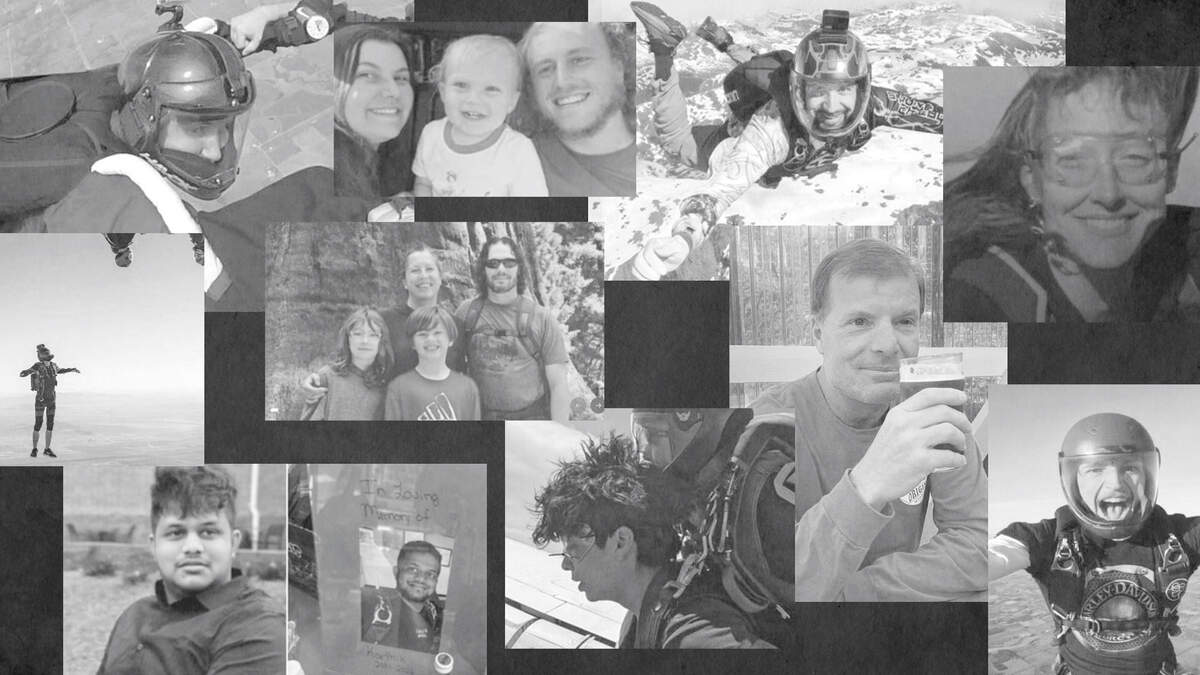
The loss from the crash was immense. Among those killed were a revered skydiving instructor examiner, a 24-year-old who came to the U.S. from India to go to college, a devoted grandfather of six and a Kansas City-area orchestra teacher.
The Bates County coroner released the names of the 12 victims two days after the crash. They are: Jen Sharp, Marcus Miller, Matthew Cole Swope, Michael Shanahan, Dustin McKinney, Dane Cordes, Nick Nash, William Fischer, Blake Thacker, Kurt John Roy, Sai Karthik Varma Datla and David Hershberger.
A sister and wife of one skydiver were on the ground watching the flight when the crash occurred, Jacobs said. Others were watching from the ground as well.
Investigators from the NTSB and the FAA were on scene last week trying to find answers to what happened.
“This is a very common aircraft for skydiving,” Jacobs said. “It’s very durable, carries a heavy load.
“Why it crashed, you know, that’s up to the NTSB to decide.”
The plane was on its third flight the morning of June 14. FlightAware showed that it had completed short flights from 9:20 a.m. to 9:42 a.m. and from 10:32 a.m. to 10:50 a.m. The plane also had five flights on Friday the 12th and two on Saturday the 13th, ranging in length from 18 to 23 minutes.
A previous crash in Butler
In May 2024, a plane crashed near the Butler airport after a skydiver’s parachute deployed over the plane’s tail, striking the stabilizer and sending the aircraft out of control, according to an NTSB report.
The NTSB investigation said the pilot reported that the first jumper scraped his emergency parachute handle while making his way toward the jump door. The man’s emergency parachute deployed outside the airplane, dragging him into the horizontal stabilizer.
“The pilot stated that he heard a loud ‘bang’ and focused on maintaining control of the airplane,” the NTSB report said. “After the remaining jumpers exited the airplane, the nose of the airplane ‘dropped straight down.’”
The pilot managed to release his seat restraints, open a cargo door, deploy his emergency parachute and jump as the plane spiraled into a field, the report said.
All six skydivers and the pilot made it down safely, but the first jumper sustained serious injuries.
“According to the first jumper, his D-ring style emergency parachute handle was unknowingly caught on something,” the report said. “While he was positioning himself to the aft door, still unaware of the handle being caught, the ripcord was pulled about 4 inches, causing the emergency parachute to deploy and subsequently pulled him into the airplane’s empennage.”
The pilot told investigators that there were no mechanical failures or malfunctions with the airplane prior to the crash that would have hindered normal operation.
Crash onto hangar roof injured 2 last year
On June 16, 2025, a Beechcraft King Air 90 used by Skydive Kansas City crash-landed onto the roof of a hangar at New Century AirCenter in Johnson County, Kansas. The pilot lost control of the plane while trying to make a left turn after the left engine suffered a mechanical failure, authorities said.
The twin turboprop was flying from Butler to New Century, according to FlightAware.
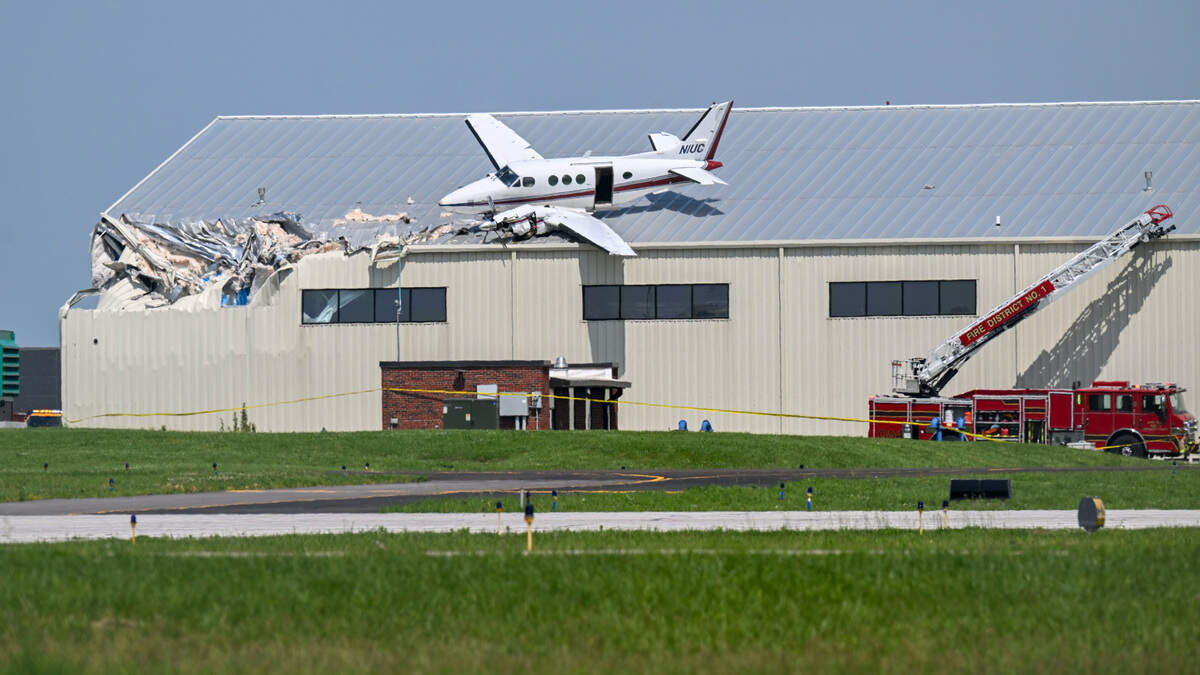
“They were flying in for some radio repairs, or some avionics repairs, so it wasn’t even during the skydiving operations,” Crinklaw said. Jacobs confirmed that the plane was going to “have some avionics work done.”
The pilot, Leslie Gorden, then 73, of Lee’s Summit, and a 30-year-old trainee received minor injuries, authorities said.
Crinklaw said Skydive KC had been using the plane for its operations around that time.
“That was their primary jump plane that they were leasing from a local Kansas City person,” he said. “And then obviously after that happened, they had to find another aircraft.”
FAA records show the owner of the plane was L&P Air Inc. LLC. The company was registered with the Missouri Secretary of State in 2011 and gave its stated purpose as “hauling skydivers up to 14,000 feet to jump.”
Gorden is listed as the company’s registered agent, corporation records show. He holds an airline transport pilot certificate from the FAA. He could not be reached for comment.
Although final determinations of what caused the June 14 crash in Butler and last year’s Johnson County crash are pending, authorities and some aviation experts have raised engine failure as a strong possibility.
In the New Century AirCenter crash, the Kansas Highway Patrol said a mechanical malfunction caused the left engine of the plane to become inoperable.
And former Department of Transportation Inspector General Mary Schiavo told The Star after the recent Butler crash that “my first guess would be there was a problem with the engine.”
The earliest crash, in Butler in 2024, was not a result of engine failure.
Jacobs said the three incidents from 2024 to 2026 were a situation of “bad timing.” He said he didn’t see it as a pattern or a safety concern overall.
“It’s just unfortunate circumstances,” Jacobs said. “It’s psychologically damaging.”
As for Skydive Kansas City, which operates out of Butler, Jacobs offered praise.
“Their whole operation here is nothing but professional.”