Venomous snakes come out in Kansas and Missouri summers. Here’s what to know
AI-generated summary reviewed by our newsroom.
- Copperheads, timber rattlesnakes and massasaugas appear around KC in the summer.
- If bitten, call 911, keep the bite below your heart, stay still and seek treatment.
- Half of U.S. snake bites happen when someone handles the snake
Most snakes start breeding in spring after winter dormancy, making summer the prime time to encounter one of several venomous snake species found from western Missouri to Wichita.
Kansas State Extension wildlife specialist Drew Ricketts and wildlife biologist at Missouri Department of Conservation Chris Cain say eastern and broad-banded copperheads, timber rattlesnakes, and prairie and western massasaugas reside in and around Kansas City. For those making weekend trips to Lake of the Ozarks, northern cottonmouths can sometimes be spotted. But, Ricketts said, many people struggle identifying the difference — leading to unknowingly touching a venomous snake.
“One of the important things that people oftentimes don’t realize is that more than half of the people who are bitten by venomous snakes every year in the United States are actually handling a snake,” Ricketts said.
With snake season in full swing until about mid-October, this and other safety tips are important to note.
How can you tell the difference between a venomous snake and nonvenomous snake?
The Missouri Department of Conservation’s guide to the state’s snakes states that venomous snakes have fangs not found in their nonvenomous counterparts. They also have a single row of scales down the underside of the tail, versus the two rows that nonvenomous snakes have.
What venomous snakes are in the Kansas City area and close-by areas?
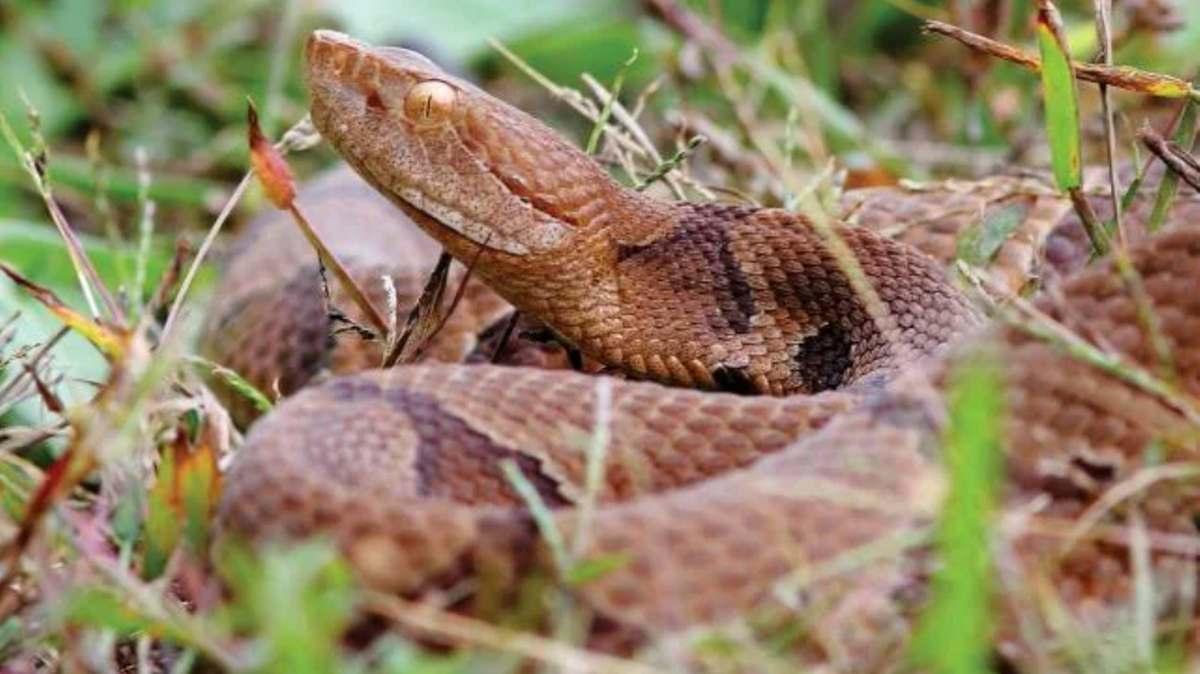
The most common snake Kansas Citians may encounter are copperheads. The physical distinction between eastern and broad-banded copperheads is minimal. Eastern ones have a “Hershey Kiss”-like pattern, said Cain, where the bands going down the back taper at the spine and are thick close to the belly. Broad-banded copperhead bands are wide all the way around the body.
Both snakes are pinkish-tan to grayish-brown, with bands being dark gray, brown or reddish brown. The head can be pink or orange, hence their name. Young copperheads can also have yellow or yellowish-green tail ends, which all-aged copperheads vibrate when alarmed. They grow to be 24 to 36 inches long.
Ricketts said these snakes can be found in wooded areas, adjacent to wooded areas, in areas with heavy leaf litter or rocks. MDC adds abandoned farm buildings and along prairie streams to that list.
Eastern copperheads may be seen more often around Kansas City, whereas broad-banded ones are located in south-central Kansas, according to Fort Hays State University’s Kansas Herpetofaunal Atlas.
Other venomous snakes include:
Timber rattlesnakes
With a tire-mark-like shapes that form bands at the top of the back, these rattlesnakes are yellowish-tan and have one long rust-colored stripe down the back. And, of course, they feature a rattle on their tail.
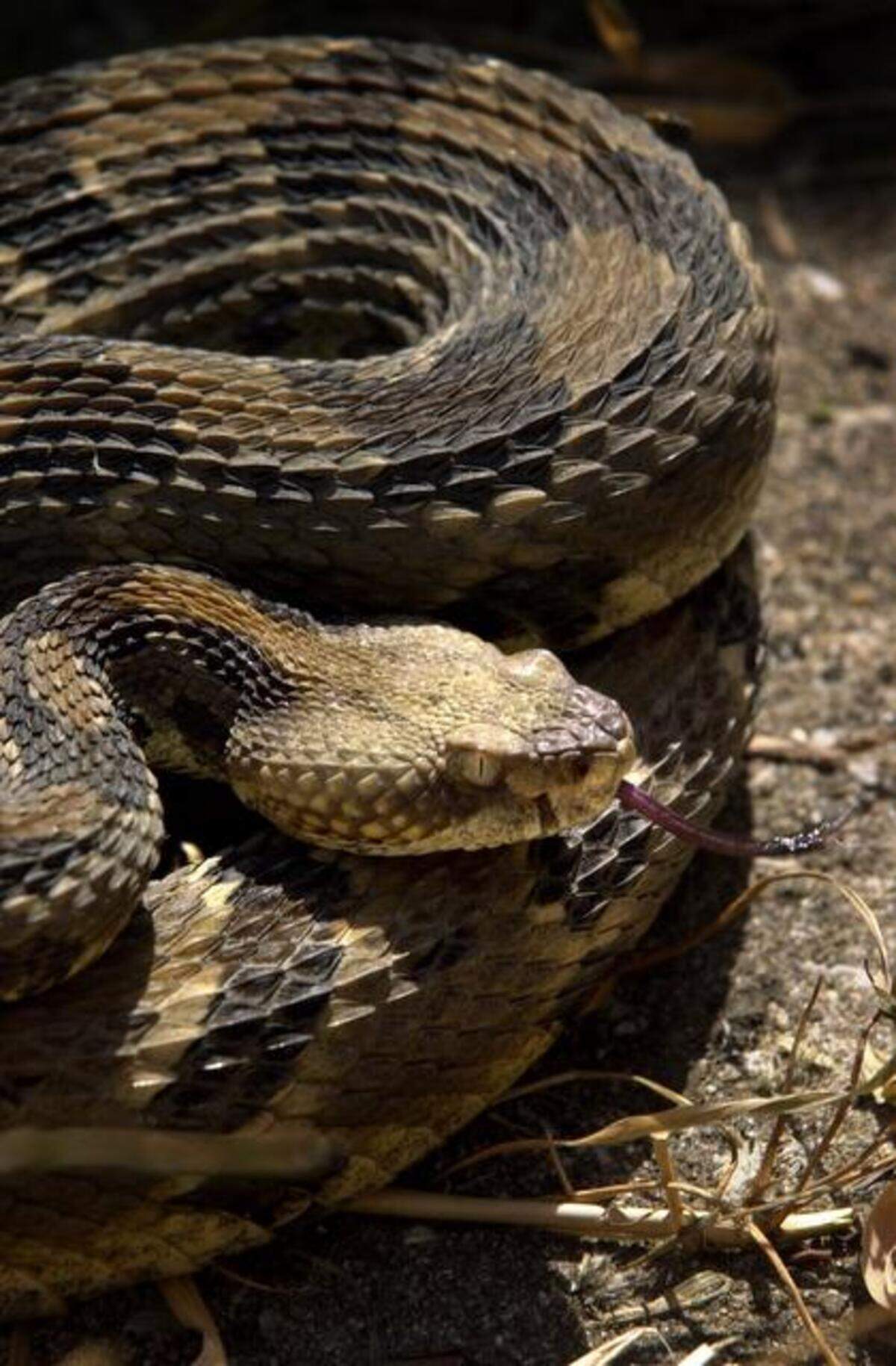
Timber rattlesnakes grow to be 36 to 60 inches. Given the name, they enjoy heavily timbered areas.
Cain said they like wooded areas, and as these habitats have been destroyed, the timber rattlesnake population has declined. The snakes use camouflage, but, if spotted and harassed, they will deliver a very dangerous bite that should be treated immediately.
Western and prairie massasaugas
Western massasaugas are found primarily in central and southern Kansas in open and grassy areas, but can reach into eastern Kansas. Prairie massasaugas are more likely for Kansas Citians to encounter since they reside in Jackson, Clay and Platte counties, according to MDC.
Prairie massasaugas are a subspecies of the western massasaugas and are endangered in Missouri, living in wet prairies or bottomlands with lots of crayfish burrows and grass. These areas have been increasingly converted to farmland, limiting the population.
The species and subspecies grow 18 to 30 inches long. They are light to dark gray with rows of light to dark brown blotches along the body. Their bellies are lighter, and they have a rattle on the tail.
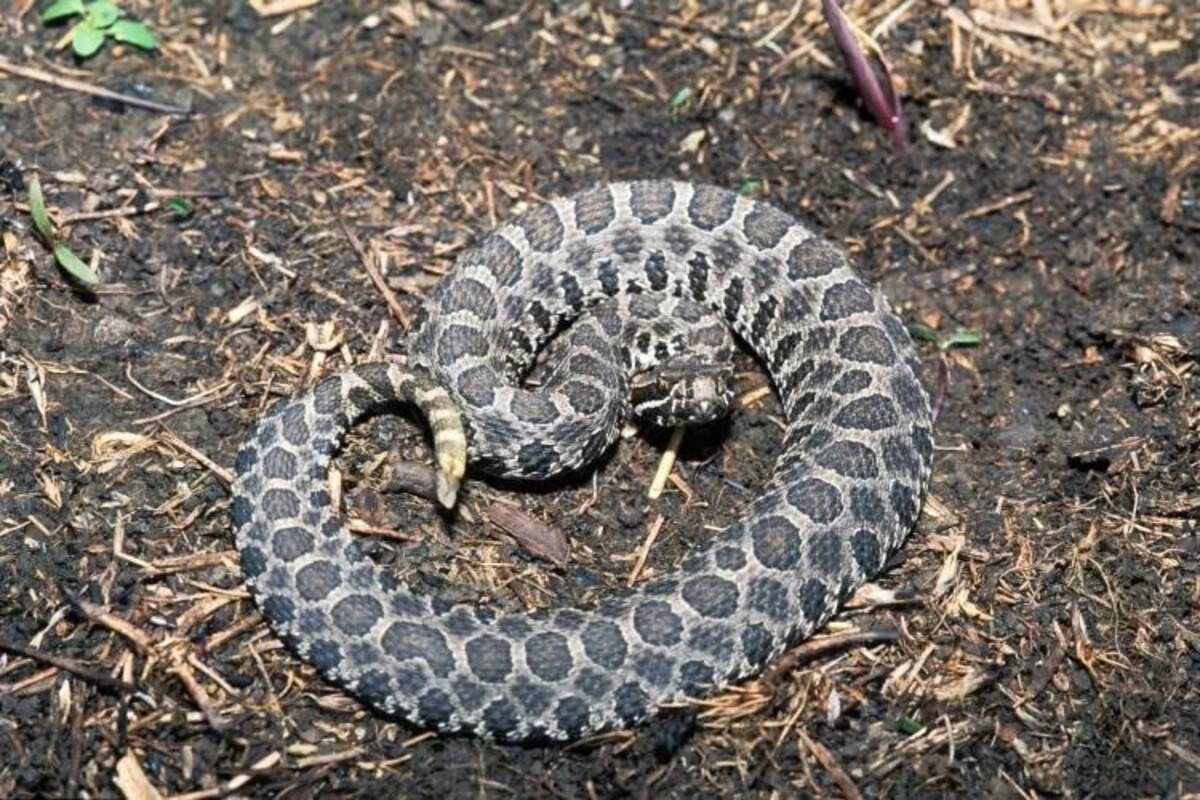
Their venom is very dangerous and requires immediate treatment.
Northern cottonmouths
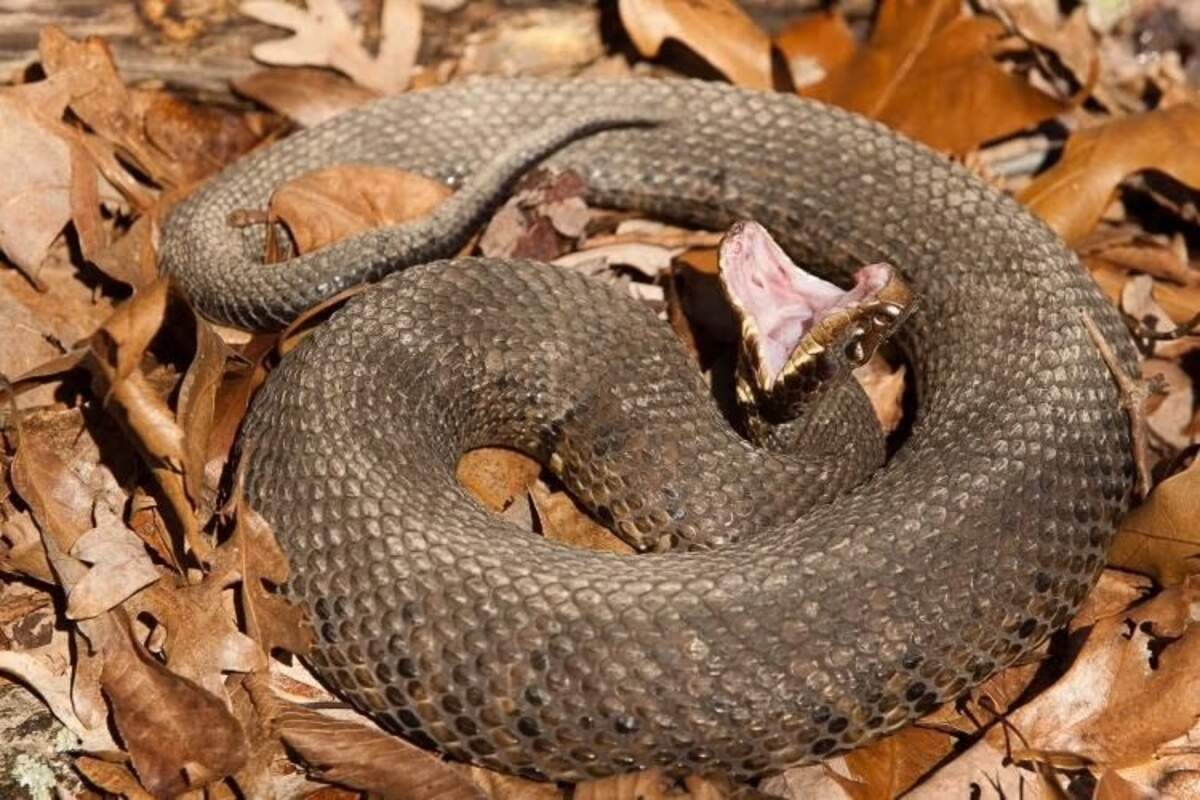
Also called the water moccasin, this snake should only concern Kansas Citians with summer plans at the Lake of the Ozarks. The semiaquatic snake has a white lining around the mouth, which it opens widely when alarmed. They live in rocky streams and river sloughs.
The 30- to 42-inch snake can deliver a fatal bite, requiring quick medical intervention. Many misidentify water moccasins with other nonvenomous aquatic snakes.
They are either completely black or dark brown with darker crossbands down their bodies and dark brown or black bellies. Young ones can be superficially patterned like a yellow-tailed copperhead.
What should you do if you spot one?
True for both venomous and nonvenomous snakes, Ricketts said it’s best to leave the area for even just 5 minutes, up to 30, to allow the snake to leave — regardless of if it was found in the wild or in your own backyard.
“Just being aware of their presence, giving them space, not handling them, not interacting with them in any way — that’s really the best thing that we can do when we detect a snake,” Ricketts said.
If out hiking, you can likely just walk around the snake while maintaining distance — Cain said most of them will freeze up.
How do can you keep snakes out of your yard?
Cain said you can keep them out of your yard by keeping yards and gardens tidy.
“If you’ve got leaves and debris everywhere, wood piles, they can sometimes seek shelter under there,” Cain said. “Obviously they’re snakes, so they eat mice and rats. Folks who don’t keep their yards tidy of bird seed, trash, food items, pet food, mice, and rats, well, potentially you’re going to get a snake.”
They also can seek cover under paving stones or elaborate landscaping. If concerned about snakes in your yard, Ricketts said you can always call a nuisance wildlife control expert to remove them.
What should you do if bit by one of these snakes?
Ricketts said:
- Call 911 right away.
- Throughout everything, keep the bite below the heart if possible.
- Stay calm and still, because increased heart rate can spread the venom more quickly.
- Wash and dry-dress the wound as you would any other one.
- If you can without lengthening the time it takes to get medical care, take a picture of the snake for identification.
- Mark the edge of the swelling on the bite and make note of the time — the spread from the original mark can indicate how fast the venom is spreading.
You should not:
- Drive yourself to the hospital, if avoidable, because you could pass out.
- Cut the bite and suck out the venom.
- Submerge the bite in water.
- Ice the bite.
- Place a tourniquet.
Expect lots of swelling around the bite, and, if bitten by a copperhead, to feel poorly with flu-like symptoms for a few days. Rattlesnake bites, Ricketts said, can cause tissue to die around the bite. In severe cases, this could mean amputation.
Some people are allergic to different venoms, and could experience life-threatening anaphylaxis without immediate treatment.
Cain reiterates that given space, snakes can coexist with people.
“They’re not out to get you or anybody, they’re just trying to life their life and do their job,” Cain said.