Kansas Citians say landmark bar forged Black political power: ‘It’s our history’
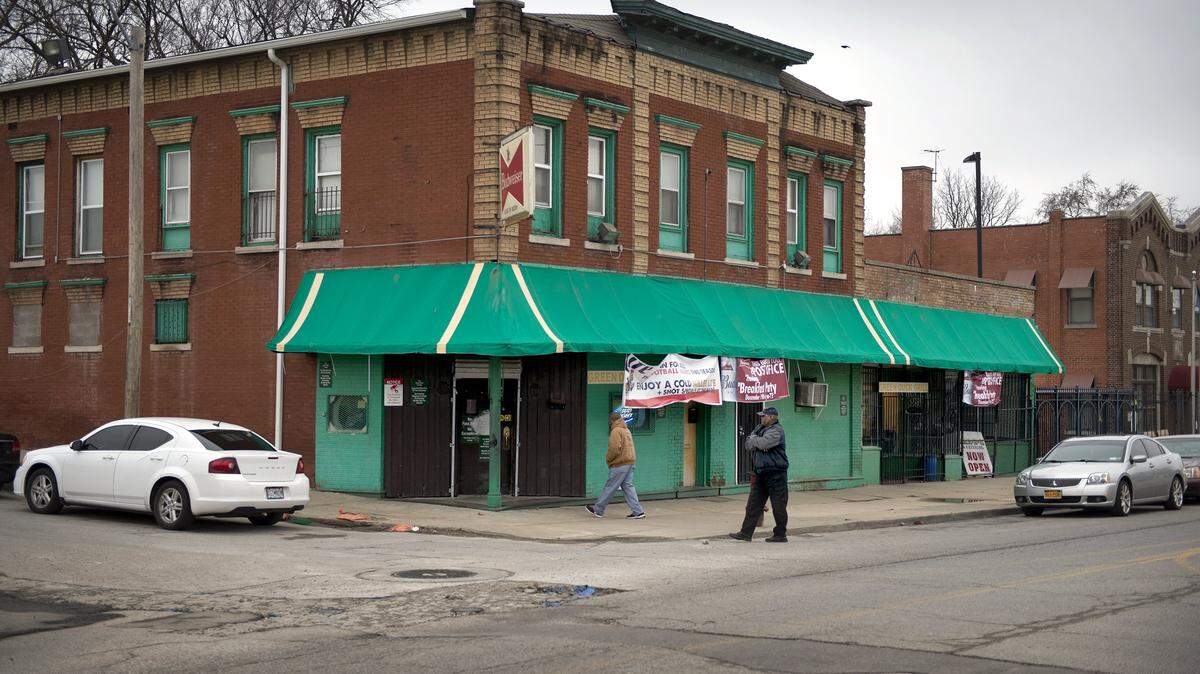
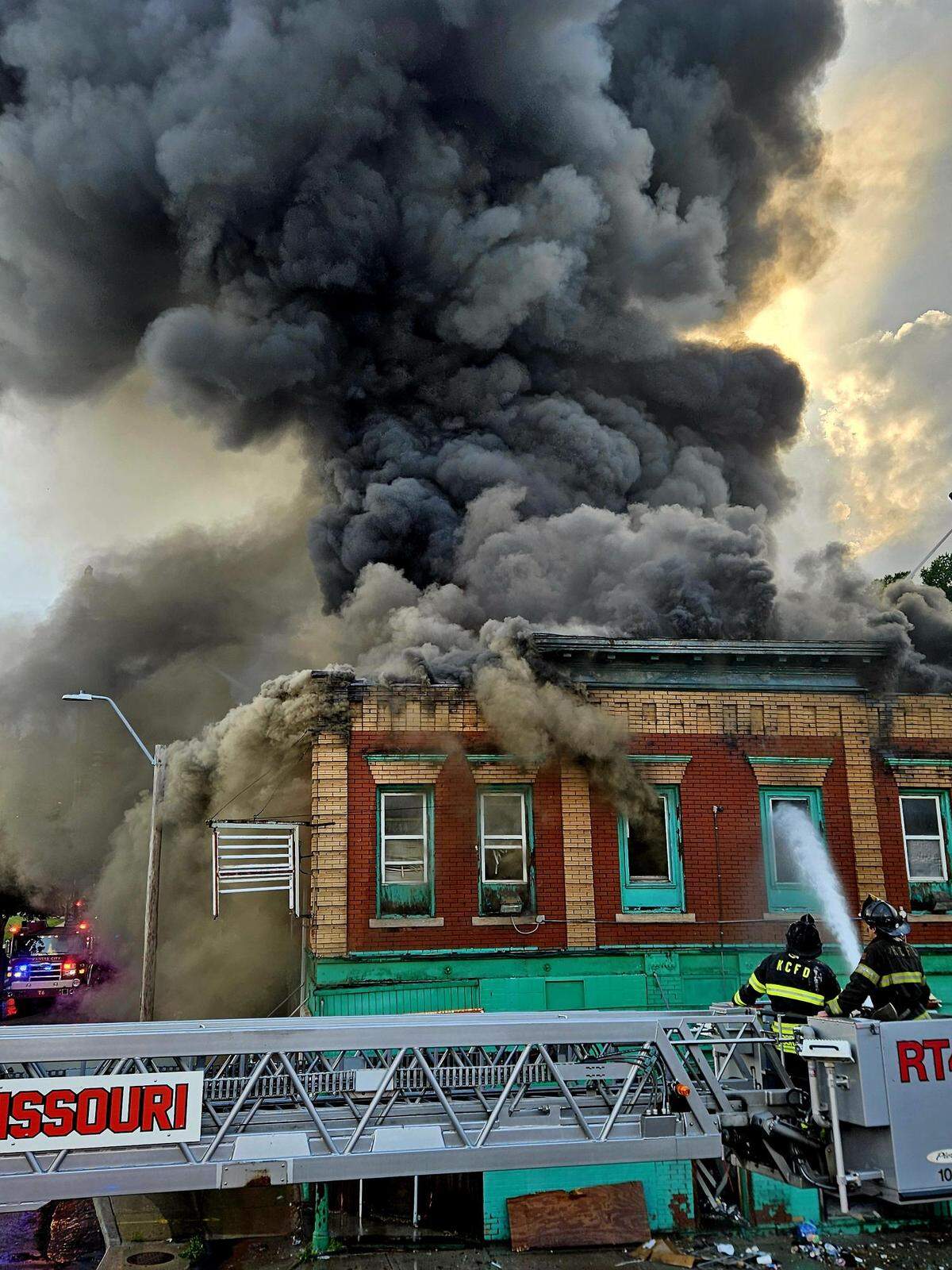
The fire that damaged the historic Green Duck Tavern has sparked an outpouring of grief, reflection and renewed discussion about one of Kansas City’s most significant Black landmarks.
For many residents, the loss extends beyond a building. The Green Duck, 2548 Prospect Ave., served as a gathering place, a political organizing hub and a symbol of Black community life for generations.
As images of smoke and fire spread across social media, longtime Kansas Citians began sharing memories of the tavern, while younger residents expressed surprise to learn the role it played in the city’s history.
The Green Duck’s legacy is closely tied to Leon Jordan, the civil rights leader, former police lieutenant and co-founder of Freedom Inc. Jordan purchased the tavern after returning from Liberia, where he helped organize that country’s police force. In 1962, he and Bruce Watkins founded Freedom Inc., which would become one of the most influential political organizations in Missouri. Jordan was later elected to the Missouri House of Representatives before being assassinated and killed outside the Green Duck in 1970.
‘The Main Street of Black Kansas City’
For Kansas City Mayor Quinton Lucas, the building represented a physical reminder of how things have changed in the city.
“The Green Duck shows the edges of the growth of Black political power in Kansas City,” Lucas said. “Our Black heroes and our ancestors weren’t Disney characters.”
Lucas said historic places like the Green Duck help tell the full story of community leaders, including their successes, struggles and the movements they helped create.
“You kind of need those structures to be able to tell those stories well,” he said. “And that’s why I hate losing them.”
The fire also reignited conversations about the Prospect corridor and the role it once played in Kansas City’s Black community. Long before years of vacancies and disinvestment altered the landscape, Prospect was lined with businesses, gathering places and institutions that served as the center of daily life for many Black residents.
Lucas described the corridor as a place that once represented economic activity, social connection and community pride.
“There’s also just the reality of a more active Prospect,” Lucas said. “It was the Main Street of Black Kansas City. And it was one we were proud of.”
Black residents made Green Duck significant
For James Watts, ombudsman for the Black Archives of Mid-America, the Green Duck’s significance has always been rooted in the history surrounding Jordan and the generations of residents who gathered there.
Watts grew up in Kansas City’s urban core and remembers the Green Duck as a constant presence in the neighborhood. After graduating from Lincoln University and returning home in the 1970s, he worked with business owners along Prospect and became even more familiar with the tavern and its role within the community.
He recalled attending an exhibit at St. Augustine’s Church that highlighted Jordan’s work in Liberia and later becoming acquainted with Jordan’s widow, Orchid Jordan, while working with the Missouri House of Representatives.
To Watts, the Green Duck became noteworthy because of the people and events connected to it.
“The history. The history,” Watts said. “I think the history and legacy of Leon Jordan made it a noteworthy place.”
He also remembers the tavern as a social gathering spot where Black Kansas Citians could relax and spend time together.
“It was a gathering place for Black people in Kansas City,” Watts said. “It was a location where Black people hung out.”
Preservation of Black landmarks needed, leaders say
Watts said he was saddened by the fire but not entirely surprised. The building had sat vacant for years, and he believes prolonged inactivity left it vulnerable.
“You can’t leave a building vacant as long as it was,” Watts said. “I knew something was going to happen.”
His comments echo a question many residents have raised online since the fire: If the Green Duck was recognized as such an important piece of Black history, why was it allowed to sit unused for so long?
The building was added to the Kansas City Register of Historic Places in 2015, but preservation efforts never resulted in a full restoration. The fire has renewed discussion about whether more could have been done to protect the site before disaster struck.
Watts believes landmarks like the Green Duck play an important role in community identity.
“Communities need landmarks,” he said. “It’s a landmark. It’s our history.”
Green Duck was gathering space for many
While Watts views the Green Duck through the lens of history, Michael Ali remembers it as a second home.
Ali spent years at the Green Duck and personally knew owner Jimmy Townsend, who took over after Jordan’s death. His memories focus less on politics and more on the atmosphere inside the tavern and the relationships built there.
He described Townsend as a generous businessman who routinely helped people in need. According to Ali, it was common for hungry residents to stop by and receive a meal, even if they had no money.
“He was just a good guy and everybody loved Jimmy,” Ali said.
Ali recalled a place filled with laughter, domino games and familiar faces.
“You could talk to anybody because everybody in there you knew,” he said. “We would go every day just to be in there and have fun.”
‘The memories that were burning’
For Ali, seeing the building after the fire was deeply personal.
“I went down there to see it and looked at all the memories burn up,” he said.
Rather than focusing on the physical damage, he thought about the decades of experiences tied to the building.
“It was the memories that were burning for me,” Ali said.
‘It’s got to be us’
That emotional response has been reflected across social media, where residents have shared photographs, stories and recollections from their own experiences at the Green Duck.
Lucas said much of the public reaction stems from the sudden realization that a place people assumed would always be there could disappear.
“The thing about historic spaces is that you never really think about them while they’re decaying,” Lucas said. “But when you see them in an inferno, when you see something destroyed, it hits you.”
He said many people are now reflecting on their personal connections to the building and wondering whether more should have been done to preserve it.
“It’s the sudden nature of it,” Lucas said. “It’s the reflection on where we’ve all failed in the process.”
The mayor also argued that preserving historic landmarks cannot rest solely on government action. While the city has invested in projects such as the Boone Theater, Holy Ghost Temple, the Sarah Rector House and the Satchel Paige House, he said there are more historic structures than public funding can address.
“We need a preservation revolution broadly in our community,” Lucas said. “It’s got to be the neighborhood. It’s got to be us.”
As investigators continue assessing the extent of the damage, questions remain about what the future holds for the Green Duck site. Some hope restoration remains possible. Others believe the focus should be on ensuring the history is not forgotten.
Whether the Green Duck is rebuilt, restored or memorialized in another way, residents say its story remains an essential part of Kansas City’s history. The fire may have damaged a building, but the memories, political legacy and community connections tied to the Green Duck continue to resonate across generations.
Lucas said if Leon Jordan were alive today, he likely would not want the site to become simply another museum.
“He would want it to be an active establishment,” Lucas said. “We need a place where people can go just chop it up and talk.”