Boilermakers racketeering trial winding down in KCK; closing arguments set for Monday
AI-generated summary reviewed by our newsroom.
- Trial testimony wrapped up on the 17th day in KCK; closing arguments set for Monday.
- Four ex-Boilermakers, including President Newton Jones, are accused in a RICO conspiracy.
- Three other co-defendants have pleaded guilty and are to be sentenced June 30 and July 7.
The Boilermakers federal racketeering conspiracy trial in Kansas City, Kansas, is winding down, with closing arguments scheduled for Monday as the case enters its fifth week.
Defense attorneys finished presenting evidence Wednesday afternoon, and Senior U.S. District Judge Daniel Crabtree released jurors until Monday morning. Attorneys will spend Thursday working with Crabtree on instructions he will give the jury prior to deliberations.
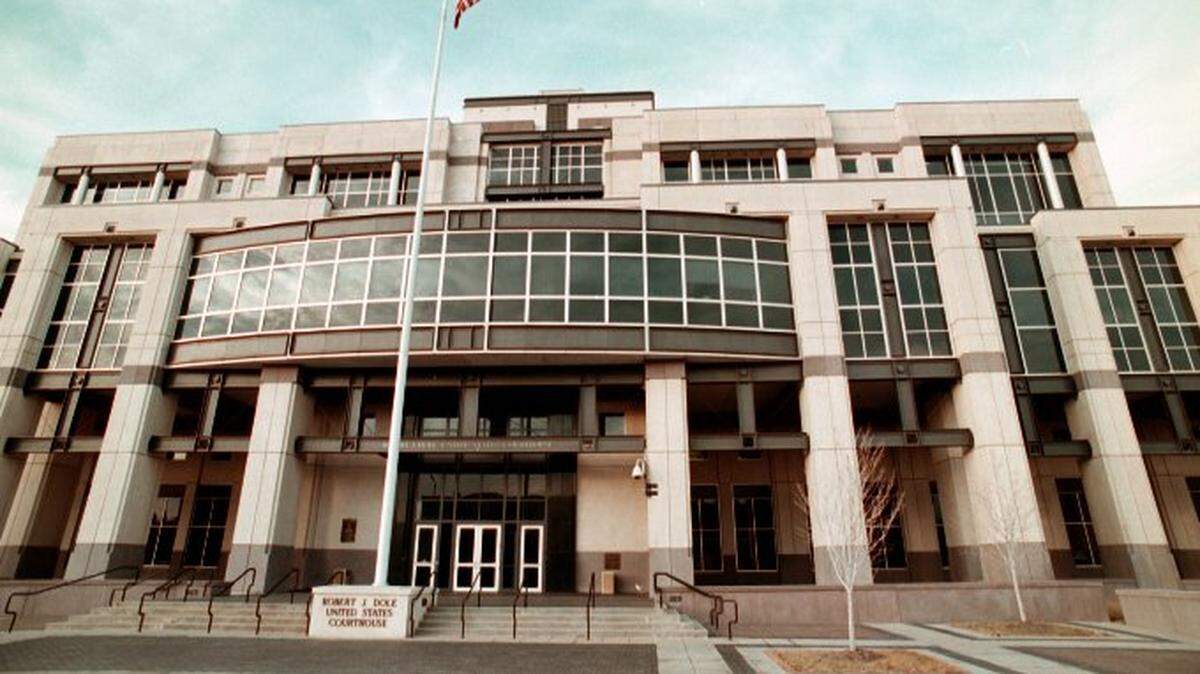
The testimony wrapped up on the 17th day of the trial, held in the U.S. District Court for the District of Kansas. Four ex-Boilermakers, including ousted International President Newton Jones, are accused of conspiring to embezzle millions from the union that went toward salary and benefits for no-show jobs, luxury international travel, fine dining, vacation payouts and unauthorized loans.
Jones, 72 — who was removed from office by his executive council for allegedly misusing union funds — his wife, Kateryna, 33; ex-International Secretary-Treasurer William Creeden, 78; and former International Vice President Lawrence McManamon, 78, are among seven former union members indicted in August 2024 for conspiracy to commit offenses under the federal Racketeer Influenced and Corrupt Organizations (RICO) Act, as well as other felonies.
From Friday afternoon through early Wednesday afternoon, the defense attorneys called on only six witnesses — three for Newton Jones, two for Creeden and one for Kateryna Jones. McManamon didn’t call a single witness.
None of the defendants testified in their own defense.
Crabtree called them up one by one with their attorneys on Wednesday to inform them that it was their constitutional right not to testify. Then he asked whether they had discussed the issue with their attorneys and whether the final decision was theirs. All said yes.
“Yes, it was a difficult decision,” Kateryna Jones told Crabtree.
Closing arguments could be lengthy
Crabtree asked the attorneys how much time they thought they would need for closing arguments on Monday. Prosecutors requested 2 hours and 45 minutes, which surprised Crabtree, who said that was the longest request he’d ever received.
Newton Jones’ attorneys asked for two hours, as did Creeden’s. Kateryna Jones’ attorney requested one hour, and McManamon’s attorneys said they would need an hour or less.
“That’s 8 hours and 45 minutes,” Crabtree said. “That sounds like a lot.” It appeared doubtful that he would end up allowing that much time.
Throughout the nearly four-week trial, defense attorneys have contended that the government cannot prove beyond a reasonable doubt that their clients intended to join a criminal racketeering conspiracy.
They also have argued that the defendants’ actions were consistent with the union’s constitution and that they were simply trying to do their jobs, which included building a worldwide brand and attracting mergers.
Witnesses testify about defendants’ work ethic
On Wednesday, Creeden’s wife, Peggy, told jurors that the two met in New Jersey and have been together for 53 years.
She said the couple moved to Colorado in 1975, and while there, Bill Creeden became a rank-and-file Boilermaker. They moved to the Kansas City area around 1994, she said, and her husband worked his way up to the position of Boilermakers’ International Secretary-Treasurer.
Peggy Creeden said she handled the bills for the household. The family never went on trips on the union’s dime, she said. When Bill paid for things with his credit card, she said, he would write “personal” on the receipts to make sure they weren’t co-mingled with union receipts.
In 2015, Peggy Creeden said, Bill was diagnosed with kidney cancer. He had abdominal surgery to remove a tumor, she said, and returned to work after six weeks.
“It was not in his nature to sit around,” she said. That work ethic, she said, never changed.
“He’s a driven man,” she said. “He’s always active, always busy.”
Kateryna Jones’ only witness was David Elbaor, a retired attorney and former government prosecutor who practiced federal criminal labor law for decades. Elbaor said he was hired by the Boilermakers in December 2020 to represent the union in a Labor Department compliance audit. His scope was expanded, he said, when the government served a grand jury subpoena on the union in April 2022.
Elbaor testified that Kateryna Jones was a hard worker.
“She gathered information for me, she made flight and hotel reservations for me, she was a note taker,” he said. “She was tremendously efficient.”
He said he was so impressed that “I would say to her, ‘If I had my law firm still, you’d be my office manager.’”
On cross-examination, Elbaor said he first met Kateryna Jones in May 2022, after the union received the subpoena.
“You never saw any work she actually performed prior to 2022?” prosecutor Faiza Alhambra asked.
“The answer is no,” Elbaor said.
Other ex-Boilermakers charged in the case
In addition to the four former Boilermakers on trial, three others who were charged in the case have already pleaded guilty. Warren Fairley — who took over for a short stint as Boilermakers president in 2023 after Jones was removed — and Jones’ son, Cullen Jones, pleaded guilty in March to one count of racketeering conspiracy and one count of embezzlement from a labor organization.
They are scheduled to be sentenced on June 30.
The other defendant, Kathy Stapp — who became the union’s International Secretary-Treasurer when Creeden resigned in 2023 — pleaded guilty in December 2024 to one count of racketeering conspiracy. Her sentencing is scheduled for July 7.
Both Fairley and Stapp testified at the trial as witnesses for the government.