In Boilermakers trial, witness credits former KCK union leader with driving bank boom
AI-generated summary reviewed by our newsroom.
- Witness said Bank of Labor assets grew from $570M in 2008 to $1.1B in 2025.
- Witness said Jones shifted bank focus from local to broader labor community.
- Racketeering trial entered 4th week as defense expected to rest as early as Wednesday.
Former Boilermakers International President Newton Jones, charged with conspiring to steal millions from his union, has been instrumental in turning the union-owned Bank of Labor into a successful operation, a banking executive testified in federal court on Tuesday.
Jeff Gaia told jurors that Jones — who for years served as the bank’s CEO and chairman of the board in addition to leading the union until he was ousted in 2023 — created a strategy that helped increase the bank’s total assets from $570 million in 2008 to $1.1 billion in 2025.
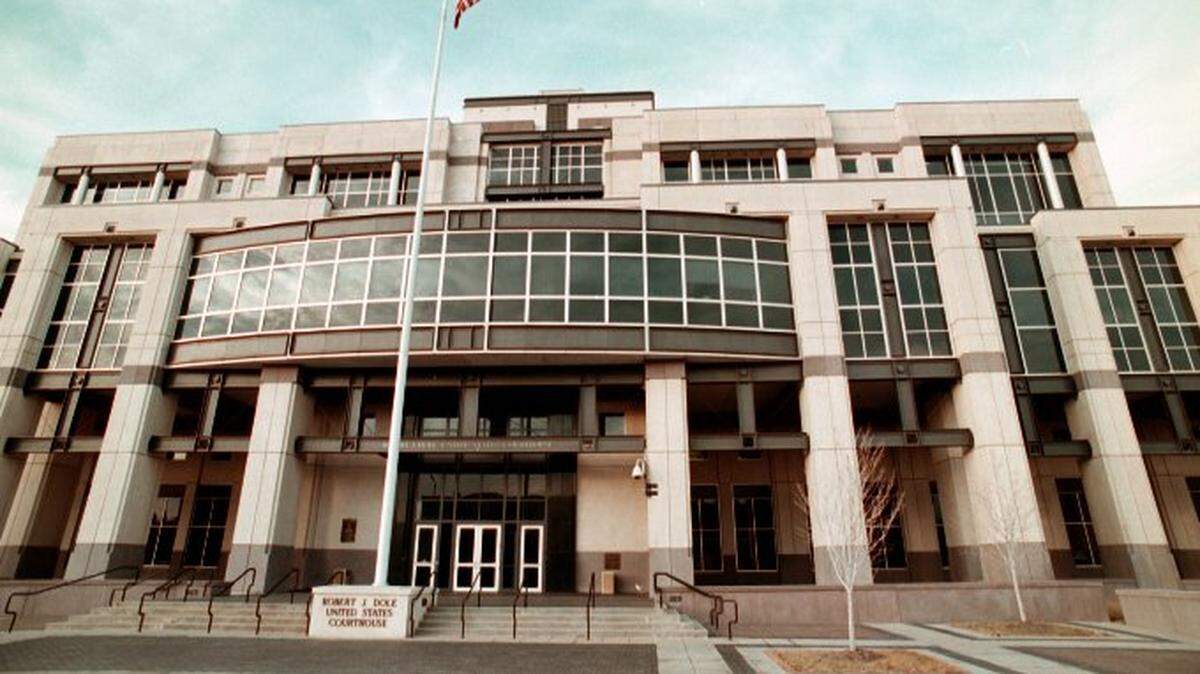
Gaia, of Paradise Valley, Arizona, was the third witness to testify for the defense as the federal racketeering conspiracy trial entered its fourth week in Kansas City, Kansas.
For more than a century, the union was based in Kansas City, Kansas, but moved its headquarters to Kansas City, Missouri, in 2023.
Gaia’s testimony painted a much different picture of Jones’ role at the Bank of Labor than the one described by President Robert McCall, who testified last week that Jones never put in a full work week in his high-paying bank position and seldom made an appearance at the office.
“I think the proof is in the numbers,” Gaia said.
Tuesday was Day 16 of the trial, held in the U.S. District Court for the District of Kansas. And there were signs at the end of the day that things were winding down. Defense attorneys told Senior U.S. District Judge Daniel Crabtree that they expected to rest their cases as early as Wednesday.
Four ex-Boilermakers, including Newton Jones, are accused of conspiring to embezzle millions that went toward salary and benefits for no-show jobs, luxury international travel, fine dining, vacation payouts and unauthorized loans.
Jones, 72 — who was removed from office by his executive council for allegedly misusing union funds — his wife, Kateryna, 33; ex-International Secretary-Treasurer William Creeden, 78; and former International Vice President Lawrence McManamon, 78, are among seven former union members indicted in August 2024 for conspiracy to commit offenses under the federal Racketeer Influenced and Corrupt Organizations (RICO) Act, as well as other felonies.
Attorneys for the defendants contend that the government can’t prove beyond a reasonable doubt that there was intent to join a criminal racketeering conspiracy.
They also argue that the defendants acted in accordance with the union’s constitution and were simply trying to do their jobs, which included building a worldwide brand and attracting mergers.
After the government rested its case on Friday, attorneys for all four defendants filed motions for judgments of acquittal. Crabtree hasn’t yet ruled on those motions.
Contentious exchange between witness and prosecutor
During his testimony Tuesday, Gaia listed other examples that he said showed how the Bank of Labor grew under Jones’ leadership.
The bank’s total net interest income in 2012, Gaia said, was $12 million. In 2022, he said, it was $24 million. At the end of 2013, he said, the total deposits with the Bank of Labor were $393 million. In 2022, that number had increased to $840 million.
Jones’ attorney, Caleb Phillips, noted that the amount of deposits had more than doubled. He asked Gaia if Newton Jones’ compensation had doubled in that time frame. No, Gaia said. Jones’ bank pay in 2013, he said, was around $300,000, and in 2022, it was about $470,000.
Gaia said he had been testifying as an expert witness at trials for about 10 years and now charges $750 an hour. He said he reviewed a variety of documents prior to issuing his findings, including the bank’s financial statements, performance reports, emails from regulators to senior management and summaries of FBI interviews with those involved in the case.
Newton Jones became Bank of Labor chairman in 2003, Gaia said. He said the bank’s chairman has historically been the Boilermakers’ international president. The union owns 56% of the bank, he said.
Jones also served as bank president in 2008-2009, Gaia said, when the previous president was fired after being accused of overstating the bank’s earnings during the financial crisis.
Gaia said Jones developed a labor strategy that altered the bank’s approach from a local community focus to one that serviced the needs of the broader labor community across the country. The bank’s name was changed in 2013 from Brotherhood Bank & Trust to Bank of Labor.
If Jones hadn’t had a personal relationship with leaders of other unions to get them to do business with the Bank of Labor, Gaia said, the strategy wouldn’t have been successful. Creeden’s role as the bank’s senior executive vice president — a position created by Jones — was to be the interface between Jones’ development of a strategy and the bank president’s implementation of it, Gaia said. He said Creeden was involved in all bank board meetings and was in the office “quite often.”
On cross-examination, prosecutor Jabari Wamble asked Gaia how much he had been paid so far for his work for Jones’ defense. Gaia said including his expenses, it was about $54,000.
Wamble said the labor strategy Gaia attributed to Jones had been a part of the bank since its founding in 1924. Gaia told Wamble that he was mischaracterizing his testimony. Wamble then asked Gaia if he thought he was in a better position than those who worked alongside Jones and Creeden at the Bank of Labor to know what they did on a day-to-day basis.
“To an extent, yes,” Gaia said.
The more questions Wamble asked, the more contentious the exchange became, with Gaia repeatedly accusing Wamble of mischaracterizing his testimony. At one point, Crabtree admonished them to stop talking over each other.
Wamble’s final question to Gaia: Other than reading reports, what did he do to learn about what Jones and Creeden did in their roles with the bank every day?
“I don’t think I needed to do any more,” Gaia said.
Union’s former general counsel testifies
The defense’s other witness Tuesday was Jason McClitis, the Boilermakers’ former general counsel. McClitis is with the Blake & Uhlig law firm, which represented the Boilermakers for about 50 years.
Newton Jones’ attorney, Pat McInerney, noted that from 2013 to 2023, the International Brotherhood of Boilermakers paid Blake & Uhlig more than $9 million in legal fees.
McClitis said he believed that a Blake & Uhlig representative attended and took minutes at all of the union’s International Executive Council meetings.
McInerney displayed the minutes of several of those meetings on a screen for jurors to see. A June 2009 executive council meeting in Paris. Meetings at the Hilton Marco Island in Florida in 2013 and 2022. A meeting in 2019 at the Grand Wailea in Hawaii. The minutes from the Hawaii meeting showed that McClitis was there, along with then-general counsel Mike Stapp, also of Blake & Uhlig.
At that meeting, McInerney asked McClitis, did either he or Stapp raise any concerns about the cost of the event or the number of people attending?
McClitis said they did not.
On cross-examination, prosecutor Faiza Alhambra asked McClitis about a Sept. 20, 2022, memo written by Mike Stapp that was sent to his wife, Kathy Stapp — at the time the Boilermakers’ human resources director — and Timothy Simmons, then an international vice president of the union. McClitis was copied on the memo.
In the memo, Alhambra said, Mike Stapp wrote that any union expense was to be for a legitimate business purpose. She asked McClitis if it was the legal counsel’s advice that the president of the union had no authority to spend money as he saw fit. McClitis said yes.
Until that point, Alhambra asked, had anyone ever asked about those issues? McClitis said he didn’t believe so.
Alhambra also asked about a forensic firm the union hired when internal charges were filed against Newton Jones in April 2023 accusing him of misusing union money. The firm was hired to try and find out who the whistleblowers were, she said, and it conducted a search of employees’ computers and emails.
McClitis said he believed the decision to hire the forensic firm was made by Creeden and his son, Ryan, a Boilermakers employee who did IT work for the union.
Alhambra asked if the hiring decision went before the International Executive Council for approval.
“I don’t think it did,” McClitis said, but added that “I wasn’t part of the engagement.” He said the work by the forensic firm was stopped on May 25, 2023.
Others have already pleaded guilty
In addition to the four former Boilermakers on trial, three others who were charged in the case have already pleaded guilty. Warren Fairley — who took over for a short stint as Boilermakers president in 2023 after Jones was removed — and Jones’ son, Cullen Jones, pleaded guilty in March to one count of racketeering conspiracy and one count of embezzlement from a labor organization.
They are scheduled to be sentenced on June 30.
The other defendant, Kathy Stapp — who became the union’s International Secretary-Treasurer when Creeden resigned in 2023 — pleaded guilty in December 2024 to one count of racketeering conspiracy. Her sentencing is scheduled for July 7.
Both Fairley and Stapp testified at the trial as witnesses for the government.
This story was originally published May 27, 2026 at 12:33 PM.