After burning trash affected his health, Jackson County man pushes for burn ban
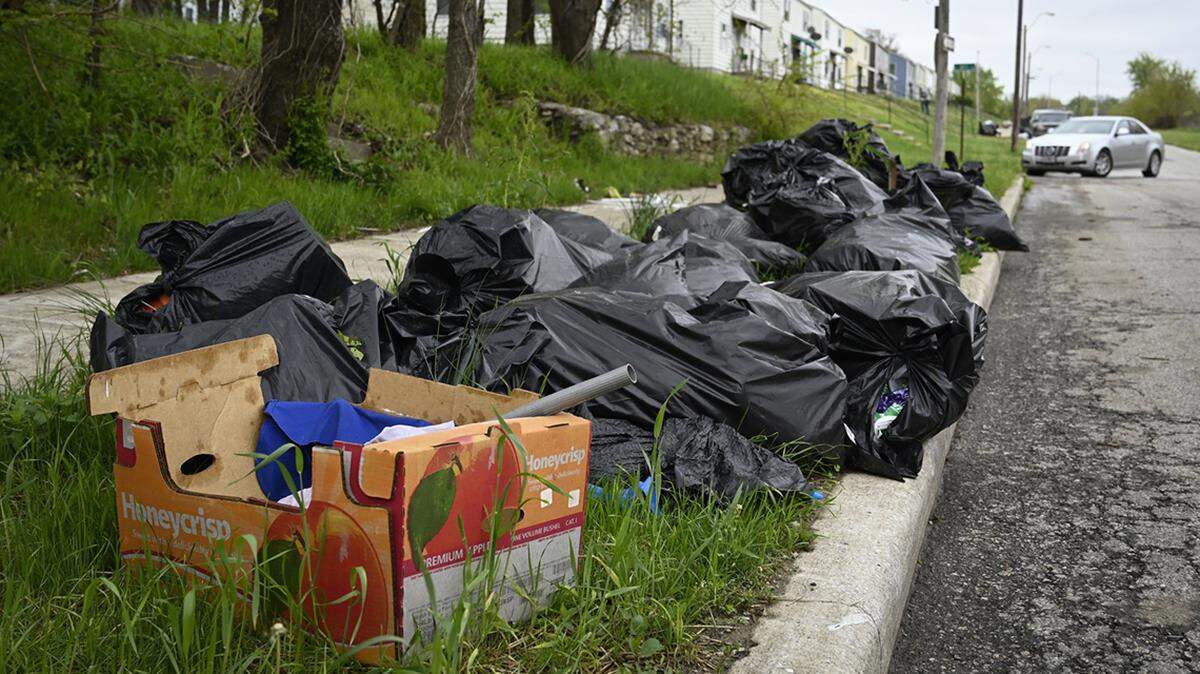
The Jackson County Legislature is continuing to set policies that affirm county-level authority in rural areas, most recently with a stronger ban on unregulated burning of home and business waste.
The burn ban was first proposed in April and passed through legislature this week. It brings Jackson County into alignment with state laws regarding the burning of waste, while re-affirming the county’s authority to directly set policy in unincorporated areas that may not have their own city-level governing bodies.
Legislator Jalen Anderson sponsored the ban, which legislators approved unanimously.
Jesse Hill, who lives in unincorporated Jackson County, told The Star on Wednesday that he reached out to Anderson in April as trash burning in his valley became a significant health hazard for him and his wife.
Hill moved to a more rural area of the county in order to have more space to garden -- he loves planting okra and tomatoes -- and to give his three dogs room to run around. But when his neighbor, an Independence landlord, started collecting trash from his dozen properties and burning it in the yard, Hill said he began looking for legal solutions.
“When he burns his trash, the smoke is stuck in our valley for hours,” Hill said. “Both my wife and I have asthma, and this kind of trash smoke is a trigger for us.”
Dogs reek of burning plastic
The ordinance generally references the burning of household waste and garbage. It specifically prohibits residents of unincorporated Jackson County from burning treated wood, plastic, construction debris, or furniture, even in private areas. It also applies to commercial properties.
It comes with a penalty of $500 per day, which can be enforced directly by either law enforcement, emergency responders or county officials. In unincorporated areas of Jackson County, fire services fall to one of five regional fire protection districts, distributed geographically throughout the county.
Hill said he initially reached out to his nearest fire protection district directly, along with state officials, but was told that neither body had the authority to stop the burn without county interference. In the interim, Hill sealed his windows and purchased several air purifiers. But his dogs would still come in for the day reeking of burning plastic, he said, and he didn’t feel safe sharing his crops with neighbors with lingering smoke in the air.
“I don’t feel like I’m growing healthy fruit that I want to give to my neighbors, like my grandfather did,” Hill said.
A former Greenwood, Missouri alderman, Hill said that Anderson’s speedy response renewed some of his faith in regional legislative bodies as a whole.
“During that time [in Greenwood] I didn’t see government really working for people,” Hill told The Star. “But I felt like Legislator Anderson really stood out as one of the only voices that actually cared to listen to us enough to actually bring something to the table to solve the issue, one hundred percent.”
County-level regulation in unincorporated Jackson Co.
Recreational and cooking fires are not subject to the ban. Agricultural burning is still allowed in areas where the law specifically permits it, as are fires used in training exercises for emergency responders and other specialized professions as detailed by the Missouri Department of Natural Resources.
Legislators noted in the text of the ordinance that unregulated burning of waste is a concern because it “produces harmful air pollutants, including particulate matter and toxic emissions that pose risks to public health and the environment.”
Legislators also noted that similar legal limits exist in incorporated areas of Jackson County, where municipal governments set these type of environmental regulations at the city level.
County-level regulation of unincorporated areas is also central to a proposed data center zoning moratorium that has now been before the legislature for six weeks. This proposal, which will next be discussed at a June 1 town hall, would place a temporary hold on zoning approval for data centers in these areas, along with battery energy storage systems (BESS) facilities.