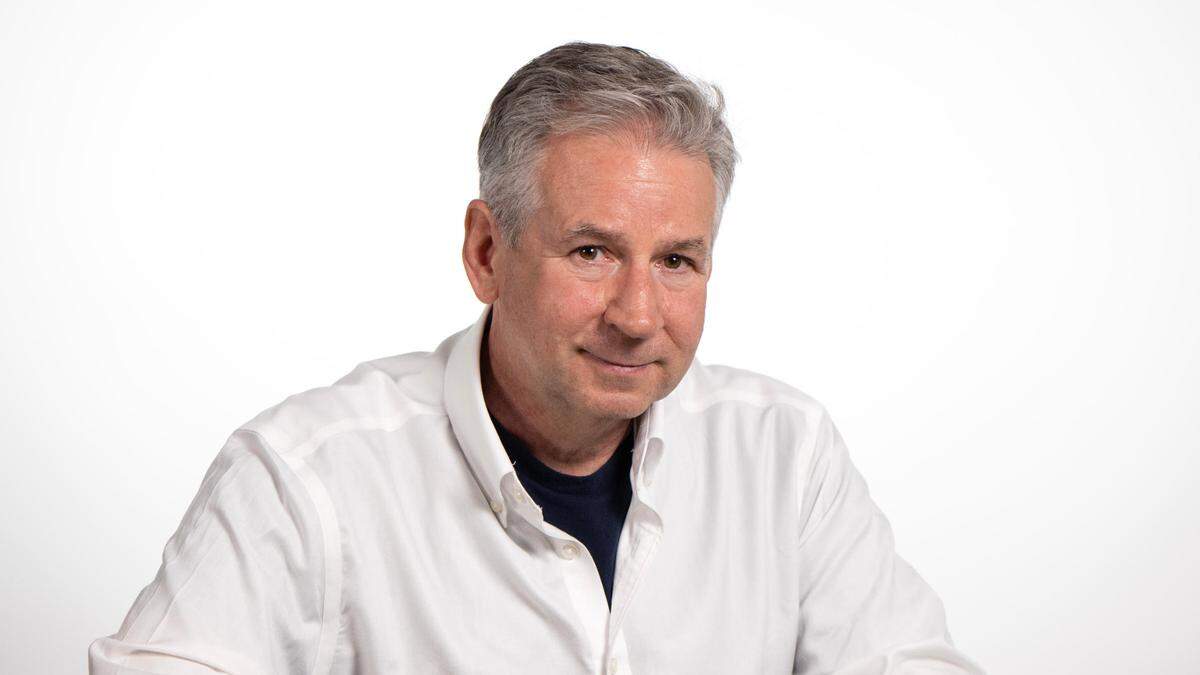
In KC, Barstow School dean helped students organize an ICE protest. Now he’s fired
When David Muhammad, who is the dean of student affairs at The Barstow School, an affluent private school in south Kansas City, was asked by students to help them stage a nonviolent protest last week against ICE and the Trump Administration’s immigration tactics, he was more than happy to oblige.
In his other role as co-director of inclusion and diversity, helping students navigate issues of race, class and culture has been part of the 41-year-old educator’s job for four years. So he got permission from school leadership to hold the protest. Rules were set.
Last week, on a rainy Tuesday, May 5, about 30 high school students, as expected, stood up from their desks at 8:30 a.m. Holding signs — such as the word ICE with a line struck through it — they left the building. For about 40 minutes, they paraded on the school’s front lawn near 115th Street and State Line Road.
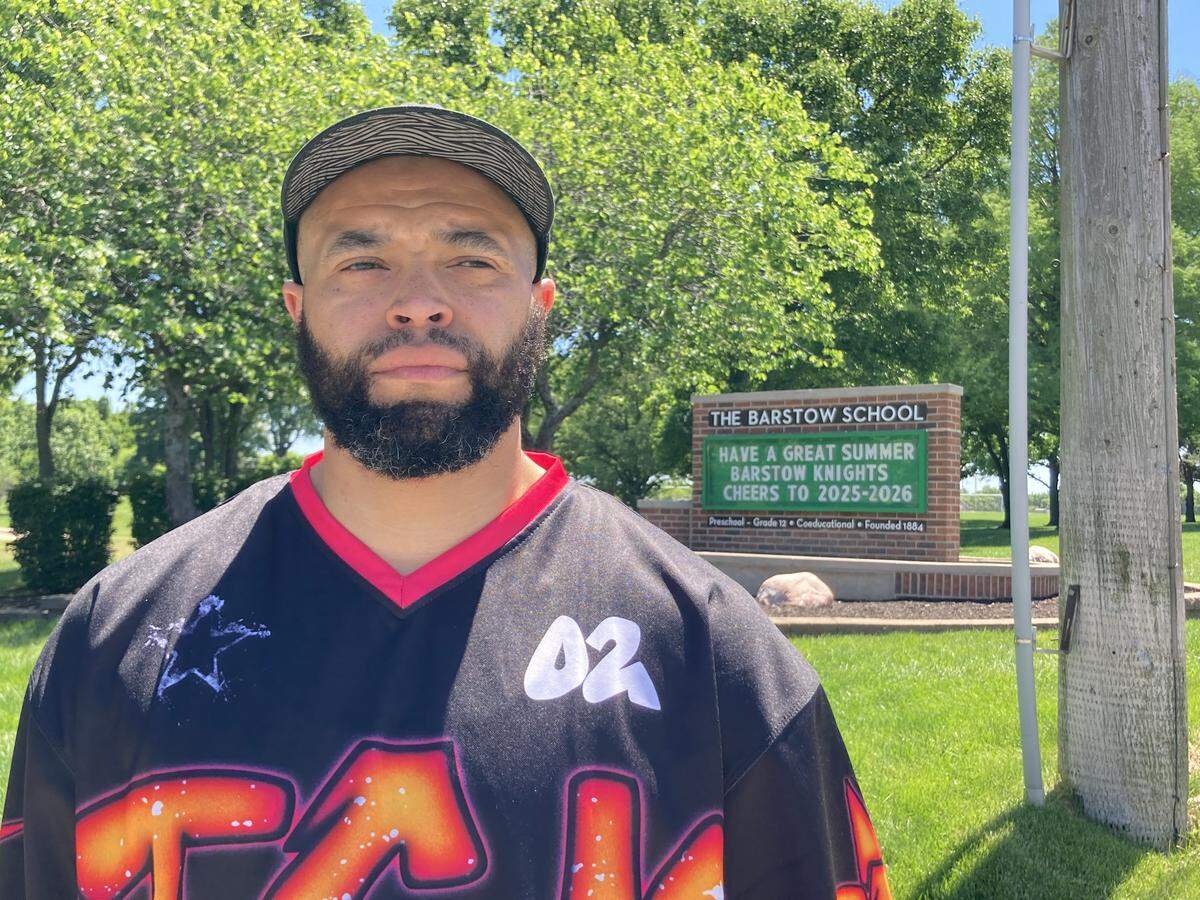
“They had some signs,” Muhammad said. “There was no chanting. One student was playing some Latino music. And that was it. The principal and I felt good about it. It was positive.”
At the protest’s conclusion, they took a group photo, snapped by a classmate who was a lone counter-protestor.
Then, three days later, on Friday, May 9, Muhammad, was fired.
Controversy at The Barstow School
The result, sparked that day, has been an outpouring of student and parental support for Muhammad, whose two children attend Barstow’s elementary school, and a call for the head of school and Board of Directors to reinstate him.
About 800 students attend Barstow from pre-kindergarten through high school. Since Friday, more than 200 parents and students have so far signed a petition asking for their voices to be heard.
“We are asking you to pause this decision before it becomes final,” the petition reads. “We would like the opportunity to meet with you in person — to let you hear directly from the students, parents, and teachers whose lives David has shaped.”
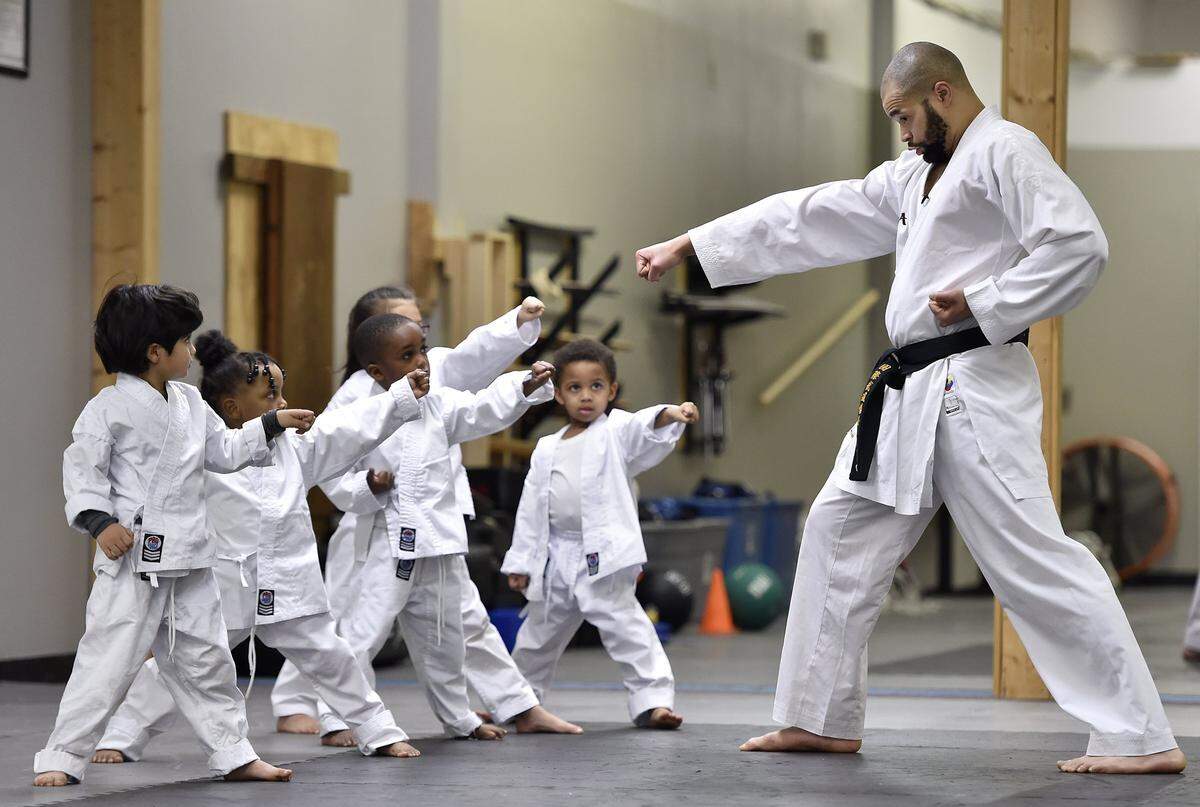
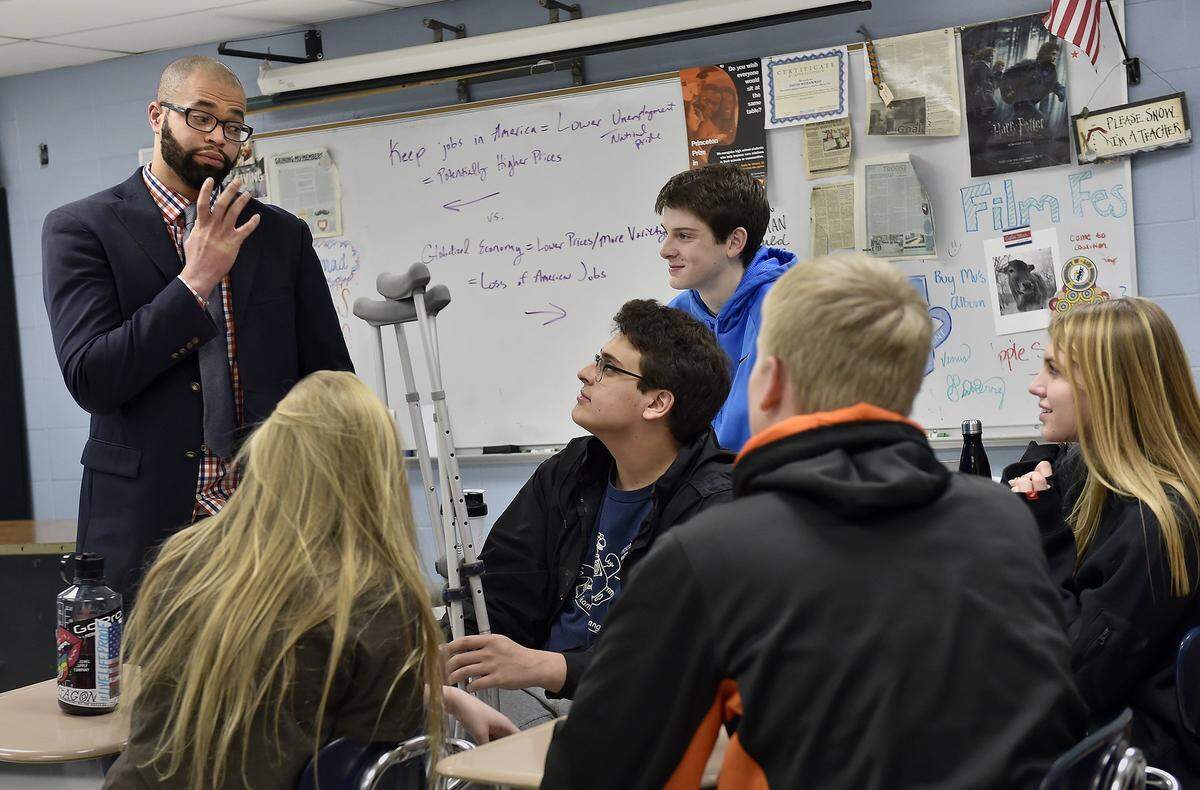
In 2017, The Star profiled Muhammad, a world-ranked kickboxer who was member of the U.S. Karate team that competed in the Pan American Games. Muhammad, a social studies teacher, taught at Shawnee Mission East and in the district for 11 years. He was also, for one year, the middle school dean of students at the private Pembroke Hill School.
Four years ago, he went to Barstow, led by president and head of school Arthur Hall, who is Black. One parent, in a personal letter, nonetheless, said that Muhammad’s dismissal raised concerns about Barstow’s commitment to diversity.
“For many students, especially Black students and other students of color navigating a predominantly white educational environment,” the letter reads, “Mr. Muhammad represented far more than an administrator, he was a trusted mentor, advocate, cultural bridge, and safe space. Students look to him as someone who understood their lived experiences and made them feel seen, valued, and protected in ways that are difficult to quantify but impossible to replace.”
Near the end of the lengthy letter, the parent wrote, “I urge Barstow leadership to listen closely to the voices of students and families who have been directly impacted by this decision. Reinstating Mr. Muhammad would demonstrate a willingness to engage thoughtfully, compassionately, and transparently with the concerns raised by the community.”
Barstow responds: ‘Not based solely . . .on day in question.’
Contacted by The Star through email, Lisa Tulp, The Barstow School’s vice president of communications and marketing, said that the school does not issue statements regarding personnel matters.
Asked if Muhammad was fired because he aided the students in their protest, she answered, “No.”
“I can confirm that Mr. Muhammad was dismissed,” Tulp wrote, “and that his dismissal was not based solely on events that transpired on the day in question.”
She later added, “Responding universally — and not specifically to this situation — the School has clear policies for conduct and progressive discipline. Violations of policy may result in disciplinary action up to and including termination.”
What more might have happened?
In an interview Wednesday, five days before The Barstow School’s high school graduation ceremony, Muhammad was frank about what more transpired in the moments after the protest.
Just as the protest was ending, Muhammad said, the school’s head of security pulled up to speak with Jennifer Marien, the principal or director of the upper school, who had been watching the protest alongside Muhammad.
For safety, one of the rules of the protest was that students were not allowed to go onto busy State Line Road. The director of security, Muhammad said, pulled up in his car to claim that the students had violated the rule, which Muhammad does not believe was the case.
“They’re kids. They didn’t just want to just stay in the middle of the campus because then it’s not a protest,” Muhammad said. “So they decided to walk as far as they possibly could. They went to the grass before the sidewalk.
“They felt like they were still on Barstow property. They’re not on State Line. They’re not marching up and down. So the principal and I just watched. We thought, ‘Oh, this is going well.’ They’re not causing any issues. Nobody’s arguing. And they stayed there for about 40 minutes.”
He added, security, “let us stand there for 40 minutes. If you really felt like it was a security issue, as head of security, you could have just come out there and let them know they had to go somewhere else.”
Muhammad said that while the principal spoke alongside the director of security, he and the students began to go back into the school by a side door that’s typically off limits to students, but for which Muhammad had a key fob.
“I thought, ‘I was an administrator. It wouldn’t be that big of a deal,’” he said.
He said he was instead stopped by Tulp, the director of marketing, who told Muhammad and the students that they could not enter. Muhammad and the students walked around the building to enter through a normal student entrance. When they got there, he said, they were then told by the director of security and the director of marketing that they were not allowed to bring their protest placards into the school, but instead had to leave them in the lobby.
“At that point, I felt like, ‘OK, this is like too much,’” Muhammad said.
The students, he said, had brought their protest placards into the school in the morning before the protest. He didn’t understand why they were now, after the protest, being prevented from bringing them in.
Muhammad said he suggested that the students leave the posters for the day his office. But he was told no.
“I felt, in that moment, that I needed to advocate for the kids,” Muhammad said.
The conversation got heated.
“I was assertive,” Muhammad said, emphasizing there was no cursing. “I did raise my voice. But my statement is that what’s aggressive to some is assertive to others. I felt like, in that moment, the kids couldn’t speak up. . .I felt the necessity to speak up, and I raised my voice. There wasn’t a lot of back-and-forth arguing. I was just firm in the aspect that I felt like they should be able to bring their signs into the building.
“This felt a bit personal. It almost felt like they were trying to dampen the kids’ experience.”
About 15 minutes after the encounter, after the students left their posters in the lobby, and returned to class, Muhammad said that he and the principal and the director of security and the director of marketing were called into a meeting with Hall, the head of school. The parties presented their differing sides.
“A few hours passed by,” Muhammad said, “and I get an email that the head of school wants to meet with me and HR (human resources).”
The time was about 3:30 p.m., he said. In her response to The Star Wednesday, Tulp said that Muhammad was not dismissed because he advocated for the students in the lobby regarding their protest signs.
Muhammad’s interpretation differs.
“I go to his office with HR. He informs me that the conversation we’re going to have is not about the protest. It’s more so about what happened in the lobby. I give my rendition. He expressed concern that, you know, it happened in front of students and I was visibly upset.”
Muhammad said he reiterated, “I was advocating for my students.”
The meeting ended. Muhammad said he was told to remain home as they investigated. Wednesday and Thursday passed.
Around 4 p.m. Friday, in a Zoom call with human resources and the head of school, Muhammad was informed, “I was being let go.”
‘I want to be able to go back to work’
Muhammad concedes there were already two other incidents in his personnel file: On his 40th birthday last year, January 20, the day President Trump was inaugurated, Muhammad sent out a birthday celebration notice with a photo of former President Barack Obama on it with a general message, “celebrate with me to kind of distract yourself.”
He said he was brought before human resources “because that could come across as discriminatory towards people who support Trump,” Muhammad said he was informed, “So that was a letter in my file.”
Muhammad said he again came before HR earlier this year after a co-worker claimed Muhammad was disrespectful and unprofessional in a conversation the two had related to his role as co-director of inclusion and diversity.
An irony of his situation, Muhammad said is that in his position as dean of student life, and co-director of equity and inclusion, he advocates for seeing multiple points of views and having what he called “restorative conversations.”
“I’m still grappling with why it all happened,” Muhammad said. But he thinks it involves a lot of complexities.
“I think that, you know, it feels discriminatory. It feels a bit targeted because I think that some people are not used to confrontation. Some people are not used to disagreement. They may feel that my voice, and my energy, is combative to them and they’d rather remove that — especially in a private school world where there is appreciation for assimilation. There is appreciation for not rocking the boat.
“It’s such a juxtaposition. Because my role is to advocate for the kids. My role is — if you’re going to have me do DEI work — DEI is to instigate. It’s going to ruffle feathers. It’s going to disrupt the system. I think that there are some people who maybe are bothered by that. I think that there are some people who maybe are not necessarily fans of what I do.”
Muhammad said that Hall, the head of school, has been supportive of him. He also felt supported by the high school principal. But through this situation, he said, “I don’t feel like my voice was heard.”
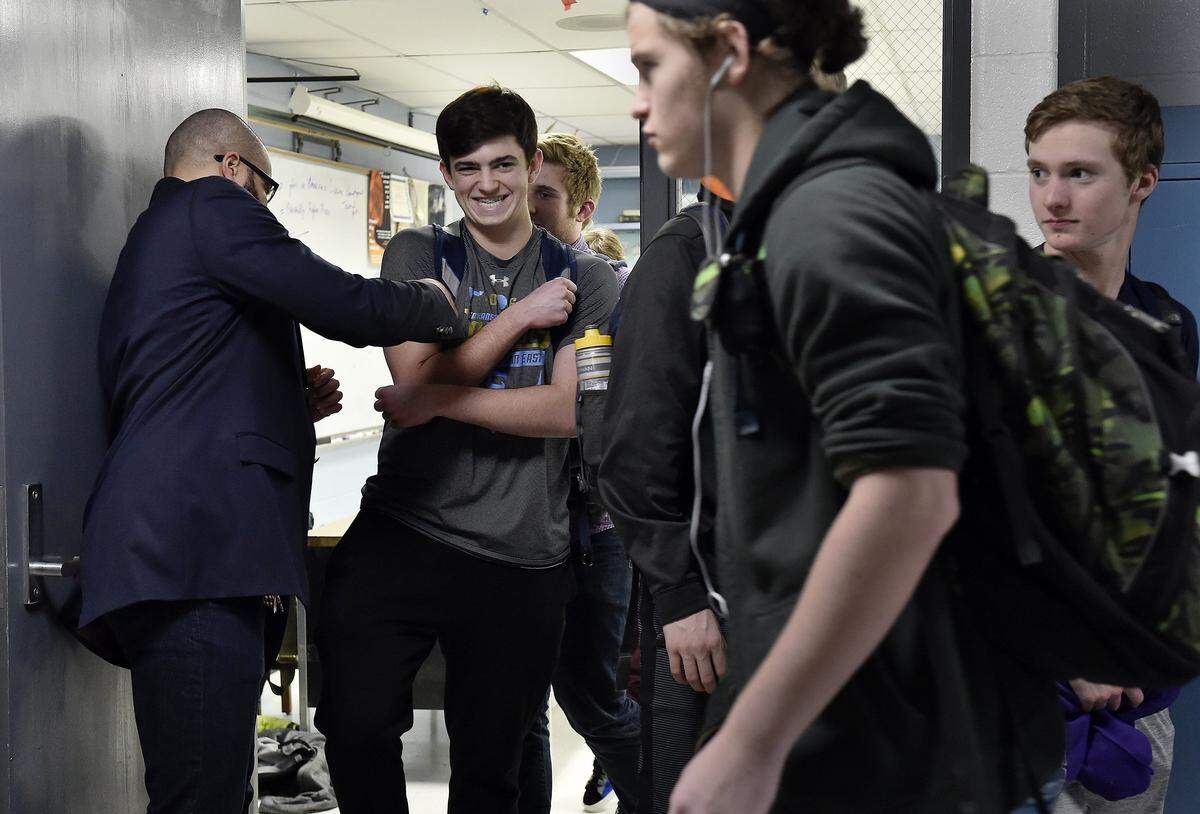
Muhammad said that although he did not ask either students or parents to rise in his defense, he is grateful for the support and the petition calling for his reinstatement.
“As far as what I want,” Muhammad said, “you know, there is a big part of me that just wants to be able to go back to work. I’d love to be able to go back to Barstow. My kids go to school there. They’ve been there for five years. There’s so much beauty there.
“What I would want is just to be able to go back to work and have some conversations on how we can continue to make things better. I also know that that’s a possibility that may not happen. So, I mean, outside of that, I guess I want, hopefully, to be able to find a job.”
On Wednesday evening, Muhammad said, he was informed by Barstow that the school’s board of directors intended to look into his situation.