
This 18th & Vine building has deep ties to KC’s barbecue past. Will it be saved?
Large-scale transformation is underway in Kansas City’s Historic 18th & Vine Jazz District: a pedestrian mall through the middle of the neighborhood, museum expansions, a new hotel, a new parking garage, multiple historic building rehabs including a long-closed historic theater, alongside new apartments and a remade Parade Park.
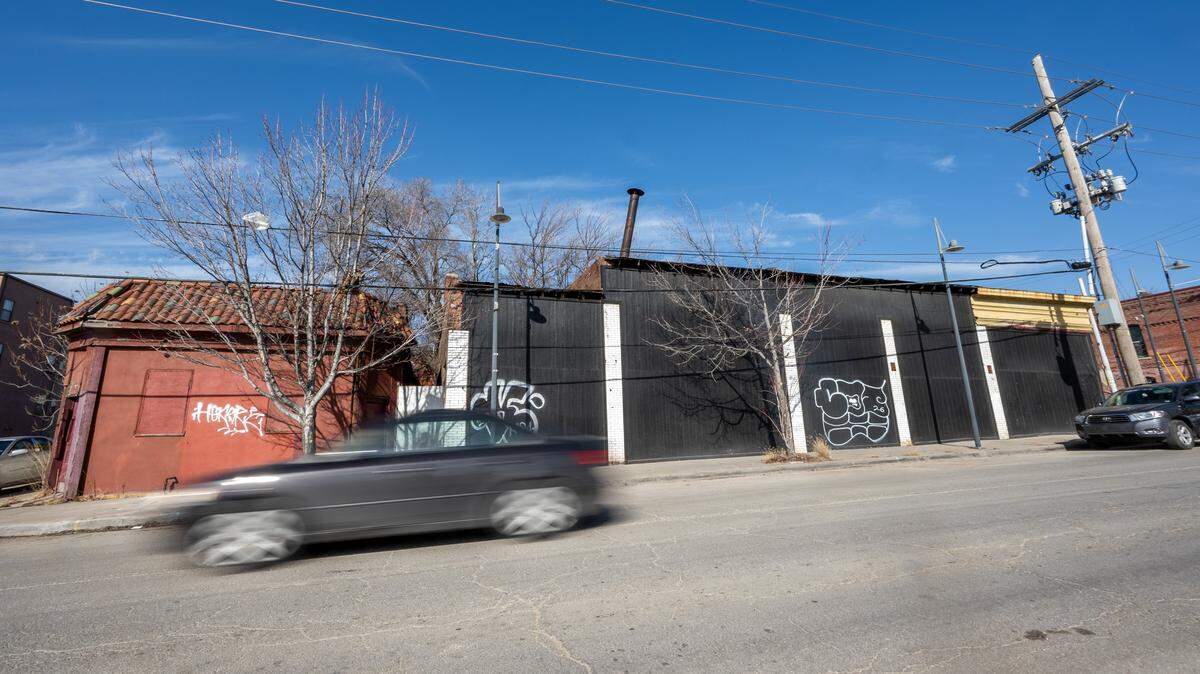
But advocates hope that another unassuming set of buildings, off the corner of 19th and Vine streets, that has deep ties to Kansas City’s culinary culture and Black history doesn’t get lost in the shuffle.
Of particular note is what’s now a boarded-up storefront that once housed a restaurant run by Henry Perry, Kansas City’s “barbecue king,” who laid the foundation for the city’s barbecue culture and legacy.
And around the corner was an auto dealership run by Homer B. Roberts, one of the first Black car dealers in the country.
The corner’s history as a hub for Black-owned businesses in Kansas City’s urban core stretches back over a century: restaurants, doctors, pharmacies, barbers and beauty parlors had set up shop.
“I would love to see this building restored,” said Carmaletta Williams, executive director of the Black Archives, based in 18th & Vine. “I know that there’s not much there to restore. But even if the facade and the images are captured and saved, I think that would add a lot to the history and vision and the feel of this area.”
Michael Wells, senior librarian for special collections at the Kansas City Public Library, has nominated the corner for preservation group Historic KC’s Endangered Buildings List, which is expected to be released in May. The list, last compiled in 2021, draws attention to historic buildings that face the risk of demolition or falling into obscurity.
Wells calls for treating Kansas City’s barbecue legacy as the critical local history that it is. His nomination notes that, while the buildings are listed on both the local and the national historic registers, they “remain at serious risk.”
Among those risks: compromised roofs, exposure to the elements, vandalism, evidence of illegal entry and fire hazard. They also face development pressures.
The city owns the properties on the corner as well as many parcels in the historic neighborhood. It has leveraged that public ownership into projects to save and preserve several buildings, offer homes for shops and cultural amenities and redevelop parcels with new housing.
The vacant 19th and Vine buildings, however, have an open dangerous buildings case, records show, and have been boarded up. But their fate is still unclear — the corner could be folded into a future phase of an ongoing redevelopment project.
Building central to KC’s barbecue history still stands
Among the prominent buildings on the 19th and Vine corner is the Roberts building, constructed in 1923 and known as the home of Roberts Motor Company, an early Black-owned vehicle dealership.
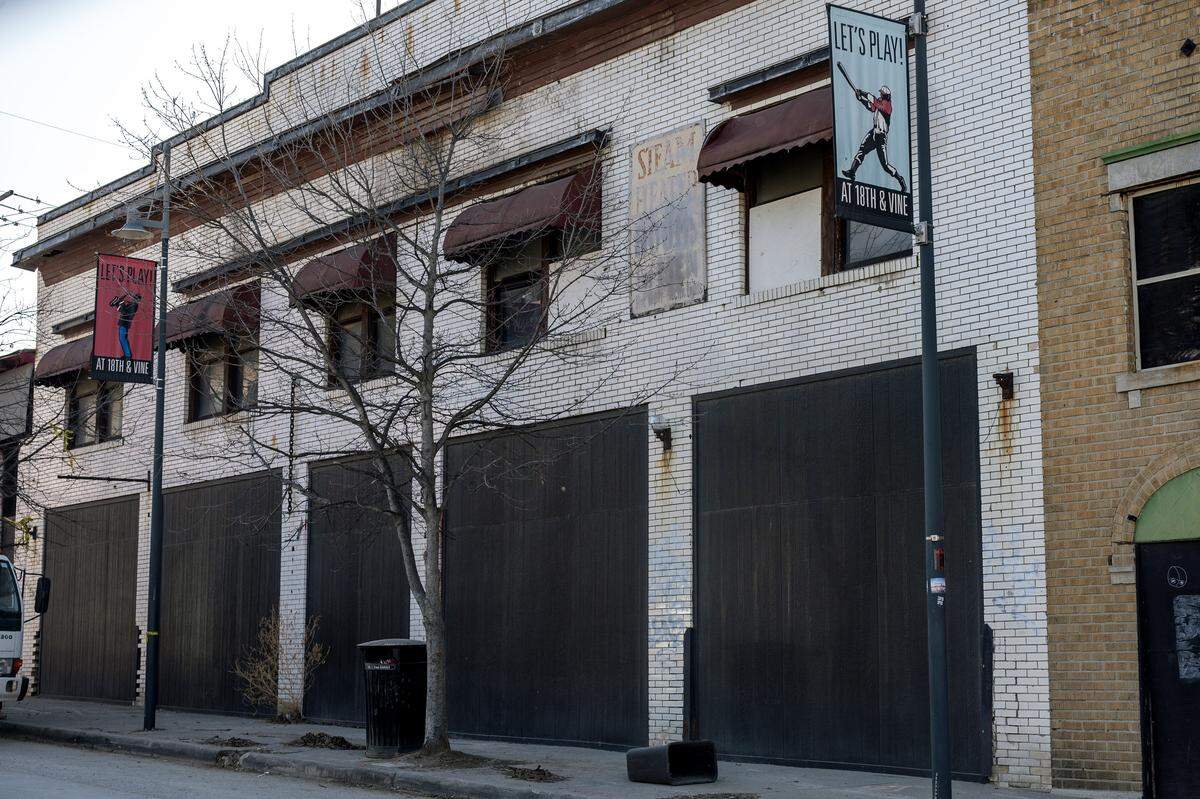
The company’s owner Homer Roberts was born in Missouri and raised in Kansas. He studied electrical engineering and later served in World War I, becoming the first Black man to reach the rank of lieutenant in the Army Signal Corps. He then got in on the growing car business and sold millions of dollars worth of vehicles before relocating to Chicago.
Nearby was a building first occupied by Henry Perry’s barbecue business. Perry, born in Tennessee, arrived in Kansas City in 1907 after working on steamboat restaurants, where he learned his craft. Here, he sold smoked meats to workers from sites on vacant lots and street corners before seeing a path to success further east, later setting up his own storefront in the heart of Kansas City’s Black community and business district.
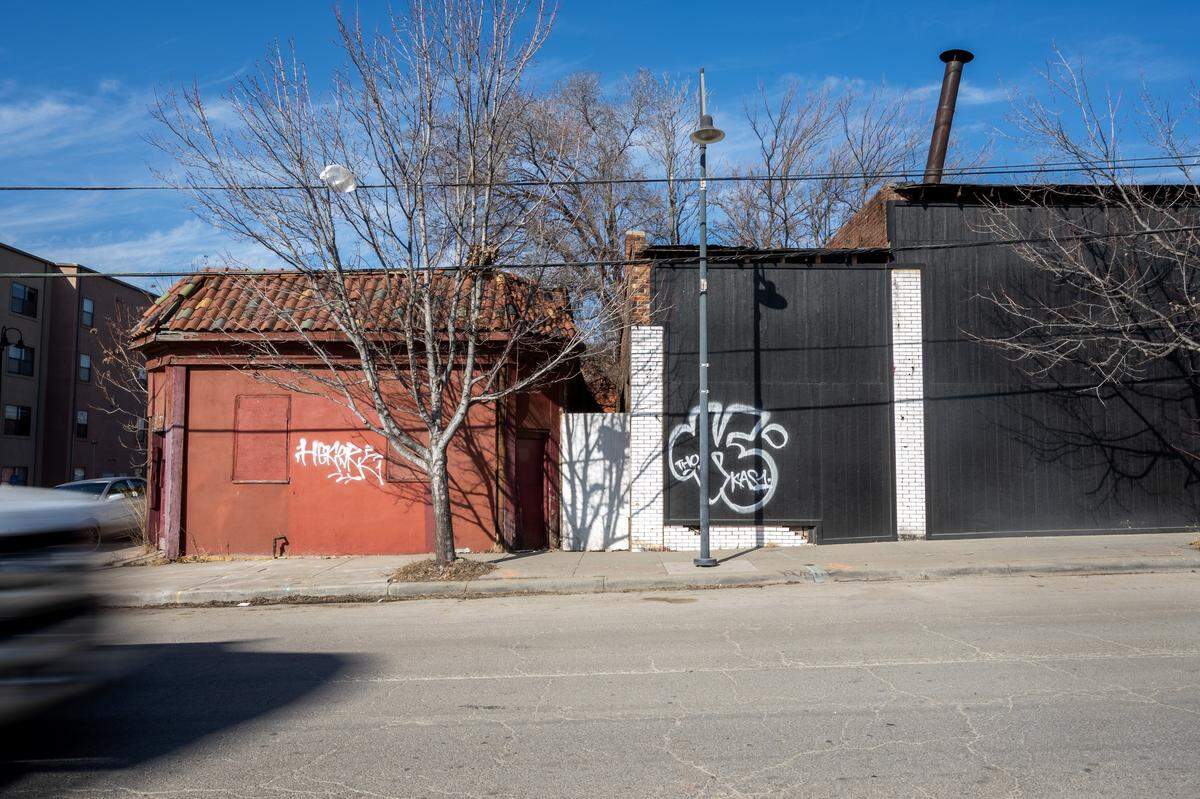
“You have this period of the Great Migration of Black people coming out of the South into northern and Midwestern cities in the early 20th century, looking for greater opportunities,” Wells told The Star. “And that’s where it happened.”
By 1914, a listing in the Kansas City Sun, a newspaper geared toward the city’s Black community, included “Henry Perry, Barbecue King,” at 1514 E. 19th St. Perry was a fixture in the press and was known for his generosity and large-scale events where he gave out his food to large groups of people — for free.
“Jazz developed here, but also barbecue as a black Southern cooking tradition, coming up to the north, and people bringing that and finding that they can make a living and a life for themselves by recreating something that people would remember from home, and Henry Perry was absolutely part of that story,” Wells said.
Perry didn’t stay in the 19th Street location the whole time but remained a fixture in 18th & Vine for years, becoming well-known far beyond Kansas City’s borders.
And his barbecue has ties to two familiar names for Kansas City barbecue fans: Arthur Bryant’s and Gates Bar-B-Q, whose origins can be traced back to Henry Perry through his apprentices decades ago.
Perry died in 1940. In 2020, Mayor Quinton Lucas proclaimed July 3 to be “Henry Perry Day,” on the same date as one of Perry’s free barbecue events, and he was inducted into the American Royal BBQ Hall of Fame.
Granddaughter carries out legacy
Alongside his culinary impact, Perry’s work reverberates into the present through a namesake foundation, run by his granddaughter Bernetta McKindra.
“His story is remarkable,” she said.
McKindra said the foundation’s work aims to keep Perry’s legacy of generosity, mentorship and perseverance alive in Kansas City and abroad.
“He was a person who didn’t quit,” McKindra said.
The foundation’s work, which started in 2022, includes creating education opportunities for students, providing sit-down community meals on Sundays and helping families with child care costs during the holidays.
A highlight? Helping fund a young chef’s trip to Kenya to learn about the culinary scene there.
KC’s Revive the Vine initiative
A trip to the 18th & Vine District will make clear how much investment and redevelopment is happening all around the neighborhood.
Work on a pedestrian mall down 18th Street is wrapping up, with a ribbon cutting scheduled for May 27.
The newly-renovated Boone Theater building reopened May 1 as an arts hub, while a new public parking garage is also close to opening to the public.
Demolition has begun on the Parade Park Homes, which are set to be replaced with a mixed-income development adding more than 1,000 new homes.
Both the Negro Leagues Baseball Museum and the American Jazz Museum are forging ahead with expansion plans.
The Parker project, named for a Kansas City jazz icon Charlie Parker, is also underway, adding even more new apartments while rehabilitating the historic House of Hits building, which previously collapsed and was at risk of demolition.
That leaves Henry Perry and Homer Roberts’ corner, on the same block at The Parker, waiting for its next steps.
Historic corner’s future is unclear
The city-owned corner has an open dangerous buildings case and has faced two 311 complaints calling for a board-up in recent weeks. A city inspector wrote in early April that a door was boarded and secured to prevent further unauthorized entry.
The corner is on the same block as the Parker project, also known as Jazz District III, which is under construction and will bring 48 new mixed-income apartments and new commercial space.
City spokesperson Sherae Honeycutt said the property is “part of future phases” of the Jazz III development.
Whatever that looks like, history advocates say it will be important to preserve the building in a way that allows visitors to gather and learn more about its legacy: perhaps by looking at photographs, viewing its remaining elements and learning about the past while new places sprout around the neighborhood.
“This would then be an anchor to what the district is really about,” Williams said. “It is that reminder right there that this is what happened in Kansas City, this is what happened in this district and this is what was going on with the people.”
Wells says we need reminders of our past.
“We need to be able to look at something and stir thoughts and emotions about who we’ve been, what we’ve done, and hopefully to inform where we’re going, and to inspire people to think about what could be,” he said.