
KC may close loophole allowing historic buildings to be demolished without review
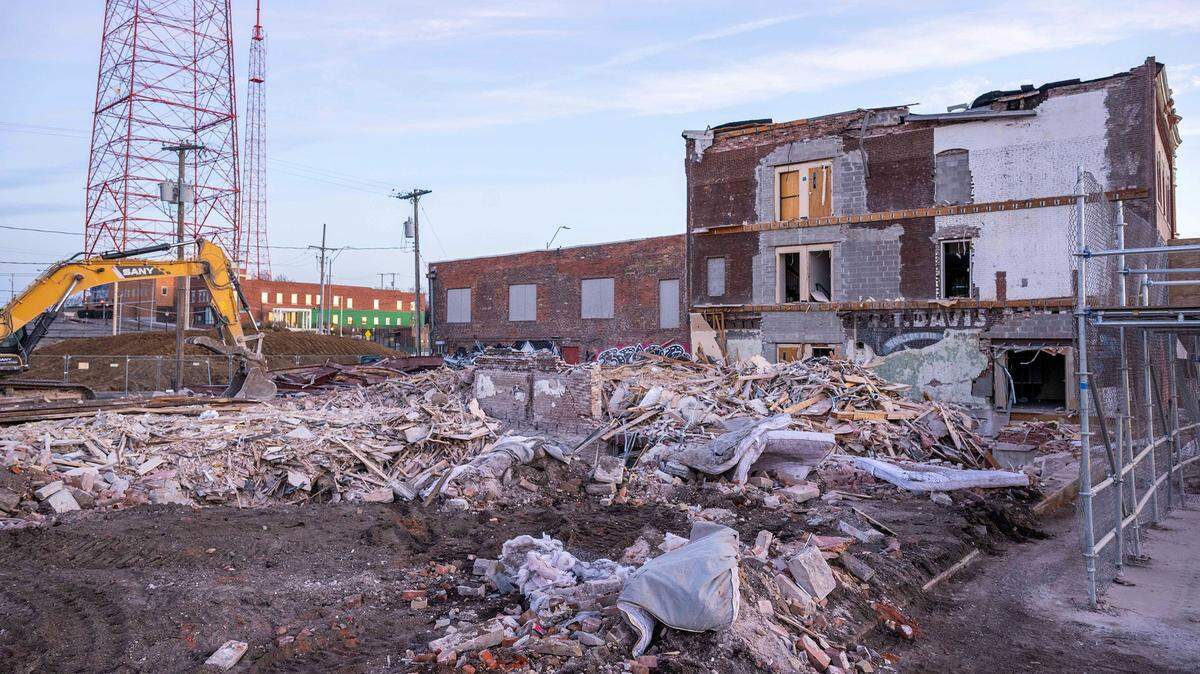
Kansas City could soon close a loophole that makes it easier to knock down historic buildings while beefing up rules for owners who leave their properties vacant.
Mayor Quinton Lucas has proposed a trio of ordinances that would set new standards for securing and “mothballing” vacant buildings, expand the scope of when owners have to register vacant properties, and require further review for requests to demolish historic buildings — even if they’re considered dangerous.
Of note, under the proposed new rules, the city’s Historic Preservation Commission would review demolition permits for historic buildings before approval, even if the city has declared the building to be dangerous.
Currently, owners of historic buildings can skip the commission if city inspectors deem a building to be dangerous, meaning it poses a safety risk to the public. That creates a loophole of sorts for owners seeking to demolish structures on the dangerous buildings list.
Local advocates point to notable historic structures like the Jeserich Building on 31st and Main, which was demolished earlier this year.
But under the proposed rules, the preservation commission would still review demolition permits for historic buildings on the dangerous buildings list — unless city staff decide there’s an immediate emergency with no alternative to demolition.
That could allow time to consider alternatives for rehab before a building is knocked down for good.
The changes would make sure that “Kansas City’s historic structures get a fair preservation review before demolition, even when a dangerous building declaration has been issued,” Lucas’ office said in a statement.
“Under the current code, that declaration effectively bypasses the Historic Preservation Commission’s review entirely, creating an incentive to neglect,” his office said. “The days of demolition by neglect are what this ordinance is designed to end.”
Next week, the City Council’s neighborhoods committee could discuss the proposed rule changes and how they would work and be implemented. The changes would need final approval by the City Council to go into effect.
New rules could save historic buildings from the wrecking ball
Closing the “dangerous buildings loophole” could have meant closer review and more protection for structures like the Jeserich Building at the corner of 31st and Main streets, which was demolished this year. It was one of the Main Street corridor’s oldest buildings.
The Jeserich Building’s previous owners eyed demolition in 2022 ahead of possible redevelopment, but advocates organized to stop it, and City Council members stepped in with a nomination to give the building official historic status.
The City Council soon signed off on the nomination, adding a new layer of protections and regulations for the Jeserich, including around demolition.
But the building’s current owner has said that — between engineering reports showing structural issues, contractors expressing safety concerns and high costs for rehab, even with potential tax credits — restoring the Jeserich was not feasible.
A city inspection found a partially collapsed roof, deteriorating brick and stone, water damage, mold in the basement and other issues. The building was declared dangerous in August 2025 and demolition moved forward, without preservation commission review.
The property is now a vacant lot by a streetcar stop. The owner has announced plans for a future new development that could include a mix of apartments and retail.
Historic preservation advocates say the situation was a clear example of the dangerous buildings loophole.
Ethan Starr, executive director of Historic KC, said his organization hired a structural engineer to do an assessment of the Jeserich during the 2022 historic nomination process and testify to the building’s integrity at the time.
“A few years passed, a change of ownership occurred, and there was no reinvestment in that building,” he said. “We all saw the process of demolition by neglect playing out in front of our eyes.”
Rules for vacant buildings in Kansas City could change
Lucas’ proposed changes also include revisions to the city’s registration system and rules for vacant properties.
Among them, the vacancy registration system would expand to include properties that have no structures on them, while owners would need to file a statement outlining their plans or intent for vacant properties.
Meanwhile, the changes would add new standards for “mothballing” long-term vacant buildings to keep them secure and prevent them from deteriorating, such as securing openings while making sure the roof doesn’t leak and the walls aren’t cracked.
Owners could face fines or liens if they don’t follow the regulations.
Lucas posted on Facebook that the new standards would help stabilize vacant buildings, protect neighborhoods and prevent small problems from becoming costly demolitions.
In a letter to the city, the Plaza Westport Neighborhood Association said it supports all three proposed changes.
“For far too long, the city has allowed developers and property owners to buy or hold properties, let them deteriorate and then call them ‘blighted’ or ‘dangerous’ in order to ask for help or incentives from the City to demolish them to “fix” this self-inflicted wound,” the letter said.
“Examples of vacant lots and run-down houses exist right now in the Plaza Westport Neighborhood as a result of developers’ shoddy practices. Many are historic buildings or belong to historically significant portions of our neighborhood.”
The proposed changes would help relieve the situation, the letter says.