Here's why some areas of the Kansas City metro seem to always be flooding
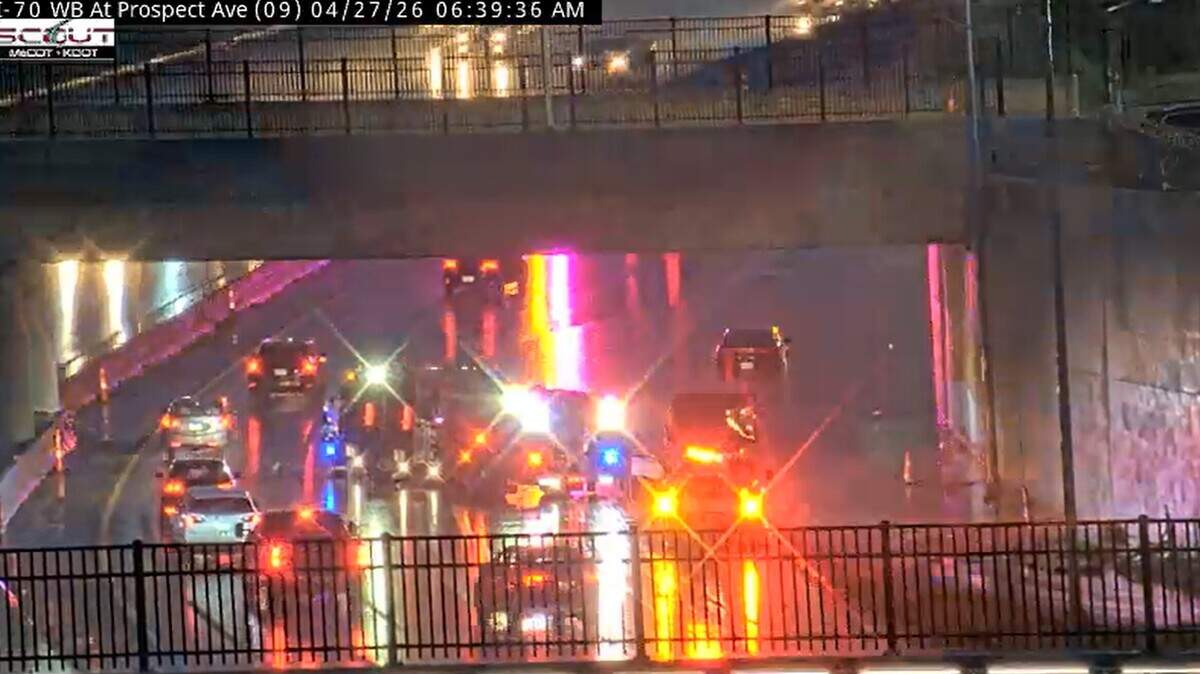
Heavy rain in the Kansas City area again led to flooding this week in parts of the city, including a section of Interstate 70 near downtown. Other areas that flooded this week included Indian Creek and East 23rd Trafficway, near Interstate 435.
Kansas City residents may be wondering: Why does it seem like so many parts of the city always flood whenever it rains?
City and state officials say there are a few reasons for the patterns of flooding.
For starters, the ground in the Kansas City region is saturated because of a higher-than-normal amount of rainfall so far this year. The Kansas City area had more than 3.5 inches of rain this week, which is nearly the total normal amount the city sees for the entire month of April, according to the National Weather Service in Kansas City.
Greg Bolon, district engineer for the Missouri Department of Transportation’s Kansas City district, said the flooding on I-70 this week was largely because the ground is not soaking up the rainfall.
“When you have 3-and-a-half inches of rain on an already wet ground, all of that becomes runoff,” Bolon said. “None of that is getting absorbed.”
Another common problem is blocked sewer grates stopping stormwater from draining away from neighborhoods and roads.
Andy Shively, a deputy director for KC Water, said clogged catch basins led to the flooding on East 23rd Traffic and some residential areas.
Shively said debris and litter are the main culprit when the drainage systems are clogged. He said residential areas may flood because of leaves piling up.
“So we ask that people, one, please don’t litter, and two, please don’t rake your leaves into the street,” Shively said, “because during a rain event, they’ll make their way to the catch basin and then clog them. And then we won’t be able to get the water off the road.”
A similar problem can lead to flooding on the highway. Bolon said a grate on I-70 was partially covered and could not fully drain water. He said problems like that can be difficult to address because the city and MoDOT may not know a water drainage system is blocked until it’s already flooded.
“Sometimes we have to find out the problems before we can go fix them,” Bolon said.
Flood prevention
Meanwhile, Kansas City is working on at least one prevention project to address chronic flooding. KC Water’s Westport Stormwater Improvements Project is currently constructing two massive stormwater reservoirs under Mill Street that can hold up to 3.5 million gallons of water.
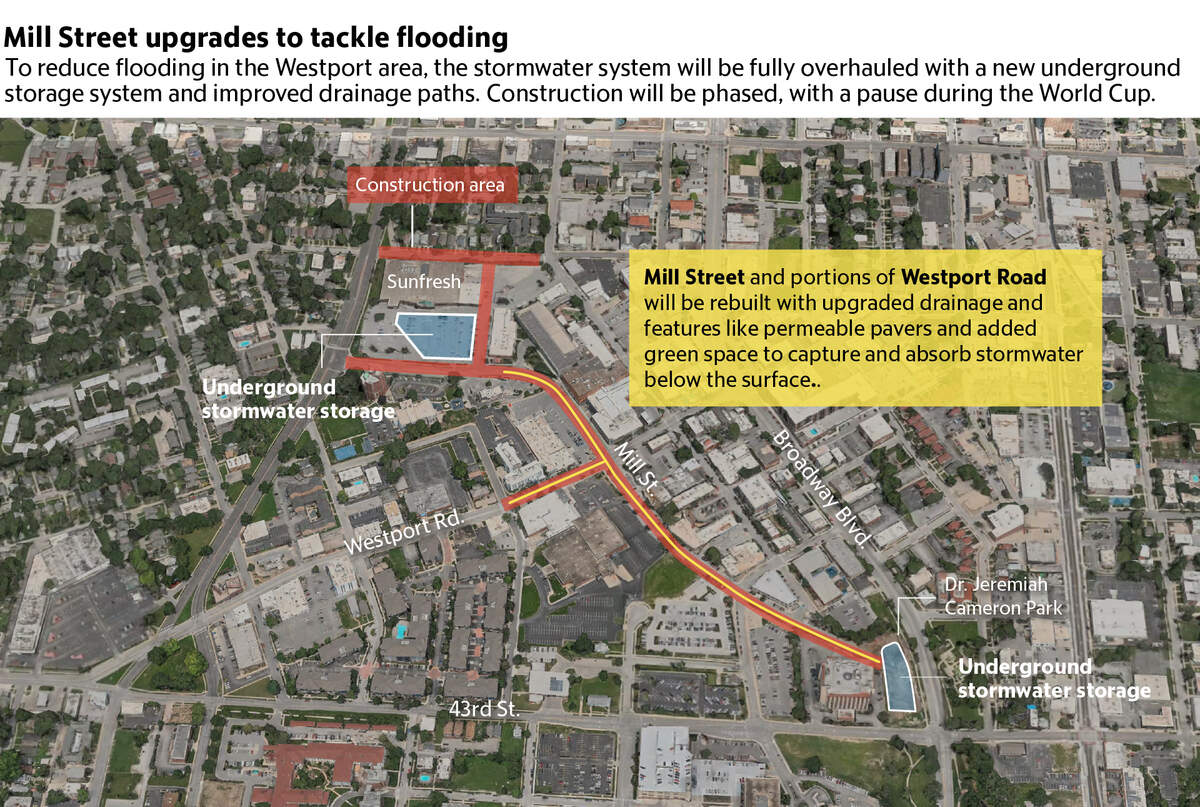
Mill Street in Westport, a low-lying area of the historic neighborhood, has flooded many times over the years. Shively called it a “multi-decade problem” because Mill Street is built on what used to be a creek. He said Walnut Street just south of downtown, which was formerly Walnut Creek, faced a similar problem before a stormwater sewer system was updated there.
“Typically, you will see during heavy rain events, some localized flooding in those areas,” Shively said, “as mother nature wants to go back to the way the things were.”
The city is also studying flooding and erosion of Indian Creek, which saw significant flooding this week, for a possible project in the future.
Shively said he contacted the U.S. Army Corps of Engineers, which oversees infrastructure for the creek, to look at its flooding issues. But any project there to mitigate flooding in the future would require federal approval, he said.
This story was originally published April 28, 2026 at 5:45 PM.