Lee’s Summit family holds out hope for new procedure that treats cancer with sound
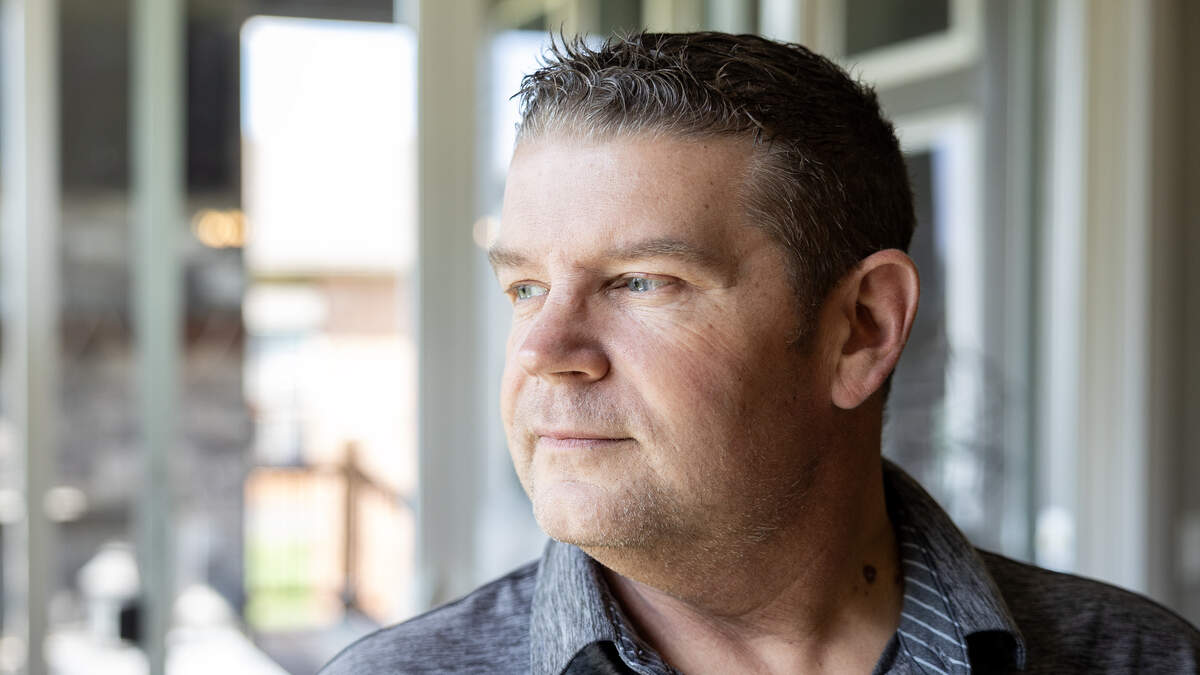
When Ryan Myers received his cancer diagnosis last year, he mused initially that he had just been handed a death sentence.
Pancreatic cancer statistics, after all, are sobering. The 49-year-old Lee’s Summit husband and father of two was told he had stage four pancreatic cancer, which has a five-year survival rate of about 3%. The average patient diagnosed with late-stage pancreatic cancer lives for about a year after diagnosis.
Doctors determined Myers had a tumor on the tail of his pancreas and spots on his liver, and because of the cancer on his liver, he would not be eligible for surgery to remove the main tumor on his pancreas.
He began chemotherapy and started researching treatment options. His thoughts began to turn: This didn’t have to be a death sentence.
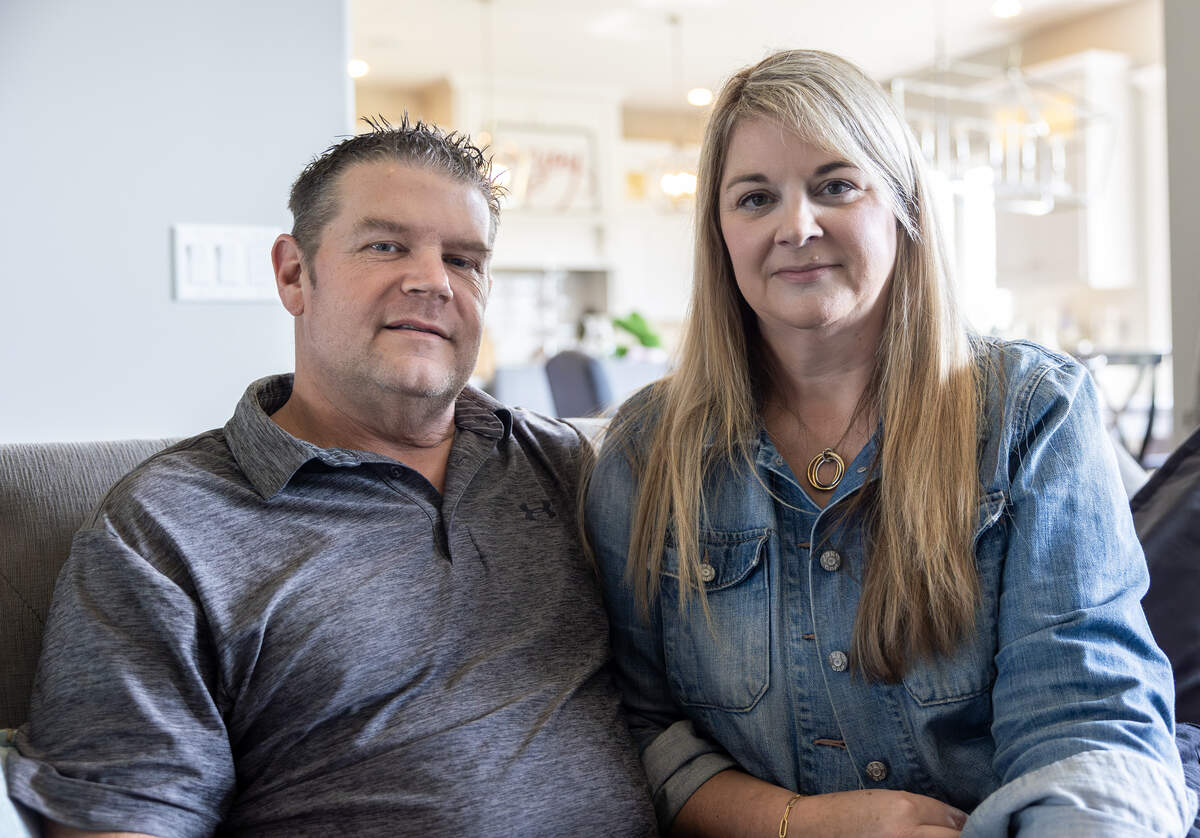
“I kind of refuse to just sit back and just do the chemo,” he said in an interview, reflecting on the last few months with his wife, Melissa. “That’s why we keep looking at different options and what’s out there. But it is a little scary at times.”
As they looked at options, the Myerses learned about histotripsy, a noninvasive treatment approved for use on liver tumors by the Food and Drug Administration in 2023. The procedure, which uses targeted ultrasound waves to destroy cancer tissue, doesn’t require incisions, radiation or a hospital stay and has shown promise in treating liver cancer.
The Myerses saw hope and began to pursue the treatment.
“A year ago, when I found this out, I don’t even know if I’m gonna be here for Christmas or not,” Ryan said. “I feel fortunate almost a year later, and I still feel as good as I did a year ago and living through this.”
Histotripsy treatment denied by insurance
Ryan sought the treatment through Vanderbilt University in Nashville, Tennessee. If it could knock back the spots on his liver, he could become eligible for surgery on the tumor on his pancreas.
“Sometimes I feel like we’re in Vegas,” Melissa said. “Do we bet on red? Do we bet on black? I don’t know which way to move, which is a scary situation. But then we’re also fighting insurance at the same time. It’s hard, it’s tough.”
When they went to get approval for the procedure through their insurance carrier, Blue Cross and Blue Shield of Kansas City, also known as Blue KC, Ryan’s case was denied. And denied again. And again. And again.
Their carrier has given shifting reasons, like that the procedure wasn’t FDA-approved, that it wasn’t medically necessary and that it was “investigational,” the couple said. They received a letter informing them about a peer-to-peer review of Ryan’s case the day after the meeting, meaning they and representatives from HistoSonics, the company that developed the system, and Vanderbilt weren’t in attendance, they said.
“We had no one representing us,” Melissa said. “Of course they erred on their side.”
“He’s stage four, so they don’t expect any kind of survival,” she said. “They’re just going to put you in this box, and that’s it, and we’re not going to pay for anything else other than your chemo.”
In an email to The Star, Blue KC spokeswoman Kelly Cannon declined to comment on the specifics of Ryan’s case but said, “In general, there are multiple reasons a procedure might not be covered by a member’s health plan, including if it is investigational or experimental. Investigational treatments, procedures and drugs do not have FDA approval to be used in certain circumstances and/or have not been proven to work in certain circumstances.”
Barb Peterson, HistoSonics’ vice president of reimbursement, said the company works to educate insurance carriers about the procedure and has a growing number of positive coverage decisions. HistoSonics has a team that works to help get prior authorizations through insurance, and at this point, the company has about a 70% approval rate, she said.
“It’s a game changer, not having to have surgical incision or anything else, with cancer, radiation, ablation, those kinds of things,” she said. “Patients have been very excited about this.”
Community support and a potential lifeline
The Myerses are still holding out hope that their carrier will cover the procedure, but in the meantime, a group of friends launched a GoFundMe page to try to raise $50,000 to help pay for the procedure in cash. So far, the page has raised around $42,000, and the family expects fundraising events to push the number closer to their goal.
“The community has absolutely stepped up in an amazing way,” Melissa said. “They definitely have shown the good side for sure in this absolutely crazy world right now.”
When Ryan and Melissa learned that Vanderbilt wouldn’t accept a cash payment, they found another provider, Dr. Kevin Burns, based in Orange County, California, who would. The procedure is not yet widely available, and Burns is one of a relatively small number of providers who can administer the treatment.
According to HistoSonics, 138 of the company’s systems have been sold in the U.S. to date. Currently, the only facility to offer the treatment in the Kansas City metro is Menorah Medical Center in Overland Park, according to the company.
In a trial sponsored by HistoSonics, the treatment delivered 90% freedom from tumor progression at one year, which was comparable with other treatments used on the liver, according to a study published last year. The study, which assessed 47 patients, reported six “serious” adverse effects related to the device used in the procedure and one death that was classified as “device-related” and said to be related to liver failure in a patient who had a “high burden” of tumors.
In another study investigating the safety of histotripsy published last year, analysis of 230 cases after treatment showed just 12 instances of patients having any complication within 30 days, and most of those instances were classified as minor. Three complications classified as major were deaths because of disease progression, the study said.
And another study published last year assessing 44 patients reported no cases of major complications and a 96% tumor control rate at 90 days after treatment.
Burns, an interventional radiologist, estimated to The Star that his facility will have topped 1,000 cases treated by histotripsy by the end of the year. He noted the 90% tumor control number and said he’s seen similar results in his practice as well.
“We’re also treating a lot of patients who had no options before,” he said. “We’re both treating tumors to get rid of them completely, but we’re also treating tumors to help the patient physically. They may have a lot of tumors in their liver, and one of them is causing severe pain. If we can go in and just treat that one specifically, we know we’re not curing the patient, but we make them better because their pain goes away.”
The procedure may soon be used in other ways too. HistoSonics plans to request FDA approval for using the treatment on kidney tumors, and trials are moving forward for patients with pancreatic tumors and enlarged prostates. The company is also eying the procedure for treating uterine fibroids.
“I think this is kind of a revolutionary therapy,” Burns said. “I’m an interventional radiologist, we have a lot of different tools that we have to treat cancer. This adds a whole new tool.”
For now, Ryan Myers has continued with chemotherapy and has responded well to the treatment. He and his family are now holding on to hope for another option.
“I’m 49, and I still actually feel good,” he said. “I don’t even feel like I have cancer. It’s frustrating to just be told, no, just do chemotherapy, there’s no other options for you right now.”
This story was originally published April 28, 2026 at 12:34 PM.