Man who died of infection after KU Med surgery was Navy vet, hands-on dad: testimony
AI-generated summary reviewed by our newsroom.
- Stephen Nolte contracted M. chimaera after heart surgery and later died on July 8, 2020.
- The lawsuit alleges a contaminated device used during his 2019 surgery led to infection.
- LivaNova denies fault and blames KU Med perfusionists who failed to disinfect the devices.
Christine Nolte sat in a Kansas City, Kansas, courtroom on Thursday, telling jurors how she and her husband met decades ago and describing the dedicated father he later became and the joyful way he lived his life.
Then she tearfully recounted the agonizing way Stephen Nolte died — after contracting a fatal infection following open-heart surgery in 2019 at The University of Kansas Hospital.
She lost track of all the doctors he saw in those final months, how many medical appointments he had and the number of trips they made to the ER. And when he was eventually placed in hospice care and a blood test finally confirmed that he had Mycobacterium chimaera infection, or M. chimaera, Christine Nolte said, he was sent back KU Med “to see if they could save him.”
By then, she said, it was too late.
“They said it would not help Steve at that point,” she said, dabbing her eyes with a tissue. “He was taken by ambulance back to hospice.”
Stephen Nolte died on July 8, 2020. He was 71.
KU hospital trial
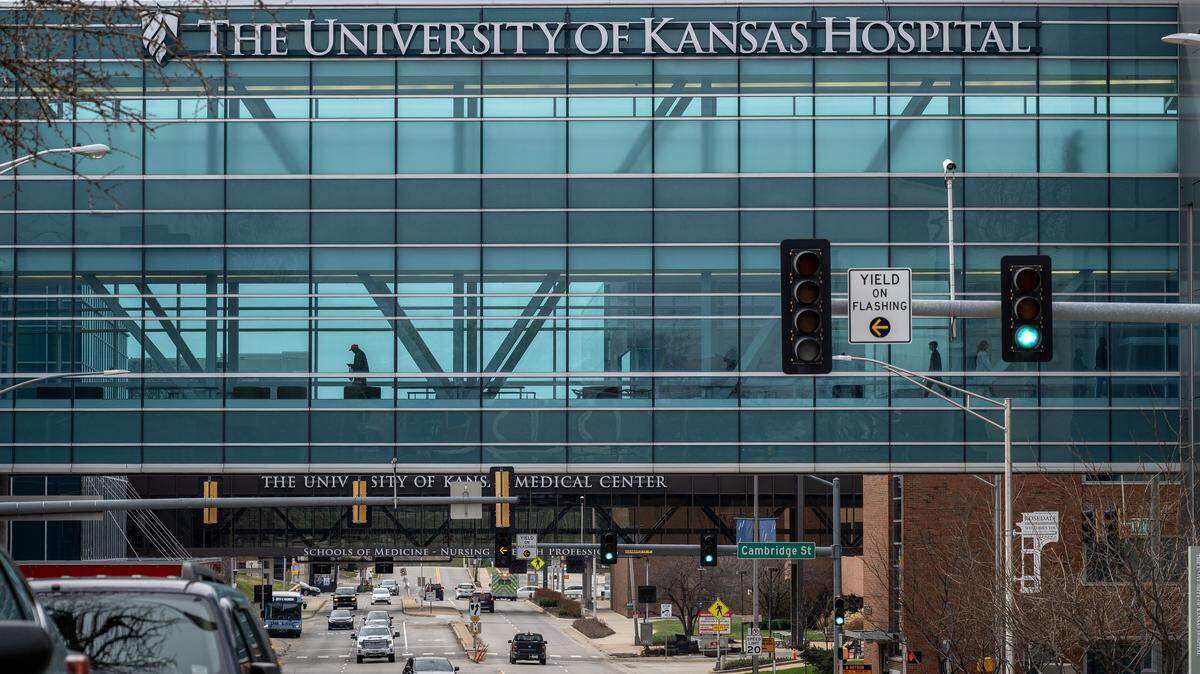
Christine Nolte’s testimony came on day nine of a trial in Wyandotte County District Court over the allegation that a contaminated heater-cooler device used during her husband’s surgery led to the infection that claimed his life.
Christine Nolte and the couple’s son, Christopher, filed a lawsuit in 2021 against The University of Kansas Hospital Authority and LivaNova USA Inc., the medtech company that manufactured the heater-cooler device.
The lawsuit alleged wrongful death and personal injury claims against The University of Kansas Hospital Authority and negligence and product liability claims against LivaNova.
The University of Kansas Hospital Authority settled shortly before the trial, and District Court Judge Courtney Mikesic approved the confidential settlement on April 13, dismissing KU Med as a defendant. According to a court filing, no admission of liability was made.
LivaNova has denied it was at fault and contends that any damages sustained by the Noltes were caused by the negligence of KU Med, whose perfusionists failed to disinfect the heater-cooler units according to the specific instructions the company provided. The company also contends that Nolte had multiple underlying health issues that contributed to his death.
A heater-cooler device contains pumps that circulate water during bypass procedures to regulate a patient’s temperature.
The units are used in conjunction with a heart-lung machine, which takes over the function of the heart and lungs during surgery. Studies found that in contaminated heater-cooler devices, the aerosolized vapor is pushed out of the water tanks by exhaust fans, spreading bacteria through the air in the operating room. That bacteria can then enter a patient’s open cavity, leading to infection.
More than two dozen lawsuits filed
Nolte’s case is among more than two dozen lawsuits that The Star reported last month have been filed in Wyandotte County District Court against The University of Kansas Hospital Authority and LivaNova.
The lawsuits allege that 25 patients at The University of Kansas Hospital contracted the M. chimaera infection after undergoing open-heart surgery involving heater-cooler devices that hadn’t been properly disinfected.
In those cases, 11 of the patients died, and others are living with life-altering health problems, according to the lawsuits. About 17 of the cases have resulted in confidential settlements with The University of Kansas Hospital Authority, court filings show.
Among those in the courtroom Thursday were two former KU Med heart surgery patients who had contracted M. chimaera and survived, as well as family members of two patients who died from the infection.
The trial is expected to wrap up next week.
Stephen and Christine Nolte
During her testimony, Christine Nolte, a retired national sales manager for a logistics company, said she and Steve met while he was attending college at Central Missouri State University and she was a student at the University of Missouri-Kansas City.
While he was still in college, she said, he enlisted in the U.S. Navy and was stationed on a battleship in the Gulf of Tonkin. They kept in constant communication, she said, noting that she still has his letters.
The couple married on May 22, 1971, while Steve was on a 30-day leave. When he returned home for good in 1975, Christine said, Steve got a job at a lumber company, then joined the International Brotherhood of Electrical Workers, eventually becoming a journeyman.
The two lived in Raytown and traveled extensively, became “foodies,” played tennis and enjoyed taking their pontoon to Lake of the Ozarks and Perry Lake, about 40 miles west of Kansas City. Their son, Christopher, was born in 1987.
“He was a very hands-on dad,” Christine said. “There was no having to convince him to change diapers or feed him because that’s what he wanted to do … he was always there.”
Christmas was Steve’s favorite holiday, she said.
“And the more decorations, the better,” she said. “Every year, we’d go cut down a tree that would be Christopher’s own tree.”
After he retired, Steve began doing even more around the house. He took care of the landscaping, put in a koi pond and a vegetable garden, “and he also got into cooking,” Christine said. While she was still working, she said, “I had a gourmet breakfast almost every morning before I went to work.”
He’d also deliver breakfast to Christopher, who lived nearby. He was always willing to help someone out, Christine said. He would even drive their riding mower down Blue River Boulevard to Christopher’s house to mow his yard.
“When a new neighbor moved in, he was at their doorstep introducing himself,” she said. “He knew no stranger.”
Heart problems
Christine said Steve started smoking when he was 16. He tried to quit over the years, she said, and finally did in 2015. She said he was in good health with no chronic medical problems prior to his heart issues.
In 2018, she said, after he started losing energy and experiencing shortness of breath, he had some hospital admissions while doctors tried to figure out what was wrong.
He began seeing a cardiologist, who suggested he get a left ventricular assist device, or LVAD, a surgically implanted mechanical pump that helps the heart pump blood throughout the body.
Steve was concerned about how the device would affect his lifestyle, Christine said, and wanted to explore other options. He was referred to a cardiothoracic surgeon, who believed Steve’s problem was an aortic valve issue.
Steve underwent an aortic valve replacement on March 6, 2019. The surgery went well, Christine said, and he had much more energy afterward.
They went to the Indianapolis 500 in May, two months after the surgery. And Steve was going to cardiac rehab, doing yard work and performing household duties again.
Things start falling apart
But that fall, things started to change. On Thanksgiving, Christine went to her sister’s early to help get ready. She woke Steve and told him when to be there, but he didn’t show up. When he finally came, she said, he barely spoke and ate little, then fell asleep on the couch.
After that, Christine said he had “many visits” to doctors and the ER for health issues. By Christmas, he was sleeping most of the time. Besides the fatigue, he was using a walker, became belligerent at times, started having memory issues, constant hiccups, an intermittent fever and could no longer carry on a conversation.
“The personality was kind of gone,” she said, her voice wavering.
“He was very heavily into politics, he was very heavily into history, and he was not remembering any of that,” she said. “A lot of times, he was just staring into space.”
In April 2020, she said, as doctors were struggling to figure out what was happening to him, a letter arrived at their house. It said that in the time frame of Steve’s surgery, there had been problems with M. chimaera infections, and if they thought it could be an issue, to contact the hospital.
Christine said they were told that doctors didn’t think Steve’s health problems were caused by M. chimaera. Different doctors blamed it on different things, she said — his thyroid, his liver, his kidneys. They would prescribe medications, she said, but he saw no improvement.
Christopher pushed the issue, she said, and Steve’s blood was finally tested. A few weeks later, she got a call at work. The blood work tested positive for M. chimaera, she said.
When they took him to KU Med, she said, the doctors said they could tell by looking at Steve’s eyes that the infection had spread to his brain. Antibiotics wouldn’t help, they said. He returned to hospice.
“We were there every day until he passed,” Christine said.
‘One of my best friends’
Christopher Nolte told jurors that his dad coached his soccer team for 10 or 11 years, took him to the lake a lot and loved to play chess with him.
“He was always one of my best friends,” he said. Not only that, he said, “He was like my sounding board.” The two could talk about everything.
“I talked to him every single day,” Christopher said. “Until he passed, there wasn’t a day I didn’t speak to him.”
He said his dad “was always very upbeat, very outgoing … very happy-go-lucky.
“He was always a joy to be around.”
When a friend needed work, his dad gave him some jobs, Christopher said. He bought another friend a car.
Steve Nolte was the one everybody called when they needed something fixed, his son said.
“My friends, they would always call him their second dad,” he said.
After his dad’s surgery, Christopher said, “he felt amazing.”
“He was very excited. He felt like he had a new lease on life.”
Seeing the person he looked upon as Superman decline so rapidly, Christopher said, was painful.
“Watching him just wither away … it was very difficult,” he said. He took time off work to be with his dad.
“At first we had no idea what was wrong,” he said. The doctors thought it could be a thyroid issue, or liver, or acid reflux. “Every day it was a new diagnosis. It was very frustrating.”
When they finally learned that his blood test was positive for M. chimaera, he said, wiping tears from his face, “he was essentially on the brink of death.”
As for his mother, he said, “It’s been extremely hard for her. She lost the main source of her happiness.”
Attorney Matt Birch asked Christopher what he and his mother wanted from the trial.
“Basically, for the people who were at fault to be held responsible,” he said.
LivaNova and KU hospital
LivaNova brought in a doctor from Texas to testify about Steve Nolte’s medical history.
Edward Dominguez, medical director of Organ Transplant Infectious Diseases at Methodist Health System in Dallas, testified that he evaluated Nolte’s medical records from before and after his heart surgery.
Dominguez said that Nolte began having “multiple medical problems” in 2018 that appeared to be driven by his cardiac issues, including pneumonia, sepsis, COPD in the form of chronic bronchitis, pulmonary hypertension, chronic kidney disease, diabetes and cirrhosis. Nolte also had some “altered mental status issues,” Dominguez said, that prompted a neuropsychological evaluation.
He said Nolte’s cardiac status was worsening to the point that doctors were considering a heart transplant: “He clearly had heart failure.” The heart problems, he said, would not be resolved by only replacing the aortic valve. That would improve Nolte’s symptoms, he said, but not long-term.
Dominguez, who is board certified in internal medicine and infectious diseases, said M. chimaera infections were more likely to occur in someone with underlying health issues.
“I don’t think, to the best of my knowledge, that it (M. chimaera) contributed to his demise,” he said of Nolte.
Nolte’s death certificate lists the underlying causes of death as encephalopathy, sepsis and disseminated Mycobacterium chimaera infection. Significant conditions, it says, are cardiomyopathy, cirrhosis of the liver, acute chronic renal failure and chronic obstructive pulmonary disease.
On cross-examination, Birch pointed out that Dominguez was not a cardiologist and had never treated a patient with disseminated M. chimaera.
“You’re here because LivaNova hired you?” he asked Dominguez.
“Correct,” Dominguez said.
“Do you know whether LivaNova also hired a cardiologist?” Birch asked.
Dominguez said he did not know.
This story was originally published April 24, 2026 at 10:43 AM.