Gifted one ‘companion pig,’ KC area couple rescued 5 more. They sleep in the house
Here’s how lives change:
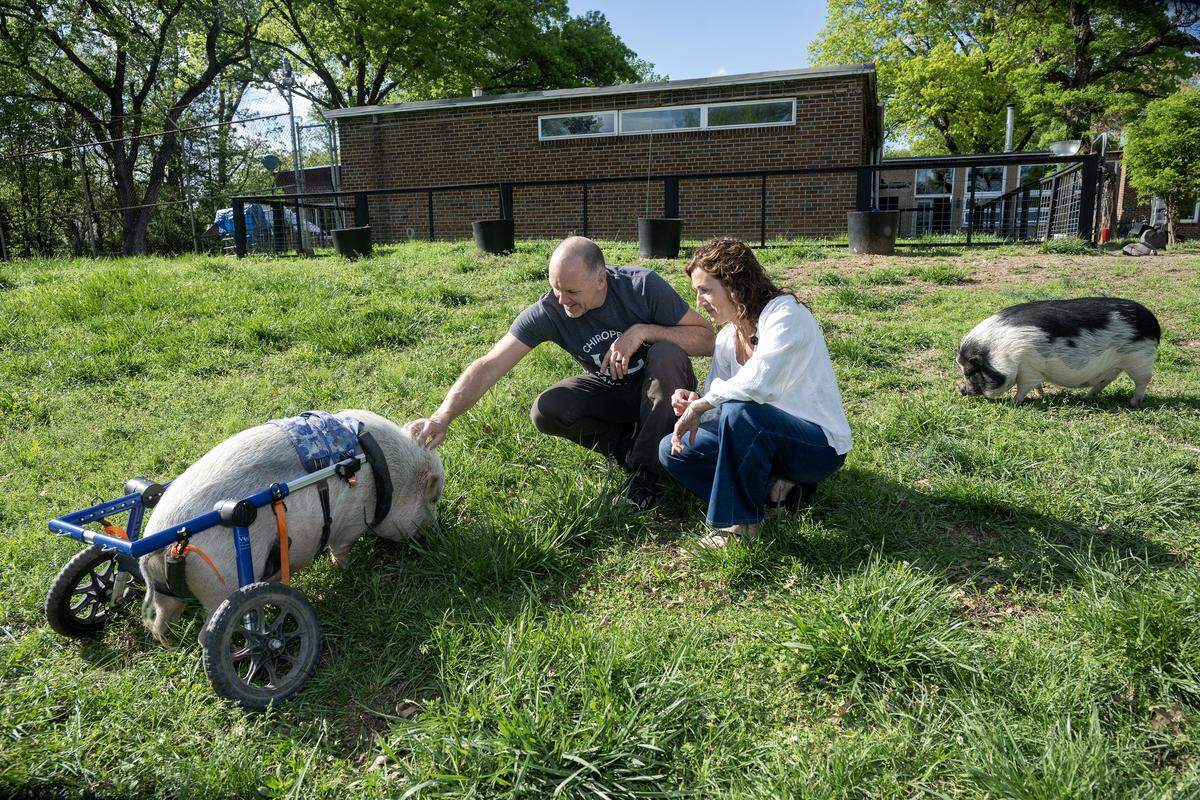
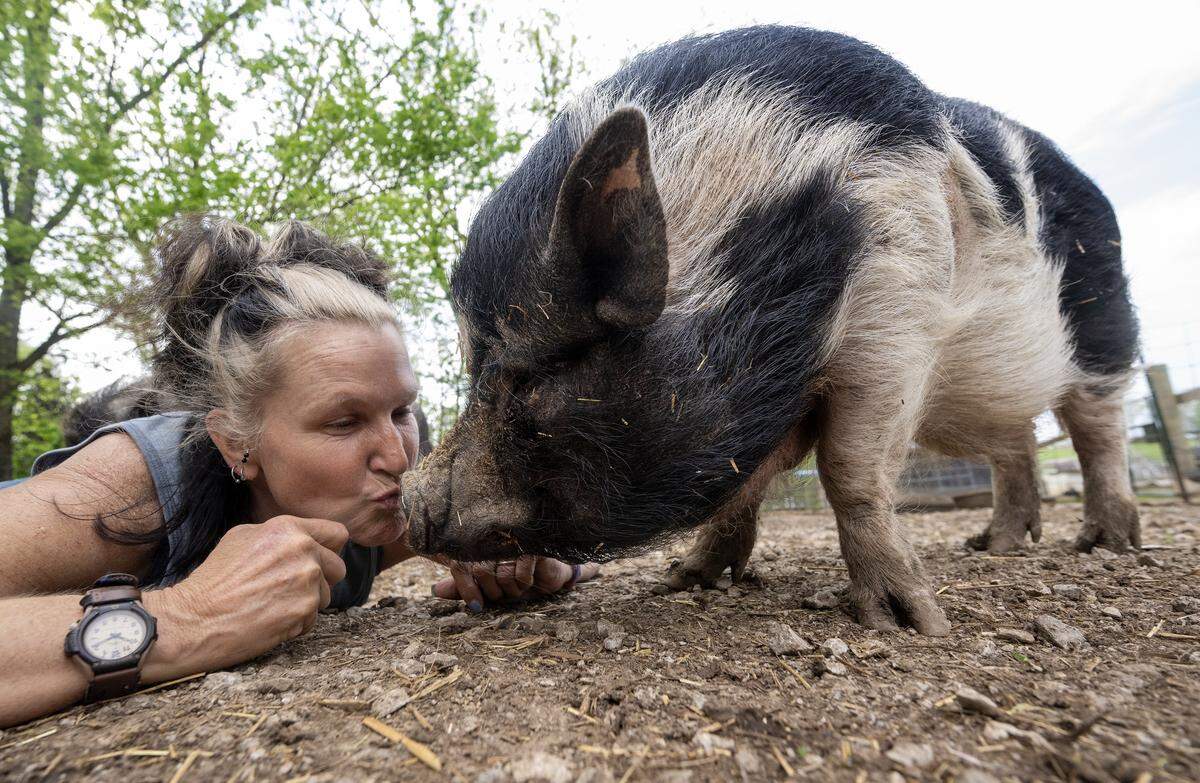
Emily McLeod, 51, and her husband Dave Jennings, 53, were never looking to make pets out of, much less fall in love with, six 100-plus-pound pigs, including one in a wheelchair — yes, a wheelchair — and another, an amputee, hopping around on three legs.
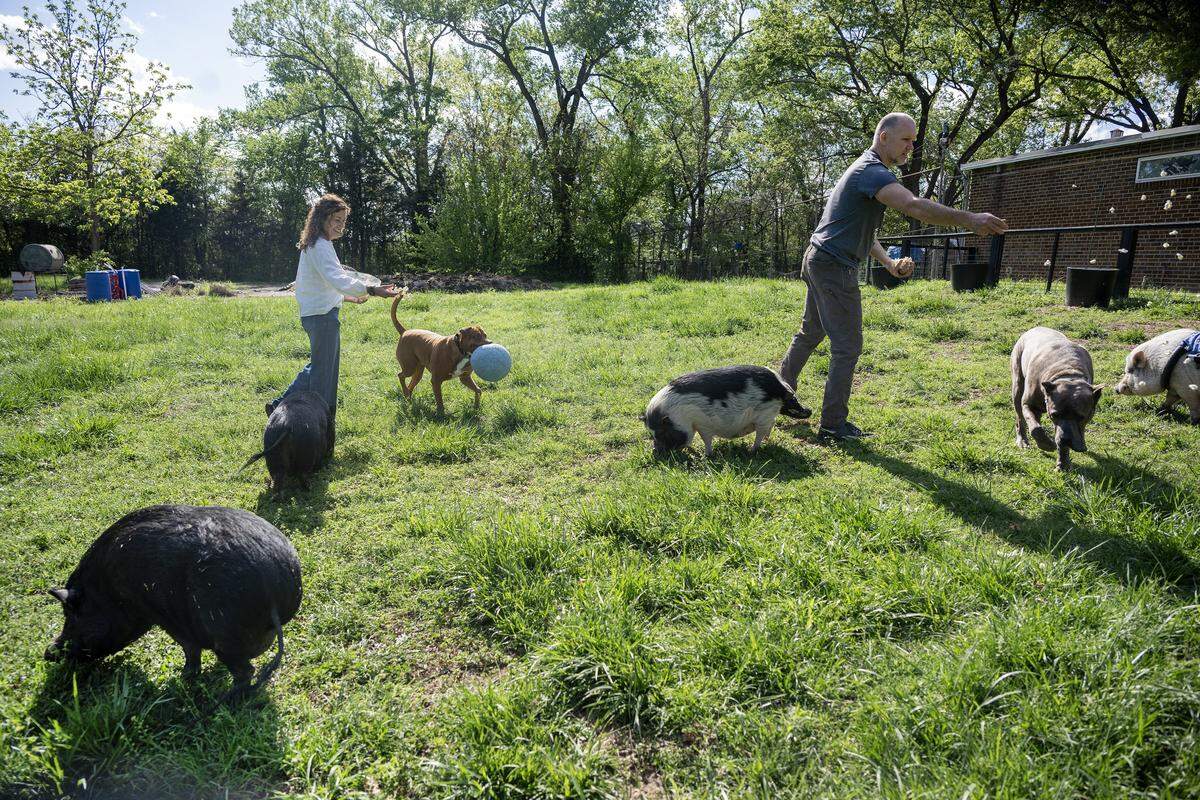
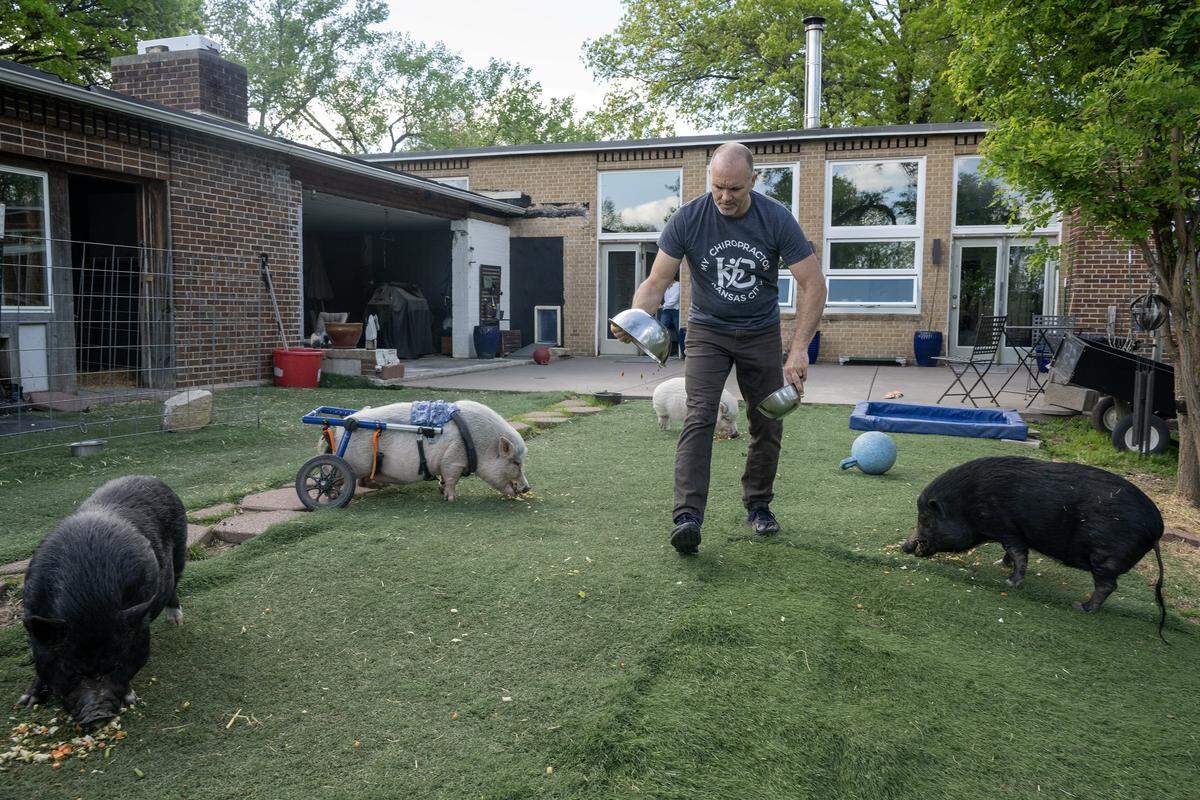
The Kansas City, Kansas, couple never imagined giving them names — Polly, Gerald, Henry, Elvis (the three-legged fellow), Maxwell (wheelchair) and Walter — and watching them, as they do now, waddle from the backyard of their curious home (a redesigned former detention center) and through the doggie door to sleep up on the sofa or on beds spread across their living room.
One pig, Walter, has his own indoor tent.
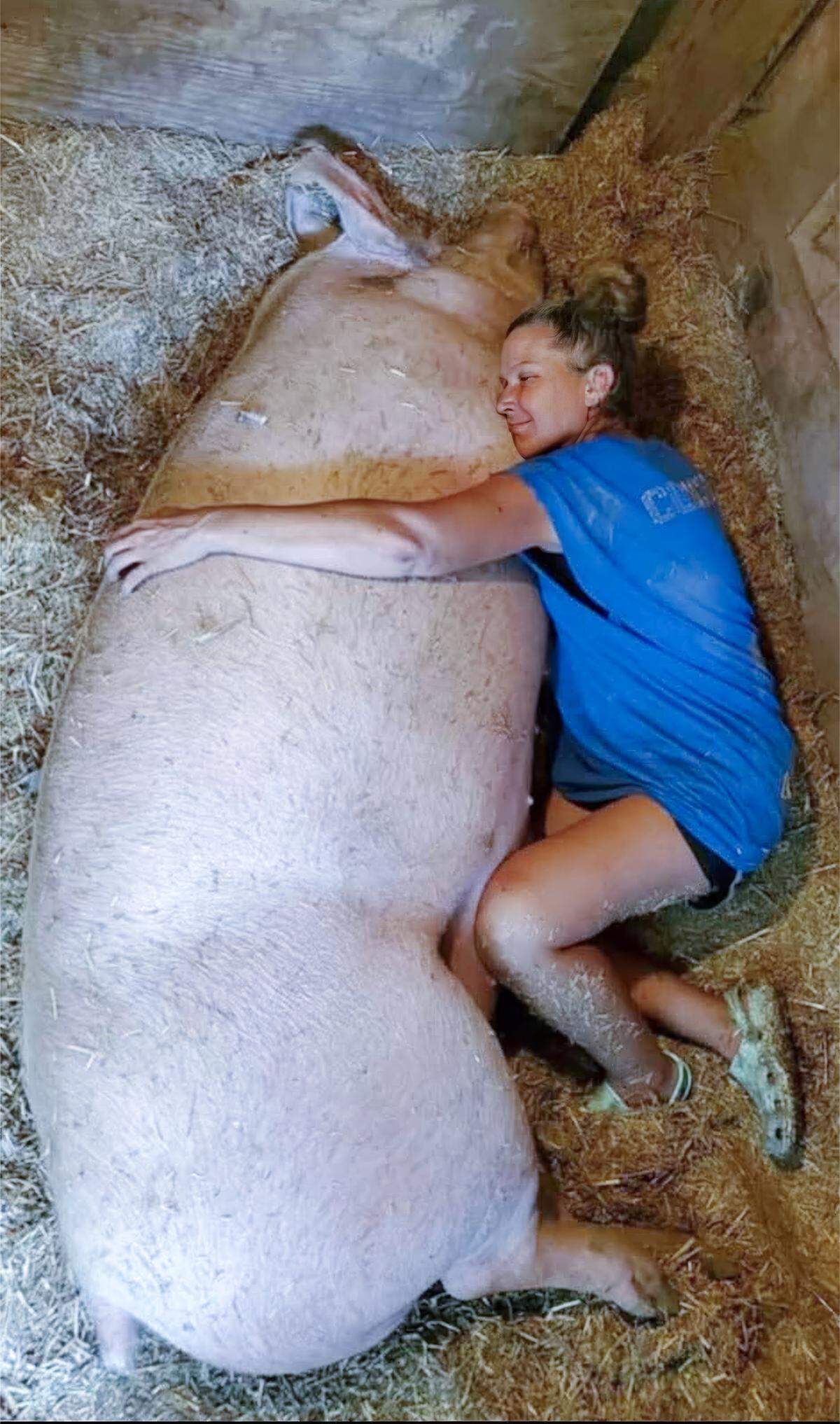
“They live in the lap of luxury,” Jennings said. “They love air conditioning in the summer. They all lounge around the wood stove in the winter. They have the best life.”
Pet pigs in Kansas City, Kansas
Truth is that when Emily and Dave made little piggy jokes over the years it was just their loving humor. They expected none of this.
“We’d give each other like little pig gifts as a passing joke,” Jennings said.
“Yeah, like I gave him a little sign that said, ‘I love you more than bacon,’” McLeod said.
Fate may have a funny bone of its own. In 2018, a friend from Virginia, who was soon to leave for vacation, called the couple. “She’s just out of the blue, like, ‘Hey, I got you guys a pig,’” Jennings recalled, “And, ‘Oh, by the way, I’m leaving in two weeks for Australia, so you’ll have to figure out how to get it to you.’”
Thus entered pig No. 1, Polly — 6 weeks old and 1.5 pounds.
“She literally fit in our hands,” McLeod said of Polly, who, as is often the case, was misleadingly sold as a “miniature” or “teacup” pig.
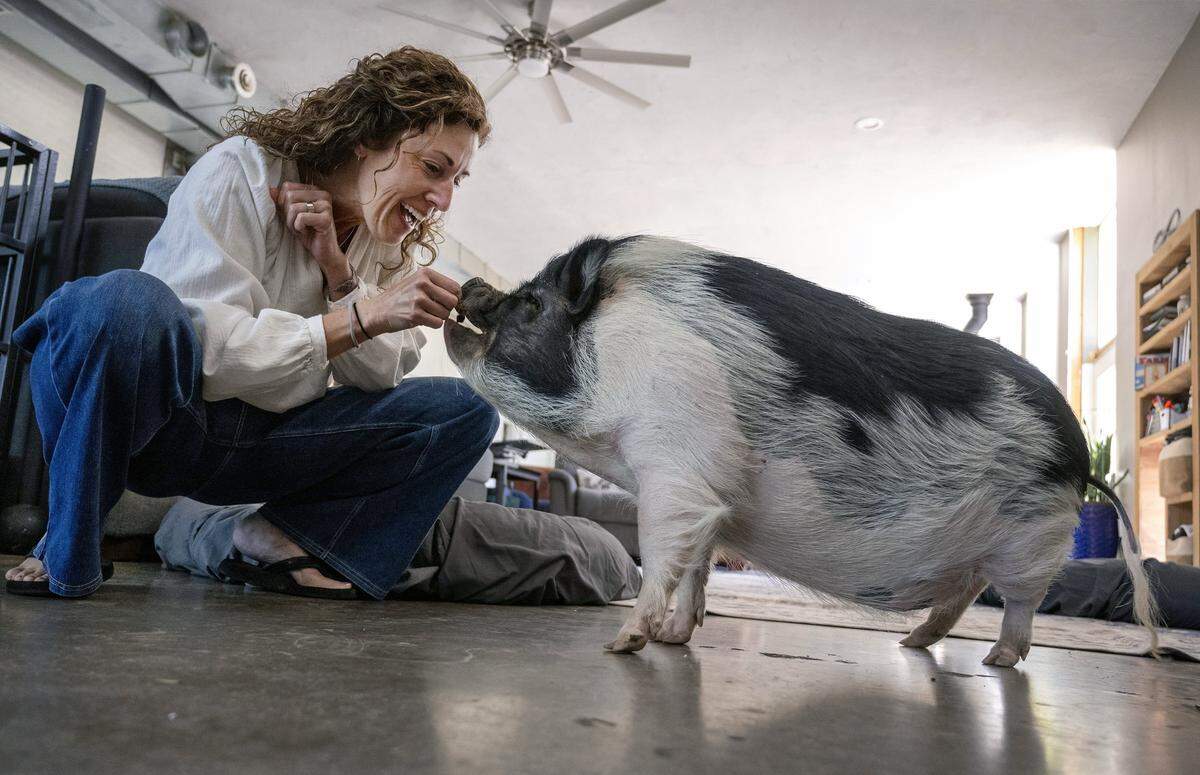
Although both Jennings, who runs My Chiropractor on Kansas City’s west side, and McLeod are massive animal lovers — McLeod runs her own animal chiropractic practice, All Creatures Chiropractic — neither knew anything about raising a pet pig, including the fact that there is no such breed as a “miniature” or “teacup“ pig.
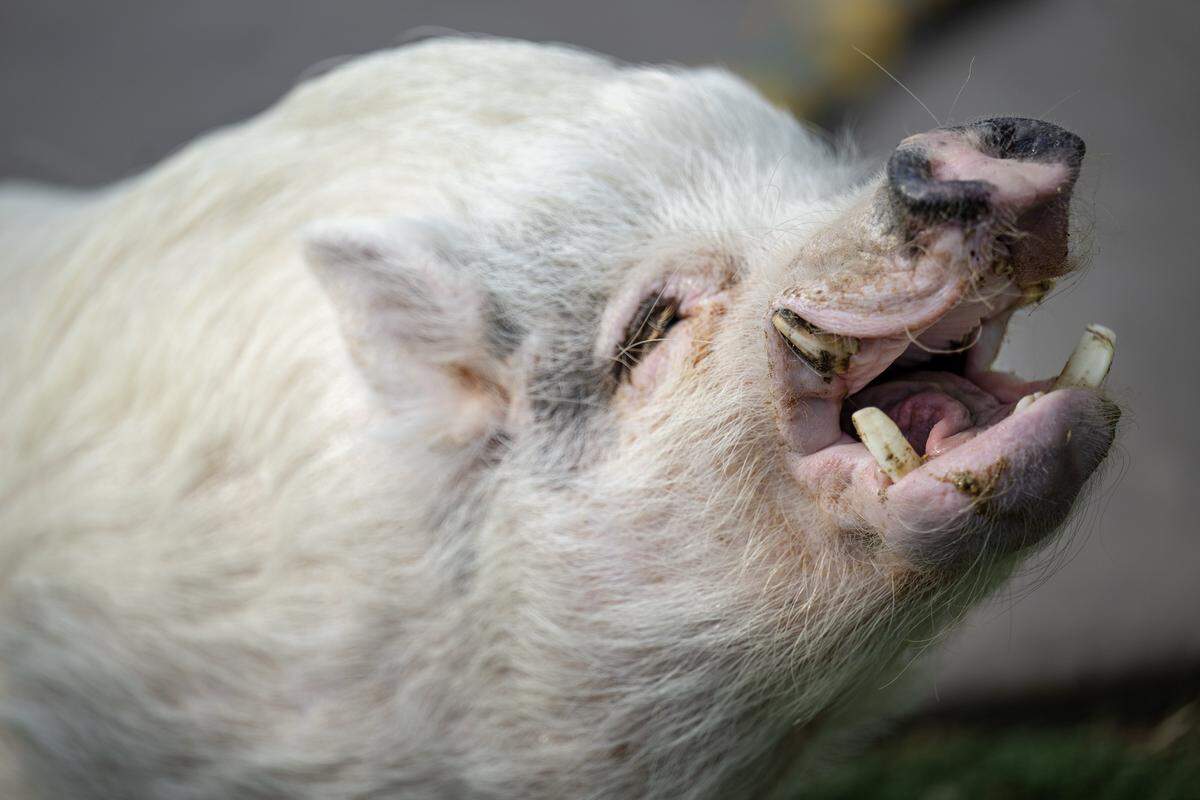
What’s known as a mixed American minipig is instead a hybrid, a mix of breeds, that stands about knee-high or 20 inches tall at the shoulder. Although they are marketed as “mini,” any mixed breed that weighs 300 pounds or less by age 5 is considered “mini” — which is only small compared to farm hogs, which can weigh 600 to 1,200 pounds. Most minis weigh 200 pounds or less.
McLeod’s and Jennings’ would eventually reach between 100 and 150 pounds.
S.O.S. to the KC Pig Rescue Network
Panicked early on, unsure of what to do or to expect, McLeod sent out a “midnight S.O.S email,” she said, to the Kansas City Pig Rescue Network, a nonprofit founded the year before, in 2017, and run 100% by volunteers. Unlike a pig sanctuary or farm where abandoned or abused pigs live out their last days, the group is focused on rescuing, fostering and finding permanent families for pigs.
More than 600 pigs have found adoptive homes since the group started nearly 10 years ago. The vast majority of them have been either abandoned or let loose by their owners in parks or along roadsides, or handed over by apartment tenants who didn’t know they weren’t allowed.
Others have been severely neglected or abused or left stranded following their owner’s death.
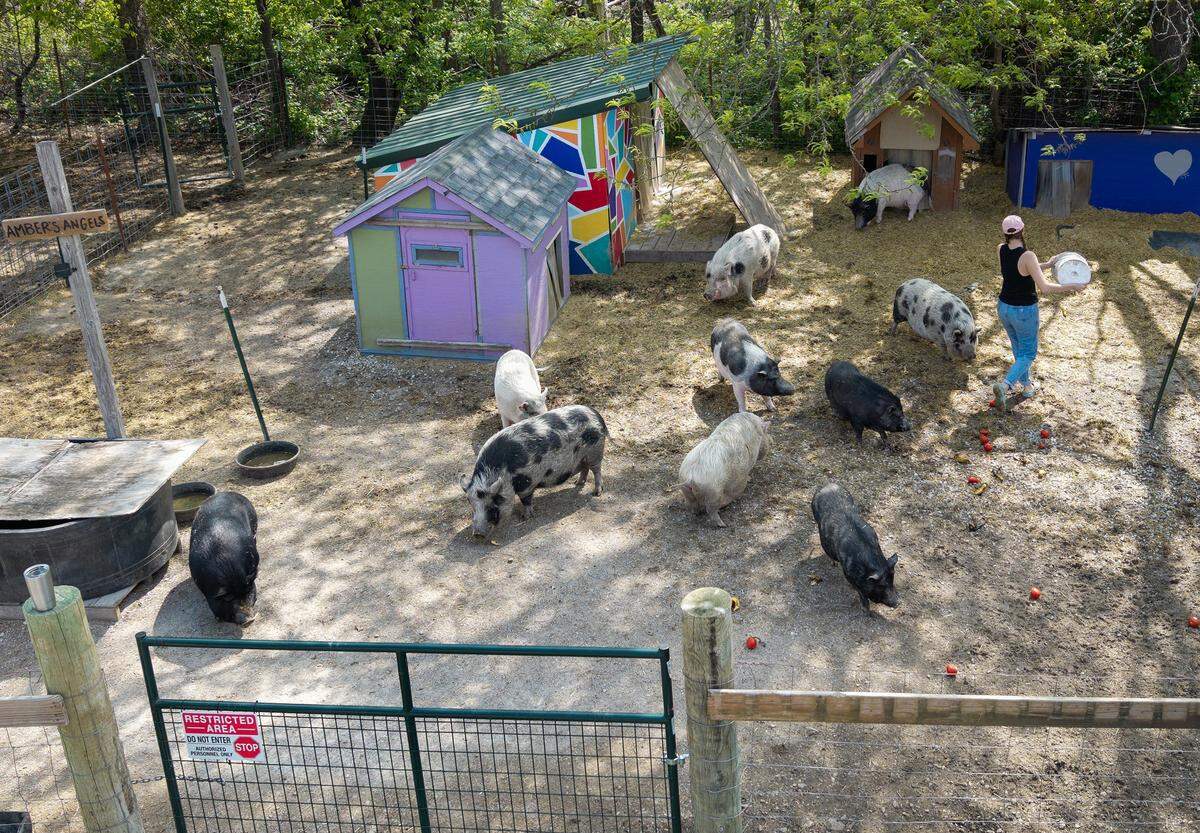
Kayli Houk, the president of the organization, who co-founded the group with vice president Jade George, recently walked the rescue’s main farmyard, an expanse of land dubbed Willeyville Farm and owned by the network’s secretary and treasurer, Angela Jones-Willey, in Cass County’s Cleveland, Missouri.
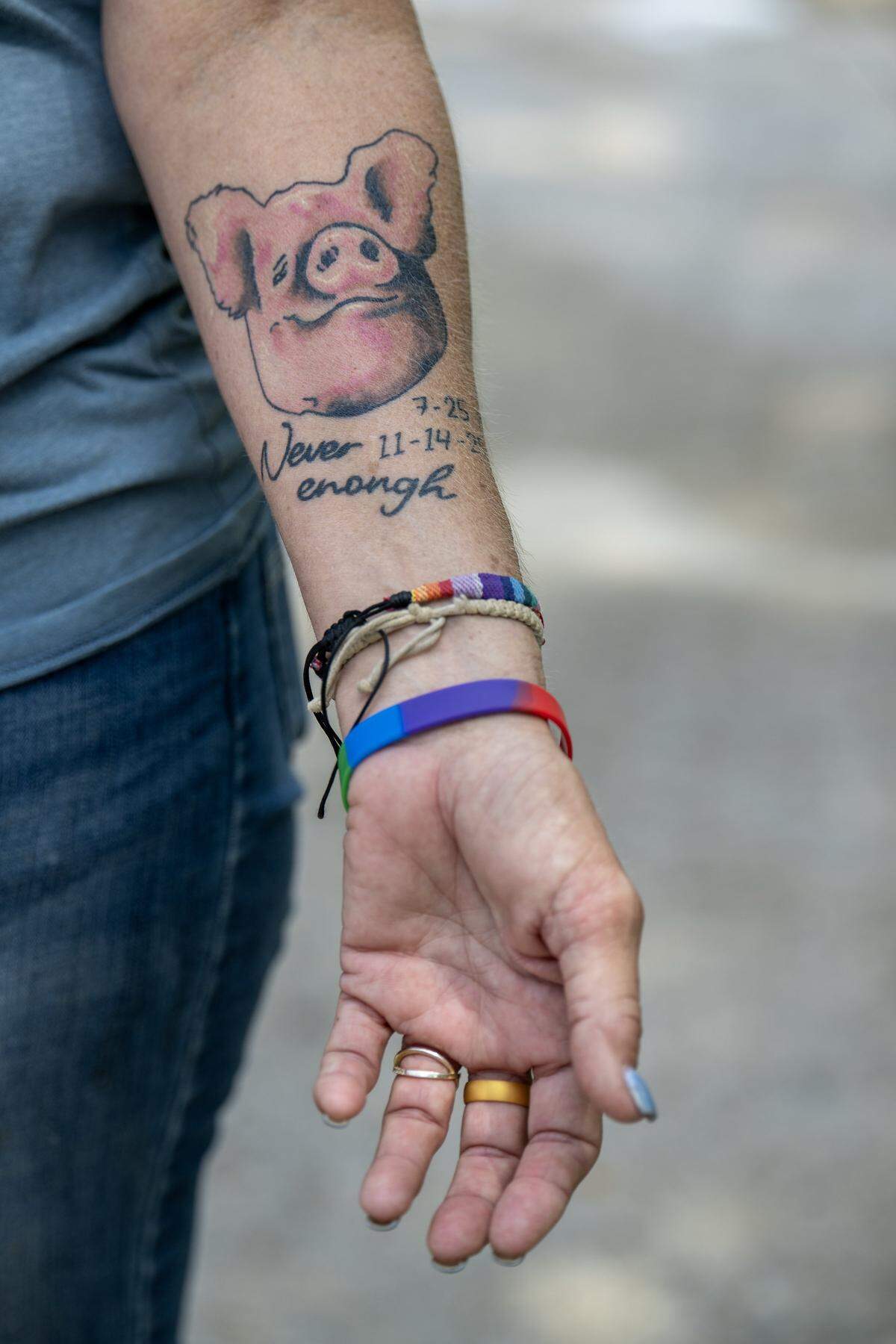
Jones-Willey has a longtime affection for pigs. A pink tattoo memorializing one of her favorites, Thad, who died last year, is inked onto the inside of her left forearm.
“I was just dumbfounded by the amount of pigs out there that need homes,” she said. She told Houk and George if they ever needed a place for emergency foster care, her place was available. “It took them about a week to contact me.”
Houk said the history of the group dates to a few years prior when a former boyfriend blindsided her, gifting her with a 10-month-old pig she named Oink, now 14. Houk, at the time, lived in a midtown Kansas City rental apartment. Pigs weren’t allowed. She was anxious.
“I began my quest for information about small-breed pigs and how to keep them as pets,” Houk said. “And what I realized at that time is that there was no good information.
“Any information you could find on pet pigs was either from teacup, nano, dwarf, micro, whatever buzzword breeders use — intentionally selling you a lie because they’re trying to make money — or they came from agricultural, vet-med, pig production type stuff. None of that applies to the longevity of a pig’s life and what they need and what their quality of life should be.”
The more she learned, the more deeply she admired them.
“Their intelligence and sensitivity, more than anything,” Houk said. “They are much, much smarter than cats and dogs. I’ve always had cats and dogs. I’ve always been a pet person, but it was so different. People will say, ‘Oh, they’re just like dogs,’ because they like to be petted and scratched. But they’re much more like cats. They’re very stingy with their affections. Everything is on their terms.
“Pigs are incredibly emotionally in-tune. The bond you can create with them is deeper because they have a deeper understanding of themselves.”
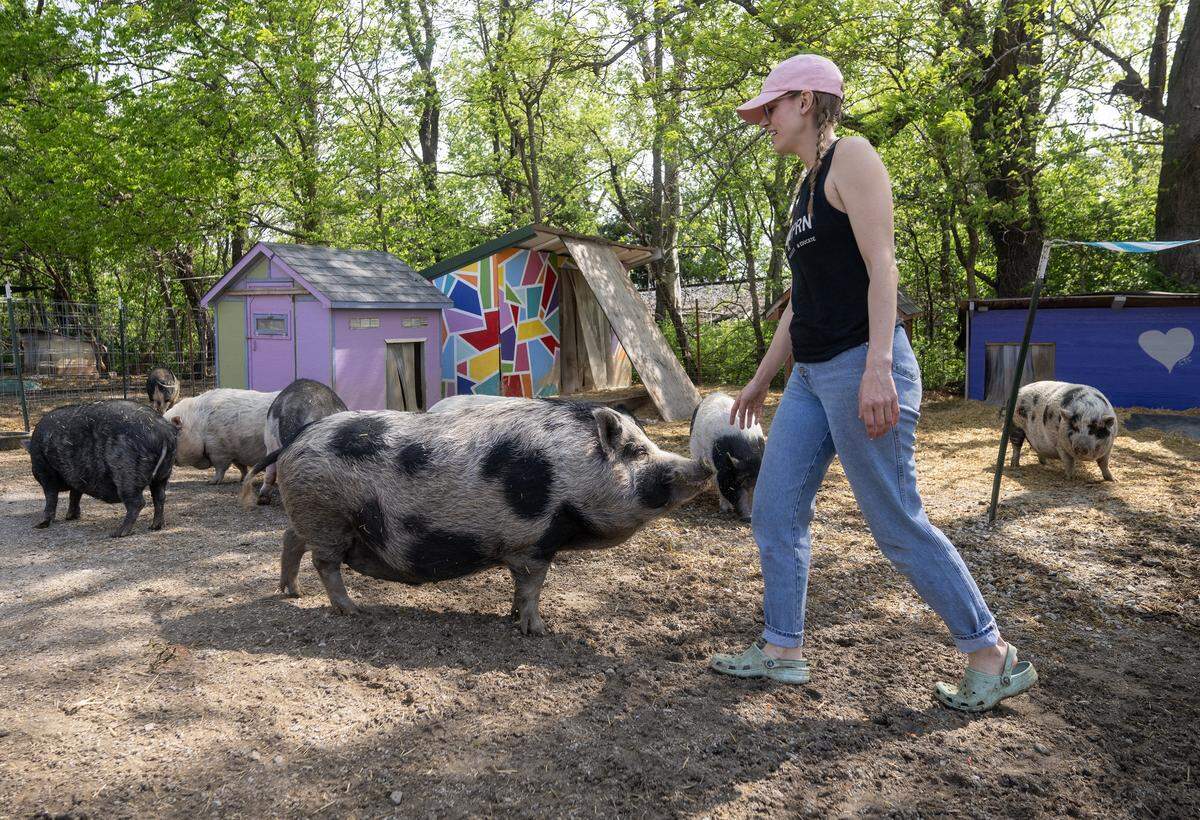
Gradually, Houk and George became known as a resource among flummoxed pig owners or owners who no longer wanted their pigs — or who weren’t allowed to have them in their apartments. More than providing guidance and education, they also began fostering or caring for abandoned, abused or neglected pigs. It spawned the network, given nonprofit status in September 2018.
Abused, neglected, abandoned pigs
At Willeyville Farm, Houk and, Jones-Willey and other volunteers were recently caring for about 40 pigs, with the goal of finding them adoptive homes. At times, the number has risen close to 100. Some volunteers foster others on their own property.
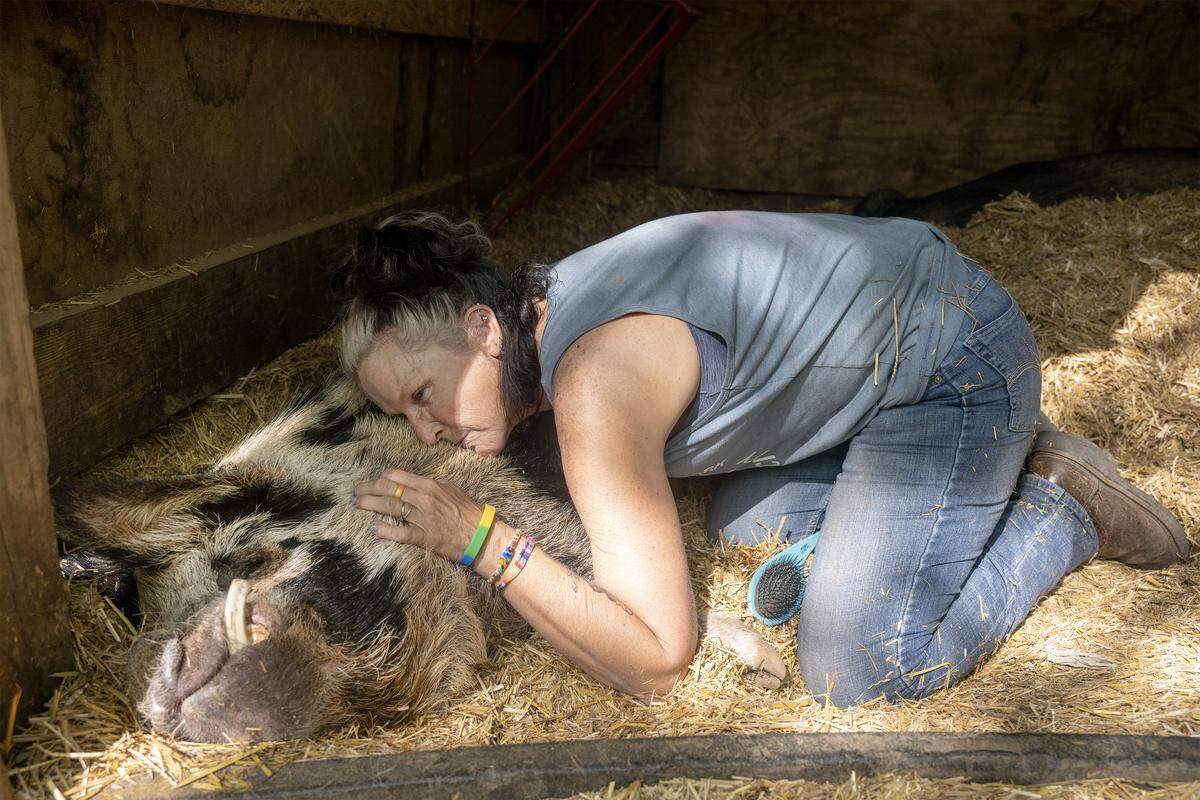
Not all can be adopted out, including Amber, a small pig born neurologically impaired and acquired in 2021 from a woman living near Topeka.
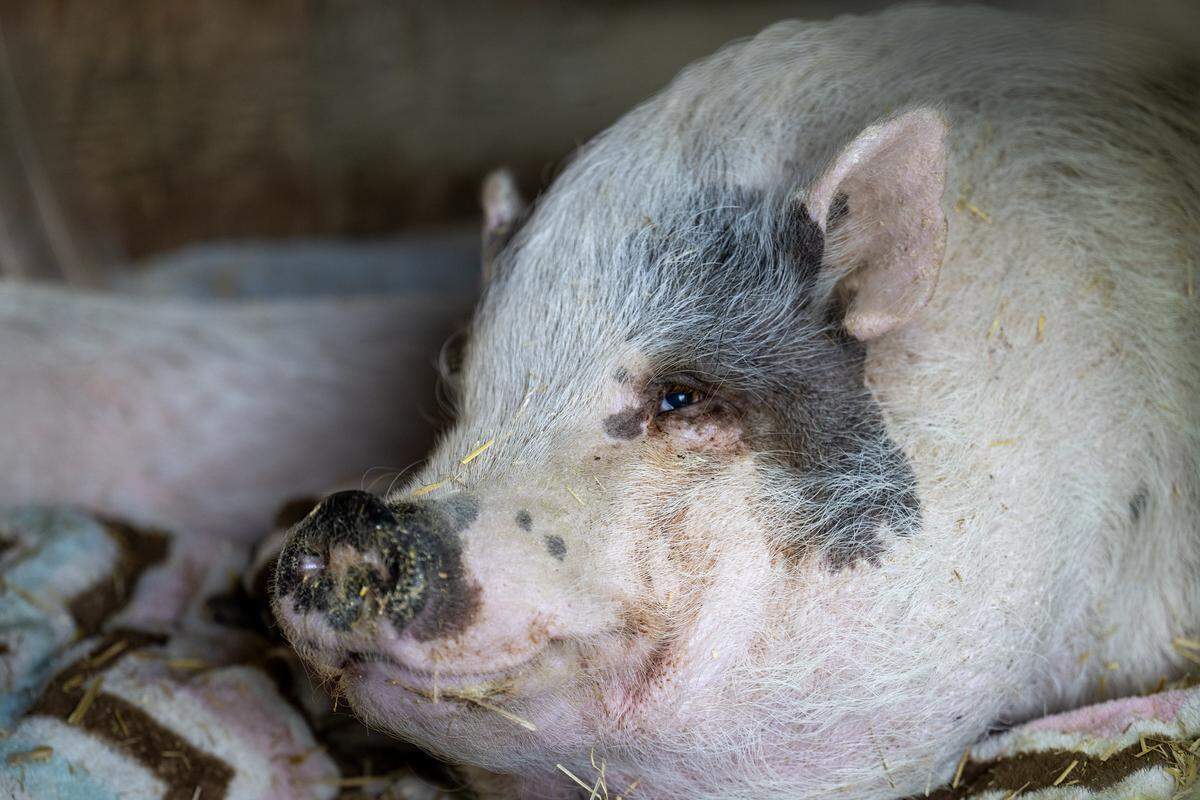
On a recent visit, Amber nuzzled in a bed of straw, as a talk radio station kept her company.
“She had a lot of seizures when she was very young,” Houk said. “It’s called ‘shaky pig syndrome.’ Essentially when she walked, she would shake and shake. She loses her balance and falls over.”
A rescue volunteer, who was on vacation, typically cares for Amber at her home. “We fully believe she can live a happy life that is full of quality and care and love, and there’s no reason that she shouldn’t,” Houk said.
Most of the rest are up for adoption, including two 1-year-old Göttingen minipigs — named Barrigan and Mulligan — sleeping near Amber and who were sent to the network by a Kansas City area testing lab after being used in research. Houk said that since 2020, the lab has sent the network between 40 and 50 pigs that have remained largely healthy after their studies, having no organ damage and thus spared euthanization.
Bred for lab research, the pigs, she said, arrive at the farm frightened and disoriented, sometimes with catheters or stents still attached.
“They live in a stainless steel environment with no sunlight,” in the lab, Houk said. “They don’t interact with one another. So when they come here, the only thing that is familiar to them is humans. The dust is new. The sun is new. The wind is new. The straw is new. . .
“It takes a really special person to adopt a prior pharmaceutical research patient. So at their homes, they are fully aware of their situation and unknowns and the trouble that may come.”
Next to Barrigan and Mulligan, lay the 12-year-old Pixie. Once surrounded by children at a Colorado daycare, Houk said, she was removed after the daycare was told it could no longer have her. She was then adopted by a new owner, but the owner died.
“She has suffered great depression since returning,” Houk said. “She doesn’t want to get up and walk around. She doesn’t want to go lay in the sun like she used to. So recently we decided to put these little babies (Mulligan and Barrigan) with her, which she mostly finds annoying. But they do provide her companionship.”
Ludo, a pig that has lost his home three times — left in a Kansas City basement by an owner who was evicted — was the one Houk intended to bring to an upcoming meet-and-greet in Kansas City.
They have pigs who have been intentionally starved to keep them small, or bred in near infancy. Others have been found in homeless camps. Some have fallen from trucks on their way to slaughter. One arrived after its owner was murdered.
“We had two small-breed pigs that we chased through Briarcliff for two whole days that were a Guatemalan dowry for a wedding,” Houk said. “They were going to be served whole-hog roasted at the wedding.”
Three-legged Elvis and friends
Nothing was the same after McLeod and Jennings called the network about their new pig.
After Polly, McLeod came to hear about Elvis, who in St. Louis had been picked up by his back legs and hurled against a wall by his owner. A back right leg hooked onto a metal pipe and shattered. A veterinarian amputated it. Sent to the KC Pig Rescue Network, Jones-Willey worked to rehabilitate him.
McLeod, an animal chiropractor, volunteered to help, offering three free chiropractic adjustments to help Elvis’s gait.
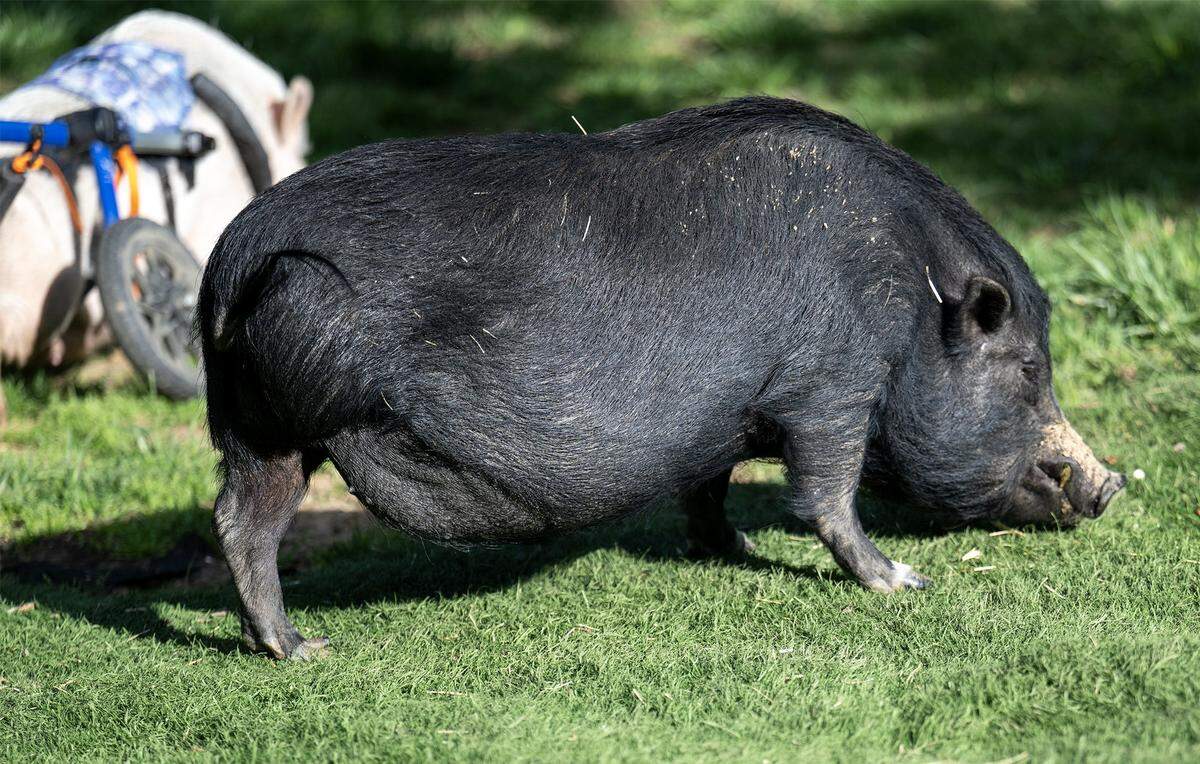
“A few free visits turned into a year’s worth of free visits,” McLeod said, “because the veterinarian loved him. Everybody loved him. And every time he would come for an appointment, the lead veterinarian would be like, ‘Elvis is in the house!’ and all the staff would come running to see him.”
Meanwhile, because pigs are herd animals, Jennings had his eye on adopting a second pig. The couple didn’t want Polly to be lonely.
Enter, in 2019, pig No. 2: Henry, who the couple quickly learned was part of a cohort of pigs that had come to be known as the Buffalo 7 — a family of seven pigs that had been severely abused by their breeder in Buffalo, Missouri, before being rescued.
“They were all starved. They were all beaten,” McLeod said. “It took Dave like two years before he could really pet Henry.”
Henry had a brother, Gerald, so they adopted him at the same time: Pig No. 3.
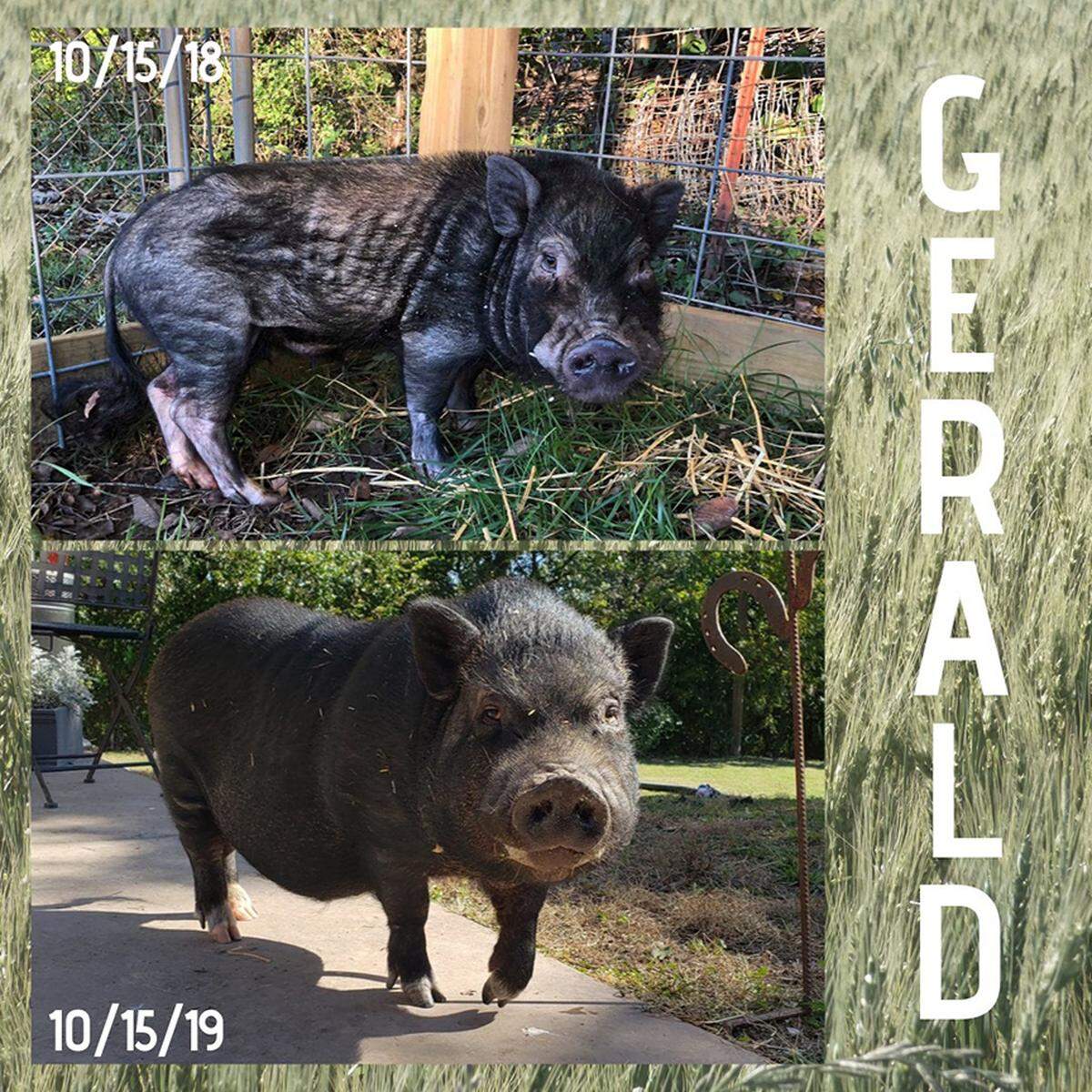
Three-legged Elvis, of course, followed at No. 4.
By that time, McLeod and Jennings had already moved into their new Wyandotte County house on seven-acres, a former county juvenile detention center that had been renovated into a residential home by the previous owner. Walls had been removed to create a large, open-concept kitchen and living room. But in the wings, some cells remained with their metal doors.
McLeod and Jennings had two dogs. They had cats. Along with their own pigs, they began fostering others.
Welcome, in 2021, pig No. 5:
Maxwell, a partially paralyzed “special needs” pig that originally came to McLeod and Jennings as what she called a “two-week euthanasia foster.” He was being kept alive as evidence in a Raytown animal abuse case.
But, as is common in the criminal justice system, two weeks turned into four weeks. In that time, McLeod and Jennings gave Maxwell chiropractic care, massages, acupuncture, laser treatments. He began to regain some use of his back legs.
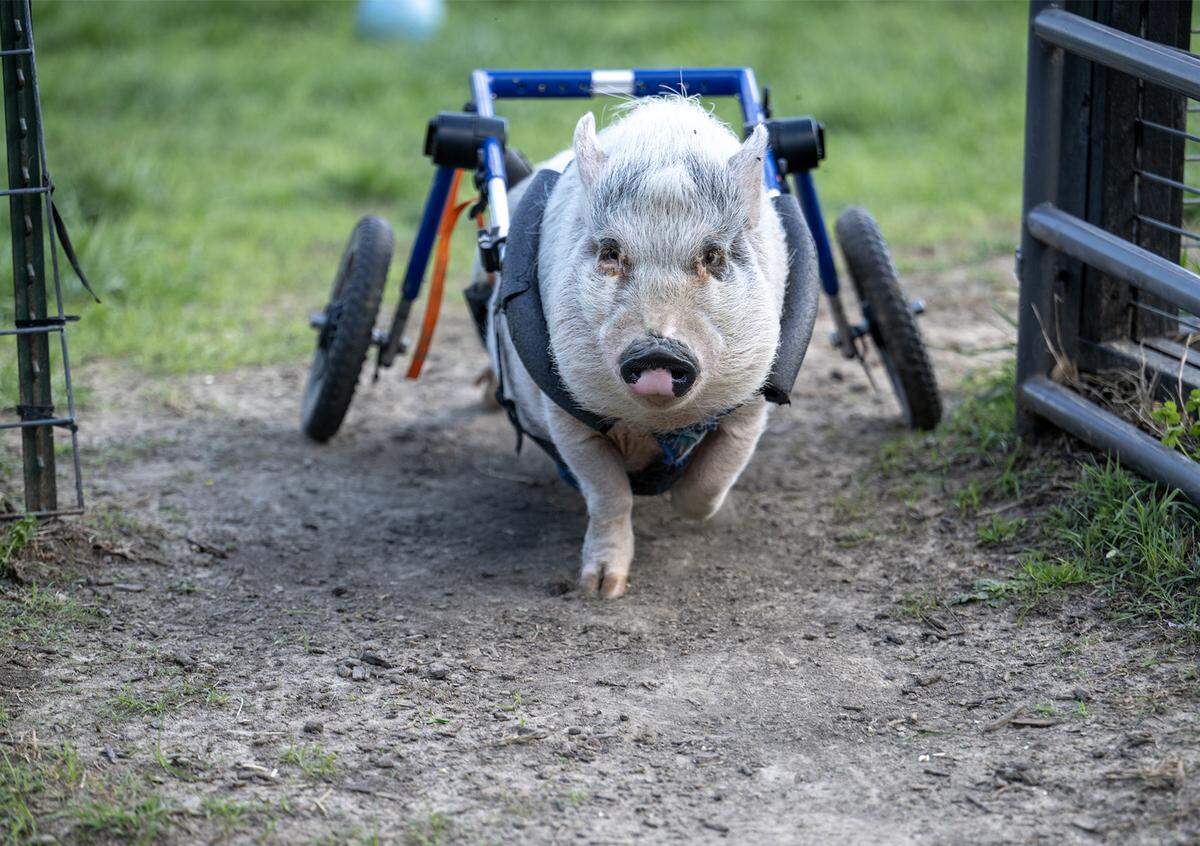
“Then we put him in a wheelchair,” McLeod said. They adopted him, too. “Maxwell now has his own Instagram page: Maxwell_Pigsworth.”
Rather than crawling through the living room doggie door, Maxwell sleeps in one of the former cells, with easy outdoor access, and his own garden.
“He’s living his very best wheelchair life, and he’s thriving,” McLeod said.
Finally, in 2023, Pig No. 6: Walter — or “Tiny King Walter” — the patriarch of the Buffalo 7 although, who was also starved at a young age and is also the smallest of the pigs.
“He is the one that goes to school with me every week,” said McLeod who, every Sunday evening, loads Walter into her car and heads down Interstate 70 to Kansas State University, where McLeod is now in her third year of veterinary school.
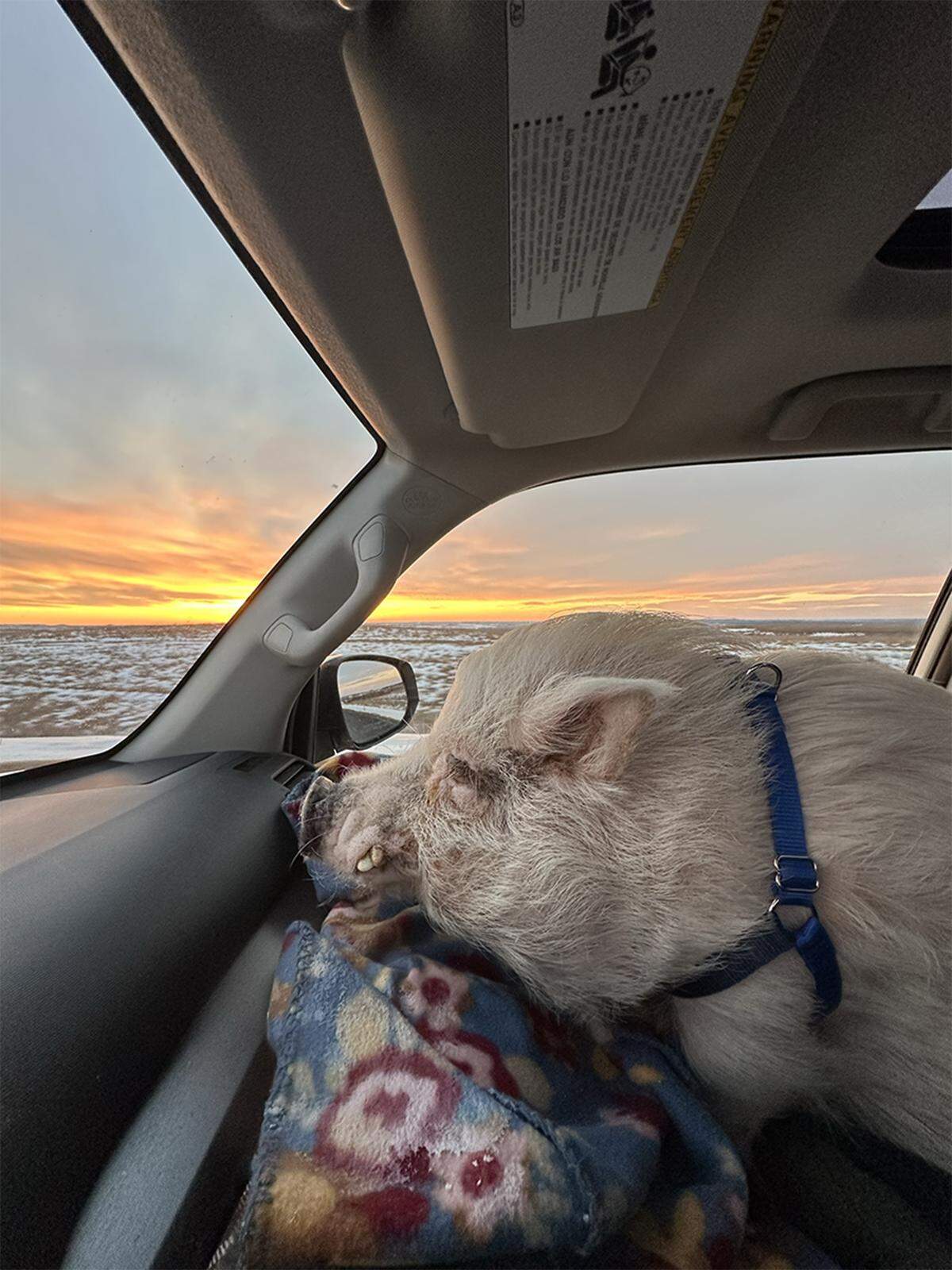
Her aim is to open a practice focusing on the care of — what else? — pet companion pigs.
Pig myths and misunderstandings
McLeod and Jennings are quick to dispel myths about their family of pigs.
Sweat like a pig? Pigs aren’t sweaty, because they have minimal sweat glands. Because they have quill-like hair and not fur, they are hypoallergenic.
Dirty? Most like to be clean, although wallowing in the mud does help keep them cool and protected from insects and the sun. Smart, they’re easily potty trained.
Yes, pigs will eat “like a hog” to obesity if allowed. Owners need to control their diets.
The couple recognizes that they’re not for everyone. And the KC Pig Rescue Network doesn’t adopt to just anyone.
It’s a process that requires an application and a vetting and training that can take weeks to months.
An important piece of information is that mixed American minipigs need to be spayed or neutered. Males can begin producing sperm as early as eight weeks old. Females can start to be impregnated as early as 11 weeks, while they're still infants.
“Behaviorally,” Houk, of the rescue network, said, “boys leave a sticky, sticky mess on everything. Yes, on your furniture, on your kids, on the pillow that you had fall off the bed on to the floor. They have a musk. That’s nature — that’s what it is.”
Females in heat: “Can be very scary,” Houk said. “They are very determined. They are very much wanting to find a man. They’ll chase you around. They’ll bite at you. Humping. Trying to hump the dog.”
It lasts, she said, from “12 weeks old when they start until the day they are spayed.”
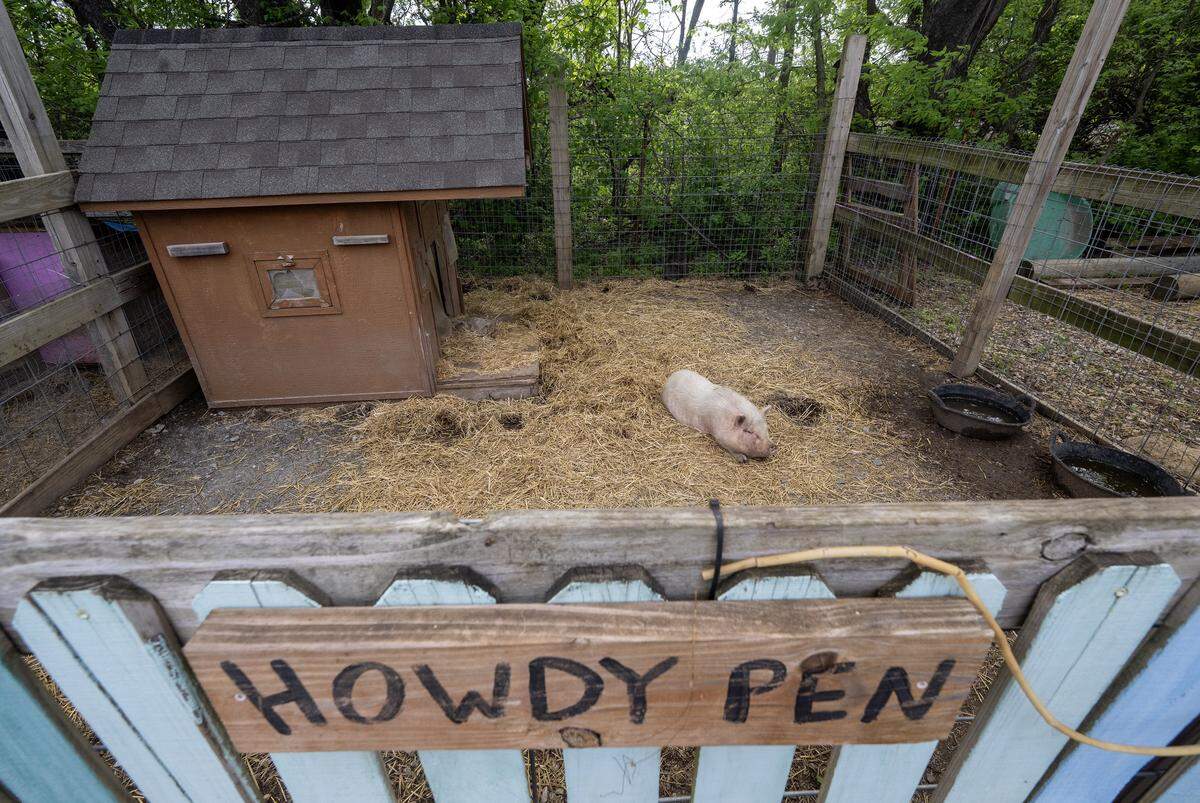
For those willing to learn and put in the time, to offer a home for a homeless pig, Houk said, the joys can be great.
“They are resilient. They are forgiving. They are persistent. They are curious. They’re very protective of one another and of their people,” Houk said. “It’s a shame that people don’t allow themselves to see it.”
McLeod and Jennings see it.
“It’s a crazy life, but it’s ours,” McLeod said. “It works for us.”
This story was originally published April 26, 2026 at 5:00 AM.