Brewer, creator, connector, mentor: How KC hip-hop artists are changing the game
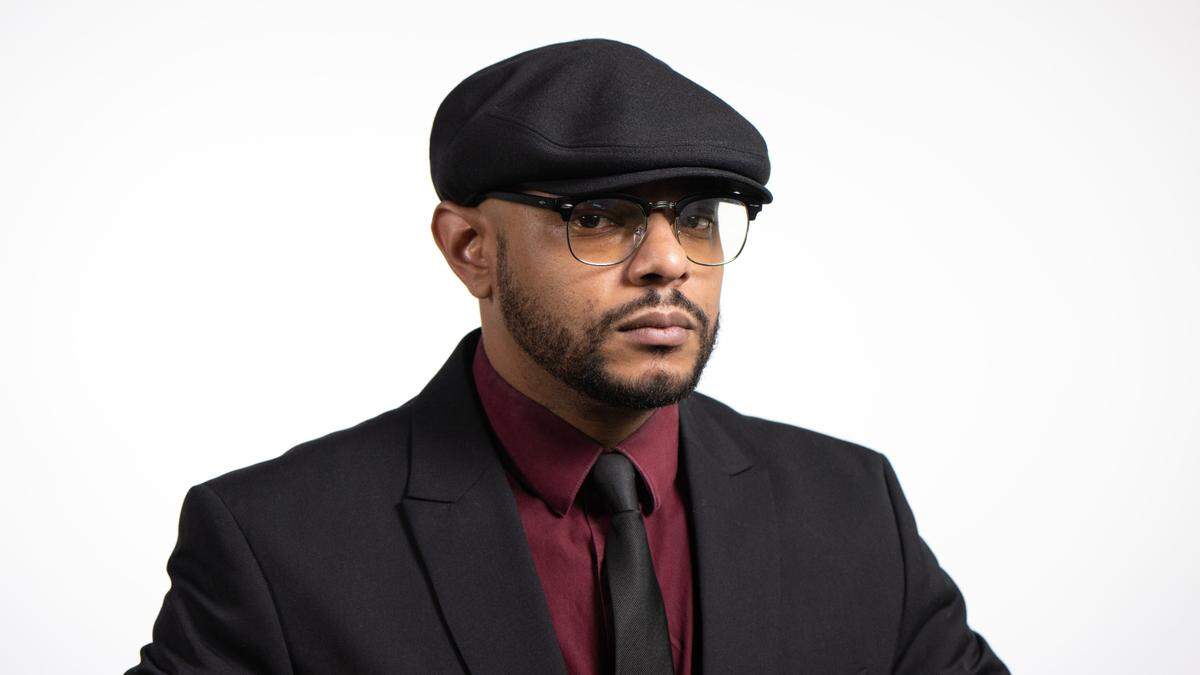
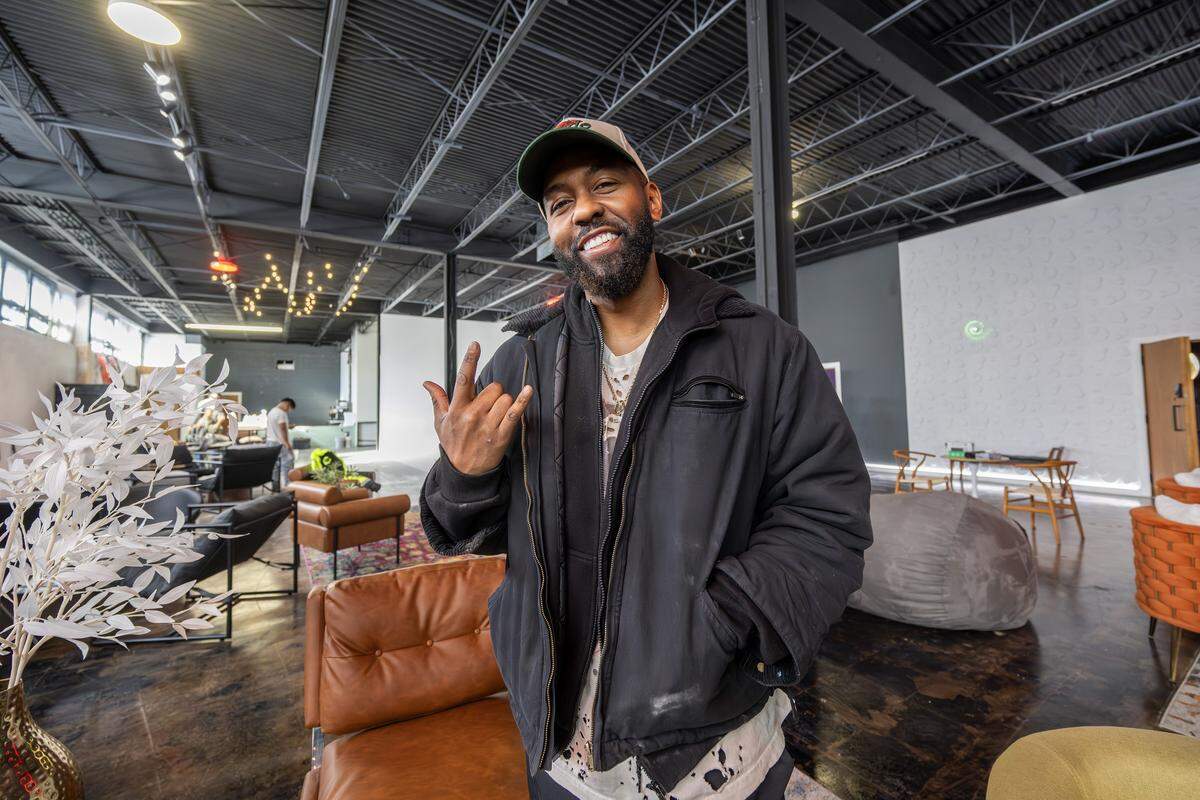
Jamel Thompson, known to his fans as The Royal Chief, has hosted many music release parties in his over more than a decade as a hip-hop artist. But on Feb. 12, he debuted a different creation — beer.
The Kansas City native partnered with Vine Street Brewing Co. to create a beer inspired by him. For the emcee, it marked a realization of how far beyond music he and many of his contemporaries have moved.
“It is amazing to see how everybody has grown,” said Thompson. “Seeing everybody making these moves and enter into new lanes is crazy.”
The taproom filled with musicians, creatives and artists, many in conversations about building platforms, creating spaces and making history.
For Thompson, Kemet Coleman, Glenn Robinson (The Epitome) and Joseph Macklin (Jo Blaq), music is still the foundation. But it is no longer the entire blueprint.
Black History Month, for them, is a moment to not only celebrate what has been built but also what comes next.
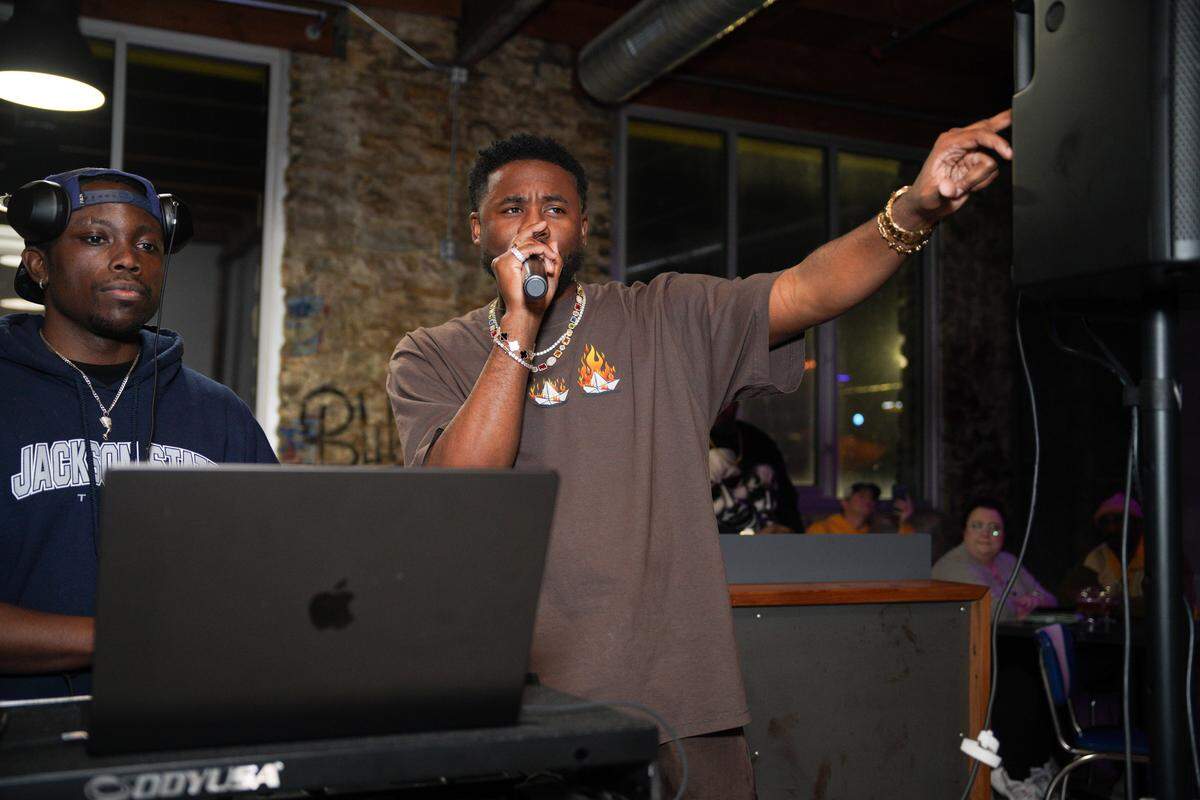
These artists epitomize how the future of Kansas City hip-hop looks less like a single lane and more like a cohesive ecosystem. From a brewery functioning as a cultural hub, a movie club turning theater outings into a community ritual, a content creator building a new kind of local influence and a producer expanding a youth-focused foundation while constructing physical space for Kansas City creatives.
Each of the four artists describes the same underlying math: If artists wait for chances to arrive, they risk missing out on opportunities. So instead, they’ve learned to create their own opportunities, then invite other people in.
Making history by making room
Coleman, a hip-hop artist and co-owner of Vine Street Brewing Co., said Black History Month is not only a time to look backward. In his mind, it should also be used to measure what is being created now.
“Black history this year means making history,” Coleman said. “That’s what we’re all about.”
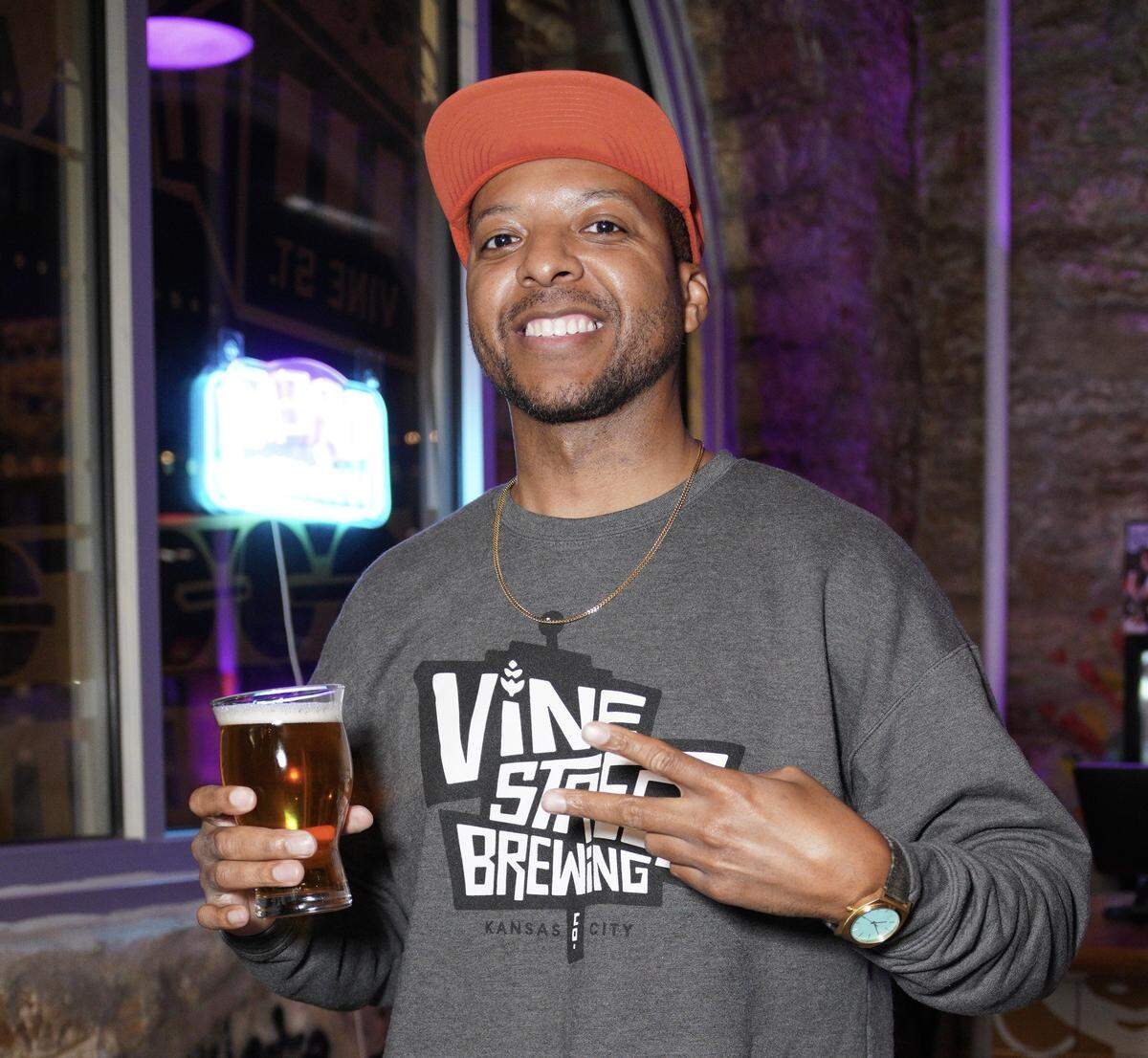
Coleman didn’t move to a city with a larger musical infrastructure because he saw gaps in Kansas City that felt large enough to build inside. Those divides were more visible when it came to Black culture and the kinds of gathering places that allow creative communities to actually stick.
“One of the reasons I decided to stay in Kansas City is because there was so much, so many kind of glaring gaps in what was available here, especially from a Black culture perspective,” Coleman said.
At Vine Street, the “gaps” Coleman talked about included practical things, like the need for more alternatives to shape the narrative of 18th and Vine. He respects the district’s jazz legacy and the institutions tasked with protecting it. But he also argues the neighborhood can hold more than one era of Black music at a time.
“Eighteenth and Vine kind of stopped at jazz,” he said.
Coleman’s point is not to replace jazz or compete with the American Jazz Museum or Mutual Musicians Foundation. It is to widen the cultural bandwidth and help tell a longer story about how Black music evolves.
“One of the goals when we opened Vine Street was to show people the elevation and the extension of jazz and influence on other genres like hip-hop, like pop music, like R&B, like house music,” he said.
The brewery owner frames that as education as much as entertainment, a way to connect roots to branches and remind people what Black invention has contributed to modern sound.
“Black people invented house music, we invented techno, we invented all these different sub drivers,” Coleman said.
A brewery as an anchor, not a novelty
Coleman remembers how he did not immediately grasp the historical weight of opening Kansas City’s first Black-owned brewery. The significance became clearer as the business moved from concept to reality, and as he realized how rare that kind of ownership still is in the region.
“It really hit me around 2021,” Coleman said. “I was like, ‘Oh my God, this actually is going to make history in the entire state.’”
The business strategy at Vine Street is built around keeping people in the room. That means programming, partnerships and, additionally, food.
Vine Street recently announced it will add Vine Street Chicken Company as a new food option in the building. Owned by Justin Clark, this opening will use a portion of the space that had been sitting unused. Coleman said the arrangement is designed to feel unified for customers, even as multiple businesses operate under the same roof.
“Basically we’re sharing the building and kind of treating it so it’s like one experience when you walk into the building, but technically several businesses,” he said.
Coleman said the decision carries cultural weight. Adding another Black-owned business at the same address, he argued, is a form of present-day progress because it expands ownership in a district that has long carried the symbolism of Black culture without always carrying its economic power.
“I feel like adding another Black-owned business in our building is making Black history today,” Coleman said “It’s a domino effect for sure.”
Programming that treats culture as the lens
Vine Street’s Black History Month approach isn’t a seasonal costume. Coleman described it as a month when the brewery increases the volume on what it tries to do year-round.
“We aren’t necessarily changing this, because our approach has always been through the lens of Black culture,” he said.
Vine Street Sessions, hosted by Janelle Rockwell, is a recurring series designed to highlight different parts of the African diaspora musically, with each week centered around a distinct theme.
Coleman has always saw beer itself as a tool for cultural education. He argues Black communities have been miseducated about beer history and ownership and he wants Vine Street to challenge that.
“We think that beer was founded in Europe when it was invented in Africa by African women,” Coleman said.
He described beer as social, practical and disarming, a way to get people in the door, then surround them with a fuller story.
Collaboration as a business model
Thompson’s beer, Opal Reign, grew out of a similar philosophy: make the collaboration accessible, and make it an invitation. He said he didn’t want a heavy product aimed only at craft beer purists. He wanted something that a casual drinker could enjoy without feeling like they had to “learn” it first.
“I wanted something that was palatable,” Thompson said. “I didn’t want nothing heavy. I wanted this to be entry level.”
He described Opal Reign as a white sangria-style ale that still reads like beer, but leans into fruit-forward flavor.
“You can taste the beer, but it does taste like a sangria,” he said. “It’s good cold. It’s good over ice.”
Thompson believed the context mattered just as much as the taste: a Black-owned brewery, a Black History Month release, and a Kansas City artist from the East Side putting his brand into a new category.
For Thompson, collaboration is not a buzzword. He sees it as the practical engine that grows audiences, introduces people to new spaces and keeps local ecosystems alive.
“Collaboration is king,” he said. “It’s the key to everything.”
In his view, cross-pollination is measurable. People who had heard of Vine Street but never visited finally walked in. People who came for a normal night out ended up in the middle of a release party and left with new connections.
Movie Club and the return to real-world community
Thompson’s expansion beyond music includes Mainstreet Movie Club, which has grown into a recurring community event built around shared movie-going and post-film discussion. The club organizes group outings, coordinates pre-movie meetups and creates structured space for conversation afterward, turning what is often a solitary activity into a social routine.
The concept grew quickly, and partnerships have helped remove friction points that keep people from showing up downtown.
“It’s kind of like a book club, but for movies,” he said.
Thompson sees discussion after the film is often where community actually forms. Some members speak often, others just observe, but the shared analysis turns the night into something closer to a live conversation than a typical outing.
“It’s almost like a podcast, in a sense,” Thompson said.
Thompson also pushes back on the idea that Kansas City doesn’t support its creatives. In his view, support is reciprocal. It begins with showing up.
“The easiest way to get somebody to support what you’re doing is to support what they’re doing,” he said.
Hip-hop as a vehicle, not a cage
Robinson’s path shows another form of expansion beyond music. A rapper who built visibility as a social media content creator with his “Hood Dude Food Reviews” he has become one of the city’s most recognizable voices in the local food space. He has increasingly used that platform to explore bigger questions about community, culture and access.
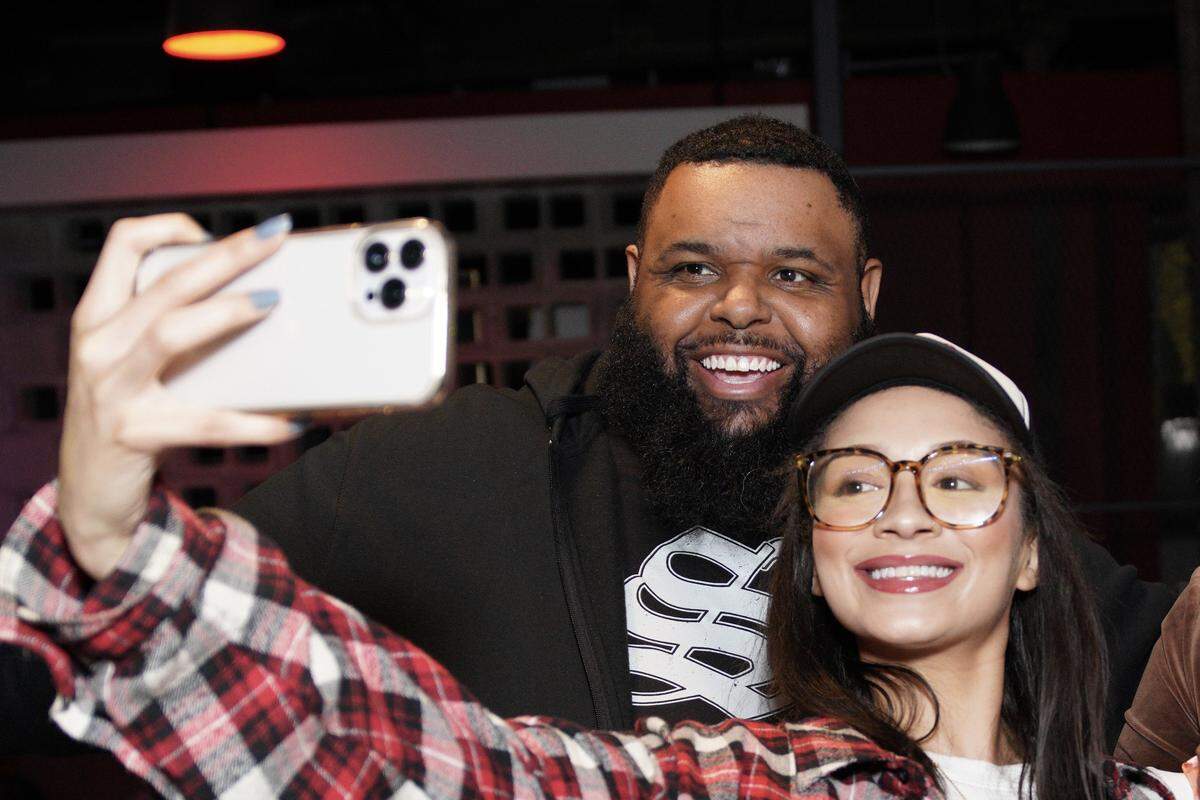
He says he finds himself constantly telling people hip-hop is not the destination, even when it’s the engine.
“Hip-hop is the vehicle to get you to your destination because it’s so hard to actually make a lucrative career out of just being a rapper,” Robinson said.
Robinson has seen firsthand how the economics are unforgiving and can feel overwhelming for those navigating the music industry. He has seen repeatedly that viral moments are real, but they don’t automatically translate into stability.
“You could do a million streams, and it’s not enough,” he said.
He views the internet as the catalyst that removed older gatekeepers and created new lanes that didn’t exist when artists had to rely on radio or traditional entertainment platforms for success.
Robinson said his own growth has forced him to recognize how much reach he actually has.
“You don’t really realize how popular you are when you’re in it,” he said.
He believes becoming a full-time creator changed his relationship to the work. What started as something he did for fun became his primary responsibility.
With that visibility, Robinson feels a responsibility to newer creators who are still learning how the business works and how to navigate questions like pricing, partnerships and sustainability.
“My responsibility is that we’re gonna make sure that the younger people, the new people, have someone they can talk to,” he said.
Though he has become one of the most easily recognizable faces among local content creators, he does see his impact being in food. Robinson is thankful for the doors it has opened but also described a desire to be remembered for more than the lane that first made him visible.
“I don’t want my legacy to be the dude who was eating sandwiches,” Robinson said.
Content creation that turns into community projects
Robinson has been working on several new projects that push his work into a larger entertainment and community territory.
He has started producing a series set around the KC Streetcar. This content displays an evolution of Robinson’s is work as a storyteller. He highlights various businesses that appear on each stop. This experience has allowed him to do research on food traditions and local history so the content is not simply a review, but a way for people to understand what different communities bring to the city.
“I’m learning so much I didn’t know,” he said. “I am excited to take the people along with me on this new adventure.”
Another series scheduled to begin in April, is built around taking familiar “ghetto-food” dishes and challenging contestants to elevate them into gourmet versions, judged by a panel. Robinson said the concept is meant to be funny, creative and accessible.
He is also developing a program teamed with local nonprofits tied to feeding unhoused residents, working with nonprofits and aiming to scale the effort significantly. He described it as a way to convert attention into tangible impact.
“We want to try to feed a thousand homeless people,” Robinson said.
Building infrastructure and telling the story
Macklin, known as Jo Blaq, describes his current chapter as both ambitious and rooted: national-level music work, local civic partnerships, and a steady focus on youth and storytelling through his foundation.
He said the Kansas City Current approached him about becoming an ambassador connected to an online series highlighting Black-owned businesses and community impact.
He said the partnership expanded to include music created specifically for the episodes and, potentially, an anthem connected to the stadium experience. He said the working title is “Current City.”
Macklin described the stadium context as uniquely powerful because it creates a shared moment across demographics.
“To be able to possibly have an anthem that all people might be singing when the game starts, it’s crazy,” Macklin said.
The woman sports team has made it a point to support Black artists during the month, selecting Thompson as their ambassador last year, who created the track “Teal Town.”
He said that kind of collaboration feels aligned with his broader commitment to building partnerships that move the city forward, rather than simply adding another credit.
Macklin has been building physical infrastructure for creators for years now, since returning from a successful career as a Grammy-nominated music producer in Los Angeles. He has created platforms to showcase artists and launched a creative hub designed to give local artists, producers and content creators access to studios, production tools and membership.
Macklin’s next steps is to start working on a string of possible documentaries in development. These projects include one centered on his foundation and the high school kids he works with. This still untitled piece would be a series, told as a long-form project that could become episodic that he would like to shop around to different companies.
He said the value of that kind of storytelling is getting out to the masses and accuracy, not spectacle.
“The majority of this stuff is exposure,” said Macklin.
Another documentary concept in the works is “Long Way Home,” which will document various Kansas City artists and the story of Black music in the metro. While both are still currently in the pre-production stage, Macklin sees this move into documenting as a desire to protect the story.
“This is our story,” said Macklin “My biggest thing is I want to tell the stories and tell them the right way.”
The shared pattern
Coleman, Thompson, Robinson and Macklin don’t present their work as leaving hip-hop behind. They present it as hip-hop continuing, just in new forms. From performing on stage to speaking at community engagements, these artists have risen above what many believed local rappers or producers capable of.
Black History Month becomes, for them, is a reminder to keep building. The goal is not simply to be seen. It is to create places where people can return, where the next generation can enter and where Black history is not only remembered, but constructed.
“If anything, we are creating platforms that didn’t exist,” said Thompson. “We’re not selling CDs no more.”
This story was originally published February 27, 2026 at 5:00 AM.