At City Hall, builders see hope as Kansas City reconsiders energy codes

When Kansas City officials moved Tuesday to fast-track a modular jail ahead of the 2026 FIFA World Cup, the headline item was money: nearly $4 million more to address newly identified design, utility and site placement needs.
But also included in the discussion was a signal — not the first — that City Hall may be inching toward a broader rethinking of the building and energy standards it adopted just a few years ago.
To meet the World Cup deadline, the Finance, Governance and Public Safety Committee recommended waiving the city’s long-standing requirement that new public buildings meet the LEED Gold environmental standard. Mayor Quinton Lucas went further, suggesting the requirement should not apply at all to facilities funded by the city’s public safety sales tax.
“I think we can still meet good environmental standards without meeting this one articulated industry standard,” Lucas said during the meeting. “I don’t think it’s something we should implement to slow down our public safety programs that the taxpayers approved.”
The amendment — carving detention facilities and certain community resource buildings out of the LEED Gold mandate — cleared the committee. It also carried an element of irony for local home builders like Brian Mertz.
“I did think it was odd for the committee to grant the city a pass on following their own standards,” Mertz said, “while they have not revised the standards that would help home builders in the Kansas City marketplace build more houses.”
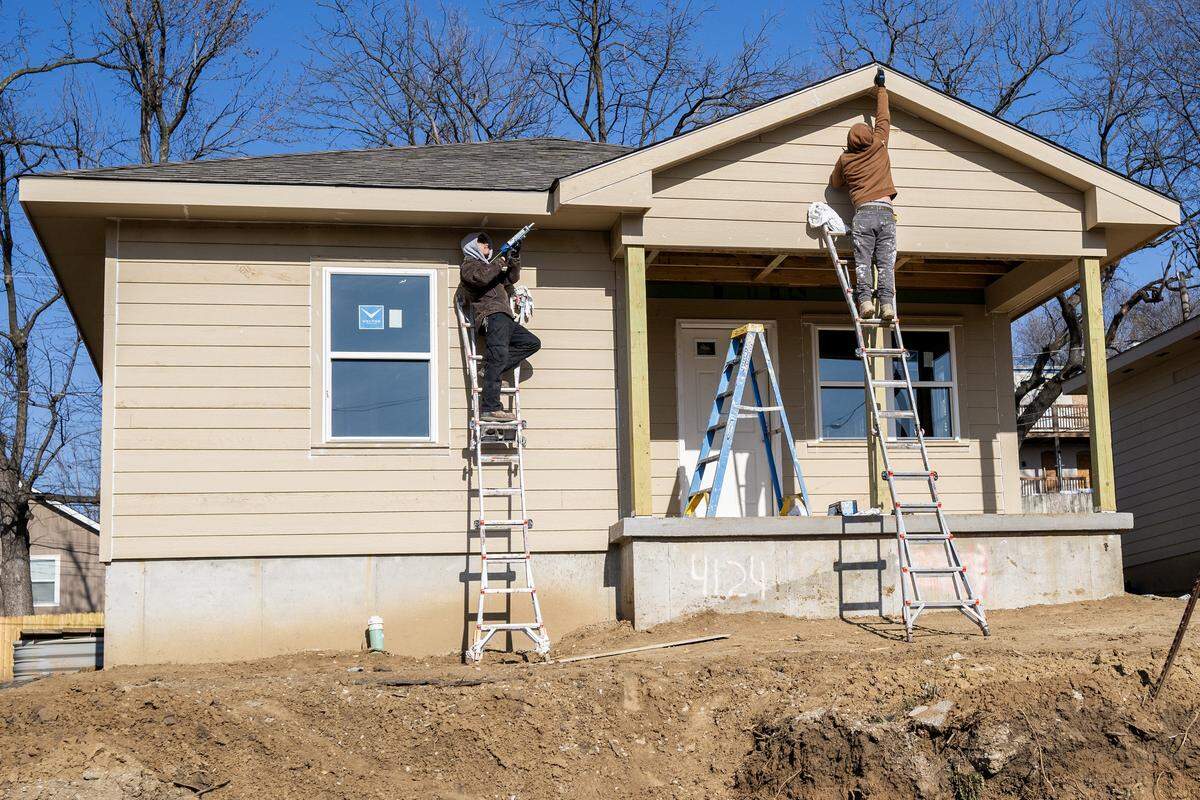
Mertz said the city’s willingness to exempt itself from its own requirements underscores a frustration builders have been raising since Kansas City adopted more stringent energy codes tied to the 2021 International Energy Conservation Code.
Mertz and other residential builders in Kansas City aren’t required to build LEED-certified housing. But the IECC means homes constructed in Kansas City must have stricter air-sealing standards verified through blower door tests, mandatory mechanical ventilation systems, higher insulation and window requirements, and additional third-party inspections.
“Those are all added costs,” Mertz said. “They add to the cost of construction, they add to the timeline for getting a permit — which is already painfully slow in Kansas City — and ultimately they have resulted in an extreme slowdown in construction in Kansas City. Which means the citizens here have less houses that are financially obtainable.”
A regional mismatch
Kansas City adopted the IECC in 2023. It passed despite No votes from the city council’s four Northland representatives at the time: Kevin O’Neill, Heather Hall, Teresa Loar, and Dan Fowler.
The Northland, which has more undeveloped land and larger parcels available for new construction than other parts of Kansas City, has continued to produce opposition to the code from its council members.
“Kansas City decided a few years ago to try to lead on this and pass more restrictive energy codes with the hopes that others in the area would follow,” said 2nd District Councilman Wes Rogers. “But that hasn’t happened. And in fact, other jurisdictions have started to see the benefit in keeping their codes the way they are.”
The numbers bear that out. The IECC went into effect in September 2023. By February of the following year, single-family home construction permits in the overall metro increased by 179%. But in Kansas City, Missouri, permits decreased by 74%.
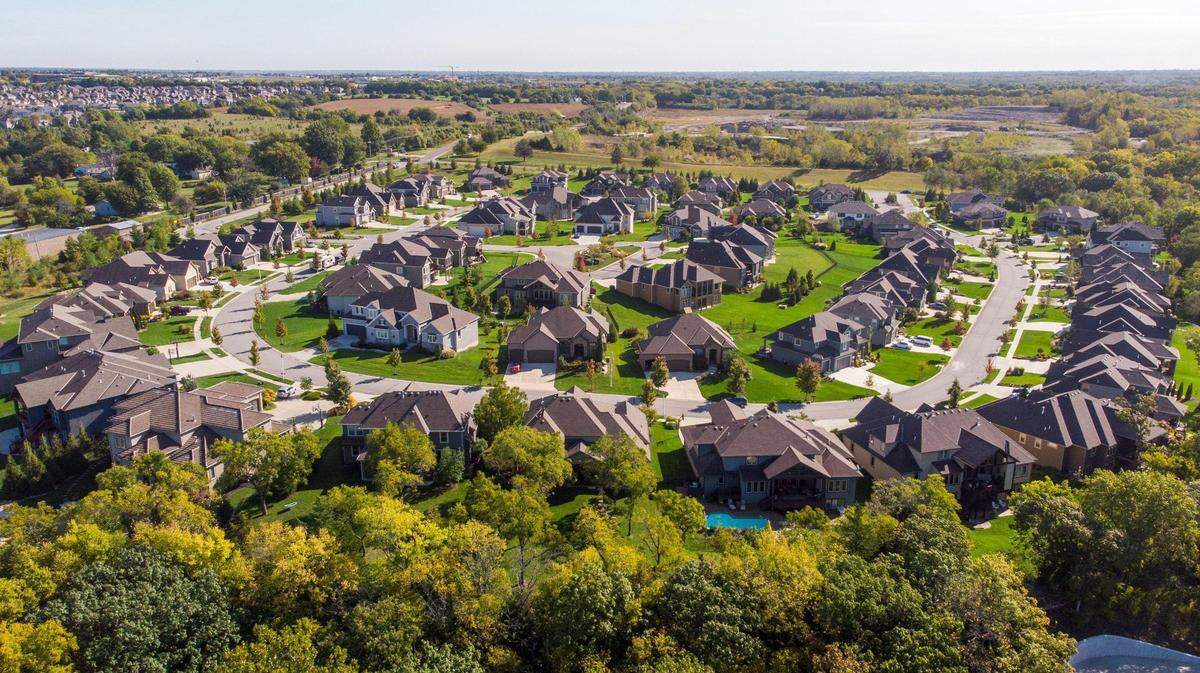
More recently, figures from the Home Builders Association of Greater Kansas City show that from January to October 2025, Johnson County (population about 620,000) issued 1,569 residential building permits for single-family homes, compared with 442 in Kansas City, Missouri, population about 500,000. In that same time frame the previous year, Lee’s Summit and Kansas City had the exact same number of single family permits issued — 375 — even though Lee’s Summit is a fifth of the size of Kansas City.
“You’re seeing a big boom in Lee’s Summit, a boom in Blue Springs, a big boom in Overland Park,” said 1st District Councilman Nathan Willett. “And unfortunately, in Kansas City, we’re seeing an overall decline.”

Those statistics reflect a range of factors, including land availability and the prevalence of large subdivision-style development in suburban areas, making direct comparisons imperfect. But in a city with a dire housing shortage, the gap has sharpened scrutiny of policies that critics say make building in Kansas City more difficult.
Rogers, who sits on the committee that on Tuesday recommended waiving the LEED requirement for the modular jail, said the city’s approach to energy codes warrants a much broader discussion.
“I wouldn’t stop with public safety projects,” Rogers said. “Obviously, I believe we need to be good stewards of the environment. I think there are ways we can still be a leader on energy efficiency. But we need to change our approach so it better matches what parts of the Northland and Johnson County are doing.”
City manager reviewing energy codes
That conversation is already taking shape in city manager Mario Vasquez’s office. Willett and Mayor Lucas in December co-sponsored a resolution directing the city manager to revisit Kansas City’s energy code and align it more closely with surrounding municipalities. Lucas told The Star in a statement that he has been “actively examining how our code impacts competitiveness for development and construction.”
Willett said the same issues raised by the jail are playing out across other publicly funded projects.
“Some of it is actually hurting our public schools, because when you try to do a bond project, it ends up being anywhere from 5 to 15% more expensive if it’s in Kansas City,” Willett said. “So the taxpayer dollars don’t go as far and the projects don’t deliver everything they should.”
He mentioned recent construction in the Park Hill School District, where Park Hill South High School opened new gym facilities while a similar project at Park Hill High School, inside Kansas City limits, took longer to complete. At Hodge Park, where the city recently installed pickleball courts, Willett said the energy code was applied to a shade structure over the benches, slowing down the project by several months. Rogers pointed to a modest middle school concession stand at the Platte Purchase Activities Complex, where he said compliance with the energy code added roughly $30,000 to the bill.
Residentially, Willett said the added costs associated with the city’s energy code fall hardest on smaller homes, where margins are thinner and buyers are more price-sensitive. In his Northland district, he said, construction has continued at the high end while entry-level homes have largely disappeared.
“You’re not really seeing the 1,200- to 2,000-square-foot homes anymore,” Willett said. “And if they are out there, they’re priced so high you might as well go build somewhere else. So it ends up hurting middle class folks looking for starter homes more than anyone.”
The resolution co-sponsored by Willett and Lucas, which passed unanimously on Dec. 11, directs the city manager to report back to the council within 45 days. The outcome is being closely watched: the Home Builders Association of Greater Kansas City has launched a campaign called Let Builders Build. Its website’s home page features a countdown clock marking the days until Vasquez is due to deliver his recommendations.