Larry Hollins, father and longtime KC jail guard known for discipline, dies at 68
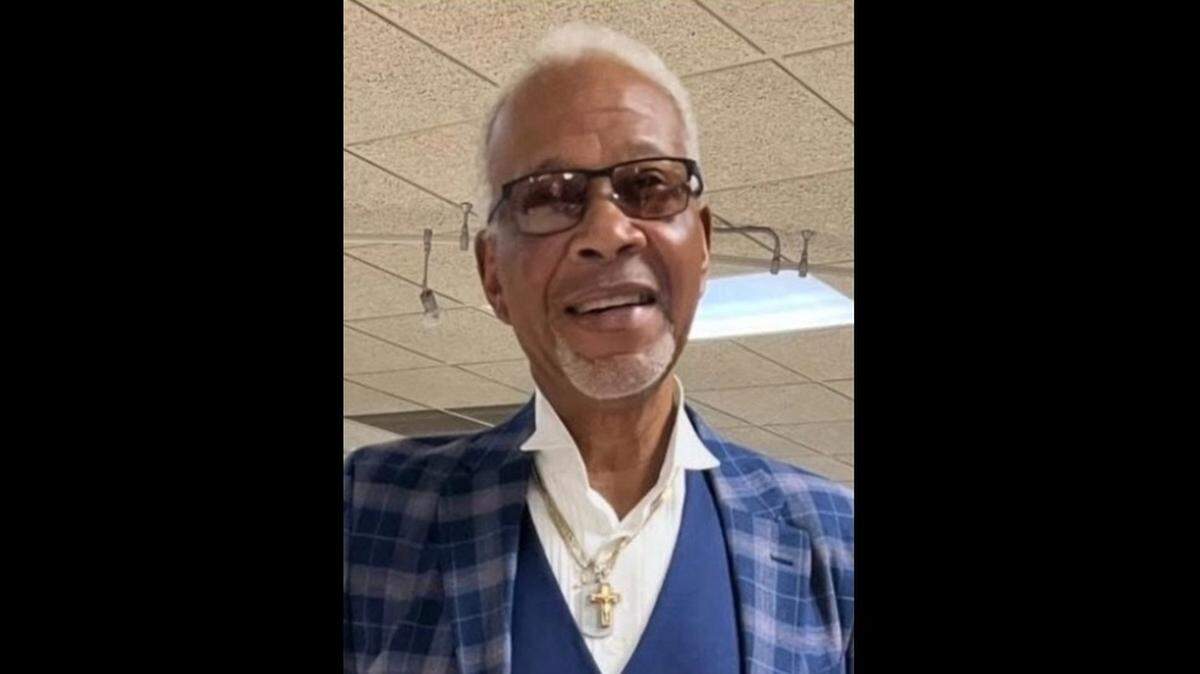
For decades, Larry Hollins set a standard that followed him from his job at the Jackson County Detention Center to the people who knew him as a father, mentor and friend.
Known for discipline, presence and a way of holding people accountable without letting go of them, Hollins left behind a reputation built on consistency at work, at church and at home.
Hollins, a longtime correctional officer and father, died Nov. 20. He was 68.
He was from Odessa, Missouri, a small-town place that shaped the way he carried himself, according to those closest to him. His son, Kyle Hollins, remembers that hometown as more than just a place on a map. It was a responsibility, a routine and a reminder of where his father’s values were formed.
“We were always going down there to make sure the house was put together, said Kyle Hollins, 38. “They had a couple properties down there, and that’s all we would do: just travel that highway, cut grass, work on trees, and all that type of stuff.”
That pattern, showing up, doing the work, handling what needed to be handled, was the same pattern Larry Hollins carried throughout his life. He was the oldest son in his family, and those who knew him say he wore that role as a kind of calling. He became the caregiver-provider type, the person others leaned on, whether they needed help with family matters or guidance in their own lives.
Hollins was remembered as being strict and assertive. His intensity could be misunderstood by people who did not know him well, but inside his home it came from a man who valued order, responsibility and follow-through.
“Some would call his passion aggression,” Kyle Hopkins said. “Big on process, big on if you start something, then finish it.”
Larry Hollins had career in service
Hollins served in the military, an experience that likely reinforced a rugged perseverance that already existed in him, his son said. He did not chase recognition but stepped up when something needed to be carried.
After his military service, Hollins built a career in corrections that stretched across decades and shaped the way a generation of officers who knew him understood professionalism.
Nelvin Allen, a colleague and friend, said Hollins started working at the county in 1985 and became known for high standards in training, appearance and conduct.
Allen knew Hollins first through faith and friendship. They met through men’s group and Bible study at Graceway Church, where they worshiped together, shared personal experiences and built a bond over time. They also played pool together, a hobby that remained one of Hollins’ passions.
“He was a mentor to me,” said Allen.
Their relationship eventually extended into the workplace in a direct, personal way. In May 2024, Allen said, Hollins asked him to come work at the Jackson County Detention Center. Allen hesitated and told him he was probably too old. Hollins disagreed, urged him forward and helped him get hired.
Working for Jackson County
Hollins was selective about who he brought into the job, Allen said, and he treated recommendations as a reflection of character. Hollins once asked Allen how many people he had recommended over more than 40 years.
“I said about 20, 25 people,” said Allen. “And he said, ‘No, two. And you’re the second one.’”
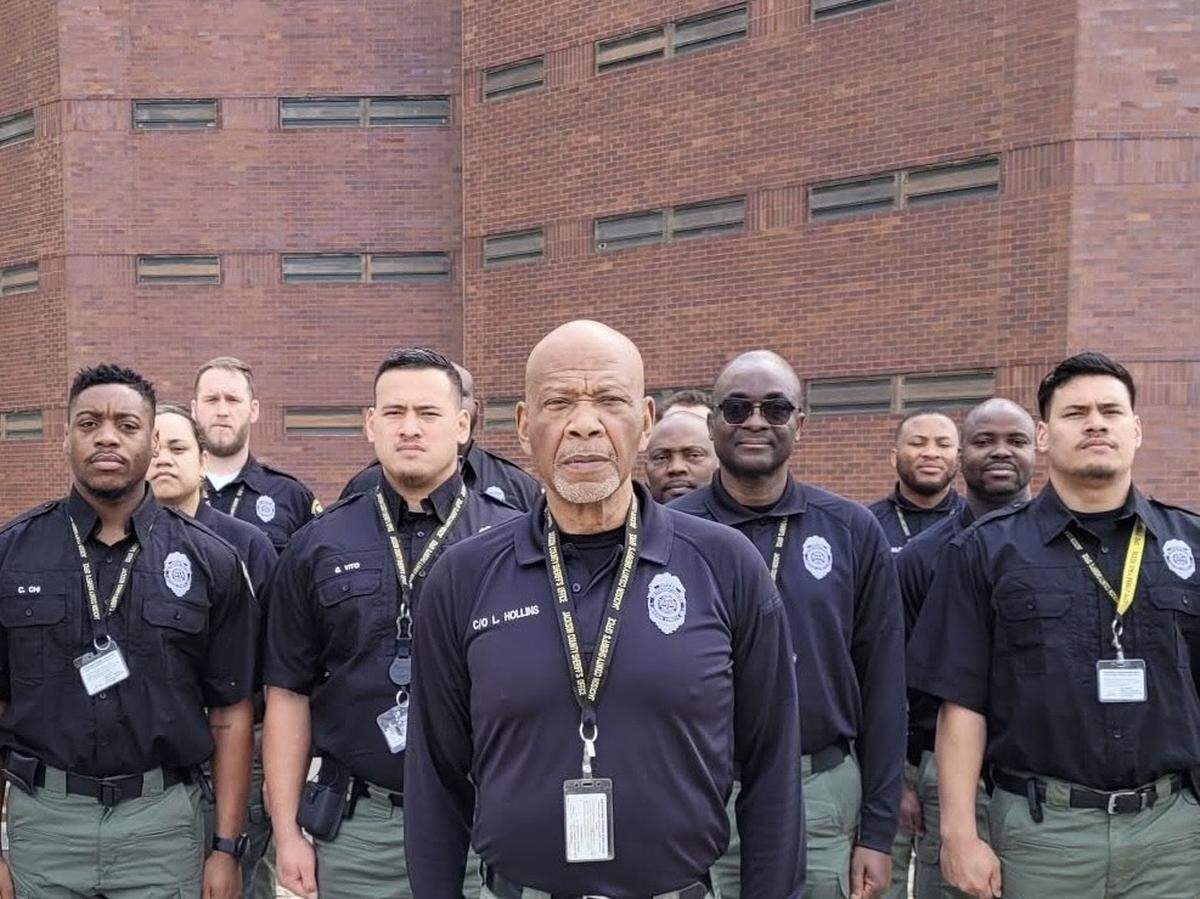
Inside the detention center, Hollins was known for setting expectations and enforcing them without ego. He was described as a strong leader who held a high standard for what an officer should be and how officers should speak to and treat inmates and fellow workers. He believed professionalism mattered because it shaped how authority was experienced on the other side of the badge.
He carried that same standard in the way he presented himself. He was the definition of “crispy,” a term officers use for someone whose uniform and appearance are always immaculate.
“When you saw him in uniform, everything was aligned, pressed, neat, shined,” said Allen. “When we went to play pool, he still wore creased jeans. Everything about Larry was pristine.”
That attention to detail was not vanity, Allen said. It was part of how Hollins taught people to respect the role they carried. He also trained new officers, and Allen remember nearly every academy officer had to go through Hollins’ classes and physical fitness requirements. Hollins did not ask recruits to do what he would not do himself.
But Hollins’ influence went beyond drills, uniform checks and policy reminders. Allen said Hollins taught something harder than procedure: judgment restraint.
“He would teach you not to be judgmental,” said Allen. “He made sure you understood you’re not the judge, jury, or executioner.”
The same man who insisted on standards at work carried those standards into his personal relationships. Allen described Hollins as a friend who was loyal and discreet, someone who would not repeat what was shared in confidence. Allen will remember him as generous and always honest in a way that could not be avoided.
“He would tell you if you’re not doing it right,” said Allen. “He pulled no punches.”
A son’s perspective
At home, that directness helped define Hollins as a father.
Kyle Hollins says growing up with a prison guard for a dad was strict and complicated, made even more intense because his mother ran a drug rehabilitation center. The household was surrounded by systems built to correct behavior, and yet Kyle Hollins still went the wrong direction when he was young.
“My mom ran the Almani House over in Swope,” said Kyle Hollins. “That was a drug rehabilitation center. My dad was in everything in Jackson County Jail. And I turned out to be a drug dealer and a gang member.”
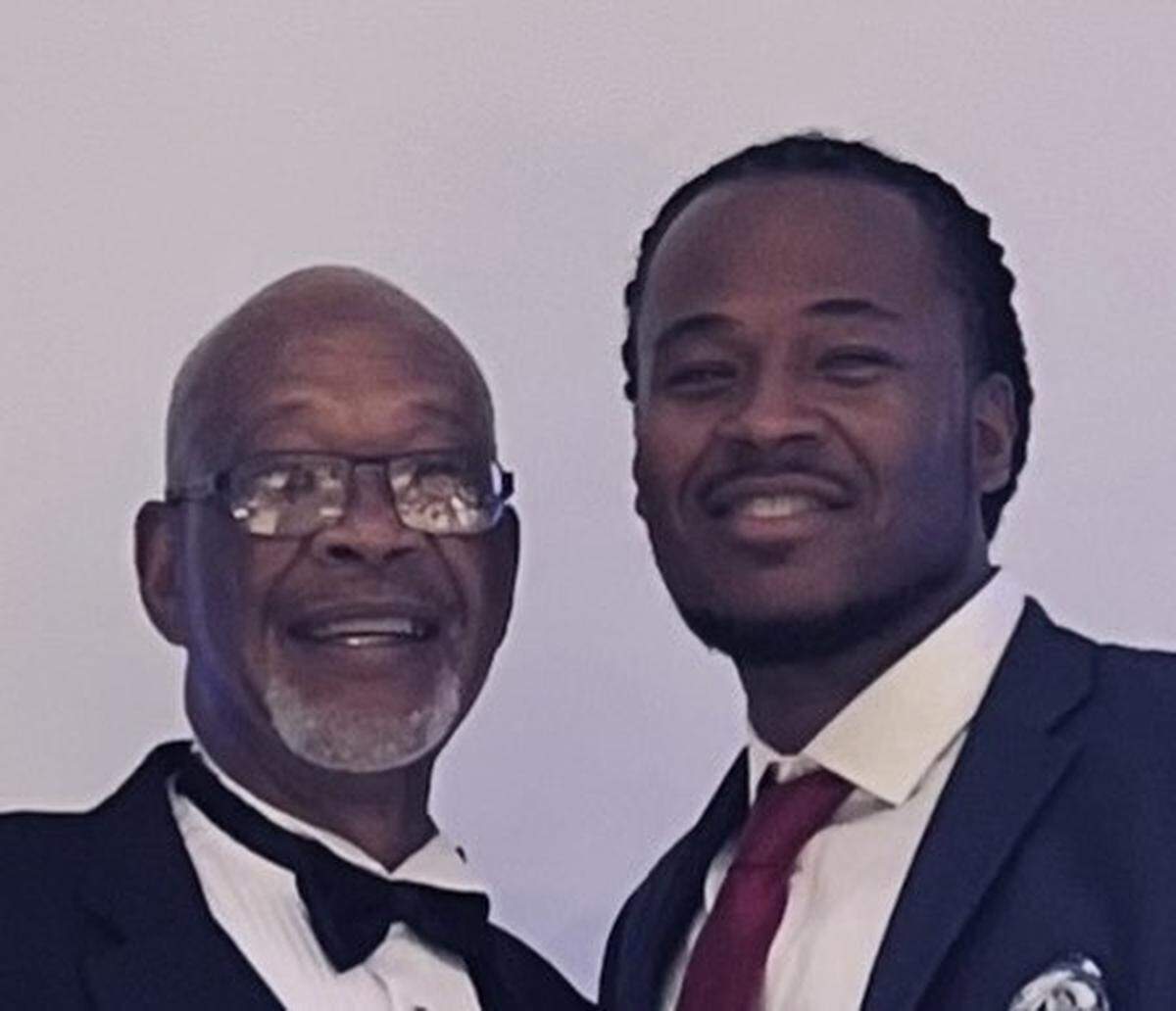
He said the tension between his parents’ work and his own choices created conflict he did not understand at the time. His father warned him where that life could lead, but the warnings were delivered in a blunt style Kyle Hollins could not receive.
“Yeah, but it was raw,” said Kyle Hollins. “He’s a country boy and a military boy, so I couldn’t hear it.”
Kyle Hollins eventually went to prison, where he said his perspective shifted. Looking back, he began to see how much of his father had already been built into him.
Kyle Hollins credits his father for the ethic that allowed him to lead, work and rebuild his life. He described it as stamina, the ability to execute, to stay consistent, and to keep showing up for people.
“A lot of what I do is ethic and compassion,” said his son.
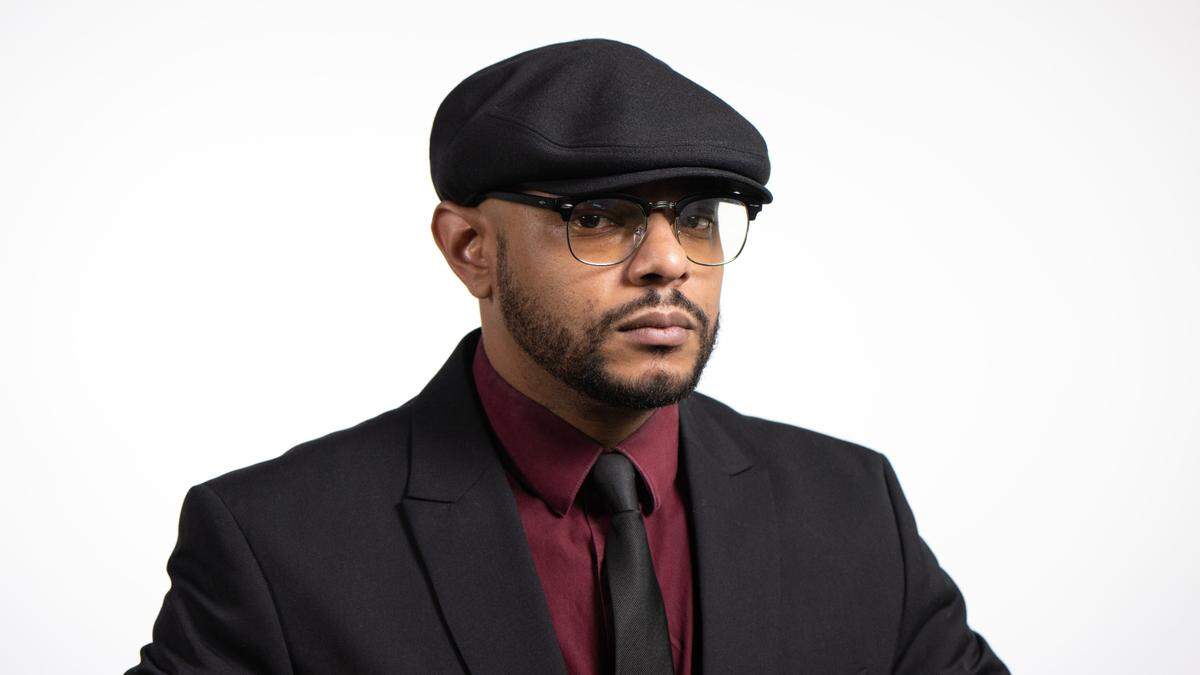
That combination is now central to Kyle Hollins’ work as founder of Lyrik’s Institution in Kansas City, where he mentors at-risk youth and young adults. He sees the work as a continuation of what his father modeled: doing hard things, putting structure in place, and refusing to give up on people others have written off.
Kyle Hollins said his father’s pride became undeniable after he returned home and started turning his life into service.
“It was rich for me to hear him say, ‘I’m proud of you,’” said his son.
Hollins’ own life, those closest to him say, remained anchored in family and faith. Kyle Hollins describes his father as someone who took care of parents and relatives and carried responsibility as a default setting, not a performance. Allen said Hollins’ priorities were clear and spoken plainly.
“God first, then his family, then his job,” said Allen.
In his free time, Kyle Hollins said, his father loved fishing and shooting pool, simple routines that fit a man who valued consistency. But the deeper pattern of his life remained the same: showing up.
‘Doing things right’
Allen knows he will miss that presence in a personal way, the mentor who kept him honest, the friend who listened, the man who demanded better without giving up on you.
“Somebody to talk to,” said Allen. “Somebody to keep making sure I’m doing things right.”
Larry Hollins’ life can be measured in years of service and decades of routine, but those closest to him describe his legacy in smaller units: a pressed uniform, a hard conversation or a lesson delivered by example.
For the officers he trained, that influence remains in how they carry policy and professionalism.
For his family, it remains in the way he chased after his children and refused to quit.
For the young people who come through Kyle Hollins’ work at Lyrik’s Institution, it lives on through structure, clarity and the steady presence of someone who does not let go when things go wrong.
Hollins’ legacy is not only the years he served, but the standard he left behind, a man who held the line, told the truth, and stayed close enough to help others find their way back.
Kyle Hollins said the word he has heard the most since his father’s passing is “present,” and he has been struck by how many people carry their own story of what that presence looked like.
“To hear that my dad took time with people, prayed with people, checked on them, brought food, I just admire the man he was and the presence he was in people’s lives.”