Birds are dying around KC from fast-spreading strain of avian flu. What to know
Birds have been getting sick and dying in the Kansas City metro due to a rapidly-spreading strain of avian influenza, according to biologists and veterinarians.
The highly pathogenic Eurasian H5N1 strain of bird flu began causing problems for North American poultry and wild birds in February 2022. The outbreak continues to have an impact on local animals, particularly water fowl, according to experts.
Operation Wildlife, a wildlife vet and rehabilitation clinic based in Linwood, Kansas, has responded to a surge of calls for birds showing symptoms, a spokesperson for the organization said.
“We saw an uptick of (bird flu) in our area when we got that snow storm,” said Diane Johnson, executive director of Operation Wildlife. “We are fielding 15 plus calls per day with birds showing symptoms.”
This time of year, snow geese migrate south on the Mississippi Flyway, which runs through Missouri. They make a temporary stop in Kansas and Missouri for their wetlands like marshes, bogs, lake borders and even swamps in the bootheel region, which help with nesting and feeding, according to the Missouri Department of Conservation (MDC).
Snow geese migration patterns bring large flocks each fall and spring, but peak numbers typically come in the winter, according to the MDC.
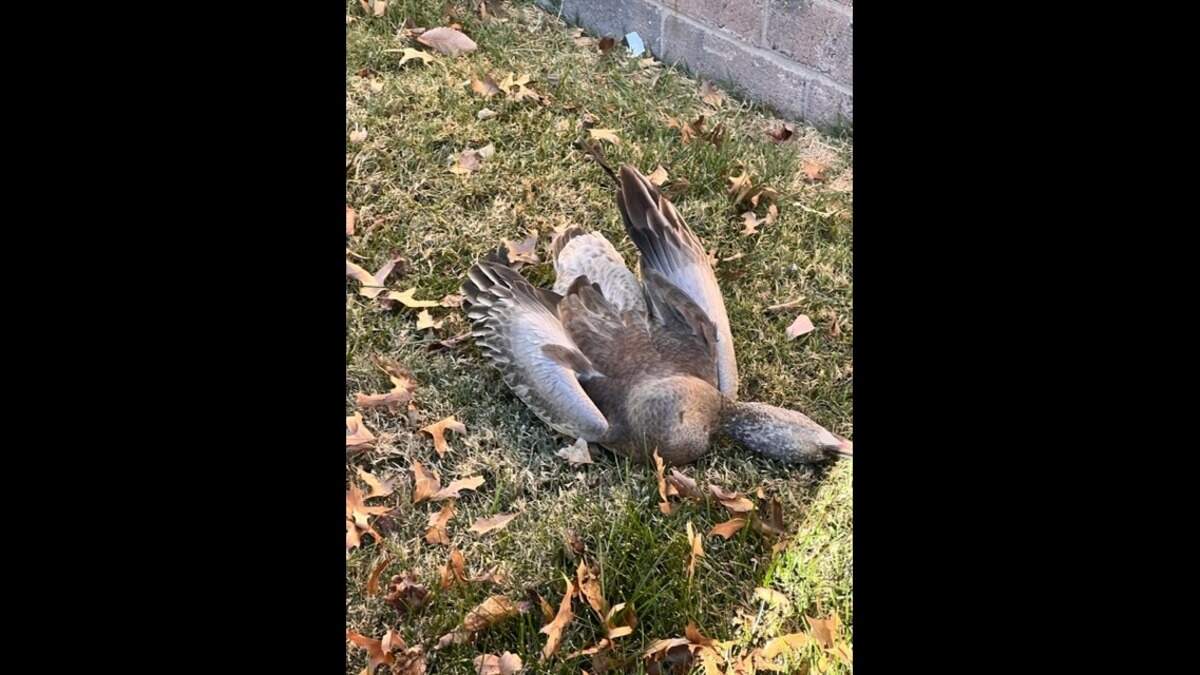
Some geese have reportedly ended up in people’s backyards suffering from the virus, Johnson said. People around Kansas City have reported standing in their yards and snow geese seemingly “falling out of the sky.”
“As they’re flying from place to place, if they’re sick enough, they can lose their equilibrium, and they go down,” Johnson said. “...(Bird flu) is almost 100% fatal in the snow geese population, and they die rather quickly, within 24 to 48 hours.”
What birds are affected by avian flu?
While there are more cases of bird flu being reported in the Kansas City area, overall the number of cases are down in Missouri and Kansas, experts say.
Juvenile snow geese are being hit particularly hard because of their underdeveloped immune systems and the toll migration can take, according to the Kansas Department of Wildlife and Parks (KDWP).
Shane Hesting is a wildlife disease coordinator for KDWP and has been tracking avian flu in the state’s bird populations. He said it’s too early to tell what total mortality numbers will be for the year, but it seems to be down overall from years prior.
“I haven’t heard of any large flocks dying anywhere yet, except a couple reservoirs that had maybe a few hundred,” Hesting said. “A couple years ago, we had several thousand dying at a time at reservoirs. So we actually might be easing up a little bit on the mortality factor.”
On Dec. 3, an Overland Park family found a red-tailed hawk injured in their backyard. An animal control officer rushed to its aid and helped get it to Operation Wildlife, where it later died from avian flu.
Red-tailed hawks and other raptors are susceptible to getting the virus since they prey on mammals, according to the KDWP. While snow geese are not a primary part of their diet, hawks will eat them as opportunistic hunters.
Overall, avian flu is less deadly for raptors, Hesting said. Bald eagles, in particular, have seemed to build up a degree of immunity.
The virus has also proved fatal to foxes and skunks in Kansas that likely ate something infected, Hesting said.
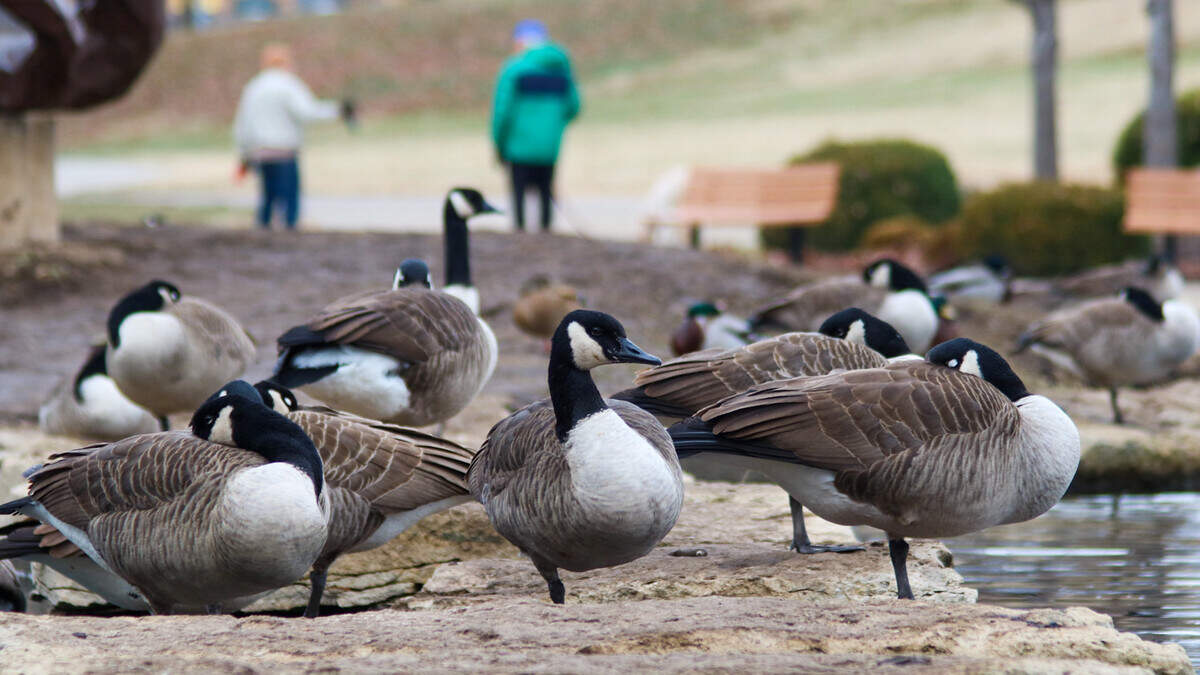
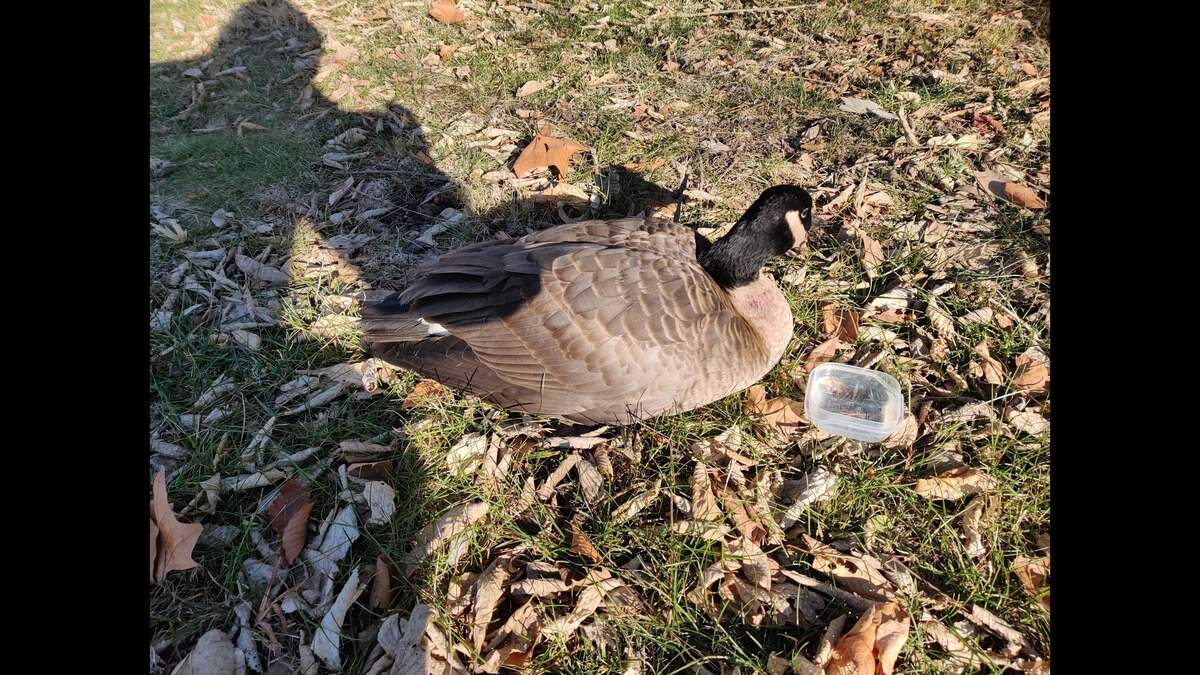
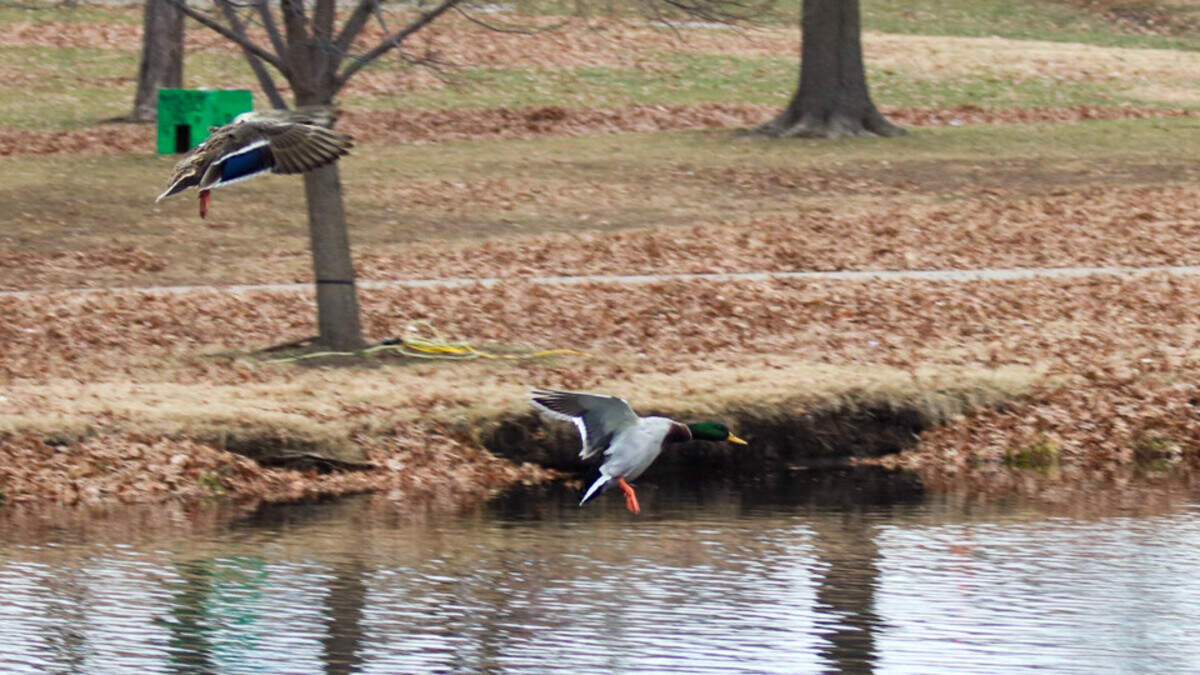
Ducks are carrying avian flu without showing symptoms. And Canada geese, which can be found in Kansas City year-round, are also getting sick.

Hesting said bird hunters should be mindful of the virus, and remember that some species do not exhibit symptoms. People should always be cooking birds before eating them, he said.
Research shows humans are at low risk of getting sick from this strain of bird flu. However, precautions should still be taken when it comes to handling birds that show symptoms, Hesting said.
“People need to make sure to wear nitrile gloves if they’re picking up geese,” Hesting said. “I wouldn’t let kids pick up geese and I wouldn’t let the elderly and immunocompromised people handle geese.”
Conservation efforts help reduce infections
As time has passed, some birds have been able to build up a certain level of immunity to bird flu. Conservation efforts have also helped reduce the virus’ spread.
Local wildlife agencies typically track bird flu data for the spring migration season (February through March) and fall migration season (early November through the winter).
The Missouri Department of Conservation reports 23 positive cases of bird flu from 10 different counties this fall, as of Dec. 11.

There have been confirmed and suspected cases in Johnson, Jackson, Clay and Cass counties, among others.
According to Deb Hudman, a supervisor of Missouri’s wildlife health program, cases were first reported near Cape Girardeau this year and began to trend further north. Last week, the state began monitoring geese dying in Holt County, near the Loess Bluffs National Wildlife Refuge.
A lot of work has been done over the years to contain the virus and slow its spread by monitoring water fowl populations and separating infected birds from flocks, Hudman said.
“We’ll be getting more results back soon, but overall, we always see an uptick in fall with HPAI (bird flu) cases, and then a little bit in the spring, maybe,” Hudman said. “But right now, we’re seeing lower numbers overall than we were last fall.”
“I think that warmer fall weather we had may have delayed the snow geese from arriving sooner,” Hudman said.
Containing bird flu has also been a priority of the U.S. government. The virus infecting poultry populations was one reason egg prices skyrocketed earlier this year.
Hudman said people should report bird activity that seems unusual to local or state agencies. Some common symptoms include: a tilted head or twisted neck, the bird seeming confused or disoriented, broken legs or other injuries from falling, ruffled feathers and wheezing.

In Missouri, there is a Wildlife Health Event Reporting form online, where people select the kind of animal they are reporting about and answer a few questions about what they saw.
Missouri also tracks the HPAI outbreak on its website with an approximate number of cases reported by county.
Despite bird flu having deadly effects on water fowl and poultry, there has been one population in Missouri seemingly unaffected by the virus, Hudman said.
“We have tested a number of songbirds in two years,” Hudman said. “We have never had one test positive in Missouri, and they’re really not at all likely to get it.”
“It’s not to say it would never happen… because any bird can become infected,” Hudman said. “But right now, songbirds are not impacted by HPAI.”