KC church pianist and teacher shaped generations through her music and faith
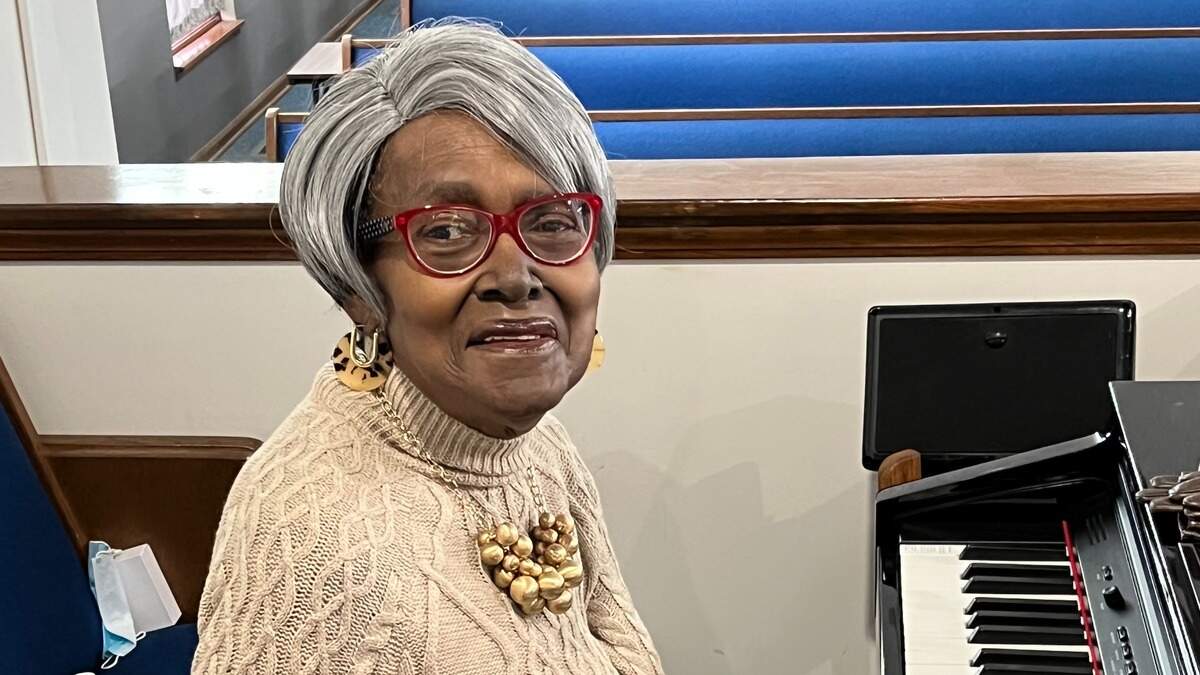
For decades, Doris Owens carried a love for music that, through her performance, shaped the lives of church congregations, students she taught and her family.
Her grandson, Nathanael Roundtree, one of the many people she taught to play piano, remembers following her to church as a child, sometimes before sunrise, as early as 5 a.m. Those early hours, formed a bond between the two of them that guided his path as a musician for the rest of his life.
“She was definitely like another mother to me,” said Roundtree. “You could call her for anything and she would always answer.”
Owens, a pianist and music teacher, died Sept. 30. She was 81. Roundtree believes she left behind a legacy of discipline, emotion and faith that lives on in the people she taught and her music touched.
He remembers how even in the final years of her life, after heart attacks, cancer and the loss of her vision, she continued to sit at the keys and express whatever she was feeling to create music that spoke to her audience.
Born in Moberly, Missouri, Owens discovered her gift early. At age 3 she began playing piano by ear. Roundtree said she came from a musical family, with relatives who were singers and musicians.
“It was how she expressed herself,” he said.
She grew up performing at her local church and later moved to Kansas City, where her talent found a permanent home at Metropolitan Missionary Baptist Church, where renowned KC civil rights activist, the late Rev. Wallace Hartsfield, was pastor. For many years she played for the early services, arriving before sunrise with a dedication that left an impression on the congregation.
Roundtree’s memories are filled with moments of his grandmother offering support and encouragement. Their relationship deepened through both family and music, a connection that continues to guide him.
Owens taught him his first notes at age 5 and instilled lessons he still recalls. She taught him to read music, play by ear and understand the discipline required to master an instrument.
“She always told me practice makes perfect, and she could instantly tell if I had not practiced,” he said.
Roundtree remembers her as a firm instructor who expected excellence and motivated her students to reach their full potential. She taught people from all walks of life, including autistic children, older adults and church members eager to learn, many of whom she instructed for free.
One such student was Brandon Black. He remembers signing up for lessons because other kids in the church were, but that experience would shape the course of Black’s life. He started studying with her around age 6 and stayed with her until he was about 17.
Now 34 and living in Atlanta, where he has been for 10 years, Black works as a professional musician and music teacher.
“I feel like those lessons defined my career,” said Black. “Because now as a professional, I still carry that and in a sense, that’s my superpower.”
Owens was known in local churches for her gospel playing and leadership in worship, but her approach with Black centered on classical training. She started him on simple pieces, then moved him into the works of Beethoven, Brahms and other composers.
By the time he reached his late teens, she had given him the technical and mental preparation he needed to study piano at the college level.
“I went on to study classical piano in college and I play everything from gospel, R&B and jazz, but she gave me a classical foundation in our studies,” Black said.
He looks for the same potential in his students that Owens saw in him. He reminds them that music is not reserved for the naturally talented, but is a skill they can build if they are willing to concentrate and put in consistent effort.
“She had very, very high expectations, and it was really my first introduction to those kinds of standards in performance and in study,” Black said. “She was the first person that showed me like how deep you got to get into something to be successful at it.”
Black recalls the long days when he wanted to walk away, but didn’t because of the encouragement he got from Owens.
Owens also tested pianos at local music stores, recorded accompaniment tracks for churches that did not have musicians, and traveled to perform for gospel organizations.
Roundtree said she never played the same song the same way twice. Every rendition reflected the emotion she carried in that moment.
For him, her performance style was unmistakable. He remembers how she sat at a piano, letting the music move through her entire body.
Community members called her “the grand piano player,” a reference to both her preferred instrument and the fullness of her sound.
Her signature song was “Be Ye Steadfast,” which Roundtree said no one he has ever heard play, played it the way she did. When he hears it now, he thinks of her, and her rendition of the gospel song.
Owens faced numerous hardships. Roundtree said she pushed through each one with determination. She survived triple bypass surgery, multiple heart attacks and two rounds of stage four breast cancer.
In 2006, she suffered several heart attacks while playing at church and continued performing without realizing it. After surgery, she was left legally blind due to macular degeneration. Even then she kept playing. Roundtree said her hearing sharpened, allowing her to guide other musicians by ear alone. She would text him the keys being sung during services.
“She played through everything,” he said. “If she was in pain, you could hear it in the way she played. If she was happy or sad, you could hear that, too.”
He said that music, for her, was a way of living.
To her family, Owens was a guiding force. She cherished watching the younger generations grow and was considered the glue of the family, keeping everyone grounded and connected.
Her influence continues through Roundtree, now music director at Second Baptist Church of Olathe. Members tell him they hear her in his playing. Roundtree said hearing that confirms what he knows: She is still with him in the music.
Her family says her work was rooted in love, joy and faith.
“She played for God,” Roundtree said. “She viewed music as service, not performance, and she used it to reach people from all walks of life.”
What she wanted to pass down was simple: discipline, expression and purpose. She wanted her grandson to carry the musical torch, and he has.
“I’m the only one still doing it, and continuing is not a duty but a joy, because I know how much it meant to her,” he said.
Owens helped many people find their voice through the piano. Her sound, her lessons and her spirit remain with him. Roundtree believes her presence continues every time a pianist plays with feeling.
“To know her was to know music,” he said. “And to know her music was to know everything she felt.”
In addition to her grandson, Owens is remembered by her children Carmelita Brown, Brian Owens and Charles Owens, and a host of grandchildren, great-grandchildren and other cherished family members.
This story was originally published December 8, 2025 at 2:42 PM.