Independence eyes special tax district to fund new supersized convenience store
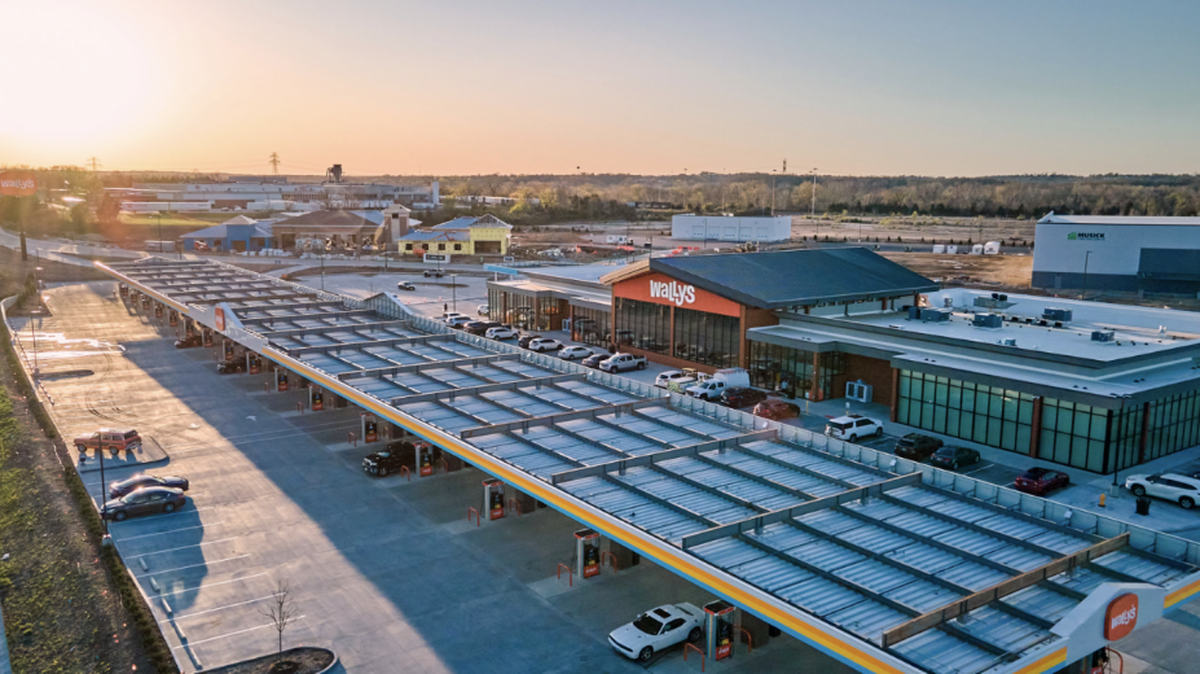
As Independence prepares to become home to a supersized truck stop and convenience store, city officials are eyeing a plan to redirect some tax revenue toward development expenses.
The Independence City Council approved a plan last month for the world’s largest Wally’s to be built at 4023 Noland Road, just off of the intersection of Interstate 70.
Now, city officials are considering drawing a tax increment financing district around the project, to borrow development funds against future property tax revenue.
Wally’s, a St. Louis-based chain, is often compared to Buc-ee’s and is known for size — each of its locations is at least 30,000 square feet. The future Independence location, which will be built on 19 acres, is planned to be 54,000 square feet, with 84 gas pumps and 12 electric vehicle charging stations.
The Midwestern mega-mart is expected to revitalize the Noland Road commercial district once anchored by a K-Mart, replacing the tool and office supply stores currently located there.
Developers estimate that building the new Wally’s will take about $53 million, according to a Nov. 12 report from the TIF Commission. The city is expected to reimburse about $10.8 million over time, plus interest, on a “pay-as-you-go” basis.
City officials have proposed creating a Tax Increment Financing, or TIF, district to raise about $7.35 million of the cost.
TIF districts are used by local governments to fund projects in areas that require some level of development costs. The city issues funding in the form of bonds, which is then reimbursed by property tax revenue collected in the area in future years.
If the TIF district was created, any property tax revenue within its boundaries above the 2025 rate would be directed toward paying back developers for the Wally’s project. Residents and business owners in the area would still experience increases in taxes, but the city itself would not collect any more revenue from the area even as property values and tax revenue increases.
Most of the tax revenue in question would likely be generated from the Wally’s itself, which developers say could be completed by 2027.
The TIF district would be about 21 acres, drawing a circle around the future Wally’s site. According to the Independence TIF Commission, the funding would be used largely to “eliminate blight” around the proposed Wally’s site.
“The Redevelopment Area cannot be reasonably anticipated to be developed without the assistance of tax increment financing (“TIF”) to help defray, among other things, the costs of ameliorating the blighted conditions,” the Nov. 12 report reads.
TIF funding is one of several proposed taxing mechanisms for generating funding up front as the supersized rest stop is built. The city is also proposing drawing a Transportation Development District around the site — a separate funding source that would create a 1% sales tax at Wally’s and in the surrounding area — as well as a Community Improvement District, which would also lead to another sales tax.
The city expects development work funded by the TIF district to involve hiring about 163 people for one year across various construction projects, according to the Nov. 12 report. The city also anticipates that once complete, the Wally’s will employ 200 people full-time.
The Independence City Council is expected to vote on the proposed TIF district at its next meeting. If passed, the TIF district would be in effect for up to 23 years, or until the $7.35 million in revenue was fully generated.
The TIF Commission noted that they expect this reimbursement to take about 14 years, after which another ordinance could be passed dismantling the TIF district.