Inside KC’s strip-mall casinos, where the bets are real but the laws are murky
Play at your own risk.
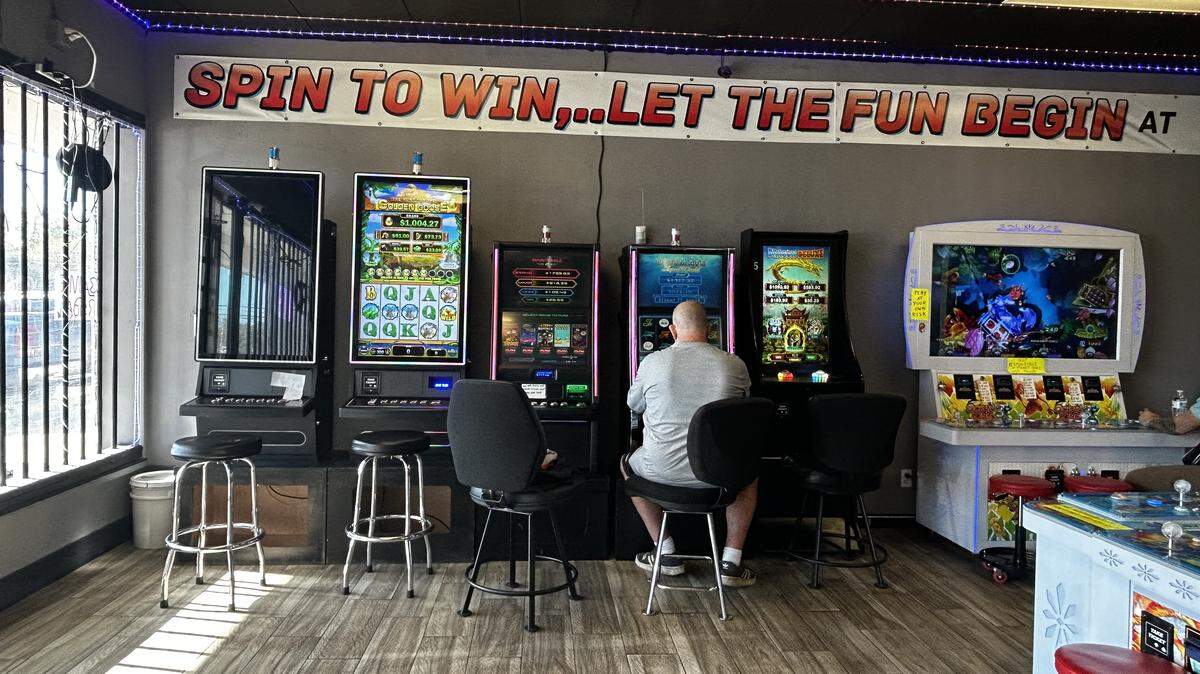
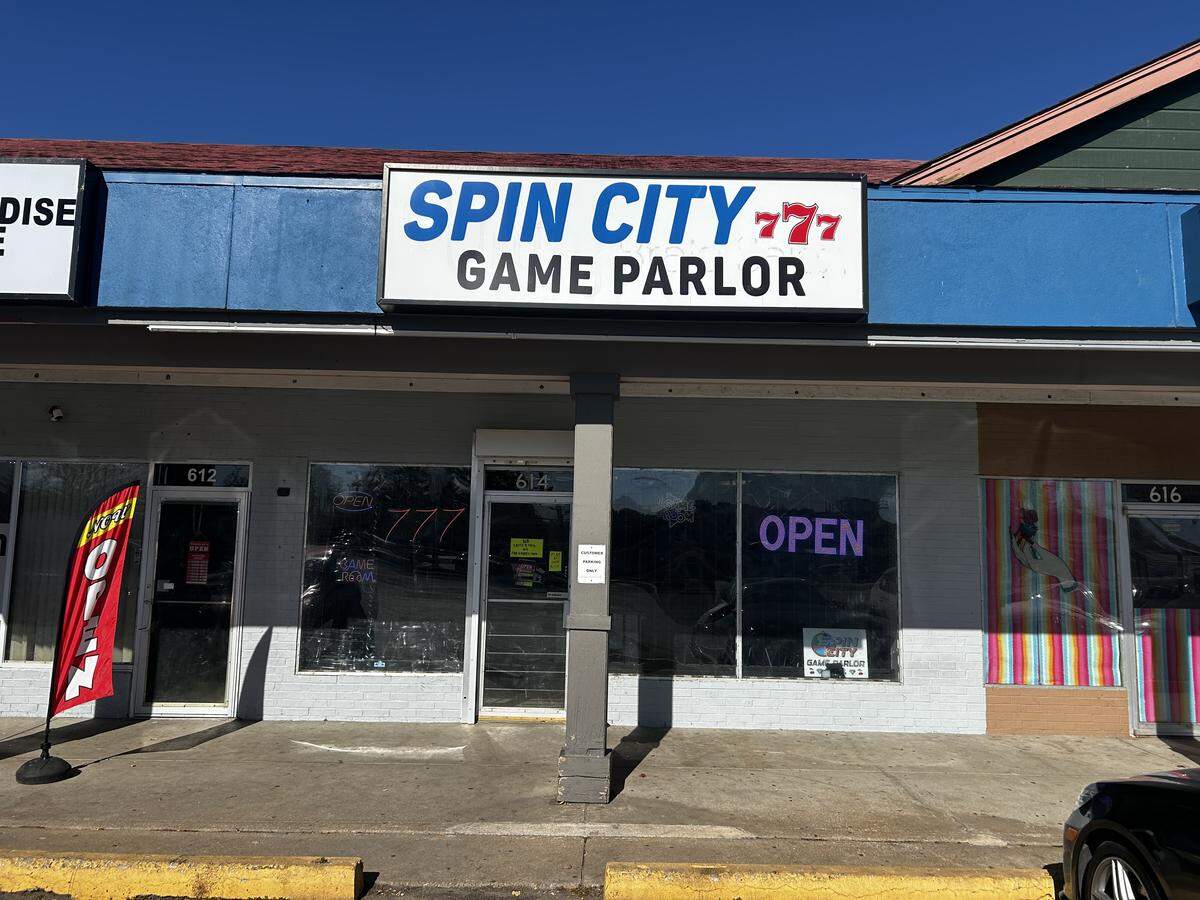
That’s what a sign on the door said at Spin City Game Parlor, a dim little room in the middle of a strip mall just west of the intersection at 99th Street and Holmes Road in south Kansas City.
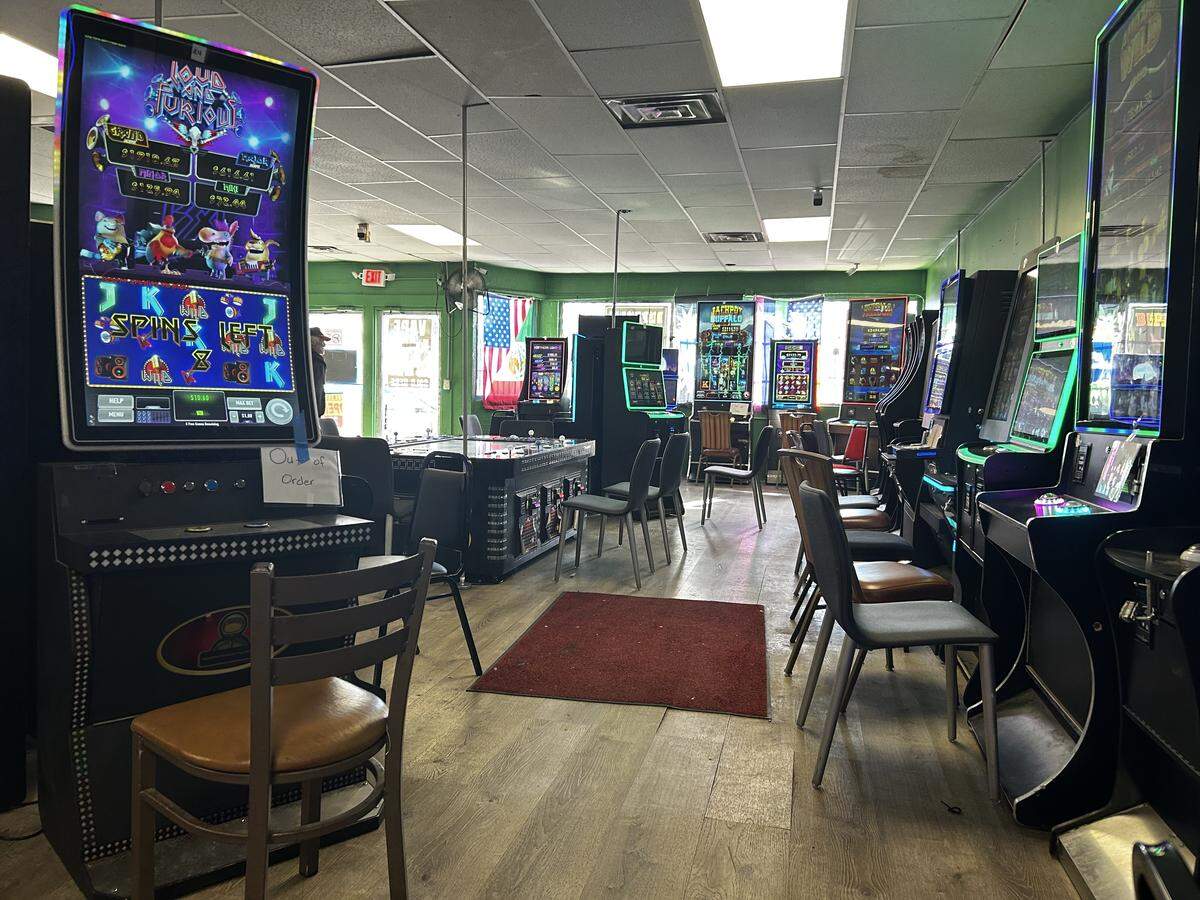
It was noon outside, but inside, fifteen slot machines pulsed and sang like it was 2 a.m. in Reno. A man in a hoodie muttered to himself at one of the consoles. Another barked obscenities at his girlfriend about a set of lost keys. Nobody looked up. I stuck around for about 20 minutes, pumping dollar bills into a game called Golden Jackpot. I never saw anyone who appeared to work there.
Spin City is not a licensed casino. It is not taxed or regulated. Its compliance with Missouri law appears, at best, theoretical. Yet there it is, open 24 hours a day — a Wild West gambling den where the sheriff never shows up.
It is hardly the only such enterprise to be found around Kansas City. Some are full-blown game rooms like Spin City, brazenly advertising themselves with a classic “777” slot-machine-signifying sign outside. Others are more discreet, carved out inside liquor stores and convenience stores — three machines in a corner.
The kind of crime that tends to linger around these places — as one example, there was a shooting outside Spin City in August — seems to have finally gotten local officials’ attention.
In October, the Kansas City Council passed an ordinance banning unregulated electronic gaming machines. But I have yet to see evidence of any enforcement from KCPD. In the span of 24 hours this week, I walked into four separate businesses that still house these machines. Two of them I visited on accident, in search of chips and beer.
Jackson County is also beginning to wrestle with the issue. On Monday, I sat through a meeting where Laura Birdsong, who works with the Independence Avenue CID, told the legislators horror stories about the problems caused by gaming rooms in the Northeast.
“They provide a constant opportunity for criminal activity,” Birdsong said. “The increase in violence has been huge.”
One such business, Up in Smoke, accounted for 32% of all the calls to the CID’s security company Titan over the course of a year and was the top location in the region for fentanyl overdoses, Birdsong said KCPD told her. When it closed last fall, crime in the area dropped 20%.
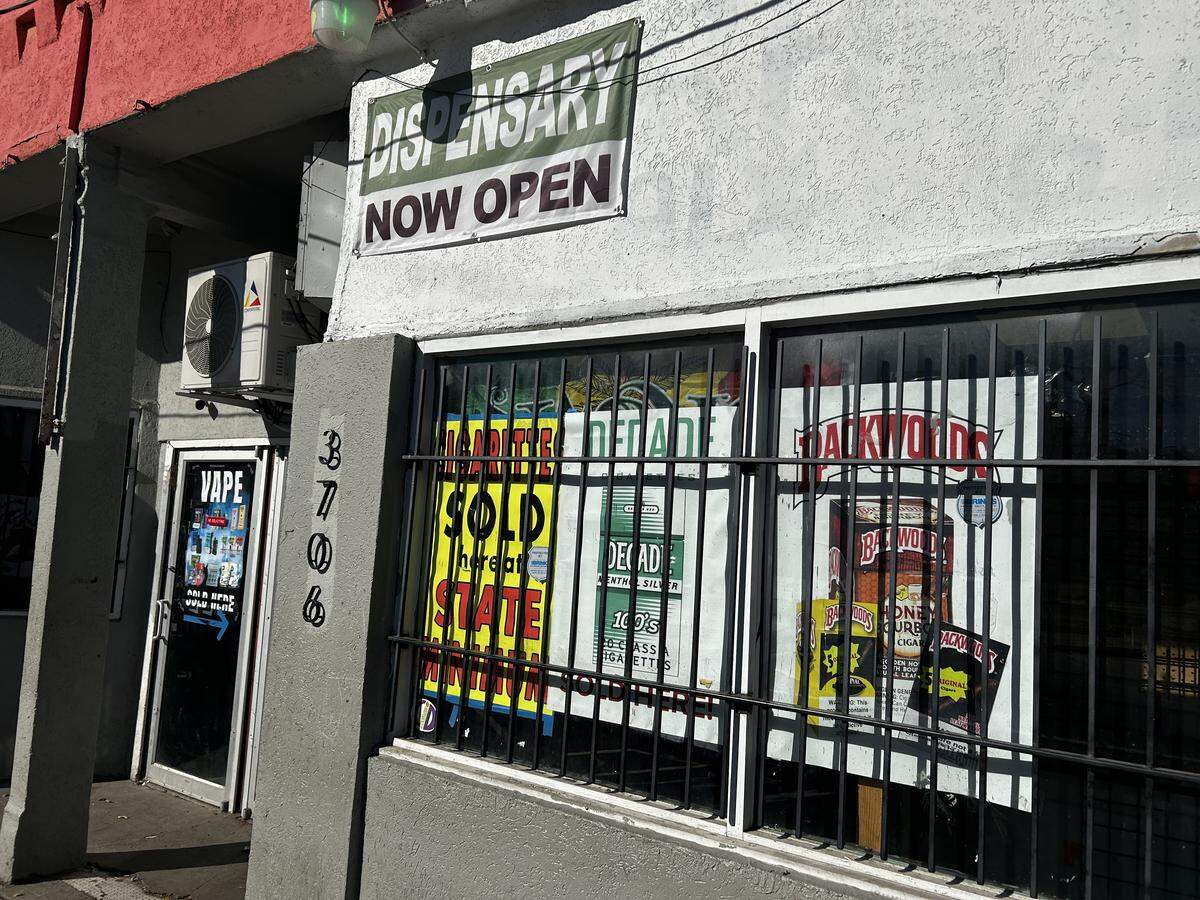
Unfortunately, a lot of that activity has simply shifted to a similar business down the street at 3706 Independence Ave. The building was formerly home to the sex shop Ray’s Over 21 — a model tenant, one neighboring business owner told me, compared to the new one, which is called Puff Haven.
Security calls to the address have increased 53% since Puff Haven opened earlier this year. KCPD received 30 calls for service there in the last year for disturbances, welfare checks, and suspicious persons. Three businesses have failed next door, Birdsong said, due to threats and the general mayhem that emanates from the place.
Birdsong has recently given tours of the area to a handful of KCPD officers and local officials, including Jackson County Legislator Venessa Huskey and Kansas City Councilman Johnathan Duncan, who introduced the KCMO ordinance.
One tour in particular demonstrated quite vividly the extent of the problem at Puff Haven.
The officials parked across the street. As they got out of their cars, somebody ran from the corner into Puff Haven to warn the employees that police were there. When the police arrived at the door, it was locked.
“They refused to let us in for a moment while they shuffled people to the back room,” Birdsong said. “As we entered, you could literally see the back door swinging. Then they started screaming and asking for a warrant, as if we had wrongfully entered, even though they had let us in. Their actions told us exactly what’s occurring in that place.”
The loophole
Puff Haven remains open. I stopped by on Wednesday. There are approximately 30 gambling machines inside, along with a variety of THC products of questionable legality, given that Puff Haven is not a licensed dispensary in the state of Missouri.
I passed on the weed and headed over to the machines. I was trying to better understand the regulatory loophole that these machine operators say makes them legal somehow.
At Monday’s meeting in Jackson County, an attorney named Mark Berry stood up to address the legislators. He represents convenience store owners, he said, who offer electronic gaming machines (sometimes called “no-chance” games) but don’t allow crime to fester in and around their stores.
“They want to maintain the integrity of their businesses,” Berry said. “But these types of machines can add to the income they produce on a monthly basis.”
Berry kept saying the phrase “pre-reveal” to describe the nature of these gaming machines.
“It means that the machine tells you whether your next spin is going to be a win or a loss,” he said. “And you can either go on and do that spin or take your money out and walk away.”
I didn’t quite grasp that concept until I took the Spin City and Puff Haven machines for a ride. It’s actually not complicated at all: These are simply slot machines.
You put five bucks into the machine. A little icon says “Win.” Sounds great. You’re about to win. You bet a quarter on a spin and hit play. You win five cents. Technically, a win. But you bet a quarter. So actually you lost twenty cents. Let’s go again. Icon says “Win.” You spin it and win a dollar. Nice. Let’s keep this streak going. Icon says “Win.” You spin and don’t win anything. But you didn’t lose anything, either. Well, actually, you lost the quarter you spent to spin it.
Not once did I see the word “Lose” in my approximately 50 turns. I never “lost.” But I lost all my money.
Missouri has spent a lot of time and money over the past seven or eight years trying to figure out what to do with these machines, whether it’s regulating them, banning them, or suing the companies that operate them.
Torch Electronics is one of those companies. It’s been mired in litigation for years for violating state gambling laws. It has also been working political angles in the state, according to the Missouri Independent. This year alone, Torch has contributed nearly $600,000 to seven political action committees controlled by its chief lobbyist, former Missouri House Speaker Steve Tilley.
“Tilley has killed legislative attempts to crack down on the devices,” the St. Louis Post-Dispatch reported last year. “Bills over the years have sought to remove any ambiguity about the legality of the machines.”
Berry said he expects the Missouri legislature to take up the issue of legalizing and licensing the machines in the upcoming session.
Thomas Gartman, the president of Kansas Capital Group, which Gartman said operates 600 machines inside convenience stores and other businesses in the region, also spoke at Monday’s meeting.
“We don’t hide, we don’t lock the doors when police show up and act like we’re not here,” Gartman said. “We’re very open with who we are and what we do, and we want to be part of a solution.”
That solution, he said, should be regulation.
“We want business owners to continue to supplement their income, and we want the government to be part of some sort of revenue-sharing and tax-paying arrangement that will improve community safety,” Gartman said.
The state and the casinos will doubtless have strong opinions about what any potential regulation might look like. Traditional casinos are required to meet a minimum payout percentage, meaning a set portion of wagers must be returned to players over time. Pre-reveal machines aren’t held to that standard. Nor are they subject to licensing, reporting, or taxing requirements.
Missouri public schools received $364 million from casino taxes last year. None of that came from Torch, Kansas Capital Group, or any of the businesses that host their machines.
It’s hard to know exactly how much revenue could be generated by taxing the gaming machines, because so many of them operate in the shadows. But a recent lawsuit against Torch revealed it operates 15,000 machines in Missouri. And Missouri state senator Nicholas Schroer, a Republican, estimated last year that the state is losing “hundreds of millions of dollars a year” on unlicensed gaming machines. That’s a lot of money to leave on the table.
What’s next?
It might also be the case that a healthy society ought not allow businesses to stick gambling machines between the soda aisle and the laundry detergent. Or that a convenience store’s potential loss of gambling profits doesn’t really need to be factored in to local public policy.
That is more or less the call Kansas City made with its recent ordinance, which assesses a $1,000 fine to businesses for each machine seized.
“We are pre-empted by the state from regulating gambling,” said Johnathan Duncan, who introduced the ordinance. “But because the companies that operate these machines say they’re doing something different, we can classify them as electronic gaming instead, which allows us to prohibit them.”
But nearly a month later, there’s been no enforcement actions. Duncan said he’s been in touch with KCPD and that logistical issues are behind the delay — things like where police will store seized machines, and figuring out how to update the charging system in the municipal prosecutor’s office.
I asked KCPD about that, but other than noting that its Vice unit would be investigating businesses that operate gaming machines, they didn’t respond in time for this article. I also tried to get in touch with the owners of Spin City and Puff Haven. But same as the police and other local officials, I was unsuccessful.
“It’s often a whack-a-mole thing, or a shell game, trying to find these owners,” Duncan told me. “Often they just close and transfer the business license to somebody else and then reopen.”
Jackson County’s proposed law — as currently written — would assess a $500 fine for a first violation, $1,000 for a second, and anyone found guilty of a third offense faces a $1,000 fine and 30 days in jail.
But that’s all still being worked out; it’s tabled for now while the legislators research the matter further.
Also present at Monday’s meeting were about a dozen owners of convenience stores with gaming machines. They, too, were asking for regulation, not prohibition. It’s a common cry among gray-area business proprietors. They want it both ways from the government: the freedom to maneuver around the law when entering the market, and the protection of the law once they have profits to maintain.
Kansas City rejected the gray area and opted for the black-and-white of prohibition. We’ll see about Jackson County and the state.