Kansas Citian to Washington: See what life’s like for those on ‘the bottom rung’
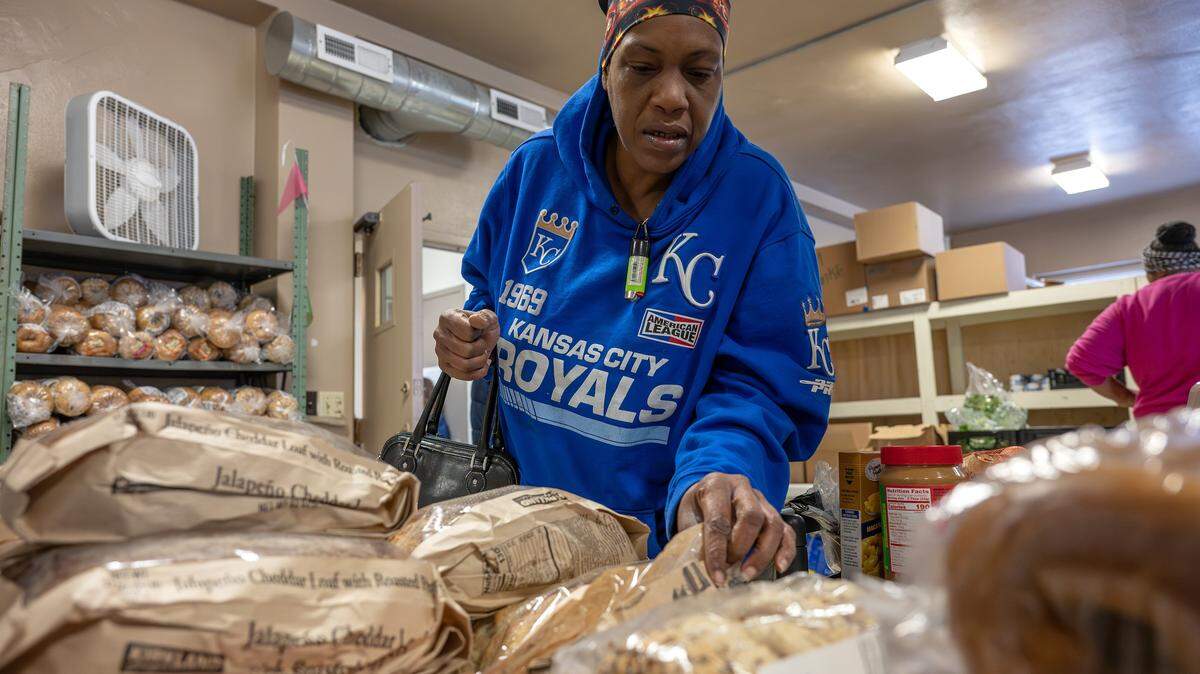
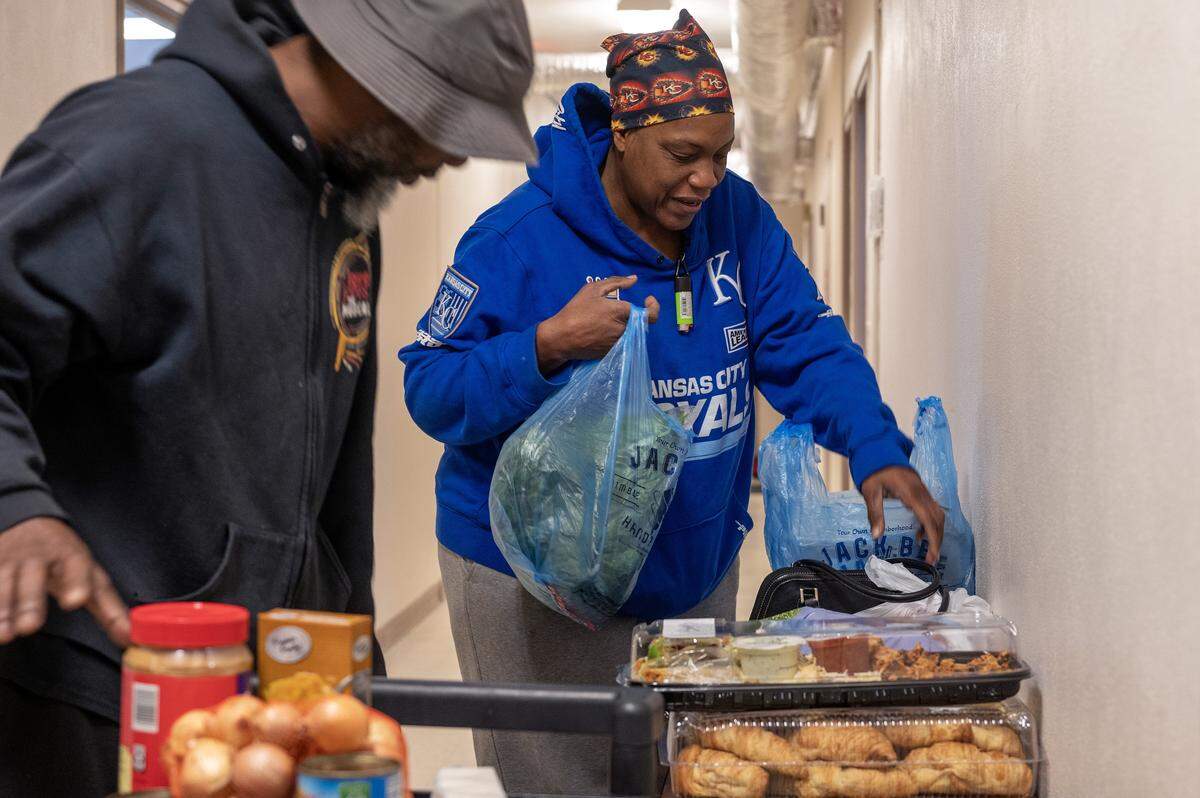
On most Mondays, Cynthia Ransburg makes her way to the Redemptorist Social Services Center to walk through the food pantry and get what she can.
Maybe some salad, fresh produce — “the good, healthy food,” she says. And then when her Supplemental Nutrition Assistance Program (referred to as SNAP) benefits come on the 19th of each month, she stocks up on meat.
But this month, she worries. The government shutdown, now the longest in American history, means uncertainty with SNAP benefits at a time she’s out of work. Will she get late benefits? Any at all?
“I mean, just everything is piling up right now,” Ransburg, 50, said, her hair covered in a Kansas City Chiefs scarf and wearing a Royals sweatshirt. “I’m in danger of losing my housing and when my food stamps come I only get maybe like $110. And if they offer only a partial payment that’s not going to do anything for me at all.”
Her story, and so many like hers, is told and retold inside the walls of the Redemptorist Social Services Center, 207 Linwood Blvd., as a growing number of people struggle to put food on the table and pay their bills. Cuts to federal aid earlier this year coupled with repercussions from the shutdown have left many desperate for help.
You don’t have to be at the midtown Kansas City center long before you can see the need.
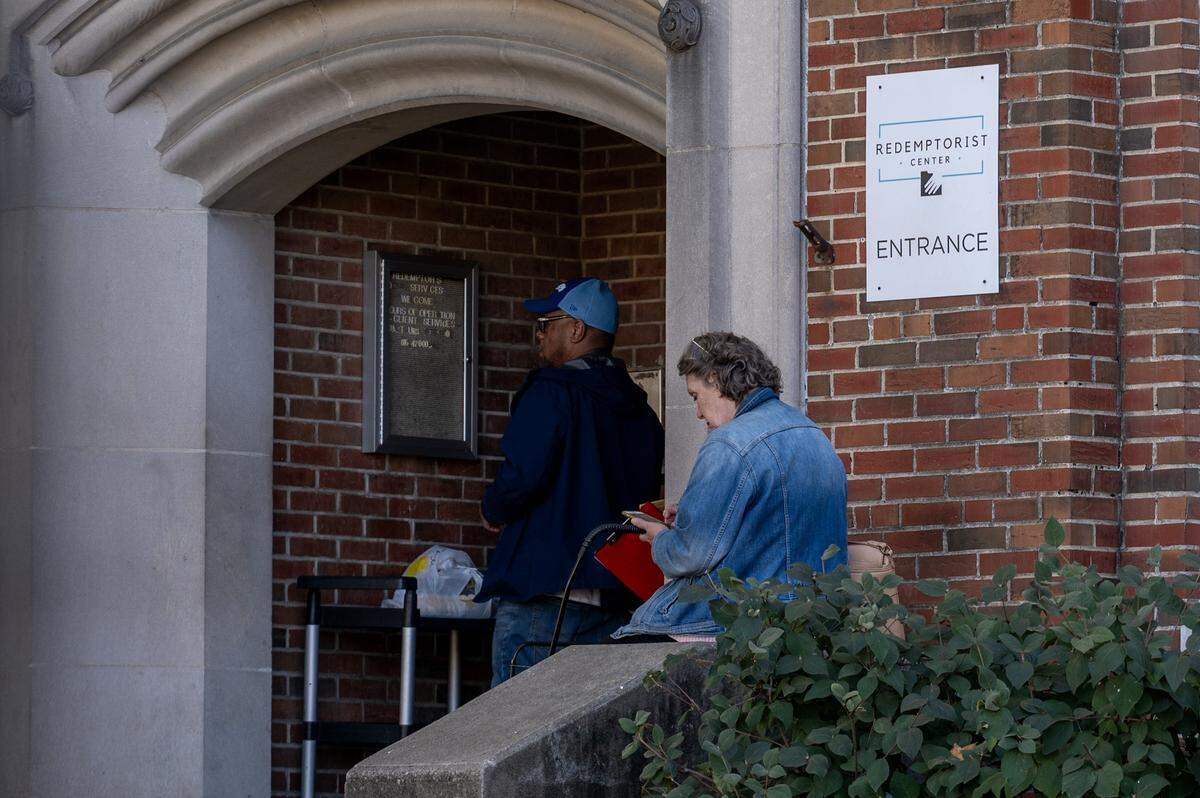
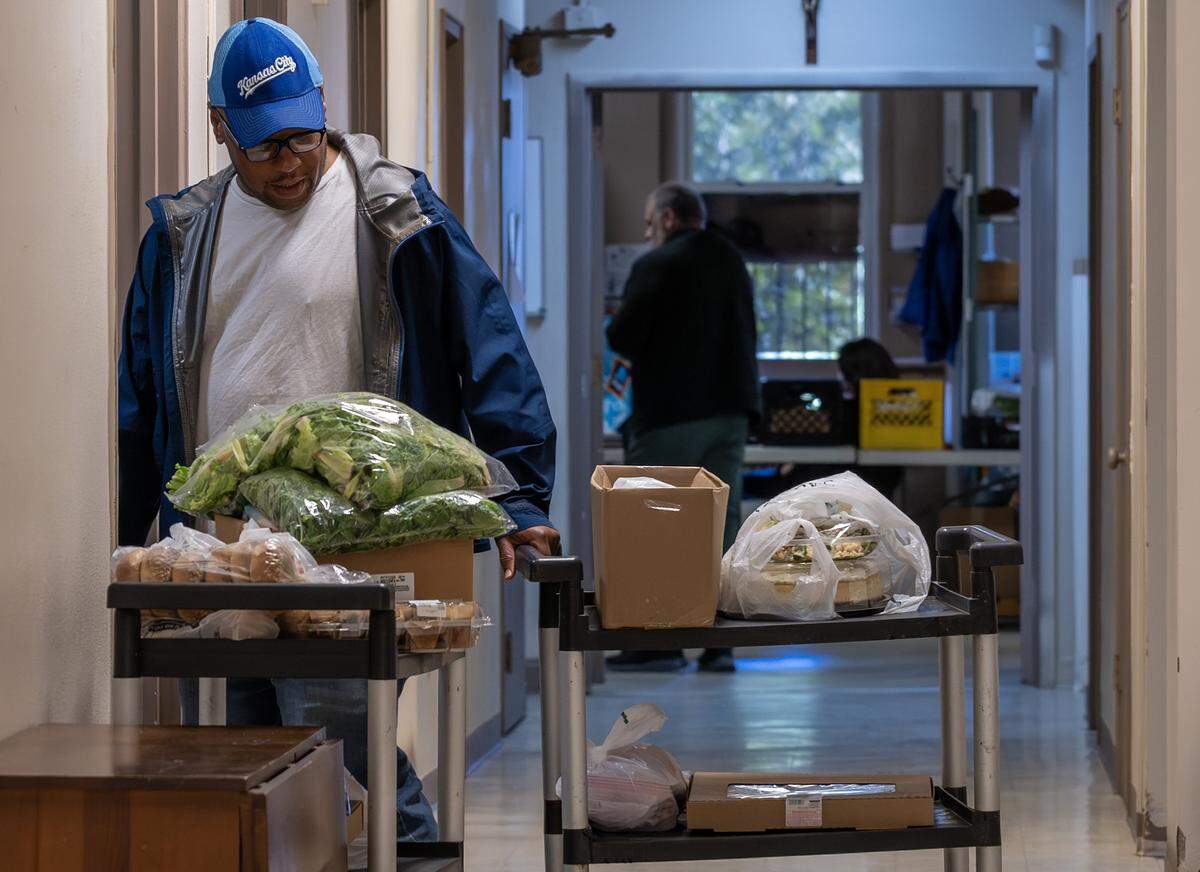
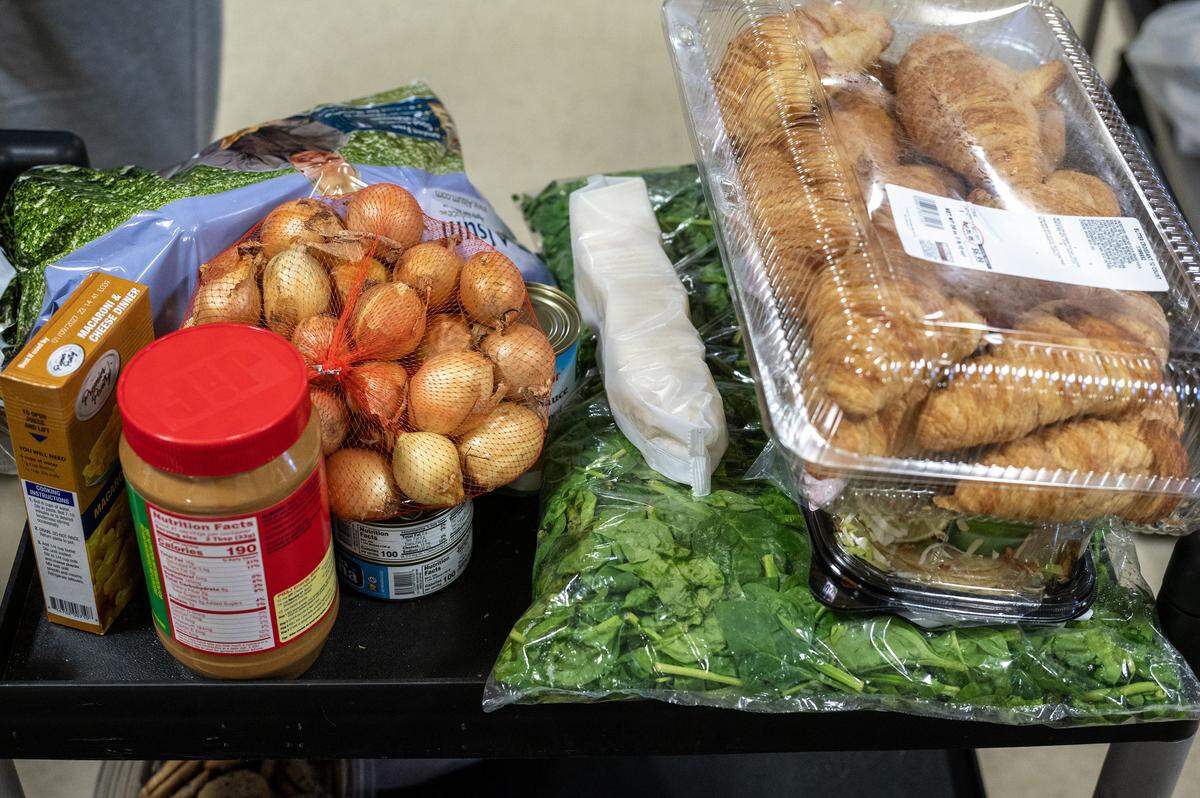
The line outside started forming at 9:20 Monday morning — doors open at 10. Once they did, a young mother loaded up on a sack of potatoes, peanut butter and bread. Another filled a rolling cart with a large container of croissants and fresh vegetables, lettuce and other food.
The center serves people from all over the area. And staff say they are beginning to see new faces as the economy gets worse and the shutdown drags on. They know their numbers are only going to increase.
“I think the unfortunate part of this and why we’re all bracing the way that we are is because we are already deep, deep in the trenches of the economy,” said Julie McCaw, executive director of Redemptorist Social Services Center. “The economy has already brought us so many clients.”
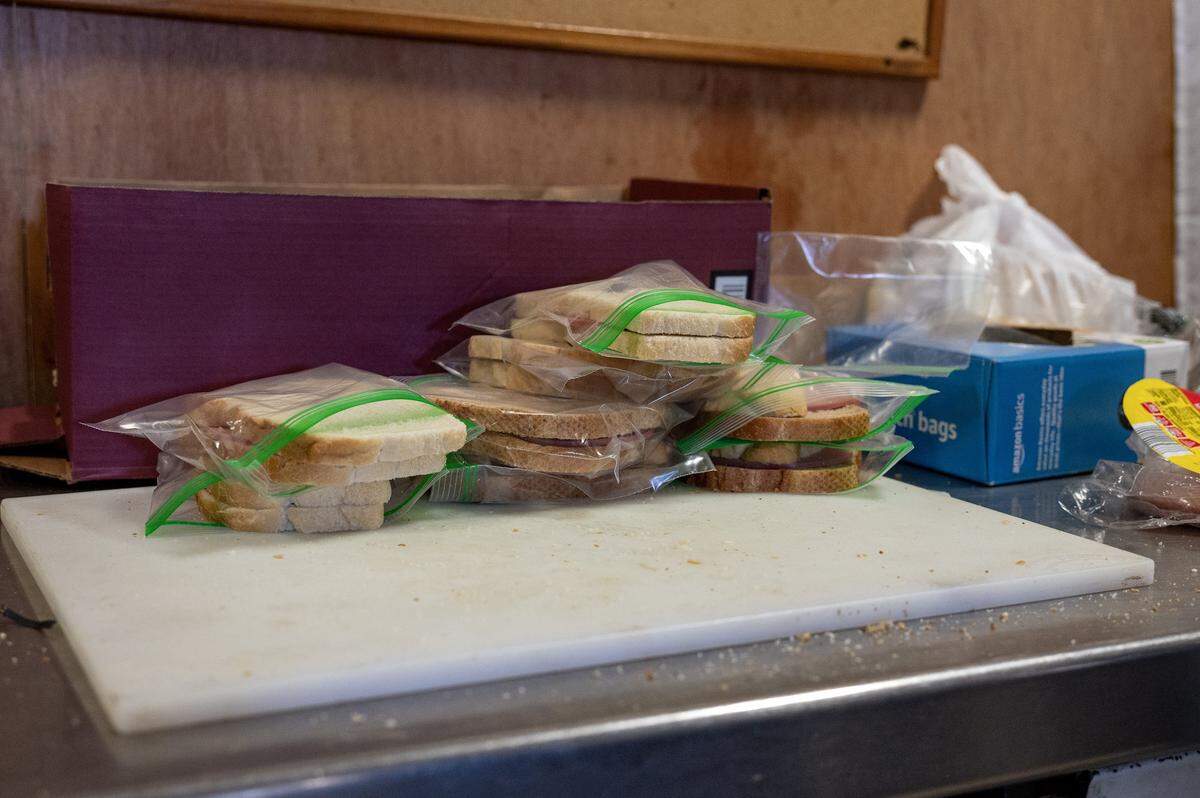
For example, she said, when it comes to clients who are unhoused, on a “heavy day” the center used to see maybe 70 people line up for sack lunches.
“That was a big day,” McCaw said. “Now that big day looks more like 150 people.”
Carla Medina, assistant director at Redemptorist, said the average day isn’t much less than that.
“We can rarely get away with making 100 to 120 (lunches),” Medina said. “It’s a big jump. It’s been increasing in the last year.”
‘Here at the bottom rung’
As McCaw described how the center serves a total of 1,500 people a week — across a line of several services — a volunteer interrupted.
“We have a little boy that doesn’t have shoes,” she told McCaw, who quickly suggested the volunteer look in the clothes closet for his size and maybe grab a blanket for his mom.
McCaw and her staff say they do whatever they can to provide what they can.
And that isn’t lost on people like Ransburg. She hopes people realize that centers like Redemptorist need help, too. With donations and food and volunteers. So more people are served during a tough economic time, where many don’t know where they’ll get their next meal.
“It’s hard on everybody, because they (pantries) have the schools that they have to cater to,” she said. “They have other homeless people that they have to cater to. They’ve got people on the streets that they cater to.”
If only leaders in Washington, Ransburg said, could see what too many people inside communities like Kansas City are dealing with. Maybe then, she said, they would make better decisions.
“They don’t know how these people live,” Ransburg said. “They don’t know how these people struggle on a day-to-day basis. ... It’s not like we can just, you know, send somebody to the store for us, or roll over and go to our fully stocked refrigerators, or, you know, none of that.
“We just don’t have a fighting chance here at the bottom rung.” she said. “Real talk.”
Food bank cuts, fallout
What’s happening now is unprecedented, say those who provide social services. Some believe that in some respects it’s even worse than what they saw during the pandemic.
Elizabeth Keever, chief resource officer for Harvesters, explains why.
Food insecurity is higher today than it’s been in a decade, she said. Food prices are “still up 25 percent over 2019,” Keever said, and cuts from the U.S. Department of Agriculture hit in March of this year.
“We saw a 30% cut, which equated to 2.4 million pounds of food,” she said. Then there were the cuts to SNAP in new legislation that Trump has deemed the “Big Beautiful Bill.”
It’s why Keever says that she and others navigating through this time, trying to help those in need, are in “uncharted waters.”
“We have had so many things step up against us right now, and we are facing a disaster as a country,” Keever said. “And we have less tools to fight it.”
Nearly 42 million Americans, which is 1 in 8, receive SNAP benefits. In fiscal year 2023, children accounted for about 39 percent of all participants in the federal food assistance program.
The U.S. Department of Agriculture announced on its website last month that due to the shutdown benefits wouldn’t go out the first of November like they normally do. Then the courts weighed in and recipients are expected to get partial benefits this month.
But as states work to figure out how much will be doled out, benefits are still not flowing and that has left millions nationwide in a cloud of uncertainty, wondering where their next meals are coming from.
On Thursday, the situation changed again after a federal judge in Rhode Island ruled that the Trump administration must fully fund SNAP benefits for November by Friday. It is not clear when states would then distribute that assistance to recipients. The Trump administration has appealed the ruling.
President Donald Trump turned to social media early last week to express his opinion on SNAP benefits and when they will be distributed. His posts only added to the confusion on what recipients can expect.
“SNAP BENEFITS, which increased by Billions and Billions of Dollars (MANY FOLD!) during Crooked Joe Biden’s disastrous term in office … will be given only when the Radical Left Democrats open up government, which they can easily do, and not before!” Trump posted on his Truth Social site Tuesday morning. “Thank you for your attention to this matter.”
At a White House briefing later that day, Press Secretary Karoline Leavitt said the administration is “fully complying with the court order.” The USDA had provided guidance to states about issuing partial benefits, she said at that time, but it “will take some time to receive this money.”
“We are dipping into a contingency fund that is supposed to be for emergencies, catastrophes — war,” Leavitt said. “And the president does not want to tap into this fund in the future. And that’s what he was referring to in his Truth Social post.”
Donations, help needed
McCaw and her staff at Redemptorist Social Services Center don’t talk about what to do when the crisis hits.
“The crisis, that’s already here,” McCaw said. “It’s already at our back door. It’s already sitting there as we’re already short of food. We’re already short of donations.
“Adding the loss of SNAP to that, I think it’s a crisis that I don’t think anybody is truly prepared for.”
For now, they’re having to rely more on donations. Money from donors would provide significant help, McCaw said. So would food donations, volunteers and clothing. Especially coats and other winter clothing and accessories likes hats and gloves for all sizes and ages and blankets.
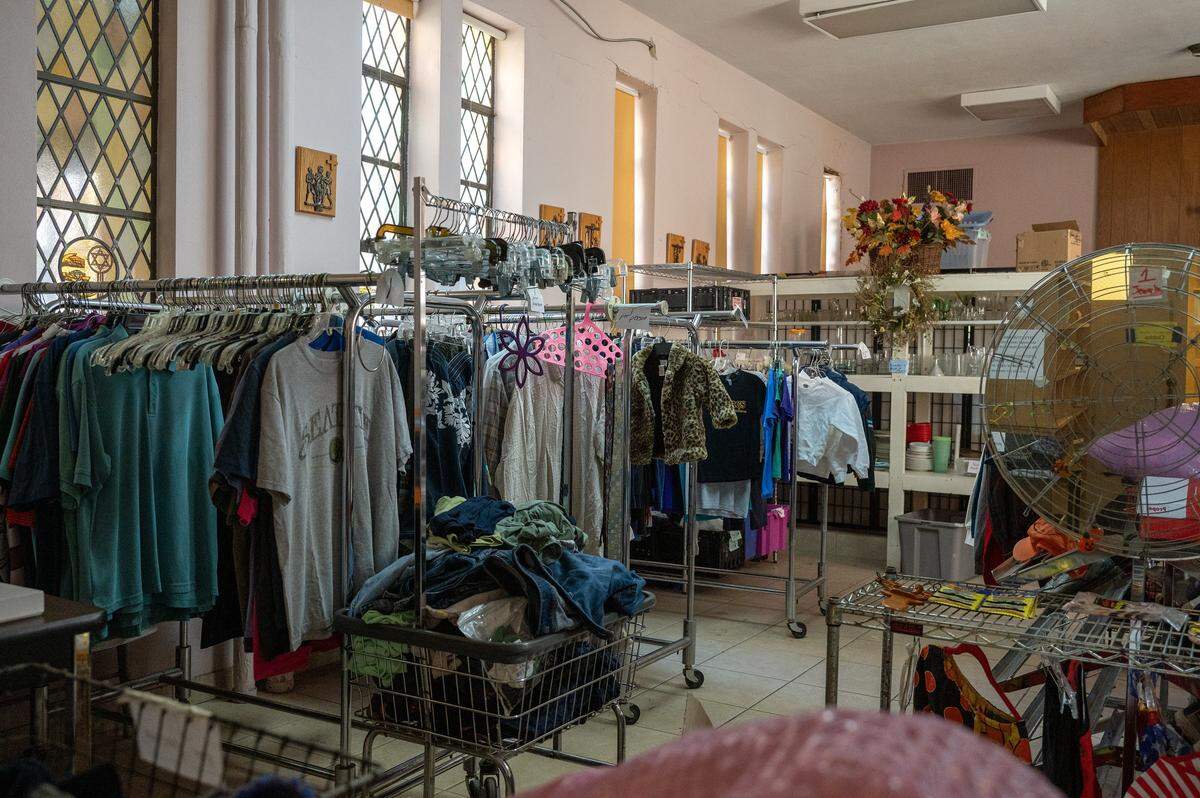
The center is in critical need of men’s clothing of all sizes, she said. People can find out more about how they can help at the center’s website, here.
“Right now we’re scared because we don’t have enough clothes,” McCaw said, “and the weather changed again.”
Another thing that’s scary, she said, is not having enough food to provide to everyone who needs it. Pantries and other agencies across the Kansas City area worry about that, too.
“The thought of telling somebody, ‘I don’t have any more food today,’ is heartbreaking, it really is,” she said, her voice breaking. “Because I know that I’m going to have to do that.
“And it’s not gonna be, ‘I have some beans, I have some rice, I have a few canned vegetables.’ It’s going to be, ‘We have nothing, because we’re completely out.’ We as a staff know that.”
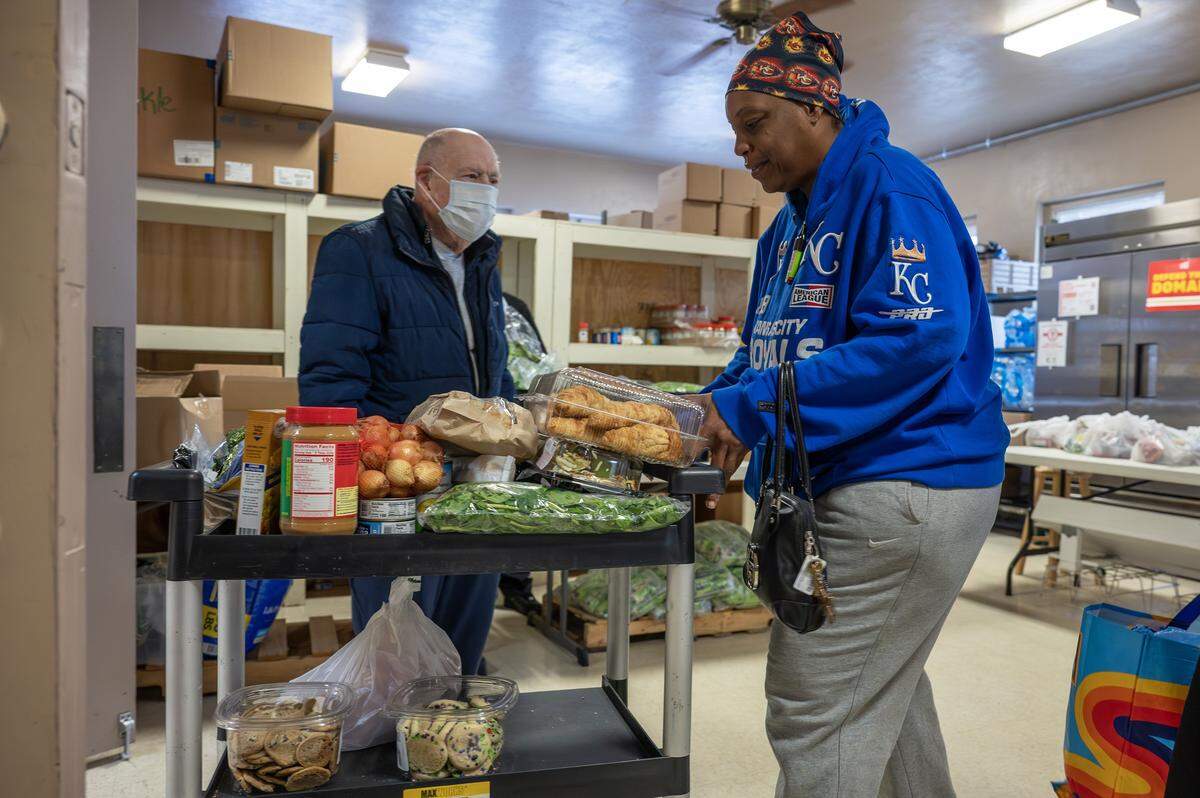
For Ransburg, who goes to Redemptorist each week, she wishes she could help the center and other pantries. Because unlike the leaders in Washington, she said she knows what people are going through.
“You don’t know where your next meal coming from,” she said. “You don’t know what you gonna do the next day, and you have no supplies,” she said. “You can’t clean your house good. You can’t make yourself feel good, nothing, because everything is just in an uproar.”
She directs her words to leaders who are making the decisions that cut assistance and prolonged the shutdown.
“Just think about if it was your grandmother or if it was your family, or if it was you, period,” Ransburg said. “How would you feel if you have people standing over you telling you they’re going to cut all your food, they’re going to cut your payment for your house, and they’re going to cut everything out?”
This story was originally published November 7, 2025 at 6:00 AM.