How racism allegations in KC’s Westport escalated into federal conspiracy claims
Since January, a lawsuit over racism in Westport has put Kansas City’s most complicated entertainment district back under a microscope.
At its core is a simple but uncomfortable question: Were certain Black business owners shut out because of racial bias, or because of safety concerns born of a volatile nightlife scene?
Recently, this controversy has escalated, both in court and on social media.
U.S. District Judge Roseann Ketchmark in early October approved what amounts to a sweeping expansion of the case, allowing the Black plaintiffs to add a racketeering charge that alleges Westport’s Community Improvement District — the semi-private board that oversees the neighborhood — has operated more like a racist gatekeeper than a civic body.
“The Westport conspiracy is multi-faceted and leverages both public and private entities in order to further its goal and mission,” attorney Cecilia Brown told The Star last week. “And that is to extort, bribe and coerce these business owners into doing whatever the CID tells them to do.”
Brown represents Euphoric, LLC, and The Sourze, LLC — two businesses that say they’ve been denied leases in Westport for racially discriminatory reasons. In her amended complaint and in an interview with The Star, Brown accused CID leaders of working with police and city regulators to threaten or financially squeeze out businesses they viewed as undesirable.
This is accomplished, Brown says, through something called the Good Neighbor Agreement.
What is the Good Neighbor Agreement?
Though they have rarely been discussed publicly, Westport’s CID has long required bar owners in the district to sign Good Neighbor Agreements, a copy of which was obtained by The Star. In a nightlife district long plagued by late-night fights and shootings, the documents are intended to give Westport stakeholders a way to enforce safety standards through contracts and financial leverage rather than relying solely on police or city departments like Regulated Industries.
Among the terms of the Good Neighbor Agreement is that bar owners must maintain a no-weapons policy, fund and maintain security cameras, share footage with police, and pay $1,000 to the CID for each violent tavern disturbance involving police if more than one disturbance happens in a year.
Westport bar owners must either sign a Good Neighbor Agreement or pay an extra fee — up to 20% of the annual CID charge based on the square footage of their business that’s subject to property tax.
Brown argues that rather than a common-sense policy of accountability aimed at making Westport safer, these agreements have been used as tools of coercion, allowing the CID and cooperating property owners to enforce their preferences selectively, disproportionately affecting Black-owned establishments.
“I think if you look at U.S. history, you’ll find a lot of covenants and agreements drawn up with seemingly neutral terms that actually held a very racist intent and were enforced in a very racist way,” Brown said.
To illustrate her point about how the agreement can be used to apply pressure to business owners, Brown highlighted the case of Steven Davis, a popular Black performer she’s representing in a separate discrimination lawsuit against the Westport CID. Davis goes by the name DJ Street King and was a regular DJ at Bridger’s, a hip-hop club at 504 Westport Road that closed in 2024, and Firefly Lounge, a club at 4118 Pennsylvania that closed this summer. Both clubs were popular with Black crowds.
Davis’ lawsuit alleges that Firefly owner Todd Gambal attended a meeting in August 2024 with Tony Uredi of the Westport CID, two KCPD majors, and Firefly staff. Uredi and KCPD suggested at that meeting that Firefly no longer hire Davis as a DJ, charge an increased entry amount, modify the dress code and change Firefly’s music formats on Sunday nights.
In an affidavit filed in Davis’ case, Gambal says that there had been no security incidents or altercations during Davis’ Sunday night gigs. Gambal says in the affidavit that Brett Allred — who owns multiple bars in Westport and owned Bridger’s until it closed — also recommended that he change the Sunday night hip-hop format and stop using Davis as a DJ.
Gambal said he felt he had to comply with the request because of the Good Neighbor Agreement he’d signed.
“If Firefly continued to book Davis it could lead to increased scrutiny on Firefly by WRBL (Westport Regional Business League), Westport CID, KCPD and others including, but not limited to: loss of the liquor license, health permit, fire permit or potential closure of Firefly,” Gambal says in the affidavit.
In the end, it didn’t matter. Firefly closed in July after what Gambal described as increased scrutiny on his business from “state agencies, Regulated Industries and the KCPD.”
“So basically, the CID can tell a business owner not to use a certain DJ, and if you don’t do what they say, you’ll get your liquor license revoked, or you won’t get the neighborhood consents you need to operate your business,” Brown said.
RICO claim
Another new component of the amended complaint is the addition of a Racketeer Influenced and Corrupt Organizations Act claim.
RICO is often associated with mobsters and organized crime, but it doesn’t only apply to traditional “mafia” activity. The law is designed to target any enterprise that engages in a pattern of illegal activity as part of a coordinated scheme.
“In this case, we’re talking about the Westport CID being a sophisticated organization that is going after Black people — whether it be patrons, whether it be DJs, or potential business owners — to make sure that they do not gain any stake and therefore economic equity or equality in Kansas City,” Brown said.
Brown says she has recorded audio of Westport CID members saying things that demonstrate this. She references a few of these excerpts in the complaint, though she doesn’t identify who said them.
One example is a Westport CID member telling a business owner, “You make one step out of bounds, we’re going to be turning you in to Regulated Industries, the health department — it can get really bad.”
Another is quoted saying, of businesses that don’t comply with the Good Neighbor Agreement, that the CID will “go after them with a vengeance because when we don’t have a contractual agreement, we do everything we can to put them out of business.”
Westport Ale House and the plaintiffs
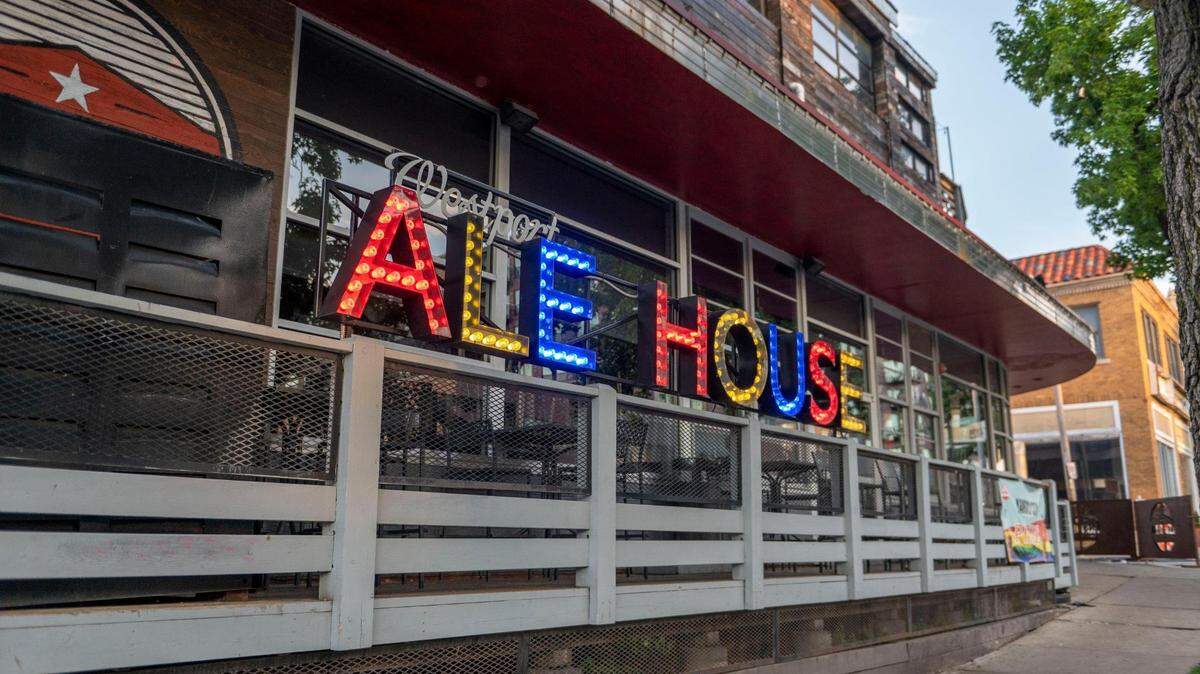
This sprawling federal case originated in October 2024 over a lease dispute at the former Westport Ale House at 4128 Broadway.
That bar had a history of fights and shootings before closing in 2024. Afterward, Hal Brody, the building’s longtime owner, wanted a quieter tenant. He thought he’d found one in Chris Lee, who pitched an upscale restaurant and cocktail concept called Euphoric Bar and Lounge.
Things went sideways when Lee later held a hiring fair promoting the venture as Ale House West, leaning heavily on the same nightclub party vibe that Brody believed had caused problems at the original Ale House, court documents said. Lee also disclosed that Rahmon Allen, the owner of a Jacksonville club with a history of violent incidents, would be running the new spot.
Nicknamed “Fat Boy,” Allen was convicted in federal court in Kansas of possession of a firearm and silencer and sentenced in 2004 to 21 months in prison. In 2014, he was indicted on drug trafficking charges connecting him to a Kansas City-based drug network tied to multiple street gangs. He became a fugitive and evaded authorities for nearly four years before being apprehended in Jacksonville in 2018. Allen was returned to Missouri, where he was ultimately acquitted of the federal drug trafficking charges in 2019.
Brody pulled out. That sparked a lawsuit not just against Brody but also every member of the Westport CID, which governs the entertainment district. The suit alleged Brody broke a binding agreement on the advice of Allred and other business owners in the district, and that they were all acting out of racial prejudice against a Black-owned business. (Lee and Allen are both Black, as was much of Westport Ale House’s clientele in the years before it closed.)
Euphoric removed its original attorney, Dave Rauzi, in June, and hired Brown as counsel. The lawsuit now includes two other businesses besides Euphoric that say they were shut out of Westport for racial reasons.
The Sourze, LLC, owned by Robert Thorpe, says it leased space in 2020 at 427 Westport Road to open an art gallery/event space and a second location of a downtown bar called KC Daiquiri Shop. After the tenants signed the lease and paid nearly $50,000 in rent and expenses, the landlord, Westport Development, LLC, told The Sourze’s owners they couldn’t open the daiquiri shop.
Westport Development LLC’s explanation, according to the suit, is that the daiquiri shop would “cannibalize” other Westport bars and that “hip-hop crowds” bring violence. Without the ability to use the full space as planned, the business failed. The Sourze claims that Westport Development LLC — owned by two white men, Jeremy Hurt and Matt Voss — changed their terms mid-lease based on racist assumptions about Black customers.
The other plaintiff is UniKC LLC, represented by attorney Stephen Williams. This entity, owned and managed by D’Mario Gray and Frederick Vickers, signed a lease in 2021 to open a nightclub at the City Ice House building at 4140 Pennsylvania Ave. Shortly thereafter, UniKC alleges, Gray and Vickers met with the owner of a neighboring business, the now-closed Denver Biscuit Company, who questioned them about their concept. They told him it would be a “club catering to a young, R&B, Hip Hop crowd,” according to the lawsuit.
The next day, the owner of the City Ice House building sent UniKC a cease-and-desist letter and locked them out of the property, they say. The nightclub never opened, but the landlord later paid UniKC $100,000 to walk away from the deal. UniKC maintains that the eviction and subsequent payout were racially motivated.
Westport CID response
The Westport CID said in a statement that its members “strongly refute” the plaintiffs’ “baseless” allegations but that it would not otherwise comment on ongoing legal proceedings.
But Brett Allred, one of the CID’s 12 members, has been outspoken in defending Westport’s policies and actions in these matters.
As the biggest bar owner in Westport, Allred looms largest among the defendants in the lawsuits. He has been dogged by racism accusations since 2019, when a couple of his bars were revealed to have “no play lists” of rap and hip-hop songs DJs were not allowed to play. All were by Black artists.
Allred handled the fallout from that controversy by engaging in public discussions about the intent of the policy and later opening Bridger’s, a hip-hop club with “an open format that gave DJs full creative freedom,” Allred said in a statement last week.
“I took pride in creating a space where a customer base that I believe often feels unseen or discriminated against in Kansas City could feel represented.”
Despite staffing Bridger’s with 30 security officers on Saturday nights and hiring off-duty police officers, the club still struggled to maintain a safe environment, Allred said.
“The demand was there, but the operation ultimately became unsustainable due to the consistent violence surrounding the venue,” he said. “Inside, we could manage it, but once fights spilled outside, they often escalated into large-scale brawls that were beyond our control.”
Regarding the accusations that he was the puppetmaster behind Euphoric being denied its lease and Firefly closing, Allred said in a statement that he has no power to control anyone else’s lease or liquor license and that Firefly had “well-documented incidents of violence and disturbances for months leading up to its closure.”
Allred has also filed a defamation suit against Lee, Gray, and others allegedly involved in the making and promotion of a YouTube video that circulated online shortly after the Euphoric lawsuit was filed in January. That AI-narrated video paired photos of the CID’s board members with images from slave auctions and civil-rights protests and said the CID was enforcing a “whites-only” mindset. Allred’s defamation suit says it depicts him as “racist, corrupt and immoral.”
Far from a discriminatory conspiracy, Allred called the Good Neighbor Agreements “responsible operating practices that protect staff, patrons, and the community.”
“Linking Westport or myself to organized crime is absurd,” Allred said. “Their goal is to stir public emotion so that those being sued will simply pay to make it all go away out of fear of being labeled racist. I understand that fear. I’ve experienced it myself.”
“The people behind this lawsuit are betting that Westport will fold and settle,” he added. “I won’t let that happen.”
What’s next?
Though Judge Ketchmark sided with Brown and her clients on amending the complaint to include RICO claims, one of the plaintiffs, Euphoric, LLC, was denied its request last week for a temporary restraining order against Brody and his LLC, 4128 Broadway.
That means the court found that Euphoric did not provide enough evidence to show they were likely to win their claim that Brody breached the lease by refusing to give Euphoric possession of the property.
Brown appealed that ruling to the Eighth Circuit Federal Court of Appeals last week. “We believe the judge got the law wrong on that,” she said.
But the rest of the claims are moving forward. Asked why the city of Kansas City was not named as a defendant in the case given that it alleges city agencies participated in the alleged conspiracy, Brown said cities generally enjoy immunity under federal law in cases like these. But, she added, there are narrow instances where the city can lose that status.
“Based on what we are finding, we do believe the city meets that narrow exception to lose immunity,” she said. “And so we are working that up as we speak.”
This story was originally published November 4, 2025 at 5:00 AM.
CORRECTION: An earlier version of this story did not include the fact of Rahmon Allen’s 2019 acquittal. The Star apologizes for the oversight.