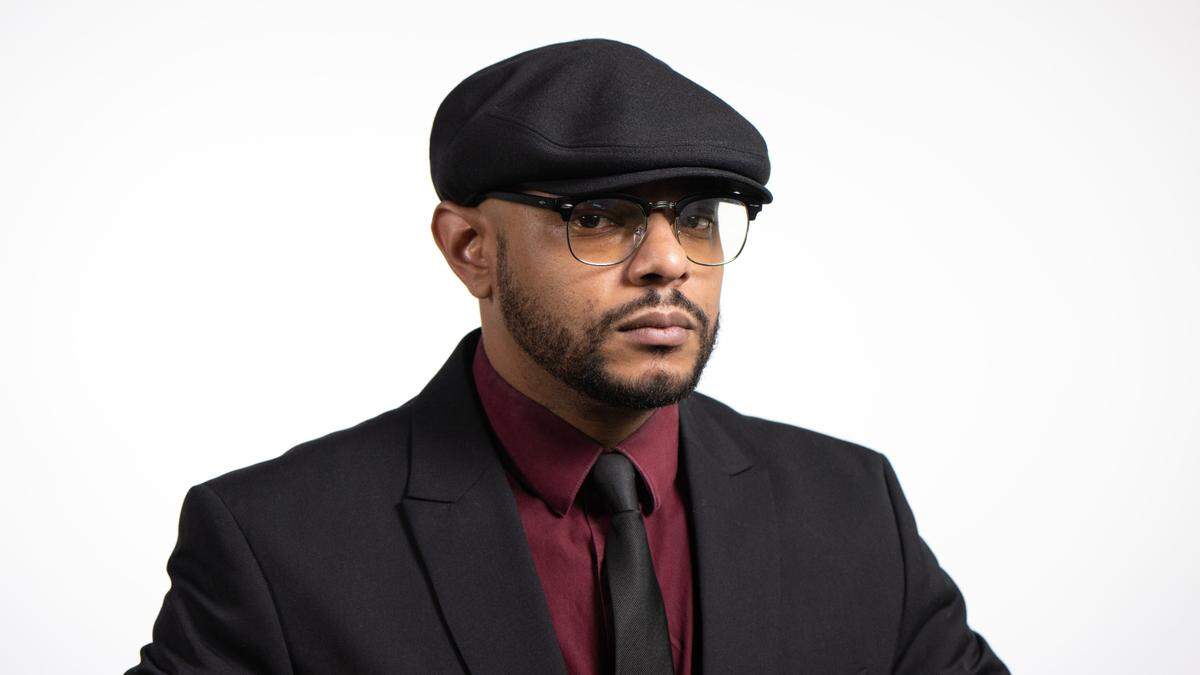
City Union Mission leader shares his four-pillar recipe that makes a good man
.jpeg "Lynn Johnson, chief program officer of City Union Mission, providing shelter, recovery and prevention to address homelessness with faith-based, community-driven programs.")
Lynn Johnson, decided in middle school that no matter what profession he pursued, it would involve helping the community.
The Kansas City, Kansas native has spent decades dedicating his career to serving Kansas City’s urban core, focusing on organizations that support the city’s homeless and at-risk populations.
Today, as chief program officer at City Union Mission, he oversees initiatives that provide food, shelter, recovery programs and youth outreach. Johnson views his work as a calling, driven by a lifelong passion for community service and faith-based leadership.
Under his direction, the Mission continues to address the root causes of homelessness while helping individuals rebuild their lives and move toward self-sufficiency.
In addition to his work with the metro’s unhoused community, Johnson published his first book, “The Surrendered Man: What Truly Matters.” A Johnson book wrote to examine his own personal journeys and an exploration into what it really means to be a man of purpose, faith and integrity.
Johnson said that through his writing and community leadership, he aims to inspire others to serve, mentor and lead with compassion.
Recently Johnson sat down with The Star’s culture and identity reporter J.M. Banks to talk about how he developed a passion for helping when he was a teenager, working with the homeless community here and writing a book on becoming a good man.
Banks: So starting off, are you a Kansas City native?
Johnson: I was born in Kansas City, Kansas. Actually, my mother relocated quite a bit, so some of my earliest memories were in New Orleans. Then she moved to Kansas City, Kansas for a job. So I spent most of my life here. I graduated from Washington High School, class of 1989.
Could you tell me about what inspired you to want to work in the field of community outreach?
It actually goes all the way back to my late middle school years. My mother enrolled me in an after-school program at what used to be called the Martin Luther King Urban Center. It was led by a giant in local civil rights, a man by the name of the Reverend Nelson “Fuzzy” Thompson (A Methodist minister and local civil rights leader, now deceased).
He had the kind of program that was almost a replica or template for young Black individuals who were going through difficult times.
That man inspired me to serve. It was his life’s work. He’s a Kansas City great and that’s where it started for me.
In college, I got my first opportunity to work. I would say the King Center was where the inspiration to serve came from, but my first real career opportunity came when I was a student at Kansas City Kansas Community College. I met a gentleman named Chuck Wilson. He asked me to be a mentor and tutor for the Juvenile Detention Center over in Wyandotte County.
That was my first career job, mentoring and tutoring individuals in the system to help them re-enter society. The young men I mentored were all facing felony charges for various violent crimes. I was tasked with helping them pass their reading and math competency tests. If they didn’t pass, they had to serve their sentence until adulthood. If they did, they could return to school.
That was part of a county judge’s program and that’s how I got my start. I did that for about six or seven years.
After that experience what were your next steps and how did that lead you to City Union Mission and the work you’re doing now as program director?
Through that journey, my mentor Chuck Wilson taught me a lot about developing program models. That included technical writing, proposal development and business plan development. I was learning how to build and design program models for community work.
That opened opportunities for me at the Boys and Girls Club. That was my first role after college, as a program director. I worked there for two years and then decided to go back for more education. I started my master’s degree at UMKC (University of Missouri Kansas City), where I became a research assistant for the Institute for Human Development.
That experience developed my research and analytical side, learning how to measure, predict and build impact into program development.
From there, one opportunity led to another. After grad school, I went to a job fair at UMKC and JCPenney Logistics was there. They had one of the highest-rated leadership training programs in the country at the time. They recruited me and I accepted because I had never worked in corporate America and wanted to gain corporate experience.
I developed leadership skills in areas like human resources, management and logistics. I was there five years before being laid off during the 2007–2008 financial crisis.
After that, I started a consulting business because jobs were hard to find. I contracted myself out, working with Don Bosco, Community Link and on political campaigns. I spent about 10 years freelancing and building my name.
Then I landed at the Urban Ranger Corps. My friend Eric Dickinson, who was president of the organization, asked me to evaluate their program. I spent three months doing a complete evaluation and he hired me under contract to develop the model I presented. I ended up being there for 10 years.
That organization became one of my favorites in the world. During that time, I also did consulting work for City Union Mission, training their staff and helping develop youth programs.
The director of family programs at the Mission later became the CEO. He started recruiting me and although I wasn’t ready to return to a 9-to-5, it felt like a calling. City Union Mission wasn’t just a job, it was a calling. There was a real need and I had already built a career and passion for serving.
I joined on faith. Eventually, there was a leadership transition and the board asked me to step in as interim CEO for 10 months. Afterward, they hired a new CEO and I continued serving as chief program officer.
Can you break down the work you do there as chief program officer?
I oversee all programs and services designed for what I call the “farthest reach” population of Kansas City.
We provide three main areas of service. The first is emergency services, meeting the homeless community where they are by providing shelter, food and clothing. That’s the ground floor of what we do.
The second is recovery or transformational programs, which help individuals move from chronic homelessness to self-sufficiency by addressing the causes of homelessness.
The third is prevention services, focused mainly on young people, summer camps, holiday outreach, utility assistance and our annual Christmas program.
On average, we serve around 60,000 meals per year. My responsibility is huge, but I view it as ministry work. Developing leaders is also a big part of my role, helping others grow in their craft and faith.
What are some of the most effective strategies or programs you’ve seen that make lasting impacts?
One of the greatest methods in any successful program is understanding the people you serve. It’s one thing to provide services, it’s another to provide the right services to the right people.
For example, if you give someone a job without realizing they have a learning disability, they may fail even though it looks like success on paper. Programs must be tailored to the people they serve.
That understanding must include cultural, racial and demographic differences and even the different needs between men and women. There’s no one-size-fits-all approach.
Are there common misconceptions about the population you serve at City Union Mission?
Yes. Many people don’t understand that most individuals who are homeless have experienced loss, often loss of access.
Someone might lose their job, go through a divorce, fall into depression and lose everything. That’s a real story, a real person. People often assume those standing on corners are lazy, but they don’t see the story behind the sign.
The biggest misconception is that homeless individuals can fix their situation alone. They need help, access to healthcare, food, clothing, medicine and resources.
What’s the most difficult aspect of the work you do?
The hardest part is building relationships with the people you serve and not always seeing the results of your work. We often don’t get to see how someone’s journey ends.
Sometimes people we help relapse into addiction or return to the streets. That’s tough. We do our best, we pray for them and we trust the process. The nature of this work is that you may never see the outcome, but you keep serving anyway.
What would you like to see happen locally and institutionally to better serve Kansas City’s unhoused population?
There are so many great organizations doing good work. I think one of the most underestimated tools is collaboration.
Healthy collaboration can be powerful. The city, shelters and nonprofits need to be part of the same community effort. Homelessness isn’t an isolated issue, it requires collective solutions.
City Union Mission focuses on ministry and the spiritual side of service, while others specialize in different needs. Collaboration doesn’t mean losing identity; it means joining forces for greater impact.
Recently, you became a first-time author, what was the writing process like and what’s the book about?
Yes, “The Surrendered Man: What Truly Matters.” I just published it a couple of months ago.
I’ve always wanted to write. About 10 years ago, I wrote a small book called “The Ultimate Gentleman: The Handbook.” It wasn’t widely published, it was just something I wanted to leave for my sons in case something happened to me.
Later, I started writing another book. A colleague shared his book with me and connected me with his publisher. She believed I had a story worth telling.
The process was intense, I set a goal of 70,000 words and ended up writing 80,000. The central theme that emerged was surrender.
The book traces my journey as a man raised by a single mother, searching for identity and control. I thought power came from controlling my environment, but I learned true power came from surrender, spiritually, biblically and emotionally.
In essence, to gain control, I had to lose control. The book walks readers through those lessons and how surrender leads to real strength.
What do you think are the key qualities or principles that define being a good man in today’s world?
There are four pillars I discuss in the book: being a provider, protector, mentor and friend.
A man must first provide for himself before he can provide for others. He must protect, not just physically, but spiritually, through prayer and presence. He must mentor, passing knowledge to the next generation, especially in the Black community where that’s often missing.
Lastly, he must be a friend, a servant who shows up when needed. When one of these pillars is out of balance, a man becomes either passive or overly aggressive. The goal isn’t perfection, it’s balance.
Looking ahead, what goals do you have for the future with City Union Mission and your work?
At the Mission, one of our biggest focuses is addressing trauma and mental health. We have a successful mental health program for men that helps move them into sustainable housing. We want to replicate that model for women, as that population is growing rapidly.
Personally, I want to continue telling transformational stories. I have three projects:
First, a YouTube podcast with my sons called Coffee Shop Conversations, where we highlight community leaders who inspire youth.
Second, “The Surrendered Man,” podcast, focusing on faith, fatherhood, leadership and personal growth.
And third, a project called Mind Over Matter, which addresses the mental, emotional and spiritual well-being of athletes, particularly at the college level, helping them navigate the pressures of competition and life after sports.
Long term, I want to start an all-boys academy. I talk about this in my book. I was labeled a “problem kid” when all I needed was someone to invest in me. I want to create a school that builds strong, responsible, courageous young men, academically, emotionally and spiritually.
For more stories about culture and identity, sign up for our free On The Vine newsletter at http://KansasCity.com/newsletters.
This story was originally published October 22, 2025 at 10:07 AM.