Will Missouri launch a cancer inquiry at Liberty school? Vote comes next week
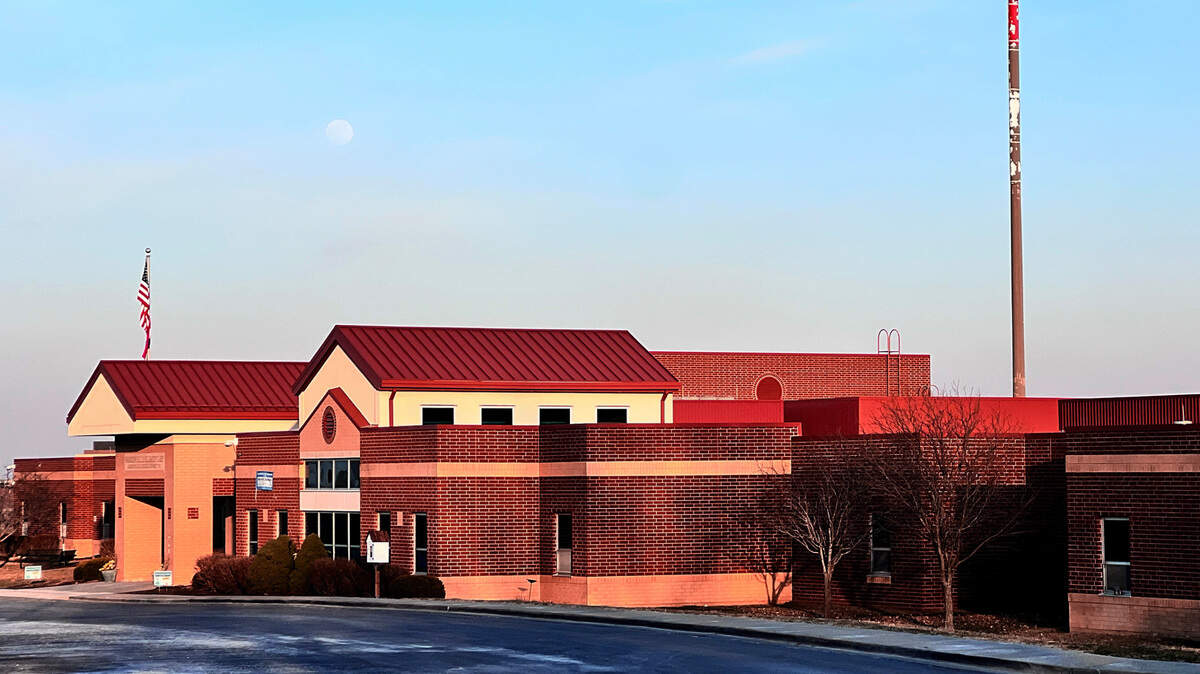
Four months after Missouri’s Cancer Inquiry Advisory Committee met to discuss diagnoses at a Liberty elementary school, the group will meet again next week.
Lisa Cox, spokesperson for the state’s Department of Health and Senior Services, said the committee is scheduled to meet at 2 p.m. Wednesday.
“They will vote on whether to conduct an inquiry or not related to the Warren Hills School situation,” Cox said.
This decision comes after years of concerns by teachers, staff and parents that something at the school may be making people sick. Since 2020, six teachers have been diagnosed with breast cancer. In addition, another at the school was diagnosed with breast cancer in 2013. And at least three other staff members have had other types of cancer, including throat and cervical.
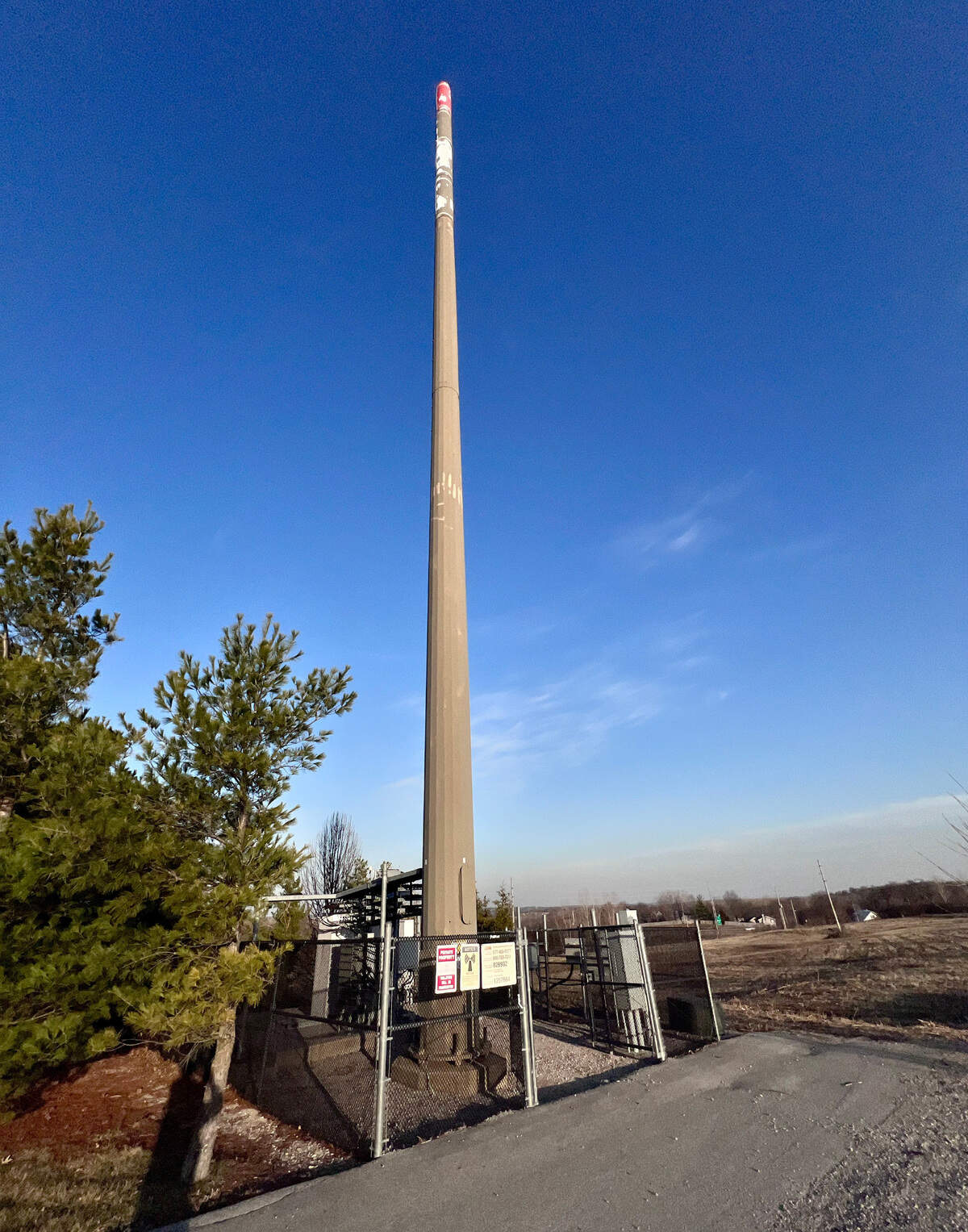
When the committee met in late June, members determined they didn’t have enough information to vote then on whether to launch an inquiry. Since June, more work has been done and results have come back on testing done at Warren Hills, where a cell tower is located 130 feet from the school.
Tiffany Schrader, vice president of the school’s Parent Teacher Association, said she hopes the committee decides to conduct a cancer cluster inquiry. The goal of that process, according to the state, would be to work with the community in exploring the nature of their cancer concern, provide education, and, if appropriate, provide epidemiological information.
“I feel the only way that anybody’s going to get resolution is if a higher entity or a higher division of professionals comes in and looks at the situation,” said Schrader, who is a nurse and has one child at Warren Hills. “I just feel like it would give people a better peace of mind.
“If you can honestly tell me that you’ve exhausted every effort that you can to ensure that everything has been done, then we have to take it for that. I want to be able to say that.”
In June, about two weeks before the Cancer Inquiry Advisory Committee initially discussed the Liberty school, the U.S. Center for Disease Control and Prevention confirmed that federal agencies were engaged with the state to learn more about the situation in Liberty. At that time, the regional office for the Agency for Toxic Substances and Disease Registry and CDC/ATSDR cancer cluster experts were discussing how their teams could provide support on a state and local level.
District officials continue to work with federal, state and county officials “as they complete their analysis and study of the environmental and health conditions at Warren Hills,” said Dallas Ackerman, a spokesperson with Liberty Public Schools.
“We have great confidence in all of the work and efforts that have taken place thus far,” said Dallas Ackerman, a spokesperson with Liberty Public Schools. “Based on all of the information we have received to date, we are very confident that Warren Hills is a healthy and safe environment for our students and staff.”
‘Talking about it’
Schrader and another parent met with Tucker and other district officials in late August. The goal was to not only get an update on testing and next steps but to have a “united front” regarding how to discuss the situation with the school community, Schrader said.
Parents want to know, she said, if there were any new developments over the summer and what the next steps are. She said she’s continually asked what’s going on and is even approached about the situation by people not associated with the school when she’s wearing a Warren Hills shirt.
“Almost every single week, once a week, I’m asked about it,” Schrader said. “People are still talking about it. It has not gone away.”
Parents received an email in late June about the initial meeting of the Cancer Inquiry Advisory Committee. And in August, district officials put up a report on the school’s website from Axiom Professional Services showing results of tests conducted in May.
Testing of soil near the West Entrance revealed that “several Polynuclear Aromatic Hydrocarbons (PAH’s) were detected at levels above the Missouri Department of Natural Resources soil cleanup levels.
“It should be noted that asphalt can contain elevated levels of PAH’s,” the report from Axiom said. “It is possible that rainwater runoff from the adjacent west parking lot has deposited some PAH’s into this low area where the soil was sampled.”
The report further stated: “PAH’s are unlikely to be an airborne hazard but rather an ingestion hazard meaning that the exposure in this case would be from ingestion of soil.”
The purpose of Axiom’s survey, the company said, was for “the evaluation of potential chemical constituents that could pose harm to human health as it relates to occupants that work at the building.”
Among the recommendations Axiom provided is having bare soil areas “remedied with sod or other soil barriers that prevents direct contact with the bare soil.”
School district officials are not concerned about the results, said Ackerman, a district spokesperson. But it will take steps soon to “remediate the area in question.”
“The main reason we are not concerned is that Axiom, along with our public health partners, have indicated that since the soil in this specific area is not at risk of being ingested,” he said, “and because this is a common occurrence in drainage areas just outside of asphalt parking lots, we are confident that no staff nor students are at risk.”
Consternation about cell tower
The Star wrote in May that about 21 staff members — of the school’s total of 80 or so exempt and nonexempt employees — wouldn’t be coming back for this school year. That includes not only teachers and other certified staff, but also paraprofessionals and other employees.
Not all departures appear to be related to the health concerns, and many are considered typical turnover for a school. But those familiar with the situation say several staff members were leaving because of cancer diagnoses and how they feel the district has handled the situation.
Some parents also decided to move their children from the school because of safety concerns.
From early in the 2022-2023 school year to the end of this year, teachers have been urging district officials to provide more information, more investigation and answers to their lingering questions,
In 2022, the district contacted the Clay County Public Health Center to initiate a study. The center’s analysis ultimately determined there was no evidence to suggest that the breast cancer rate at Warren Hills was higher than expected.
At that time, it was decided that no further environmental investigation was warranted. Since then, concerns have resurfaced and grown after a beloved teacher died a year ago and another teacher was diagnosed with breast cancer late last year.
Much of the consternation centers around a 120-foot cell tower located 130 feet from the school. It’s been there since shortly after the school opened in 2006.
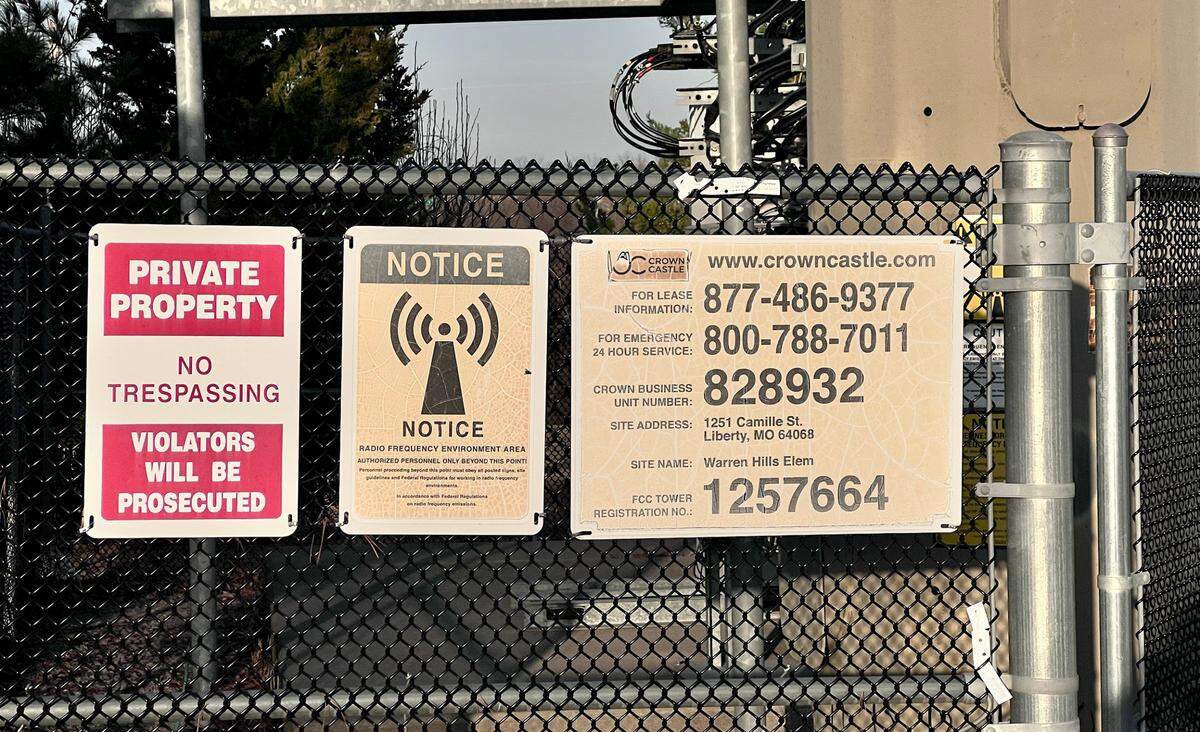
In the district’s late June email to school staff, the tower was addressed.
“The District has continued our evaluation of the cell tower,” the letter, written by the district’s chief operations officer, said. “There is nothing to report on at this time but we will certainly update the Warren Hills community should any determinations be made with respect to the future of the tower.”
Schrader said she and other parents just want to make sure everything has been done to rule out that something at the school is making people sick. She also wants more information about the tower.
“I do feel that it’s a safe environment,” Schrader said. “Because, again, I haven’t gotten any scientific data, prominent data, showing maybe that it is something that’s environmental that is causing the problems.
“I feel though they are still avoiding checking the tower.”