Beekeeping is buzzing in urban KC. It’s transforming lives and saving communities
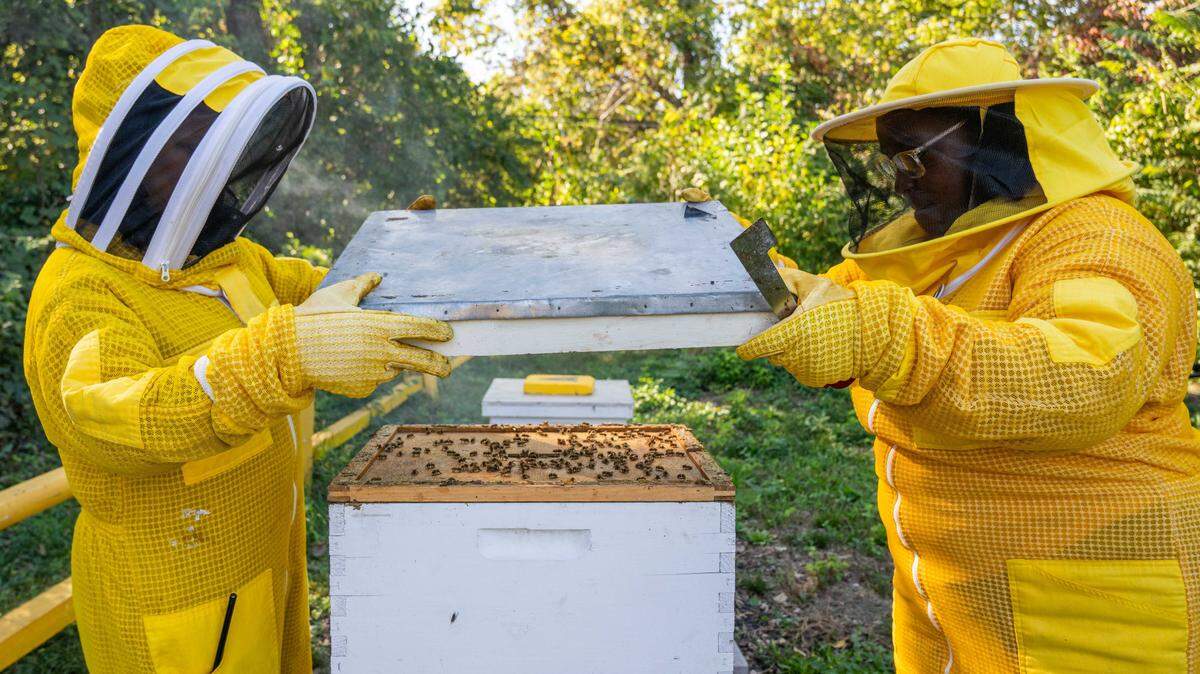
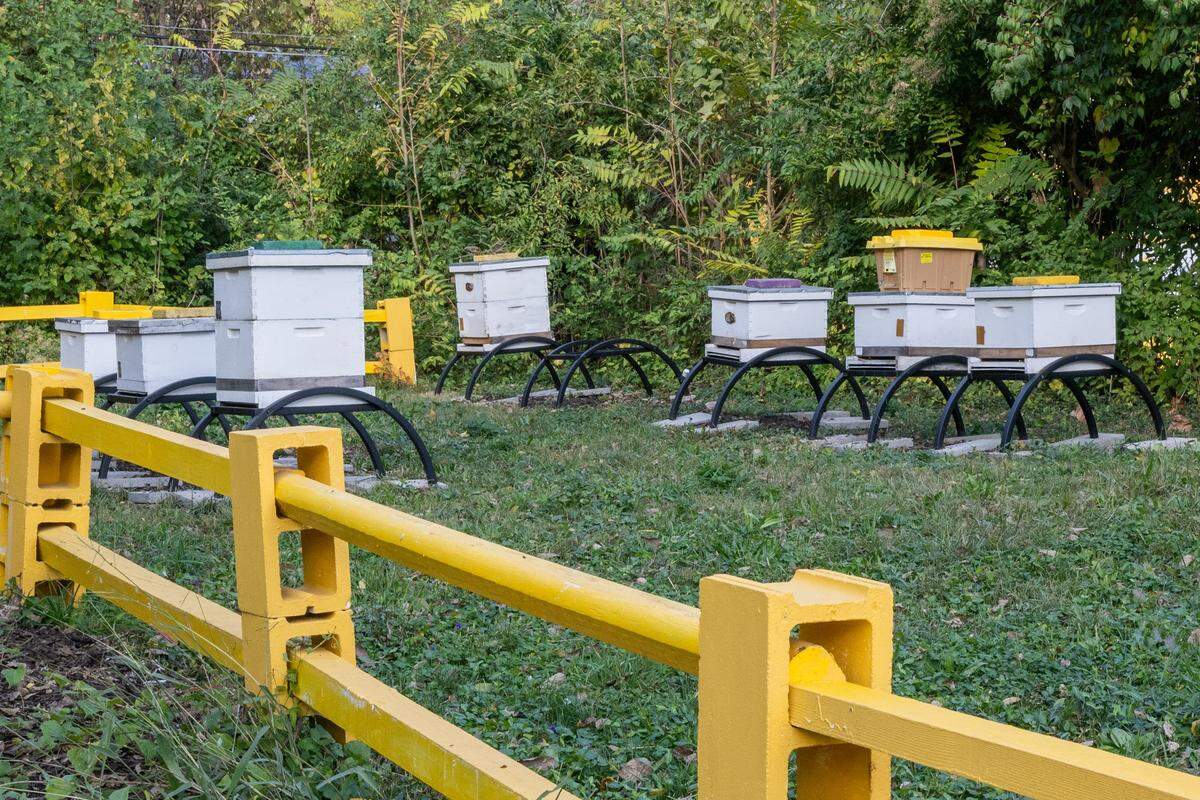
On a chilly fall morning, Dr. Marion Pierson, a local pediatrician, and Charity Brown-Ritchie don yellow beekeeping suits and moved carefully among rows of white wooden boxes stacked one on top of the other and side by side on what used to be six vacant lots near 50th and Wabash Ave. in Kansas City.
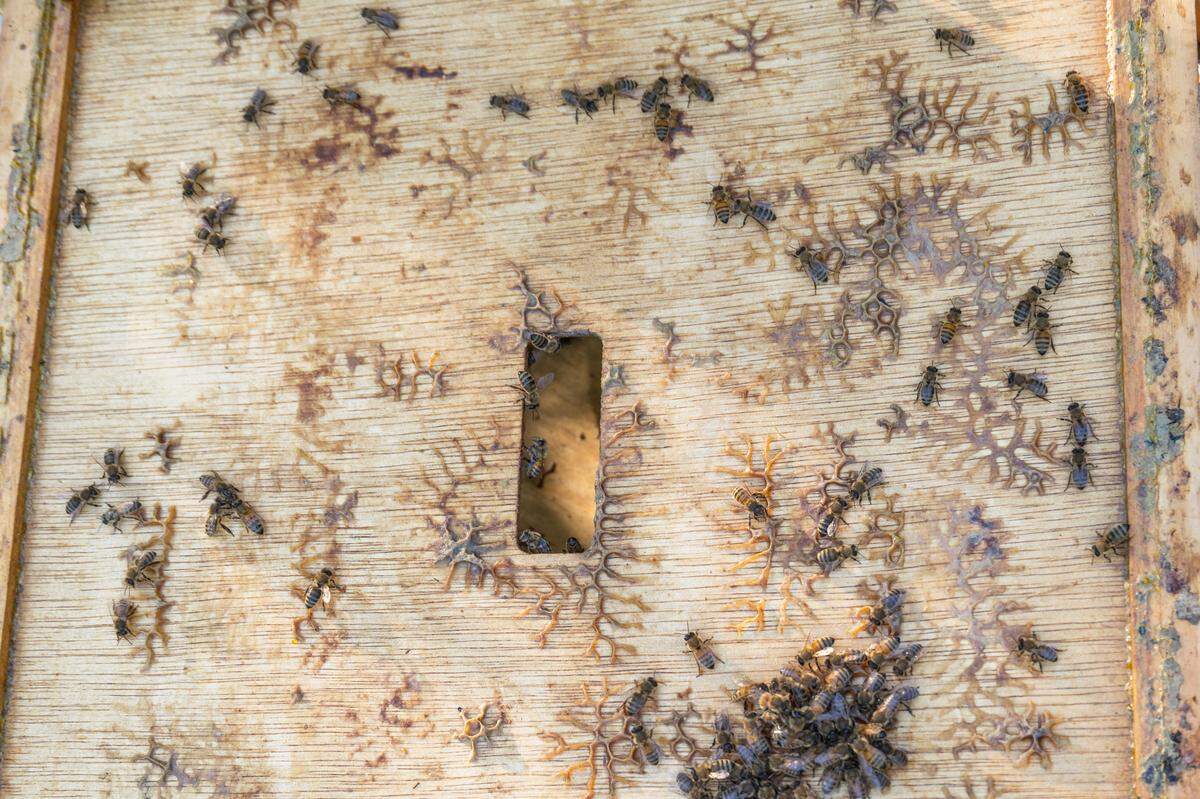
A loud buzzing, like a steady hum, filled the area. It came from inside the boxes, home to thousands of bees.
The idea of swarms of stinging insects may have once sent nearby residents hurrying indoors. Now, it signals something different, life returning to urban Kansas City neighborhood.
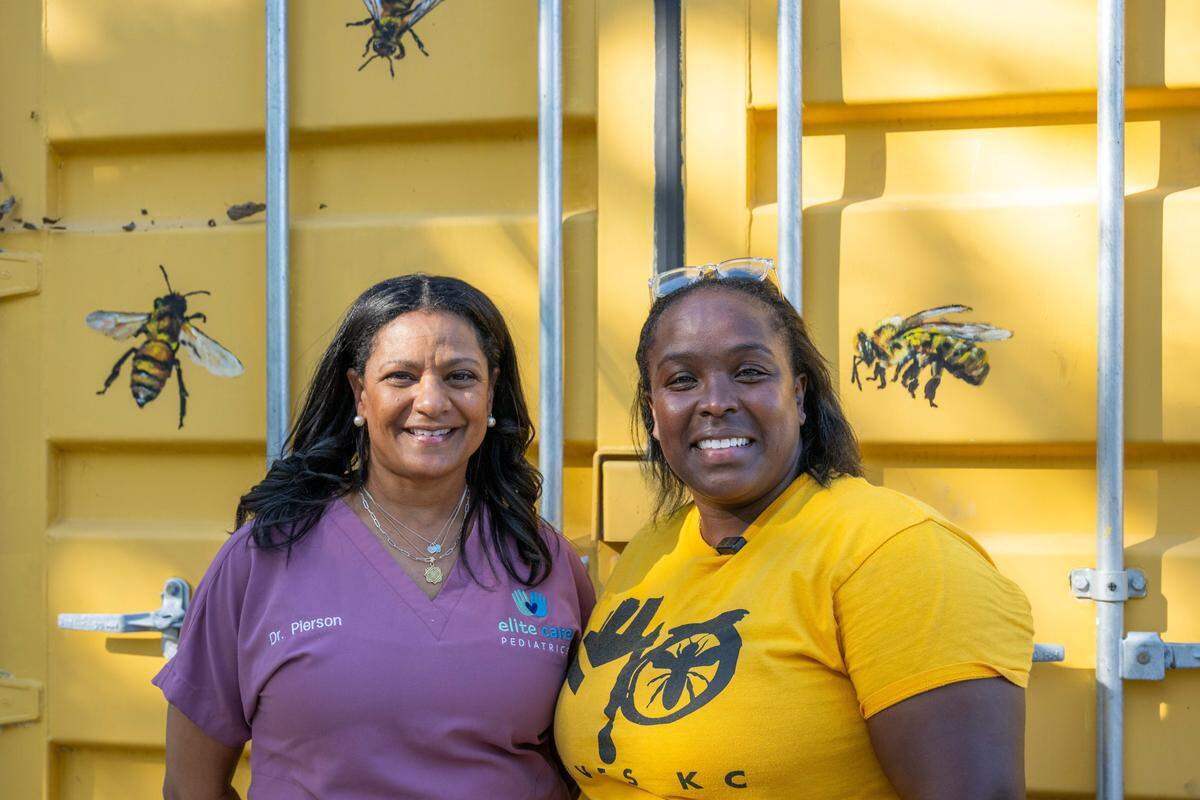
The bees are in the community, courtesy of MO Hives KC, a nonprofit that turns unused urban land into living classrooms for conservation. The organization was founded five years ago by Pierson alongside Brian Reeves a local beekeeper. The group has helped transform forgotten corners of the urban core into bee farms, micro-prairies and edible gardens.
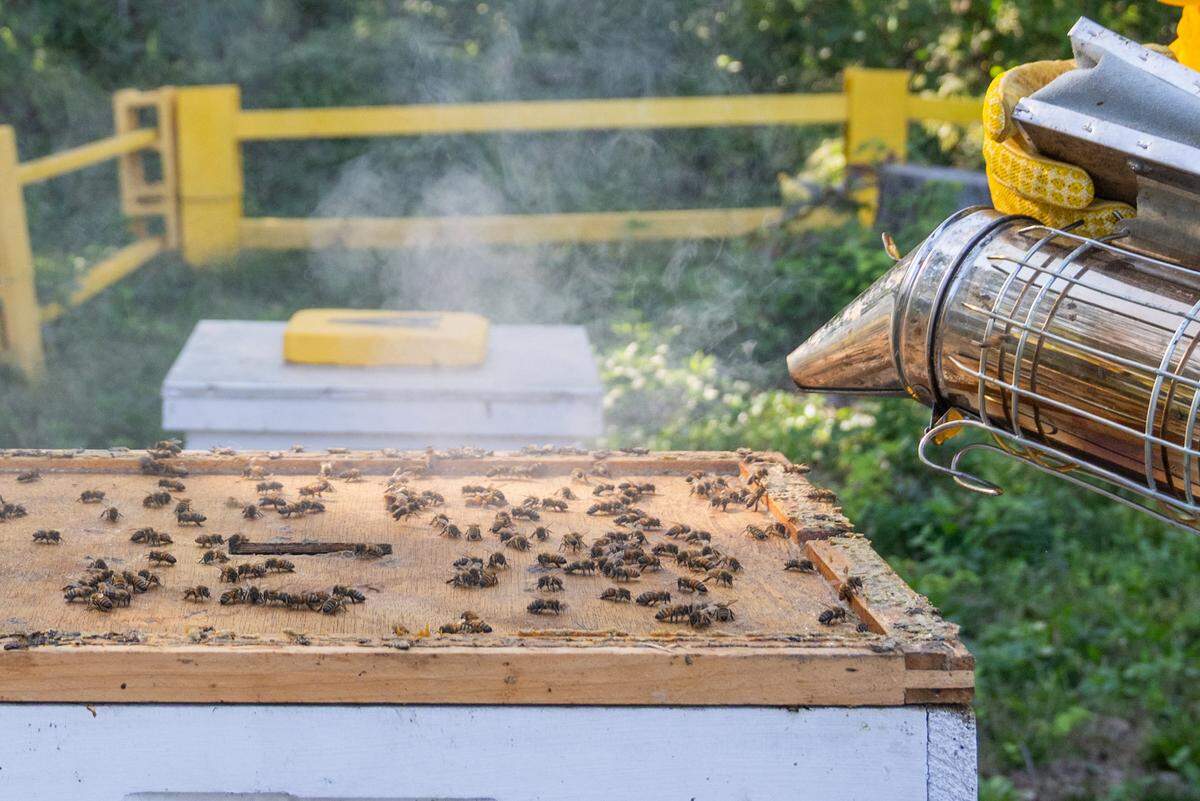
The hives were less active this time of the year, now that the temperature had dropped and the colonies were preparing for winter hibernation. Pierson and Brown-Ritchie were checking the boxes, or hives, making sure that the bees have what they need to be comfortable during the coming winter months.
They clean the boxes that house the hives, make sure they are properly ventilated and treated for parasitic mites, beetles and other pest that could possibly invade and interfere with the bees. The two are usually accompanied by other volunteers however, with the bees preparing for the winter only the pair are required.
“Our main goal is to encourage people in the urban core to know more about beekeeping,” said Pierson. “Not just about keeping bees, but about their role in maintaining and establishing healthy pollinator habitats.”
The idea began when Pierson’s two daughters graduated from high school and left for college. She found herself looking for a new passion. As a nature enthusiast and lover of honey, she decided to do some research about how to turn her idea of beekeeping into a reality.
That spark of curiosity grew into a movement that now spans multiple neighborhoods and has inspired similar projects across the state.
Together with educational initiatives like St. Teresa’s Academy’s rooftop apiary and technological advances like Kansas State University’s Bee Machine app.
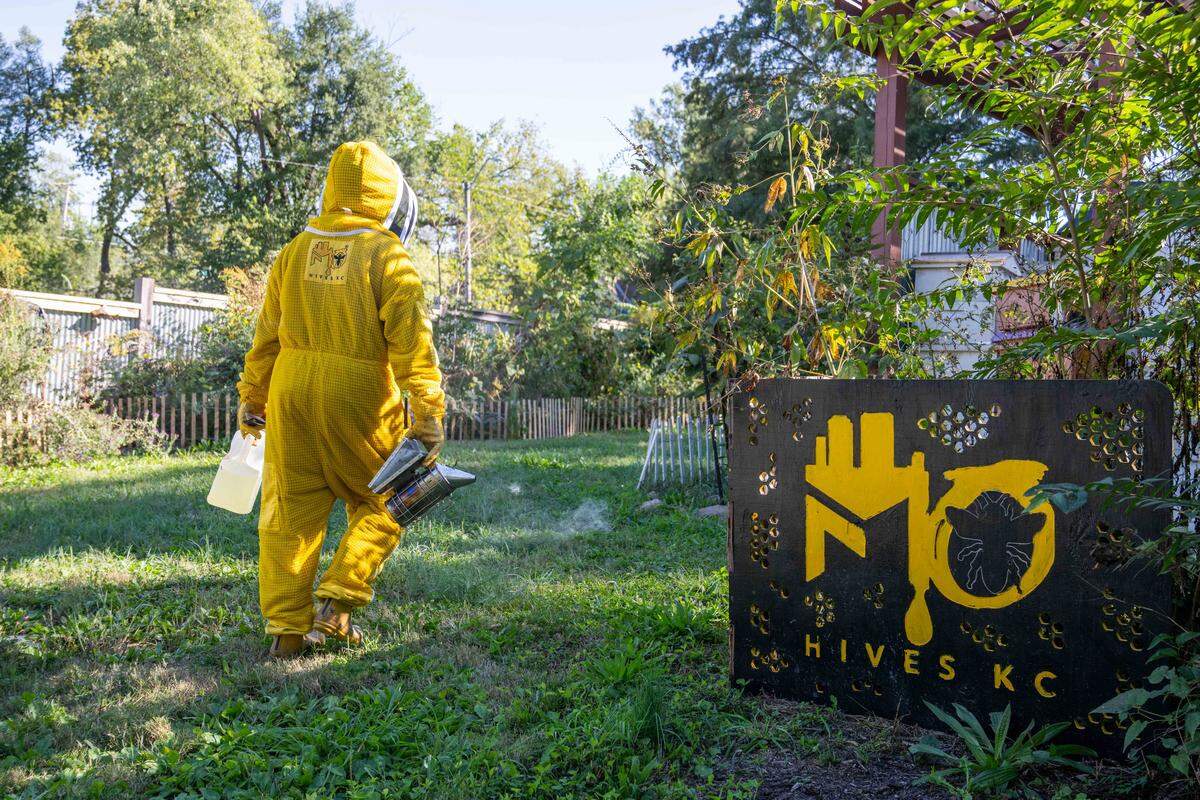
Turning Vacant Lots Into Living Labs
MO Hives KC began in 2020, at the height of the pandemic. Pierson and Reeves were inspired by Detroit Hives, a nonprofit converting abandoned city lots into beekeeping sites.
“Detroit had tens of thousands of vacant lots after bankruptcy,” said Pierson. “My husband found an article about the founders there, and we thought, ‘Every city has vacant lots and Kansas City has plenty.’ ”
Through her husband, Emmet Pierson’s work as CEO for Community Builders of Kansas City (CBKC), the pair identified six empty lots across from the Kansas City Community Gardens on Wabash Avenue. “These lots had every problem you could imagine, dumping, weeds, neglect. But we saw potential,” she said
The team converted those lots into the bee farm MO Hives now resides on.
CBKC, which owned the properties, agreed to a long-term lease. Pierson said neighborhood support was equally important. With urban farming being on the rise in the metro, many community members welcomed the idea of bees helping the ecosystem. After starting with their first few hives they had thousands of bees ready to start pollinating. Pierson and Reeves used their beekeeping connections in the metro to source their bees from local apiaries.
“The best thing was, the community actually asked us to come,” said Pierson. “They had planted so many fruit trees and they wanted pollinators to help them. We said, ‘We’ll bring 50,000 tiny helpers to pollinate those trees.’ It was a perfect match, they needed us and we needed them.”
The site soon evolved into more than an apiary. With the help of volunteers and partner organizations, the empty lot became a patchwork of various areas of plants, flowers and a pond for the bees and other native insects.
The location is also home to a test kitchen funded by GEHA (Government Employees Health Association, Inc.) where local chefs experiment with honey-based recipes and a shed built by youth carpenters from Cornerstone of Care Build Trybe now stores the group’s equipment.
“It’s amazing what collaboration can do,” said Brown-Ritchie, MO Hives KC’s first executive director. “We started with just bees and now we have micro-forests, edible trails, a pond, and a test kitchen. Every piece has come together through volunteers, donations and hard work.”
Building an Environmental Workforce
Brown-Ritchie, whose son was one of MO Hives’ first youth volunteers, said the organization is about more than saving bees, it’s also about creating opportunities.
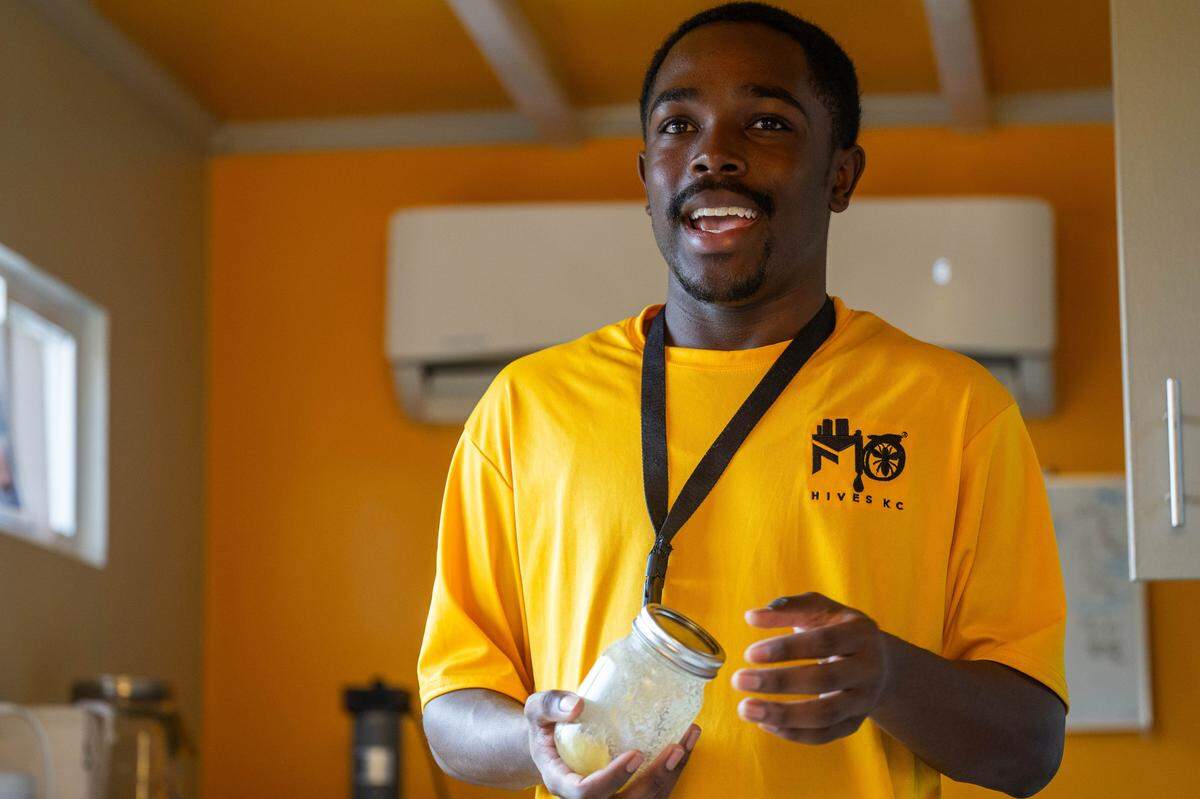
“We have a youth program called the Nature Action Crew for ages 14 through 24,” said Brown-Ritchie. “They don’t just help maintain the site; we gear them up with shirts, boots, and backpacks and we take trips to conservation areas around Missouri.”
Those experiences, she said, often open new doors for participants. This past year MO Hives took trips to Albuquerque, New Mexico and New York City to see how other people are doing beekeeping in different environments.
In just a few years after setting up the hives the impact is visible at the neighborhood level. The once-empty Blue Hills neighborhood now draws families and volunteers from across the metro that come to learn about bees. Though local gardeners and growers were happy to have the bees helping with the pollinating, some others in the area were worried.
“When we first came in, some neighbors were afraid,” said Brown-Ritchie. “One told me, ‘Those bees are gonna come get me.’ But over time, as we built relationships, that changed. Now they come to our events and even call to check on the property. They’ve become part of it.”
Representation in Green Spaces
Pearson sees MO Hives KC creating an entry point for environmental involvement for the community and creating a new generation of stewards of the environment. She is excited to get more minority beekeepers in the field.
“We know that when Black and brown faces show up in green spaces, people sometimes ask, ‘What are you doing here?’” she said. “But we’re just as concerned about clean air, clean water and a healthy environment as anyone else.”
Pearson and Brown-Ritchie know that if kids don’t see scientists who look like them such as horticulturists, entomologists, environmentalists, they might not think those career fields are for them.
Learning to Lead from the Rooftop
Across town, in Kansas City’s Brookside neighborhood, students at St. Teresa’s Academy, a girls-only Catholic School, find their own way to connect with bees.
In 2019, Sarah Holmes, an environmental science and anatomy teacher and longtime beekeeper, taught a short elective course on beekeeping during the school’s interim week.
“It’s a week between semesters when students pick fun, non-academic classes,” Holmes said. “I thought, I’m a beekeeper, why not share that?”
Holmes partnered with MO Hives KC to introduce students to basic bee biology and conservation. Two students from that first class proposed bringing hives to campus.
“They pitched the idea to our administration,” Holmes said “They thought about everything, safety, accessibility, and how to make it work on campus. We decided the roof was the safest place.”
With startup funds from the Women’s Circle of Giving, St. Teresa’s launched what may be the area’s only rooftop high school apiary.
“The students came up with everything,” said Maureen Kierl, the school’s marketing director. “We have two hives on the roof and a pollinator garden nearby. It’s become part of who we are.”
Hands-On Science and Real-World Lessons
Holmes said the hives have become a central piece of the school’s environmental curriculum. As one of the areas only educational institutions designated as a Missouri Green School and the bee endeavor ties directly into the school’s sustainability goals.
“Students learn about pollinators, but they also learn about care, patience, and interdependence. The hive is a great model for community,” she said.
Students suit up in full protective gear before heading to the roof. Holmes said that at first, they’re nervous, many not fans of insects. But once they’re up there and we walk through it step-by-step, they get hooked.
The program also teaches practical skills, bottling and filtering their own honey and creating candles — from the beeswax — that is sold in the school bookstore and online.
Losses happen, and Holmes uses them as teaching moments. “We’ve had hives die from parasites or lack of food,” said Holmes. “That’s part of beekeeping. We look at what went wrong, pesticides, mites, starvation and learn from it.”
Inspiring a Generation of Environmental Leaders
The rooftop project’s ripple effects go beyond the school walls. Holmes said students have written their college essays about their work with bees and one student received a youth beekeeping award. Others have taken the information learned with the rooftop apiary to start their own hives.
The school now sees the hives as something that helps their school standout and draws a lot of attention from potential students, during campus tours.
Future plans include installing a live camera so students can monitor hive activity online and building a YouTube channel to share their experiences.
“It’s about awareness,” said Holmes. “The more people understand how these systems work, the better chance we have to protect them.”
Science Behind the Swarm
While Kansas City’s educators and community leaders are hands-on with hives, one scientist in Manhattan, Kansas, is using technology to take pollinator study global.
Dr. Brian Spiesman, an ecologist at Kansas State University, launched the Bee Machine in 2023, an AI-powered app that identifies bee species from user-submitted photos.
“It’s a fun project to work on,” said Spiesman. “You can download it for free or use it online at beemachine.ai. Upload a photo, and it tells you what species you’ve found.”
Under the hood, the system is complex. When a user uploads a photo, the algorithm locates the bee, crops the image and compares it to our database. It also considers the date and location so it won’t label something as a species that doesn’t live in the area.
The goal for Spiesman is to empower citizen scientists.
“Before this technology, identification had to be done by hand, under a microscope, by experts. But there are only a handful of people in the world who can identify all bee species. With over 4,000 species in North America and 20,000 globally, we need new tools,” Spiesman said.
Spiesman began developing the app in 2018 after receiving support from the National Science Foundation and the U.S. Department of Agriculture. As more people use the app and upload their photos the model gets even more accurate.
He hopes the tool can serve both researchers and the public.
“A lot of people think there are only honeybees and maybe bumblebees,” said Spiesman. “But there’s incredible diversity out there. If we relied only on honeybees for pollination, we’d be in trouble.”
Building a Global Network
Spiesman’s vision for the Bee Machine extends far beyond Kansas, working with collaborators around the world. In Germany scientist collaborating with Spiesman are developing a global bumblebee monitoring system using the app. The idea is to enlist and mobilize thousands of citizen scientists to document bee populations to aid in tracking population information. This information aids researchers in tracking the declines and increases in bee numbers and the root causes of those factors.
He’s also developing a new device called the Bee Cam, a solar-powered field camera that automatically identifies and counts bees using the same AI algorithms.
Despite the global reach, Spiesman sees the work as deeply local, with every community able to contribute something to the cause. Whether it’s a beekeeper in Kansas City, a student on a rooftop, or someone snapping photos in their backyard, he sees all efforts are helping to map and protect bee diversity.
But Saving bees here in urban communities of Kansas City isn’t only about honey and beeswax sales, or bringing life to once vacant lots, or even fear of losing a vital element of the environment. It’s about balance. In a time when climate and development threaten even the smallest species, Kansas City’s beekeepers, educators, and scientists are proving that a little curiosity and a lot of collaboration can make a difference all around
“We started thinking we were going to save the bees because they were in peril,” said Pierson. “But in truth, the bees have been saving us—from isolation, from division, from disconnecting with nature. They bring people together.”
This story was originally published November 14, 2025 at 6:00 AM.