Student journalists who sued Lawrence schools over surveillance allege retaliation
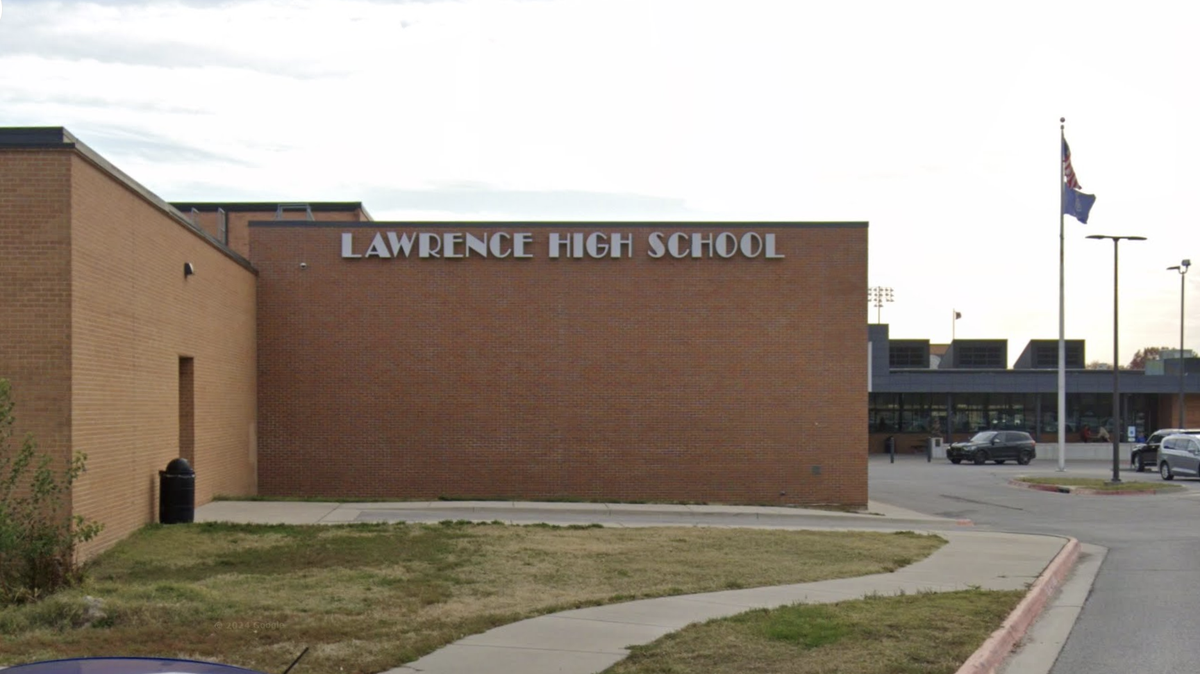
Students who recently filed a lawsuit against the Lawrence Board of Education claim district staff retaliated against them by pressuring journalism students not to report on the lawsuit, according to court documents.
The lawsuit centers on a monitoring software called Gaggle, which the district began using in November 2023, to scan students’ emails, documents, and other files on digital devices as a means of mitigating harm to students and keeping them safe, they say. The students claim the software has, instead, subjected them to unlawful “round-the-clock” surveillance, and violated their First and Fourth Amendment rights.
The students have asked a judge to approve a preliminary injunction that would order the district to allow students to report on the lawsuit. No ruling has yet been made.
According to a September filing, district staff allegedly hinted at adverse employment actions that could be taken on the student journalism advisor if students reported on the lawsuit.
The injunction asks for a court order to “maintain the advisor’s employment status quo.”
While students allege retaliation, the district said in their own filing that staff assured students in writing that they could report on the lawsuit. Additionally, no adverse action would be taken against the advisor for students’ lawful reporting, the district said.
The Budget, Lawrence High School’s student newspaper, has since published articles covering the issue.
An attorney representing the students criticized Gaggle for what he claims has been the chilling of free speech, blocking protected communications and infringing on privacy rights.
“...What went on here was… a chilling of free speech,” said Harrison Rosenthal, the lead attorney representing Lawrence students. “We filed our complaint (about Gaggle). After that, the principal directed the student journalism advisor not to report on the lawsuit. My client called me from class saying, ‘This sounds very odd, this is a problem.’ I said, ‘Yeah, it’s a real problem.’”
Alan Rupe, an attorney representing the Lawrence Board of Education, said in an email that the board never sought to restrict students’ speech or otherwise infringe upon their constitutional rights.
“Defendants implemented Gaggle as a relatively non-invasive method for monitoring students for threats of violence, self-harm, sexual exploitation, and other serious harms,” Rupe said. “Defendants intend to vigorously litigate this matter to vindicate their intentions and the constitutionality of their actions.”
Student problems with Gaggle
Student journalists who worked for The Budget, Lawrence High School’s newspaper, and The Free Press, at Lawrence Free State High School, claim Gaggle hindered their ability to work on each school’s respective student newspaper.
The student-monitoring software flagged and deleted journalistic material including publication drafts, emails and collaborative documents, the lawsuit alleges. Gaggle also deleted student assignments and falsely labeled an art student’s photography assignment as “child pornography,” the lawsuit claims.
Students were allegedly subject to interrogations from the principal when Gaggle flagged certain materials, even if they were falsely flagged. In many instances, administrators were unable to see materials that were deleted by the software.
Student emails about mental health concerns were flagged and seized by Gaggle before they could reach teachers, counselors or even parents, the suit claims.
Rosenthal argues that these examples show how the monitoring software isn’t protecting students and providing safety like the district hoped.
“One of our students in her reporting sent a simulated mental health email to her journalism advisor, saying that ‘I’m having mental health issues and need help,’” Rosenthal said. “That email never got to the teacher because Gaggle blocked it.”
District argues no wrongdoing
The district argues in their filing that the need for student safety outweighs Gaggle’s alleged mishaps.
In a June 17, 2024, letter, the district’s attorney Bradley R. Finkeldei said that, despite student concerns, it would continue to use Gaggle’s services “to ensure the District does everything in its power to protect students from harm — whether from themselves or someone else.”
“Moreover, the District is statutorily required under both state and federal law to monitor student’s District-issued devices to ensure they are not used to access or produce harmful content,” the letter reads.
“Under the Children’s Internet Protection Act, (the) district must prevent students from using district-owned technology to access obscene and harmful content and must enforce those restrictions any time minors use their devices.”
In a recent filing, attorneys representing the district also argue that a preliminary injunction is unnecessary because the relief requested, permission to publish and protection of the journalism advisor, has already been granted.
Since no ongoing harm exists, the students do not meet the standard for an injunction, the district argues.
Rosenthal, however, argues that the district’s written assurances, without a court order, are not enough to protect student journalists or the adviser.
The district did not dispute that a restriction to publish existed, Rosenthal argues, only that no restriction remains.
Alleged constitutional violations
The case raises questions about student privacy, digital rights and constitutional protections in public schools as technology evolves, Rosenthal said.
Different states have varying degrees of protection for student journalists. In Kansas, First Amendment protections are extended to student press through the Kansas Student Publications Act, one of the more progressive statutes for student journalist rights across the country.
“This is one of the only, if not one of the very few cases where a district is using this to search students’ files without any, not just reasonable suspicion of wrongdoing, but without any notion of wrongdoing whatsoever,” Rosenthal said.
“It’s a pure Fourth Amendment violation, and I have not seen any other case like this in the country, which is in part, the reason why we wanted to take the case,” Rosenthal said. “It’s a new issue of constitutional law that we think will become increasingly problematic as AI develops and as districts continue to engage with these sorts of programs and softwares.”
A staff attorney at the Student Press Law Center (SPLC) said students in Lawrence sought their advice in regard to their concerns about Gaggle and prior restraint allegations.
“Students had originally approached our hotline for some of these questions as to whether their particular school district might have been crossing some lines,” said Jonathan Falk, a staff attorney at the SPLC. “They gave us some details… and we certainly, you know… rushed to the occasion.”
Falk said the case is complex since it involves a budgetary matter. The district entered into a contract with Gaggle for the monitoring software, which was extended through July 31, 2026.
The lawsuit notes that the contract is a three-year $160,000 agreement.
Having a way to minimize harm to students is something that school boards are going to be interested in, Falk said. But, he said, the district’s implementation of Gaggle raises red flags for student press rights.
Falk also said the case is an example of why it is important for communities to be aware of how boards of education are spending money.
“...Figuring out that this very expensive contract with a third party tech company that’s using a technology that we’re really only beginning to figure out, I think that’s a prime example of not only being attuned and aware of what’s happening with your local authorities, but that’s civic engagement,” Falk said.
This story was originally published October 8, 2025 at 6:00 AM.