Olathe native builds global connections with education and community empowerment
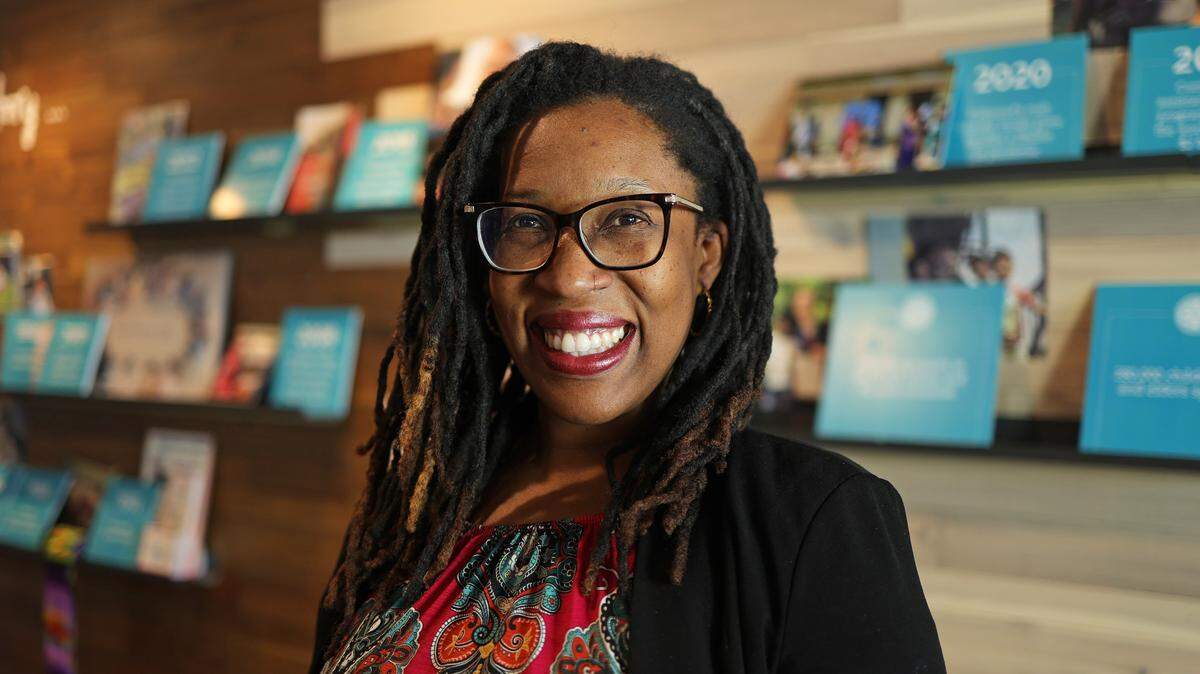
Ari Griffin learned when she was a young child that education was more than information being taught; it was a tool for a better life.
Her journey into education and community service began early in her life, influenced by her Nigerian heritage and experiences in missions work in Mexico that sparked a deep passion for language, culture and community. These experiences fueled her commitment to helping underserved communities locally and globally.
Currently, Griffin is the senior manager of school partnerships and educational gifts at Unbound, a nonprofit organization started in Kansas City and focused on breaking the cycle of poverty worldwide through education.
Griffin strengthened her skills for doing this kind of work by starting in the classroom and then working with other sponsorship organizations. Sponsorship organizations seek donations by persuading people and groups that have, to lend financial support those who don’t have or have far less.
At Unbound, Griffin also oversees the Global Classmates program, which connects students in the United States with sponsored children around the world to promote empathy and global awareness through educational resources like poverty simulations and awareness trips.
The Olathe, Kansas native works to expand access to quality education and strengthen partnerships with schools across 35 states, helping students and families through providing educational resources, mentoring and opportunities to assist in ending the cycle of poverty through learning.
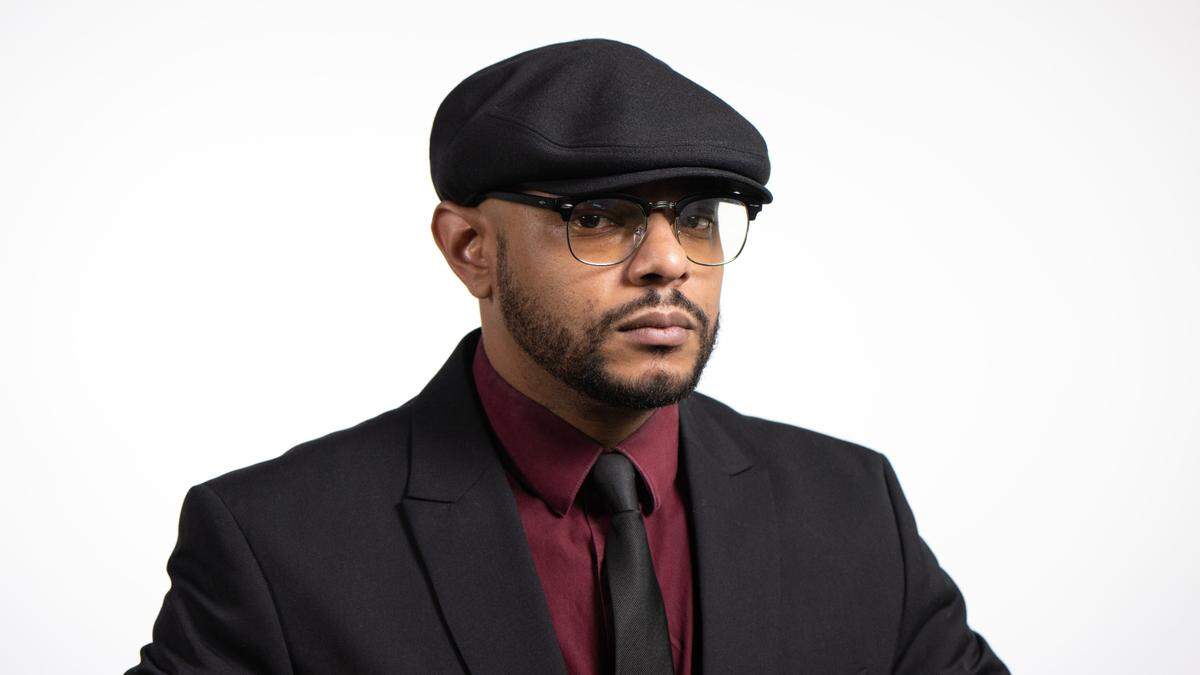
Recently Griffin sat down with The Star’s culture and identity reporter J.M. Banks to talk about how language helps break down barriers, her passion for education and creating pathways through understanding.
Why don’t you begin by telling me about your early life and upbringing and how those experiences led you into the career you’re currently in?
I was born in Kansas City. I spent most of my K through 12 education in Olathe. Most of my family on my mom’s side lived in Kansas City. My dad is from Nigeria.
I say those two pieces because I think one of the common threads, when I think about my upbringing, is this sense of attachment both to Kansas City and in a broader sense, to the world. So growing up in Olathe, I started out in private school from kindergarten through fourth grade and then transitioned to public school from fifth through 12 grade.
A huge part of my upbringing was my involvement in my church. Another piece that was really significant for me growing up was learning Spanish. I just remember that through my church, I had the chance to go on mission trips during ninth through 12th grade. I remember going after my ninth-grade year, having just taken Spanish and going to Mexico for two weeks.
All I really knew was very basic stuff and I would just practice those basics with everyone I met, same conversations. As soon as I ran out of phrases, I’d go find somebody else to talk to. When I got back, I realized that people I had grown up around spoke Spanish, but I had never really thought about it until I started learning the language and especially, until I interacted with people in Mexico.
So when I came back and started engaging with people whose families were from Mexico, it was like I was connecting with them in a different way.
One of my favorite quotes is from Nelson Mandela “If you talk to a man in a language he understands, that goes to his head. If you talk to him in his own language, that goes to his heart.” And I saw that in real time. When I started speaking to people in Spanish, we connected in a different way.
And I guess the last thing I’ll say is, you know, that kind of connection is really central to the work we do at Unbound. It’s not about going into a place and trying to fix someone else’s situation. It’s about providing people with opportunities so that they can look at their own environment and create plans to change their own circumstances.
There’s a level of empowerment I experienced through learning Spanish, seeing how I could connect with people. But I also saw empowerment happen in the people I spoke to. They no longer saw the other language they spoke as a deficit. When I affirmed it, even though I spoke terribly at the time, they felt valued. And that, to me, is a kind of empowerment.
That’s what we try to do in our work at Unbound. By giving cash transfers directly to people’s bank accounts, they get the opportunity to use that money in ways that align with their own life plans.
For example, we use something called Poverty Stoplight, which allows families to look at different dimensions of poverty. They assess themselves using red, yellow, or green, kind of like a stoplight. If they rate themselves as red in an area, like education, maybe their children aren’t all in school, they can then create a plan to use the funds for school supplies, materials, or even graduation fees. Maybe a child was close to graduating and they use the funds so that money isn’t a barrier anymore.
The point is, we value their decision-making as a family. And through that, they come to realize, You know what? I do know what’s best for me, for my family and for my community.
Can you tell me about how you started working with Unbound and what your role is in the organization as the senior manager for school partnerships and educational gifts?
I started working with Unbound last year, it’s the second sponsorship organization I’ve worked with.
Prior to working with sponsorship organizations, I was a teacher. And for the longest time, all of my education, up until my second master’s degree, was in international development. When I finally started working for a sponsorship organization, I felt like my education finally matched my experience as a teacher. I was able to bring those two things together.
But my first understanding of what a sponsorship organization was started the way it does for many people, watching commercials and kind of assuming, “Oh, those people over there…” And it was strange, because my dad is Nigerian. So, what I saw in commercials during the ’90s didn’t match my dad’s family or my Nigerian experience.
When I was about 16, I remember going to a church service and there was a booth outside that gave you the opportunity to sponsor a child. At the time, I was making about $6 an hour, but I felt called to sponsor a child. So I gave what little I had each month to support her, writing letters and staying in contact.
Fast forward a few years, I got the chance to visit her after I graduated from college. I was living in Mexico for a year through a state department program called Fulbright..While I was living there, I got to meet her. I saw her family, I saw her circumstances and I just couldn’t let it go.
It wasn’t my first time in Mexico. I had gone on mission trips growing up, but this experience was different. I had been writing to her for five, almost six years. And to then see it all firsthand, the home she lived in, her siblings, the environment. They were living in a two-bedroom house and I think there was only one real bed that many of them shared. It was hard to see.
I had been working in Mexico at that time, so I was extremely aware of the disparity. When I got back, I went to grad school for my first master’s at UT Austin (University of Texas at Austin). As I was thinking about what I wanted to do next, I felt called to teach, because I had been teaching during that master’s program and I wanted to continue. But I also couldn’t let go of what I had seen and experienced.
My first job out of the classroom was an opportunity to work as a program officer, leading education programs in all the countries where the organization sponsored through was working. That was the same organization where I got to lead educational efforts.
Then this opportunity at Unbound came up, where I would be able to connect U.S. schools to the work happening around the world. That’s why I knew I had to do it. Because more students need the opportunity to expand their worldview, to realize that what they see between home and school isn’t the whole world, even though it may feel like it is.
In my role as senior manager of school partnerships and educational gifts, the “school partnerships” piece primarily happens through a program called Global Classmates. The mission of Global Classmates is to connect students globally to expand their minds, hearts and hands.
So that’s our focus, working with school partners to give them teacher resources and establish relationships with sponsored friends around the world. The teacher resources raise awareness about global issues, especially poverty, with the goal of moving students from kindness to empathy and from critical thinking to problem-solving, so that when they look at the issues in their own communities, they have a broader perspective.
One part I love most is that, because of generous donors, all schools can participate, even if they can’t afford the cost of sponsorship. We have opportunities for schools with lower budgets to still take part in activities like this, which are somewhat extracurricular. They get to participate because donors help cover the cost of sponsoring the friends they’re writing letters to.
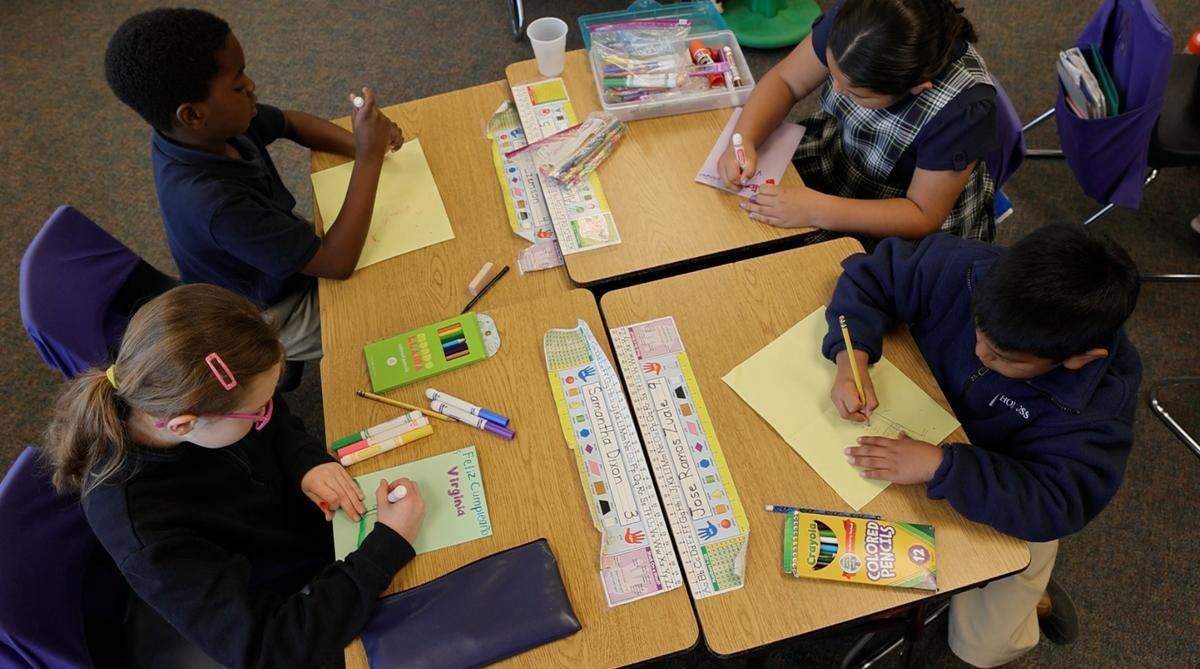
We’ve even had local banks sponsor activities in the past, like something we call a Poverty Simulation. We invite schools to come to our headquarters in Kansas City, Kansas, where they participate in a simulation that puts them in the shoes of a Guatemalan family and asks them to make decisions about limited resources.
It’s all about decision-making, something we often take for granted. They have to allocate a set amount of money across needs like education, housing improvements (for example, moving a stove out of a bedroom) and more. Then, something unexpected happens, someone gets injured, for instance, and they have to reallocate funds. After that, we introduce the idea of sponsorship, showing how a small amount of added support can ease decision-making. It doesn’t solve everything, but it helps.
And we’re only able to offer this because of donations. Some schools can’t even afford the cost of the bus ride to come to our headquarters. Others can’t afford to have their students miss school lunch, which is often subsidized. Donors have helped make it possible for schools, regardless of location or budget, to participate.
The last piece I’ll mention is what we’re expanding into now, which is awareness trips. We just took our first school to Costa Rica in March, where students got to meet some of their sponsored friends. For that trip, the students covered their own costs. But our hope is to secure funding so that in the future, students who can’t afford to travel will also have the opportunity to meet their friends and experience the world in a new way.
How do you think the work that you guys do at Unbound impacts the community of the people you serve?
One of the biggest pieces is that it connects the community to the world.
I think, you know, as somebody who’s from the Kansas City Metro, I love Kansas City. Which is a little crazy, because if you had asked me when I was 17 and trying to get out, it would’ve been a different conversation. But coming back home, after being abroad in Mexico and living in Austin, Texas, I grew more and more in my love for my city.
And then coming back, I was a grown person, an adult who had to pay full bills, you know? I realized there are some unique things here. This is a place where people truly love you. Like, you see people on the street and they’ll say hi. The way people treat you, it’s from an authentic place.
So, on a low level, I think when our friends or our school partners in the Kansas City Metro write letters to sponsored friends, they get to take that kind of Midwestern hospitality and the world gets to see it.
On a higher level, I know that, for example, Kansas City is very invested in entrepreneurship and is really trying to pour into that area. Well, we have a business accelerator that many of our sponsored families participate in. There’s a group of mothers who get together, some of them want to start businesses and because they’re contributing money to that group, they’re able to use it as a no-interest loan.
Women in the group can borrow from that pool to start their businesses and then they pay it back. That’s a model that is elevating entrepreneurship globally, just like we’re doing here in our city.
So I think there’s so much overlap between the work we do around the world and the things we care about in our own city.
I also think there’s this understanding that, when it comes to resources, whether time, money, power, or whatever it may be, the sky’s the limit. You know, when it feels like things are running out, like there’s not enough time to do all the things you want to do, we’ve found ways to work within that.
Take, for example, schools. You have standards to meet, tests to prepare students for and a goal of making them college- and career-ready. You might wonder, “How can we find time to talk about global issues? How can we fit in discussions about what’s going on around the world?”
And the way we’ve stretched time, or shown that time doesn’t have to be a limitation, is by creating resources through Global Classmates that can be used in a math class, for example. You bring in global issues and awareness and show how certain math concepts apply to the kinds of decisions people are making globally.
You can do the same in a science class when you’re talking about the environment. Or in a reading class, where students are writing letters to their sponsored friends.
So for us, the connection between community and the world is essential.
We often say when you look at the world and then look at your own community, it’s like your vision becomes more clear. You’re able to see better. You’re able to understand the issues you’re facing in a different light, because now you have a greater perspective.
What are the biggest challenges that you face in the work that you do with Unbound?
I think the first challenge would be helping students see that poverty is much bigger than maybe their own experiences, that it’s a lived reality. There’s a concept in Catholic social teaching that says we all have human dignity, that we all have value.
And I think that sometimes part of my work is helping students build empathy while recognizing their own ability to make a difference, not only in the lives of their families, not only in their own communities, but also in the lives of people they’ve never met before.
So really trying to navigate that space.
We work in multiple types of schools, private schools (both faith-based and non-faith-based), public schools and we’re now starting to work in charter schools. Each of those is a different system, with different processes.
And navigating those processes is a challenge, especially because we have a sense of urgency about our work. We know that the sooner we can get people involved and engaged in what we do, the sooner we can make changes.
But sometimes change is slow and we’re trying to speed up that process while also honoring the relationships we already have and building new ones at the same time.
Another challenge is balancing this always-on work with motherhood and community service. I have my job and the work that I do with school partners, but I also have my family and I have the areas in my community where I work, serve and am invested.
So, in order to make space for all of that, I bring my family along in the work that I do. In some cases, I have to keep things separate, but in other areas of my life, I try to integrate things.
I make my work community part of my personal community. My family becomes part of the service that I do. All of these areas start to overlap a little more.
And at the end of the day, it’s awesome, because now that I’m out of the classroom, even though I’m still working with school partners, I have the next generation I’m investing in through my sons.
What do you think is the most rewarding aspect of the work you get to do with Unbound?
One thing, the first thing that comes to mind, is that I love seeing students understand their own power, you know?
I think oftentimes we underestimate the power that lies in a five-year-old, a 10-year-old, or a 15-year-old. And it’s so cool to see that once students have knowledge and awareness, they get excited about doing something with it. They don’t want to just keep it to themselves.
One example; we had a fifth grader who was able to raise almost $15,000, and it was through just a school event. This fifth grader wrote a letter about the work that we do at Unbound, specifically because they were part of a church that went on mission trips to Guatemala. They got connected with Unbound and the work we do, and their community had a lot of people sponsoring friends in Guatemala.
This child, who had never been on a trip but had only heard about it, wrote a letter and got our organization selected as the recipient of all money raised for a jump-roping and basketball event at their school. And through that event, they were able to raise $15,000, which is amazing.
That child didn’t say, “I’ve never been myself. I haven’t seen it firsthand.” They said, “You know what? Someone else’s experience is enough for me to do something about it.” And they thought, “I don’t have the money myself, but I do know how to write and I can tell the story.”
So if a 10- or 11-year-old can tell the story, then most definitely I, as an adult, and all of us who have full-time jobs, we can tell the story too.
I just love being able to see that. To see grown folks be encouraged by youth. I’m encouraged by the youth.
And when I think about the future, one day, I won’t be here, but to really believe that there is power in the hands of the next generation and they are already making changes. That’s just exciting for me to be a part of.
How do you feel education closes the opportunity gap for people in underserved communities?
Education is a tool that goes way beyond just what you know. There’s a component of education that is relational, that’s experiential and that’s rooted in dignity.
But also, I would say that when we invest in educational opportunities, we’re investing directly in children. And that investment, if this were just a business, right, we’d want to see a return.
And I think the benefit we reap when we invest in education in underserved communities is that we see people feel empowered and they’re able to walk in that empowerment.
One example I can think of, as a former educator, is I remember being in some environments where I would ask students, “What do you want to do?” and I’d hear things like “I want to be an athlete,” “I want to be a singer,” “I want to be a doctor,” “I want to be a lawyer”, you know, the careers that are commonly talked about. Sometimes I’d hear, “Firefighter.”
But then, when I was in other environments, where students had access to a wider variety of experiences, I remember one girl said, “I want to work in supplier diversity.” And I said, “What? Where did you even hear about that?”
And she said, “Oh, my mom’s friend. I was able to intern for a summer.” All these opportunities, right?
So I think what’s inherent in education is the ability to provide experiences that open students’ eyes to the possibilities, not just the ones they’ve heard about, but ones they’ve seen and touched.
They start to understand, for example, that when they’re in math class, they don’t ask, “Why does this matter?” Instead, they can say, “Ah, I remember when I did that internship, I saw how this showed up.”
In light of that, this past summer, in July, we hosted our first formal internship that was specifically for students from the Kansas City area. Through that, we brought in students to work in various departments within Unbound.
Specifically, we had students working with our program, Global Classmates and they helped take our poverty simulation and make it virtual.
There was one young woman from Olathe. She had won the MLK competition (Olathe School District contest) specifically in multimedia. So we brought her in as an intern and she used her multimedia skills to help develop the virtual poverty simulation.
Afterward, when I spoke with her, she said, “I thought being an intern meant I’d just be making copies and getting coffee. But now I feel like I’m contributing and I can see how a career in multimedia doesn’t just have to be about entertainment, I can actually make a difference with these skills.”
To me, that is the epitome of learning.
She was a woman of color and it meant a lot to her to have someone who saw something in her, someone who shared her background and culture.
That just means something. It’s so important. And it’s something I valued when I was a student, seeing people who looked like me and people who didn’t look like me, believe in me.
That’s what needs to happen in all the communities in Kansas City.
What are your hopes for the future of education in the communities that Unbound serves?
My hope, part of it is aligned with the UN’s Sustainable Development Goals, is to see that children are not only receiving an education, but they’re receiving a quality education that prepares them for the world.
So it’s beyond just high school graduation. It’s getting to a place where, when they graduate, they have access to college opportunities and career opportunities. That way, when they go back to their communities and their families, they’re able to help break the cycle of poverty.
That is what we hope to see.
What are your goals for the future?
I definitely see myself here because I’ve got a lot of work to do.
My heart is really to be able to see our programs grow. We’re currently in 35 states, so it would be awesome to see our programs, specifically Global Classmates, reach schools across all 50 states.
We’re deepening our footprint in the Kansas City Metro. What originally started in Catholic schools has expanded into public schools. We’re now having opportunities to expand into charter schools.
So I’m not done. I’m not going anywhere until I finish what I’ve been called to do, because there’s a lot of work to be done.
For more stories about culture and identity, sign up for our free On The Vine newsletter at http://KansasCity.com/newsletters.
This story was originally published September 30, 2025 at 5:30 AM.