
Former Las Vegas showgirl living in Kansas tells what the life is really like
AI-generated summary reviewed by our newsroom.
- Showgirl Carrie Barton, now living in Kansas, performed in 'Jubilee!' in Las Vegas.
- Showgirls danced up to 12 shows weekly, wearing 20-pound headpieces and heels.
- Barton hopes Swift’s album corrects misconceptions and honors showgirl legacy.
Many years ago, The Kansas City Star sent me to Las Vegas to write several tourism stories. For one I drove alone into the Mojave Desert to interview UFO believers.
Another story put me in the audience of the most famous and iconic showgirl revue in Vegas. Before the show I took a backstage tour where I got to see the costumes up close and met a showgirl. This is what I wrote then.
Few things are more intimidating for a woman than to meet a Vegas showgirl.
Or so I dreaded as I headed to the Jubilee! Theater for a backstage tour.
Our guide was statuesque Holly Haynick-Dean, a friendly 26-year-old brunette with a degree in fine arts and a lifelong desire to dance. She has been a showgirl for three years, and “Jubilee!” “is my first, like, huge, huge job,” she said.
“I’m really proud to be a showgirl in this show, especially because it is true to what a showgirl was and used to be.”
I liked her instantly.
Holly wore a sequined hot-pink costume with flesh-colored fishnets, gold dance shoes and rhinestones around her neck.
Her lips matched her costume and her eyelashes stood out to there. That’s the showgirl look.”
Taylor Swift fans have been talking about showgirls since August, when she announced her new album, “The Life of a Showgirl.” It debuts Friday.
Kansas native Carrie Barton lived the life of a showgirl.
Raised in the small-town embrace of Wellsville, southwest of Olathe, she was 22, newly graduated from Oklahoma City University in 2007 and newly engaged when she was chosen for the cast of “Jubilee!,” the longest running showgirl spectacular in history.
Today she is 40, a fitness instructor and co-owner of Pure Barre in Lawrence married to her high school sweetheart and mother to a young daughter taking dance lessons.
Barton belongs to the story of America’s pop culture. Showgirls don’t exist anymore. If you visit Vegas you might still see them on the Strip, posing with tourists for money. But those are usually paid models or street performers.
Barton rarely tells people about her showgirl past.
She danced for three years. More than 600 shows a year. Six days a week, no Fridays. Twelve 90-minute shows a week. Nearly a dozen dance numbers each show.
She wore the fishnets, heavy headdresses and famous Bob Mackie costumes in “Jubilee!” at Bally’s Hotel & Casino. The show closed in February 2016 after 35 years, bringing down the curtain on the city’s showgirl era.
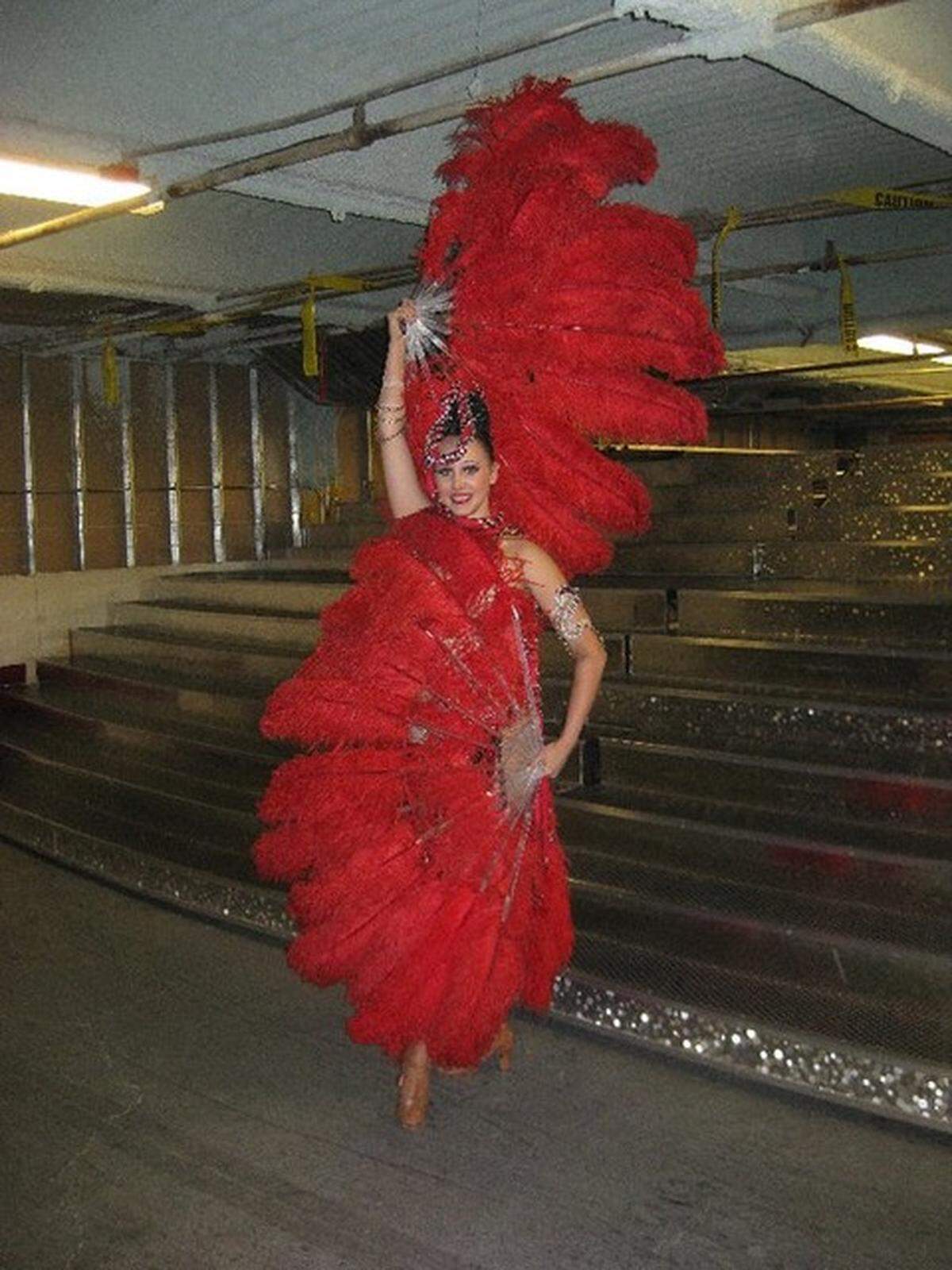
She is shy about sharing that part of her past because she believes people harbor misconceptions about showgirls. They were not strippers. They were not burlesque performers. Hollywood did them no favor.
The erotic, campy 1995 movie “Showgirls” with Elizabeth Berkley from TV’s “Saved By the Bell” bore little resemblance to reality.
“It’s not something that I just bring up,” Barton said. “Not that I’m not proud of it. Definitely in the Midwest the connotation of a showgirl is not the best.”
And so she and colleagues who keep in touch online are cautious about how they will fare in Swift’s depiction. She’s already seen the mama drama.
.jpeg "CBSPBHeadshot (1).jpeg")
Swift has released several sexy publicity photos of herself in showgirl cosplay, a dramatic shift away from her PG-13 persona that some Swiftie moms have grumbled about.
Barton performed in some of the regalia Swift models, thus qualified to weigh in on what she’s seen so far in the album’s campaign.
“The one thing that really annoys showgirls about people pretending to be showgirls is when they wear hair down with a hair piece,” she said.
A true Vegas showgirl, nine ties out of 10, wore her hair up and tucked under a headpiece, she said.
“She got that wrong,” Barton said. “But she was wearing fishnets. At least she got the fishnet memo.”
.jpeg "505453629_10101055136560353_5582532598955374965_n (1).jpeg")
Did Swift get the orange memo, too? She uses it as part of the color theme for this new era.
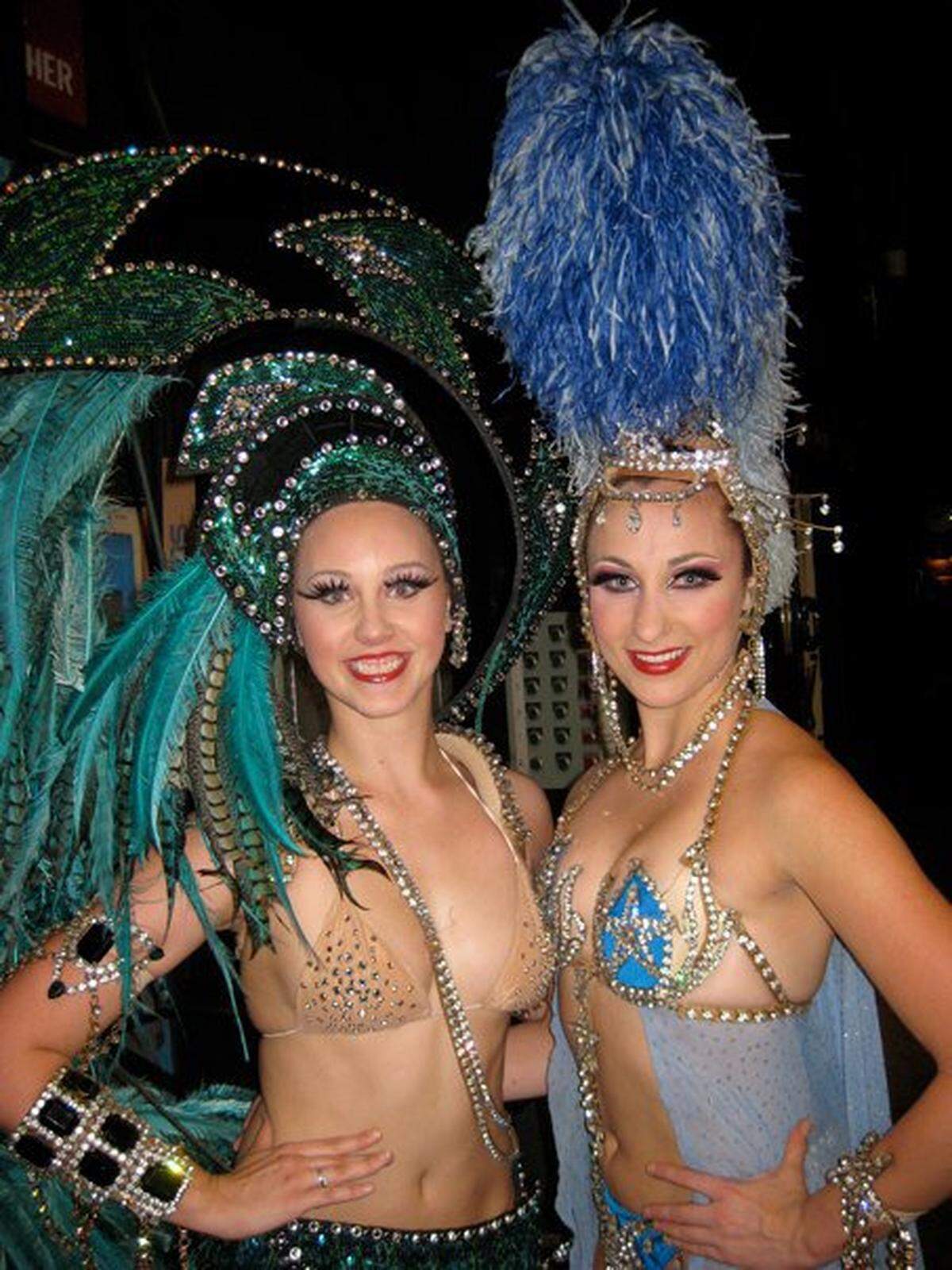
When women were hired for “Jubilee!” the show sent them to the MAC Cosmetics counter to learn how to do their own makeup. The “Jubilee!” showgirls were known for wearing orange eyeshadow, Barton said.
Most quickly learned that “nobody looks good in orange eyeshadow. But you can soften it with pinks,” she said. “You can always spot the newbies. They wear orange.”
At 5 feet, 10 inches tall, Swift easily would have met the showgirl height requirement. Women had to be at least 5 feet, 8 inches; the men 6 feet to be a showboy. (Yes, that’s what they called the male dancers.)
“On a good day I’m 5-8,” Barton said.
That put her in the show’s “short line.” The tall girls were two, three inches taller. Like the Radio City Rockettes who also have height rules, showgirls had to be tall enough to not be physically overwhelmed by the oversized headpieces.
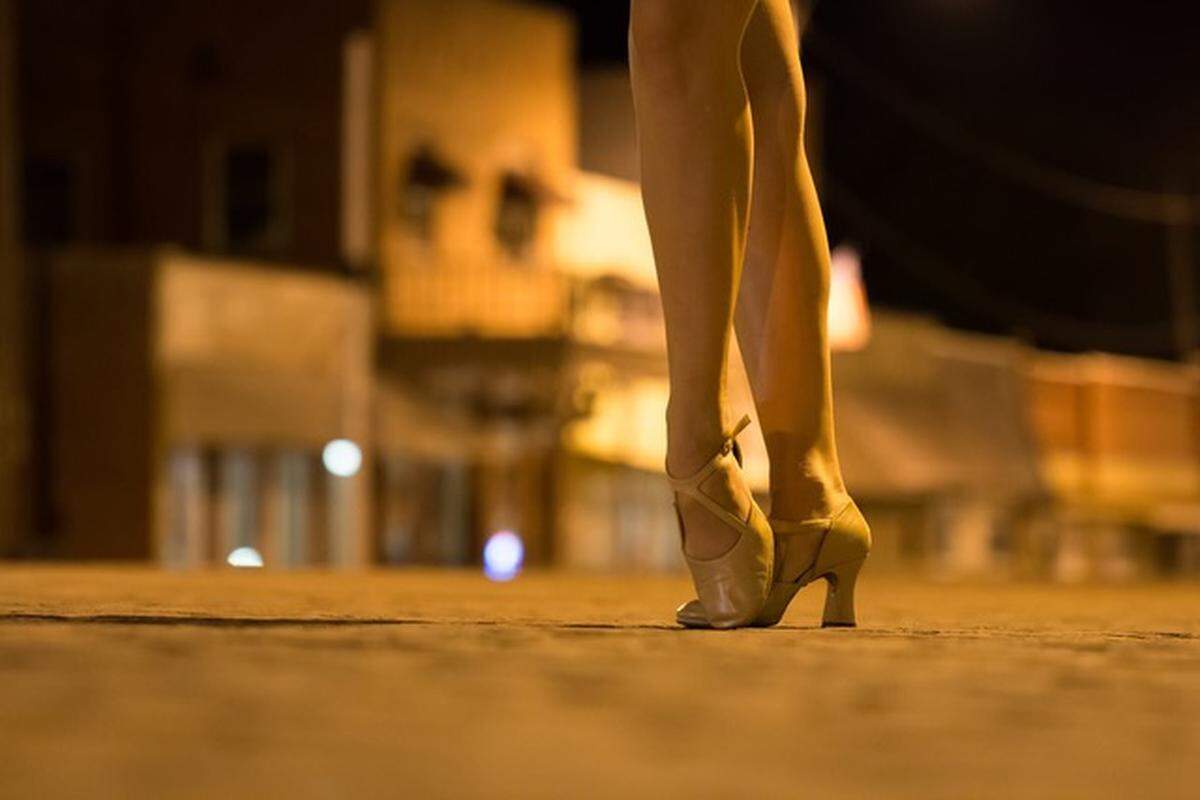
On stage showgirls looked much taller because they danced in shoes with 3-inch heels braced underneath with metal to keep them from breaking off during the dancing.
The shoes also had rubber soles to prevent falls, which they didn’t. To this day Barton bears the physical proof.
They didn’t get hazard pay like the Cirque du Soleil performers on the Strip, nor did showgirls make as much.
When she began, Barton earned $639 a week.
1,598 stairs per performance
As she cautioned everyone against taking pictures in the basement of the theater, Holly led us down a steep hill of concrete steps. Twenty, forty. It seemed like a hundred steps as we clopped down in our sneakers, sandals and flip-flops.
“These stairs are what all the performers and singers have to climb up and down between every single number,” said Holly, who makes the trip at least 16 times every show.
“Do we fall down the stairs? Yes, we fall down the stairs all the time. Usually it’s just a little trip. That’s why it helps to hold the handrails.
“I’m not sure who designed a theater with the dressing rooms in the basement.”
Barton has done the math, calculating that “Jubilee!” showgirls in their outsized headgear and dance heels, thighs burning, hustled up and down 1,598 stairs — 72 flights of stairs — during each performance.
There were stairs on stage, too.
“At the end of every contract they do these little awards,” she said. “One of them was the person most likely to fall up the stairs. And that was me.
“All stairs are not made equal. The stairs that got me that award are used in the opening. They’re 12 inches tall, a foot. They are not normal stairs you’re used to walking up every day. The lip on the front of your shoe gets caught ... there’s a metal lip ... and you have to keep going.
“On my right shin I do have a divot that has never gone away. Is it in the bone? Maybe. I do have a little cut-in where the metal went right in.”
Her feet and neck bore most of the brunt. She “wound up at the chiropractor quite a bit.”
“My feet have definitely gotten prettier over the years since I’ve been out,” she said. “Did my feet hurt? Of course they did. We’re dancing in heels.”
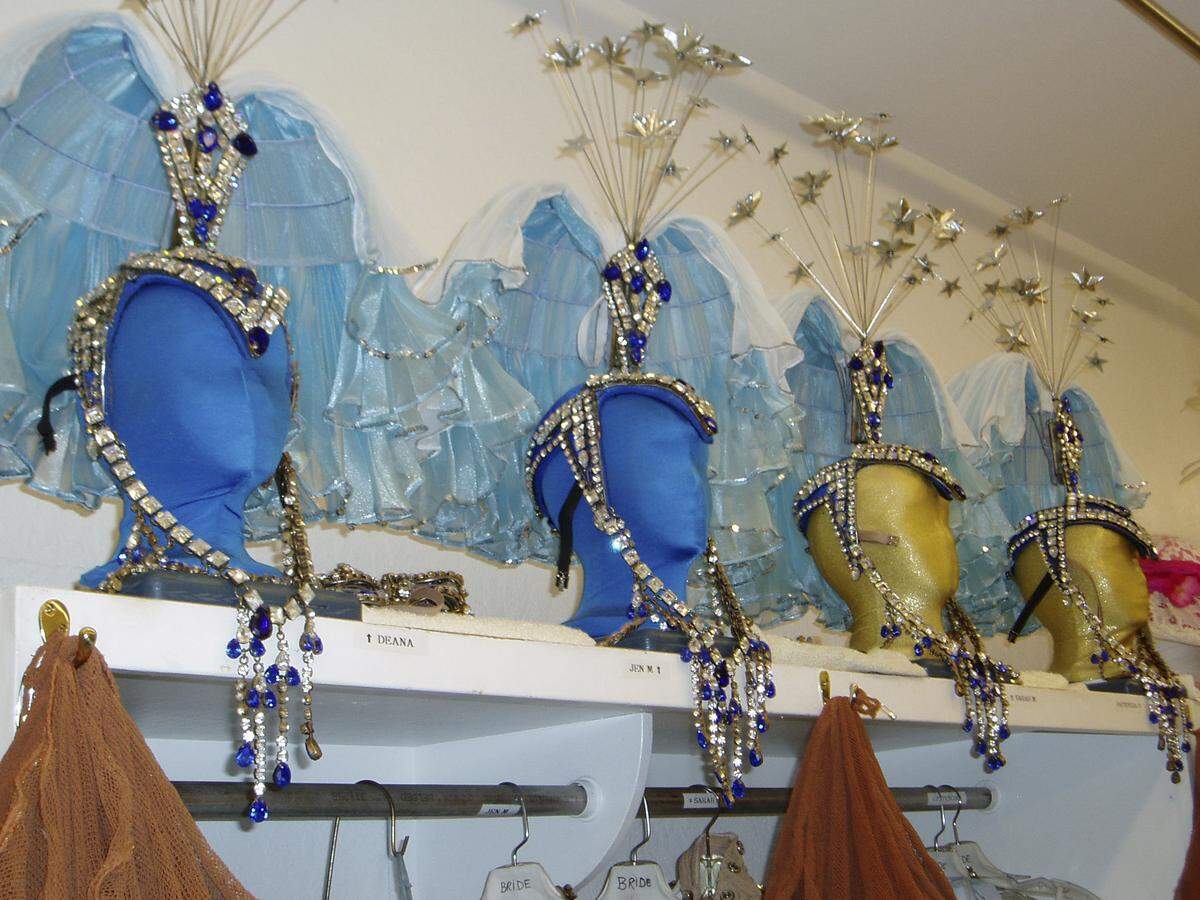
The headpiece she wore in the opening was about 2 feet tall. Some weighed as much as 20 pounds. Think of carrying two 10-pound sacks of potatoes on your head, while you dance.
But oh they were gorgeous.
“It’s pretty awe-inspiring. The costumes are monstrous,” she said. “... They have to fill up that stage. The ‘Jubilee!’ stage is monstrous.”
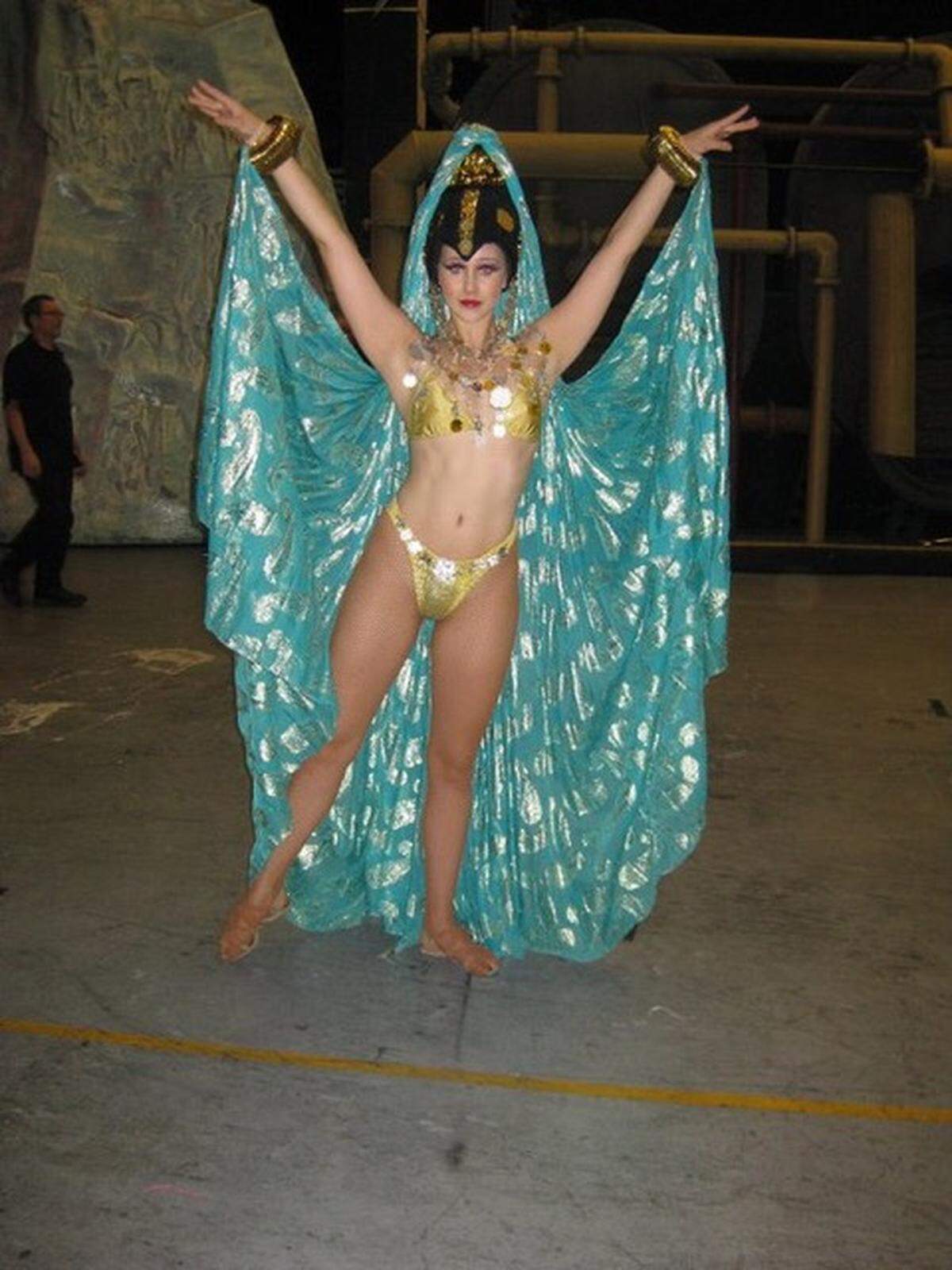
Barton wore one of the show’s famous Mackie costumes in the finale. The American fashion designer created the most famous Vegas showgirl costumes. Last year Pamela Anderson wore original, vintage Mackie costumes from the “Jubilee!” archives in “The Last Showgirl.”
Swift also wore one of the finale costumes by Mackie and co-designer Pete Menefee in her album photoshoot.
“Produced by Don Arden; the show featured over 1,000 costumes based on Florenz Ziegfeld stage shows with elaborate couture costumes worn by the showgirls,” reads a post on Mackie’s Instagram.
“The bra, undergarments, and armbands are all French wirework and backed with a blush fabric for a nude illusion.”
The costume Swift wore also had “set stones and drops at the under-bust of the bra and the waistline of the underwear.”
Barton needed help getting into some of the more cumbersome get-ups. One strapped onto her body like a backpack. The uneven headdress shifted her weight to one side.
“It wasn’t my favorite costume to begin with,” she said. “Do I have lasting problems, maybe some neck pain and tightness? Whatever. It comes with the job. My body is not going to get out of the dancer life scot-free.”
Showgirl roles were so coveted that she didn’t dare say, “Oh, I don’t want to do that.”
She got to wear her favorite costume just once. It was called the “Mae West” and had head gear that covered half the face.
She asked the show’s famously feisty associate producer Fluff LeCoque if she could wear it.
LeCoque, who died in 2015 as one of the most famous characters in Vegas entertainment, said no.
“I went into the office and (asked) Fluff is there any way I could wear the ‘Mae West’ instead of the peacock. And Fluff looks at me says, ‘Honey, we put the girls in the ‘Mae West’ if we don’t want to see their faces.’”
LeCoque’s assistant, Diane Palm, the company’s manager and herself a former “Jubilee!” dancer, piped up.
“I wore the ‘Mae West,’ she said.
The last showgirls
The 90-minute show, with no intermission, has changed little over the years, Holly said. I found out later what that entails. Lots of songs I knew, such as Irving Berlin’s “A Pretty Girl Is Like a Melody.” Pretty dancing, like an elegant pas de deux against a starry backdrop to “Smoke Gets in Your Eyes.”
And pure camp, as in a Samson and Delilah number with guys in G-strings and my favorite lyric of the show: “She’s got the hots for a guy named Sam.”
“Jubilee!” is kind of like your neighborhood high school show, only with better singing, dancing, costumes and sets.”
“I don’t think you’ll see a show that uses showgirls the way ‘Jubilee!’ does ever again,” LeCoque said in a 2014 interview, two years before the show ended.
“The attraction of Cirque du Soleil has taken over. It used to be so many shows here were filled with wonderful dancers and showgirls. Now almost all of the showgirls are in ‘Jubilee!’
“Not everyone who is in a show is a showgirl. Over the decades, they’ve changed from tall and glamorous mannequins to classically trained dancers. It is a very demanding form of dance.”
Barton is convinced that most people really don’t know what the life of a showgirl is like, other than what they’ve seen in recent movies.
In part, the lines between burlesque dancers and showgirls remain blurred, she said, because Dita Von Teese, known as the “queen of burlesque,” paid homage to showgirl revues in her first Las Vegas residency. She wore Mackie’s original showgirl costumes on the same stage where Barton performed.
“I don’t know if somebody off the street could tell you that there’s a difference between a burlesque dancer, a showgirl and a stripper. But they are three very different things,” Barton said.
“A showgirl is about non-sexual ensemble movement. Burlesque is more sexualized, about the individual personality. In burlesque you have to have a gimmick ... all showgirls, true showgirls, are classically trained.”
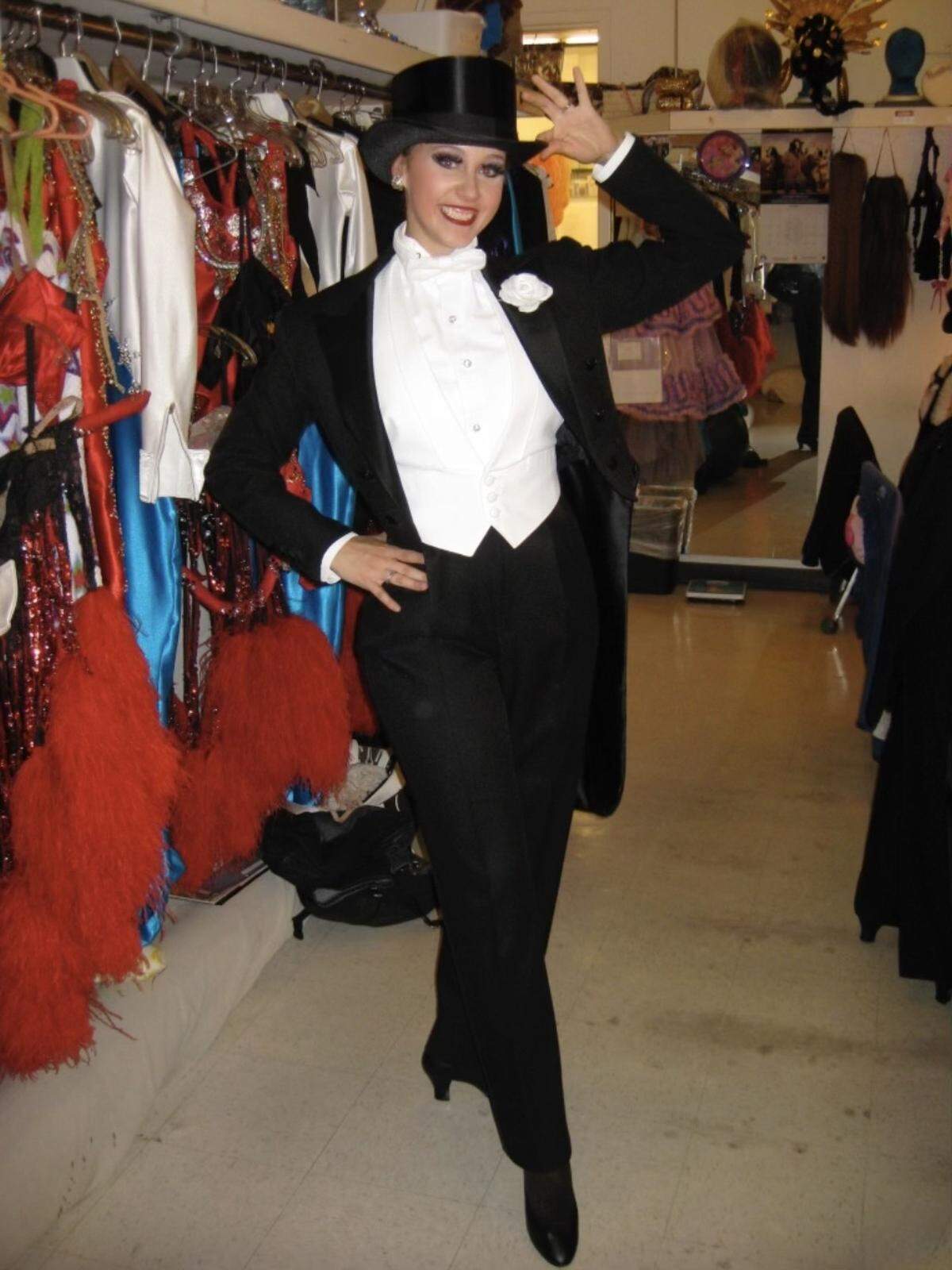
She knows showgirls who trained with the Royal Ballet in London and the American Ballet Theatre in New York before they joined the Vegas show.
Some of them, like her, now wait to see what all this new attention will bring their way.
“A lot of people are not thrilled with how showgirls are being portrayed right now,” she said. “A lot of it based on Pamela Anderson’s movie.”
They hope Swift’s album will “bring some light and beauty back into it.”
This story was originally published October 1, 2025 at 6:30 AM.
.jpg)