Kansas and Missouri teachers punished for Charlie Kirk comments. Was it legal?
From the day, Sept. 10, that conservative activist Charlie Kirk was assassinated on the campus of Utah Valley University, champions of the First Amendment right to free speech have been watching with alarm — others with approval — in the aftermath.
Across the nation, public employees, private employees, and earlier this week, television talk show host Jimmy Kimmel, have either been fired, disciplined or placed on leave for expressing opinions deemed critical of the slain 31-year-old Republican podcaster and close ally of President Donald Trump.
Questions are now being raised regarding the legality of the consequences.
‘Fascist’ and firings
“Look, we have a First Amendment in this country,” Vice President J.D. Vance said on Fox News on Wednesday, in his latest salvo against what he describes as the “radical left.” “But if you celebrate Charlie Kirk’s death you should not be protected from being fired for being a disgusting person.
“If you are a university professor who benefits from American tax dollars, you should not be celebrating Charlie Kirk’s death, and if you are, maybe you should lose your job or your university should, should face loss of funding.”
Such has been the case:
In Kansas on Wednesday, a Kansas Department of Education analysts who also is a Manhattan-Ogden school board member, was fired from her job as a state employee for responding on social media that Kirk’s death was “well deserved.” Although she quickly apologized, the state’s top Republican leaders forced her ouster.
In Dodge City, a high school debate coach this week was placed on paid leave pending an investigation for comments on his personal social media page calling Kirk a “fascist” whose death “was not a loss for our country.”
In Hallsville, Missouri, north of Columbia, two school employees were put on leave after re-sharing a social media post by the content creater So Informed calling Kirk “a racist, xenophobic, transphobic, islamophobic, sexist, white nationalist mouthpiece who made millions of dollars inciting hatred in this country.”
On Wednesday, the sudden removal of Kimmel by ABC become a flashpoint on free speech.
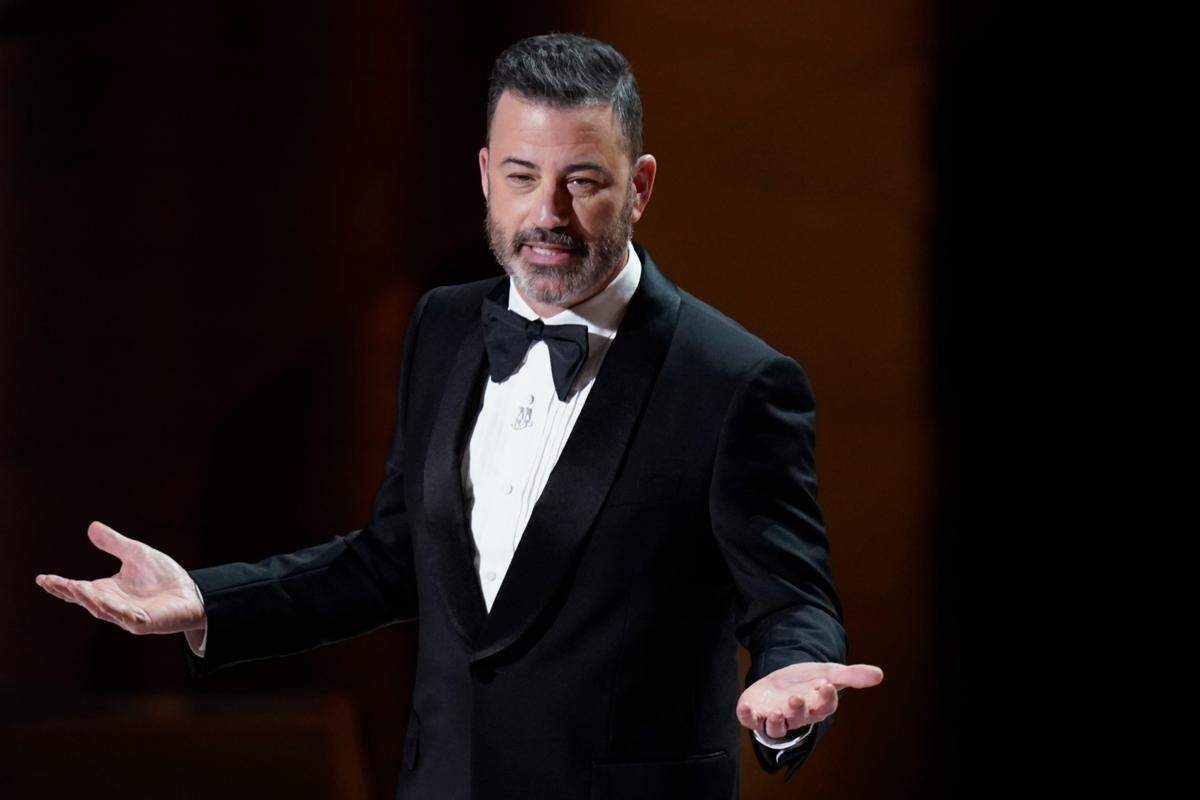
“We hit some new lows over the weekend with the MAGA gang,” the late night comic, 57, said Monday in his opening monologue, “trying to characterize this kid who killed Charlie Kirk as anything other than one of them and doing everything they can to score political points from it.”
Federal Communications Commission Commissioner Brendan Carr, whose agency controls television licensing, called Kimmel’s comments “truly sick.” He said on a follow-up podcast, in terms of consequences, “We can do this the easy way, or the hard way.” Disney, which owns ABC, responded and removed “Jimmy Kimmel Live!” indefinitely.
On Friday, Kansas Senate President Ty Masterson said the removal of employees was merited.
“The fact that some in the media and on the left are trying to conflate traditional political speech with the celebration of murder we’ve seen from some in the past week is dishonest at its core,” he wrote to The Star. “No one is challenging anyone’s right to have yard signs and bumper stickers. We’re holding individuals accountable who celebrated Kirk’s assassination on social media.”
Pickering, Garsetti and ‘clearly established law’
The answer to the question of what is legal and what is not, what violates an individual’s First Amendment protections can be murky depending on specific circumstances — who said or wrote what and under what circumstances. But more often, attorneys said, the case law is well established. They insist that numerous situations that are now unfolding could end up in court, perhaps even the U.S. Supreme Court.
“That, I think, is what is concerning, is that there is clearly established law,” said Max Kautsch, a First Amendment attorney in Lawrence, who adjunct professor at the University of Kansas School of Law. “It seems that other factors are controlling decision making rather than the rule of law.
“Theoretically, if there is freedom of speech, then employees at public agencies ought to be able to say what they want, on their own time, and not be penalized for that,” he said.
Kautsch and other First Amendment scholars said two Supreme Court cases are instructive.
The first is Pickering v. Board of Education, which in 1968, on an 8-1 ruling, established that public employees, including teachers, have the right to free speech on matters of public concern, without being fired, unless the statements they are making are “knowingly” or “recklessly false.”
The case involved a teacher, Marvin L. Pickering, who had written a letter in the local paper critical of his school board and Township High School District 205 in Will County, Illinois, regarding bond issues and how money was spent.
The school board argued that Pickering’s statements were false and that the reputation of the district and its employees had been impugned. The efficient running of the school was disrupted.
But the Supreme Court found that, even though Pickering’s statements may have been false, they saw no real harm to the district.
“In sum,” the court wrote, “we hold that, in a case such as this, absent proof of false statements knowingly or recklessly made by him, a teacher’s exercise of his right to speak on issues of public importance may not furnish the basis for his dismissal from public employment.”
The second case, from 2006, is Garcetti v. Ceballos, in which the Supreme Court, in a 5-4 decision, ruled that the First Amendment does not protect speech made by public employees if the comments are made “pursuant to their official duties,” meaning as representatives of their agencies.
But in making that ruling, the court was in its own way also affirming that speech made by public employees is protected if they are making comments outside of the bounds of their job as private citizens.
In specific, the case involved Richard Ceballos, who worked as a deputy district attorney in California in the office of the Los Angeles District Attorney, headed at that time by Gil Garcetti.
Ceballos claimed that his First Amendment rights to free expression were violated, and that he was passed over for a promotion because he had written a memo on agency letterhead and had, in court proceedings, publically criticized the D.A.’s office, regarding a case.
The case wound its way through the courts with the U.S. Court of Appeals for the Ninth Circuit ruling in favor of Ceballos, saying his First Amendment rights had been violated. He had a protected right to speak because the subject was “inherently a matter of public concern.”
But in its split ruling, the Supreme Court reversed that decision. It said that when public employees are speaking “pursuant to their official duties, the employees are not speaking as citizens for First Amendment purposes, and the Constitution does not insulate their communications from employer discipline.”
“He did it in his official capacity,” Kautsch said. “The court found that his First Amendment rights are not going to trump their ability to discipline folks for doing their job.
“But now, when we’re talking about something like Charlie Kirk, there is a much better chance that anyone who’s expressing thier opinions about that, about that event, is more likely doing so as a private person. So the whole reason why the employee lost in Garcetti is probably not applicable here.
“We have got to be thinking that usually these are social media posts on people’s private pages. Under Garcetti, public employee have the right to be able to say things as long as they do so in their capacity as a private citizen.”
Kautsch predicts that, under Garcetti and Pickering, many of the current firings and disciplinary actions will be challenged.
“If Garcetti is the law, there’s going to be a lot of lawsuits,” he said. “Like everbody and their mother is about to file a Garcetti lawsuit under these circumstances here. So now we’re going to really see, aren’t we? There’s going to be a case, I assume, that goes up the Supreme Court.
“But generally speaking, there should be a pretty good case for a lot of these folks, as long as they can clearly show that they weren’t speaking in their public capacity.”
Teachers may be different. Disruption
What if the public employee is a teacher or works at a school?
That standard may be different, attorneys said.
Most relevant, attorneys said, is the 1969 case Tinker v. Des Moines Independent Community School District.
In the case, high school students in 1965 planned to wear black armbands to school to show their support for a truce in the Vietnam War. Learning of the protest, the school’s principal created a policy saying that students who wore armbands would be asked to remove them. Students who refused could be suspended.
That December, students Mary Beth Tinker and Christopher Eckhardt wore the armbands, and were sent home. The following day, John Tinker wore an armband with the same result. Through their parents, the students sued the district for violation of their Constitutional protections.
Two courts sided with the school. But in a 7-2 decision, the U.S. Supreme Court ruled that the armbands were speech and that students do not lose their First Amendment rights when they walk onto school grounds.
But there was a caveat. Speech could be suppressed, the court said, if administrators could prove that the conduct would “materially and substantially interfere” or disrupt the operation of the school, or infringe on the rights of others.
In its letter this week announcing that a teacher had been put on leave, the Dodge City district superintendent specifically noted, “We acknowledge that this incident has disrupted the educational process and eroded public confidence in the school district.”
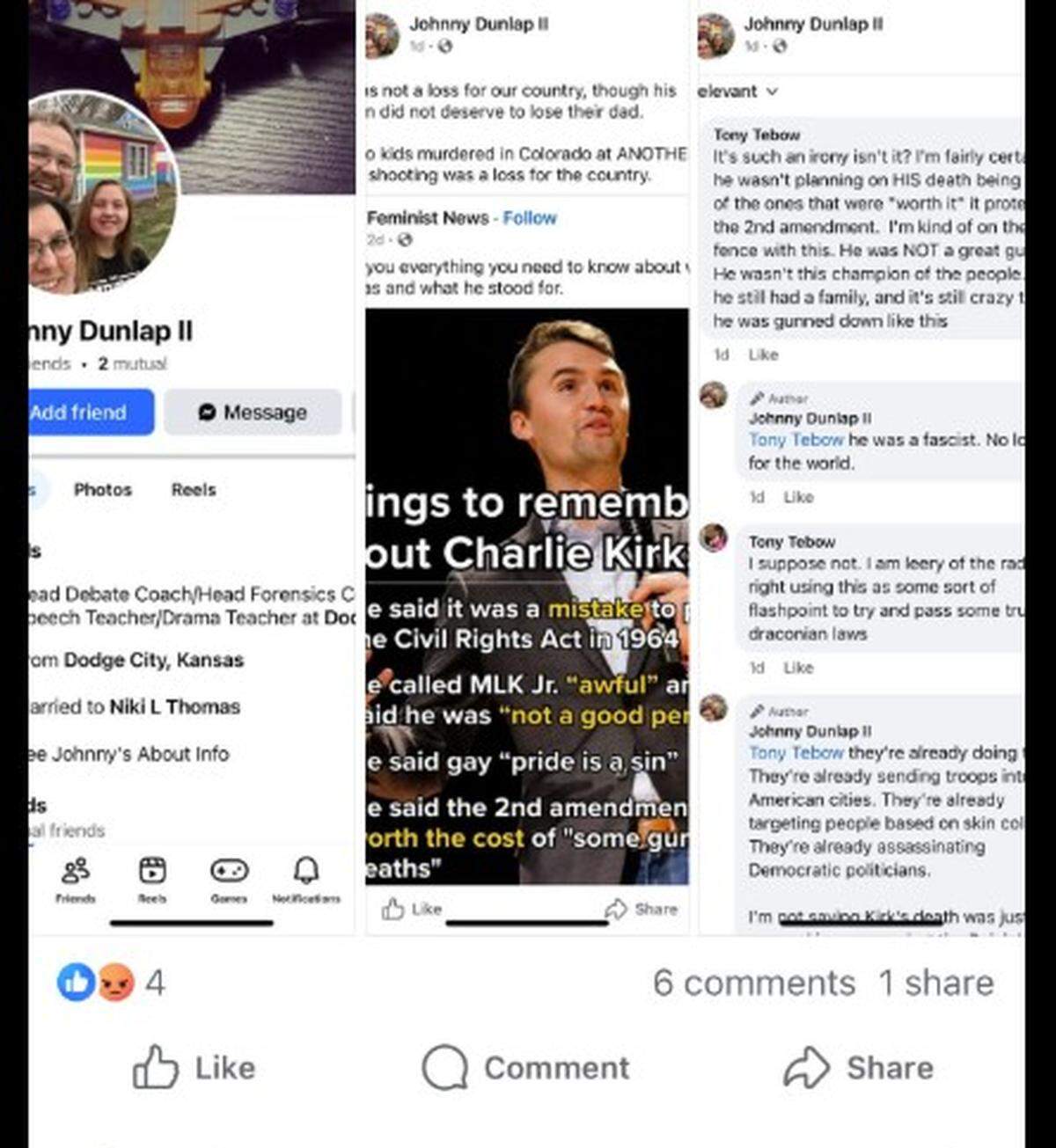
“You have to show material disruption to school activities,” Kautsch said. “When you’re talking about disciplining this teacher, I’d be very curious to see how the school board. . .what evidence there is that a Facebook post on somebody else’s time was actually disruptive to any sort of school work.”
Protections for hate and other speech
To be sure, the First Amendment protects a wide variety of speech, even hate speech.
In 2011, in Snyder v. Phelps, the Supreme Court, in an 8-1 decision, ruled as much. The case centered on protests conducted by members of Topeka-based Westboro Baptist Church, led by its pastor Fred Phelps.
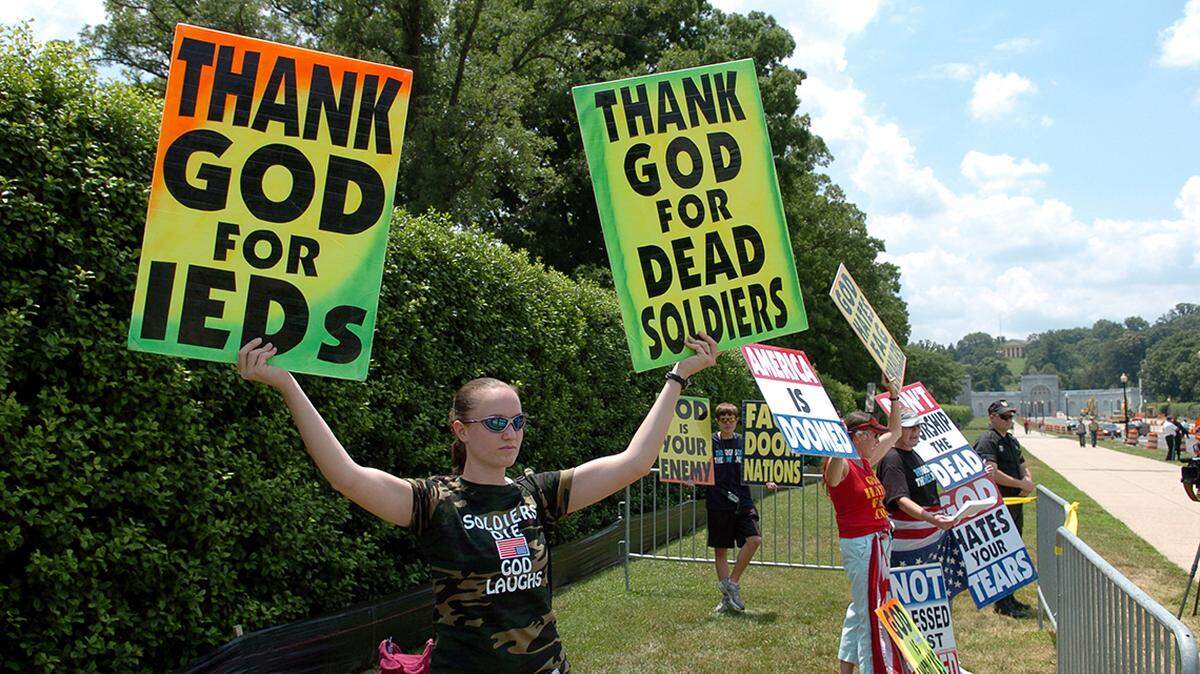
Phelps’ family and congregants had routinely picketed and protested funerals of gay soldiers, holding up signs such as “Thank God for Dead Soldiers.”
In 2006, Westboro’ s members picketed the Maryland funeral of Lance Cpl. Matthew Synder, who had been killed in Iraq.
Snyder’s father sued for emotional distress. Phelps argued his group had First Amendment protections. And the Supreme Court agreed, saying that although the speech was offensive, the church was speaking on “matters of public concern” as opposed to “matters of purely private significance.”
Reagan shooting: “I hope they get him’
In 1987, the Supreme Court heard a case resonant of debate surrounding the death of Kirk.
It involved the shooting of President Ronald Reagan on March 30, 1981 outside the Washington Hilton Hotel by would-be assassin John Hinckley Jr.
The case, Rankin v. McPherson, centered on Ardith McPherson, a clerk in the constable’s office in Harris County, Texas. Listening to a radio in an outer room, McPherson heard the news that Reagan was shot. She responded aloud, “If they go for him again, I hope they get him.”
McPherson got reported to the constable, Walter H. Rankin, and she was fired. McPherson filed a First Amendment suit. In a 5-4 decision, she prevailed.
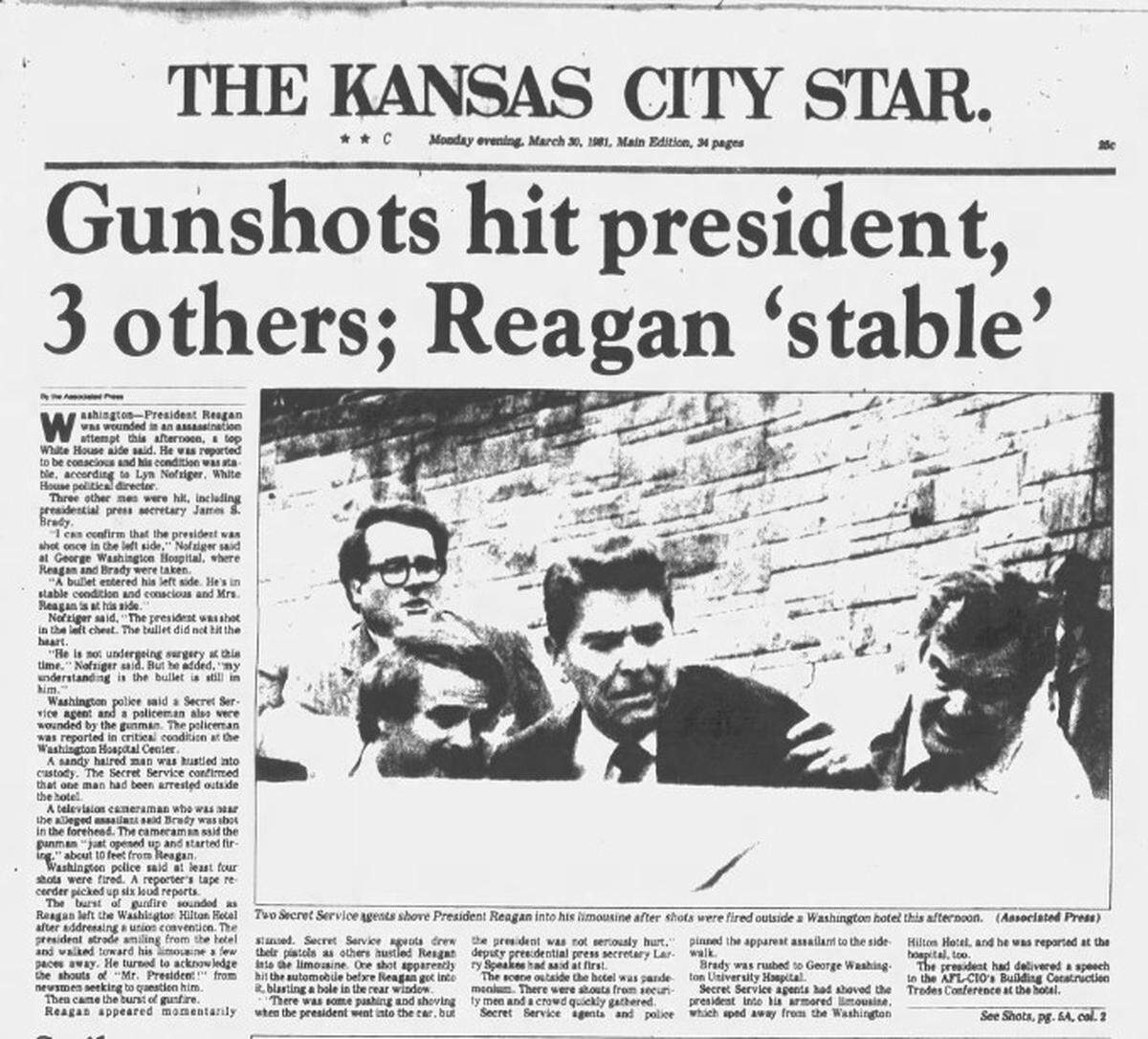
The Supreme Court ruled that McPherson’s speech was protected in that it “plainly dealt with the matter of public concern.”
Importantly, it held that her role was not one of “confidential, policymaking, or public contact.” The comment was made during a private conversation away from the public. As such, her comment did not interfere with “the efficent functioning of the office.”
”Petitioners have not met their burden of demonstrating a state interst justifying respondant’s dicharge that outweighs her First Amendment rights,” the court ruled. “Nor was there any danger that respondent discredited the office by making the statement in public.”
No First Amendment protections for private employees
Private employees have a different concern.
“People might be inclinded to say, ‘What about the First Amendment? What about freedom of speech?’” said Allen Rostron, professor of constitutional law at the University of Missouri-Kansas City. “The simple answer to that is it doesn’t apply to private companies.”
The First Amendment only prohibits “Congress,” and by extension, other local, state and federal bodies from abridging freedom of speech.
“In general, if you work for a private business,” Rostrom said, “they can fire you for anything they want. They don’t have to have a good reason. Most people are just at-will employees, meaning they can just fire you because business is slow, or they just don’t like you. They really don’t thave to have justification.”
The exception, Rostron said, are when laws prohibit firing based on, for example, race, creed, age, gender, sexual orientation or other protected categories outlined, for instance, in the federal Civil Rights Act or the Age Discrimination in Employment Act.
Missouri has a law that restricts private employers from discriminating against employees based on their political beliefs. But Kansas and most other states do not.
“It’d be interesting,” Rostron said. “Let’s say somebody’s got a factory or a restaurant or a store, a private business, and they fired someone because the employee put something on social media about Charlie Kirk that was considered to be celebrating the fact that he died.
“I assume the employee might say, ‘You know, it’s illegal for you to fire me under Missouri law. You can’t fire me for my political beliefs or opinions.’ And I would imagine the employer would respond, ‘I didn’t actually fire you for your political beliefs or opinions, or because you were a Democrat or a liberal. I don’t care. I fired you because of your statements about murdering somebody.’”
In terms of public employees, Rostron also spoke of firing or disciplining teachers for their postings on social media as a “gray” area.
“I guess the argument for (disciplining) a teacher,” he said. “I guess they would say. ‘You have to model respectful behavior. It undermines your ability to do the job effectively. You need to have the trust of the parents and the students, a lot of families are greatly offended by your views. Or you’re teaching the kids to be violent and disrespectful and that undermines your ability to be a good teacher.’”
Judges, he said, are likely to rule differently on the matters depending on the details.
“It’s not like a speed limit where it’s 55 miles an hour and it’s pretty precise,” Rostron said. “This is going to be like, ‘We’re going to balance the interests on each sidie. The government has an interest in regulating what its employees do. Does it disrupt operations? But people also have an interest in expressing themselves on these issues.
“So you get essentially a balancing tasks that leaves tremendous discretion for the courts to decide what they want to do about these things. That makes it pretty tough to predict.
“I suspect there are school systems all over the place talking to whoever provides them with their legal advice right now, and they’re asking advice about what to do. And I suspect that legal advice, in many instances, is pretty indefinite.”
Colin Kaepernick and Jimmy Kimmel
But Kautsch argues that although Kimmel was disciplined, put on leave “indefinitely,” by a private company, that it might still be possible, given the circumstances, for a First Amendment violation case to be made.
Not because ABC took him off the air for his comments, but because it might be argued that the network took him off the air because it was coerced into exacting discipline by the government. He said the situation may be analagous to that faced by former San Francisco 49ers quarterback Colin Kaepernick.
In August 2016, Kaepernick made international headlines when he refused to stand, and later regularly took a knee, during the U.S national anthem in protest of systemic racisim, oppression and violence against Black people. He ignited a movement among other Black athletes.
He faced harsh criticism and claims that his protests were bad for NFL businesses. In March 2017, he left the 49ers and became a free agent. The former Super Bowl-winning quarterback was never signed by another team, ending his NFL career.
In September 2017, Trump, then in his first term, called on football fans to boycott NFL games unless the league fired or suspended players who refused to stand for the national anthem.
“If NFL fans refuse to go to games until players stop disrespecting our country,” the president wrote on social media, “you will see change take place fast. Fire or suspend!”
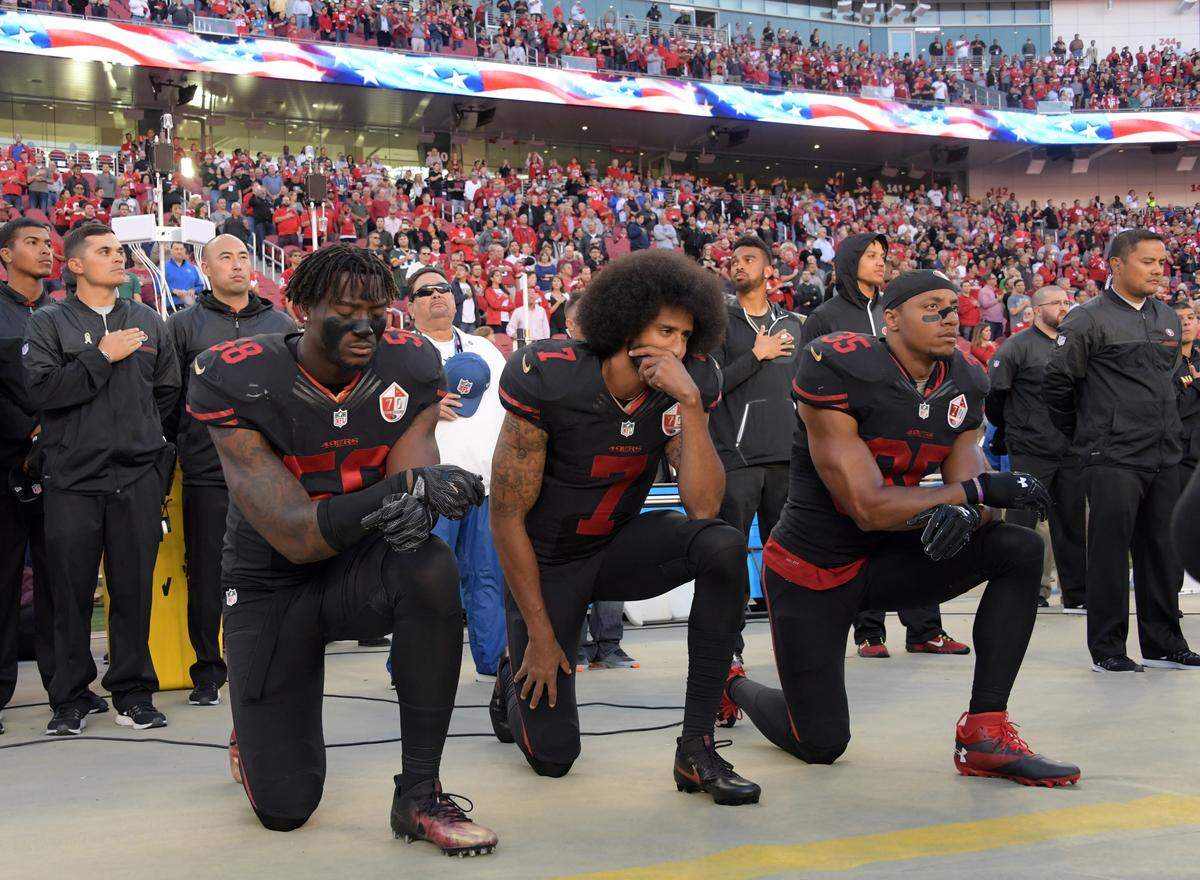
In October that same year, Kaepernick sued the NFL, alleging that owners had colluded to keep him out of the league.
“The NFL ended up having to settle that case,” Kautsch said. “The reason they had to settle for what we’re pretty sure was multi-million dollars was because there was such a connection between Trump’s suggestion that there need to be discipline against people who were protesting the national anthem while he was president in 2017.
“This is analogous to the things that high-level federal government officials have been saying the last few days, about how employers shouldn’t tolerate this kind of stuff. If I’m a private employee and I get fired for my speech, maybe I’m thinking about how to try to make it a First Amendment issue because my employer was motivated by the government to fire me.”
He went on. “When the government gets involved in a coercive way, it could give rise to a First Amendment lawsuit against an ostensibly private actor.”
Kautsch said that recent statement made by federal officials could possibly be used to support the claim: Attorney General Pam Bondi, after Kirk’s death, said she would “absolutely target” protestors engaging in “hate speech.”
Bondi said she had the authority to investigate businesses who refused to print memorial vigil posers for Kirk, claims she later backed away from.
When it was announced that talk show Stephen Colbert’s late-night show was canceled in July, Trump on social media posted, “Next up will be an even less talented Jimmy Kimmel.”
“All I’m saying is this is a whole new world where we’ve got governent officials who are making statements about how private organizations should handle their employees,” Kautsch said. “And once you get the government involved in overtly or expressly or impliedly getting in how a private company makes its employment decisions, then that employee is going to have a better argument that there’s a First Amendment problem.”
This story was originally published September 22, 2025 at 5:30 AM.