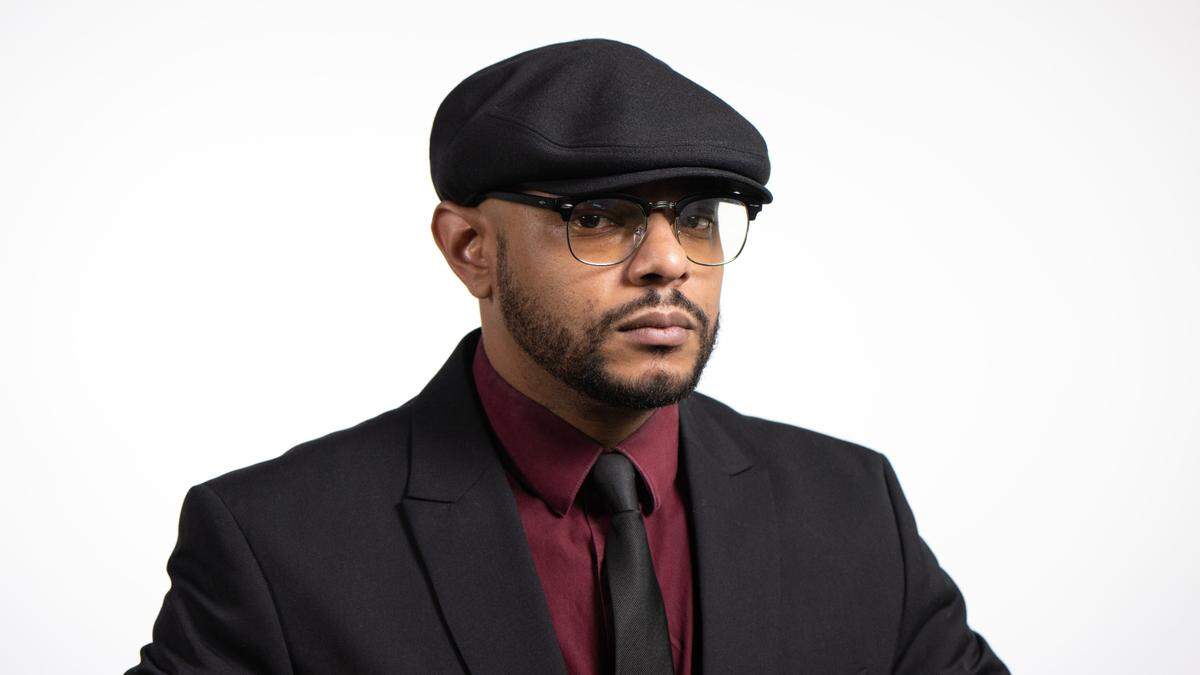
This local podcaster is revealing the untold stories of KC’s missing Black women
AI-generated summary reviewed by our newsroom.
- Podcaster Vaughan Harrison launches 'Fountain City Files' to spotlight Kansas City's missing Black women and systemic failures in law enforcement.
- Season one, 'Vanishing Point,' explores the Timothy Haslett Jr. case and regional human trafficking patterns.
- Harrison fuses investigative research, trauma-informed storytelling, and community advocacy through immersive audio journalism.
Vaughan Harrison has always been fascinated with the true crime genre of entertainment. As a child, he grew up watching documentaries and, later, listening to podcasts, that told the darkest of stories.
Now, as a photojournalist working with the Kansas City Defender and as the creator of the upcoming podcast Fountain City Files, Harrison focuses on stories involving missing Black women, systemic failures in law enforcement and community neglect.
His work blends investigative research, trauma-informed storytelling, and a personal commitment to justice, driven by lived experience and years of grassroots involvement.
Harrison sat down with The Star’s culture and identity reporter J.M. Banks to discuss elevating local awareness of missing people, challenging misconceptions and pushing for accountability through journalism that centers victims and communities.
Let’s start off with you telling us about your early life and upbringing here in Kansas City—and how those early experiences led you into the career field and the engagements you’re currently involved in.
I’m born and raised here in Kansas City, Missouri. I’m a neurodivergent individual, so I feel like the way I process information and perceive the world has always been a bit different from the majority of people. Nevertheless, I think I developed some unconventional interests as a kid. And true crime just so happened to be one of those things.
My dad would always play documentaries about prison life and stuff that would come on Discovery ID or, every now and then, even national news segments. That kind of content always fascinated me, both sides of it, actually, the victimology and the perpetrator’s perspective.
I want to say the first major case I remember being interested in was the Precious Doe case. It sent shockwaves through the community, something that transcended race. While everyone was scared, I was curious. I asked a lot of questions, even before they figured out who was responsible. I remember the first night it was covered on TV, when they found the body in the morning. I was at my aunt’s house off East 62nd Street, near Forest Park, right around the corner from where all of it happened.
I just wanted to know who, what, where, why, when? Ever since then, I’ve always wanted to stay close to stories like that. I’ve always had a knack and curiosity for investigating. I think my favorite word as a kid was “why” which led me to as much discovery as it did trouble.
As I got older and went to high school, my inclination for the unconventional stayed strong. I have ADHD, so I’ve been through a lot of different career fields. I tried a bit of musical theater, which I loved. Funny enough, I avoided journalism like the plague. I was even asked to join the school newspaper a few times and I said, “No way.”
I didn’t go to college. Academia just wasn’t for me. The idea of sitting through lectures for hours every week never felt like a path I’d be successful on. But I was a natural hustler, a natural storyteller, and a gifted listener.
Those traits all kind of culminated in me joining the Kansas City Defender around the time of the protests. I can’t remember if it was 2021 or 2022, I want to say 2022. The story that actually led me to them was when Bishop Tony Caldwell made a call to action, saying that community members were trying to report Black women missing and they were being ignored or dismissed.
What made you initially want to get involved with the work the Kansas City Defender was doing?
I reached out, asked how I could help, and it’s been magic ever since. Not long after I joined, Ryan (Sorrell) asked if I wanted to lead an investigation. They had received a grant from FIJ (Funding for Investigative Journalism) to do investigative reporting on missing Black women in Kansas City and Timothy Haslett Jr. and that kind of led me to where I am now.
What took me a long time to get here, though, was waiting, for credentials, validation, someone with authority to say, “Yeah, you’re legit.” Since I didn’t go to college or have one clear path, I’ve struggled with imposter syndrome.
But even though the path was winding, I’m happy I’m here. After sharing the clip I sent you with a few people, I’ve heard nothing but excitement. I’m just glad to be here — no matter how long it took.
What is the work you currently do with the Kansas City Defender?
I contract with the Kansas City Defender, mostly doing photojournalism. Ryan will usually call and let me know when he needs high-quality images captured for something.
That’s something I really enjoy, taking photographs. It allows me to tell stories like a journalist, but through imagery. For a while, that was my way of hiding behind fear, I didn’t have to write. That was one less scary thing to worry about.
But the podcast has been the next big step for me, something I’ve always wanted to do but avoided. Watching documentaries growing up, that was always the dream. That’s how this all started. I knew I wanted to tell stories that were underrepresented or overlooked and Precious Doe was it.
I started working on a documentary, but I think fear got the best of me. At least, that’s what I used to think. Now, I don’t think that was the right story for that time. The universe was guiding me here. Not to say the documentary won’t ever happen—but that story wasn’t meant to be told then.
What initially led you into podcasting, and what were those early stages like?
So, I got into podcasting originally for a couple of reasons. Growing up, people always told me I had a voice for radio. I never took it seriously, again, imposter syndrome.
Eventually, I gave in. A few friends and I started a podcast called Quarter Life Crisis. It’s no longer accessible, but it was me and three other mid-20-somethings in Kansas City, all with something to say about life and Blackness. It was part comedy, part social commentary—just our perspective as young Black adults navigating life, pop culture, and everything in between.
It was a simple concept, but we had fun. And, like a lot of things in my life, I didn’t wait for anyone to tell me how to do it. One day, I just messaged them and said, “Every time we hang out, we have a good time and say cool things. I’ve got a voice for this. I think all roads are leading here. None of us are ‘qualified,’ but what if we just did it?” They all said yes.
We ran that podcast for about a year and a half. Eventually, we hit that “mid-20s burnout” wall and moved on but it was fun while it lasted.
With podcasting functioning differently from traditional journalism or television, how do you see it as a unique avenue for storytelling, especially for the kinds of stories you’re telling?
I would say the difference is both in production and audience.
People who consume media through video or short-form content are different from podcast listeners. There’s some overlap, sure, but folks who tune into audio stories, those are my people. I’m a natural orator. I’ve got the gift of gab, as they say.
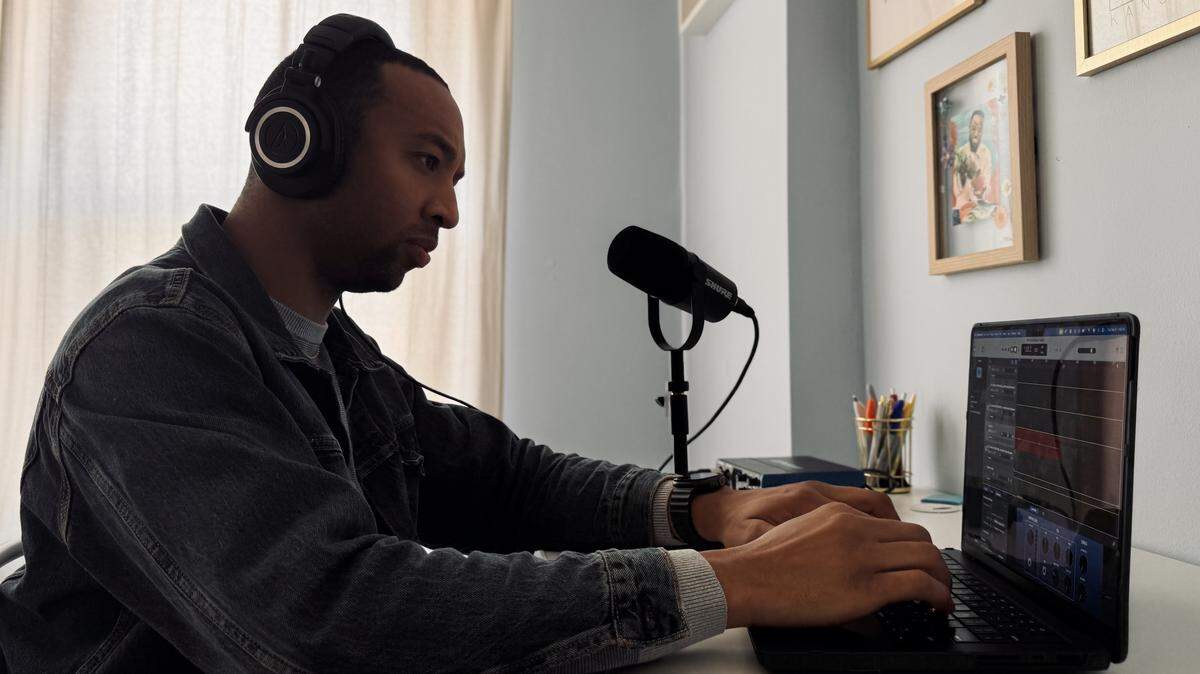
What makes podcasting special is the ability to curate immersive experiences. I love sound design, I’m a musician, too, so I enjoy picking the exact sounds that will grab attention and elevate the story. I get to play with my voice, tone, and pacing.
It lets me make news both informative and entertaining. That balance is what I’m trying to strike. A lot of true crime content is salacious and gory, full of reenactments and shock.
My podcast is the opposite. It’s narrative-driven, survivor-centered, trauma-informed. I want listeners to still feel that adrenaline, but without exploiting survivors or their emotions. And podcasting gives me the perfect platform to do that.
With the entertainment aspect, especially in true crime podcasting, how do you balance telling a compelling story with respecting victims and their communities?
Honestly, I come from a traumatic background myself, so it’s second nature for me. It’s not even something I have to think twice about. When I interview people, it’s all about preparation and research.
For example, we have some interviews coming up next month, thanks to folks over at the Excelsior Citizen. They were generous enough to say, “Hey, we can connect you with these people.” But before I even reach out to them, I need to build a relationship first.
Podcasting, journalism, even photography, these are intimate experiences. You’re stepping into someone’s life, capturing and possibly immortalizing their story. So for me, it’s about relationship-building and setting boundaries before we dive into anything deeper.
That balance between storytelling and care is part of my identity. Being a refuge, being a safe space for people, that’s central to who I am.
Can you give me the breakdown of the show, what each episode is going to look like and the kinds of topics you’re going to be diving into.
Absolutely. So, the podcast is called Fountain City Files. It’s all about doing deep dives into stories from Kansas City that may have been overlooked, underreported, or that I feel carry deeper implications than what’s currently being discussed.
Season one is titled Vanishing Point, and it focuses on Timothy Haslett Jr. and missing Black women in Kansas City.
I chose this story because it’s incredibly relevant. It’s a hot-button issue, not just here, but nationally. You’re seeing shows like True Detective covering missing Indigenous women in Alaska, and other media spotlighting missing Black women in places like D.C.
In Kansas City, it hits hard. We’re a major hub for human trafficking, and when you bring up things like the Roger Golubski case, it really paints a disturbing picture. The data shows that while Black people make up about 23% of the population here, we represent 56% of the city’s missing persons cases.
So, the season will be structured into three central episodes going over how we got here, that explores how Kansas City ended up in a place where cases like these can happen in silence. How it continues where we’ll unpack the systems, attitudes, and failures that allow this cycle to persist. Then where we go from here which looks forward, at solutions, calls to action, and how communities can mobilize.
Within that three-episode arc, there’ll be several adjacent or related topics layered in, like the case of Tamontez Kurtz, a missing Black man. This issue transcends gender and age. In fact, most of the active missing persons cases in our area involve juveniles.
Every time I bring this up, Black or white, doesn’t matter, people are shocked. And while it’s okay to be surprised, I don’t think it’s okay to not know. That’s the point of the show: to inform, to shine light, to be a beacon.
The first episode is dropping December 1, 2025, which is the same day as Timothy Haslett Jr.’s trial date.
Episodes two and three will be released in Q1 of 2026, likely January. The plan is to drop the first episode alongside the trial, see how things unfold in court, and, if possible, integrate relevant trial developments into the following episodes.
We’re also planning a listening event for donors and supporters in early November. The details aren’t fully locked in yet, so no need to worry about that for now—but it’s coming.
What do you think audiences often misunderstand about those cases?
I think a lot of the misunderstandings stem from the barriers that exist, both explicit and implicit, right? When I talk to women or Black people about missing persons, there’s just such a lack of resources and education around the process.
I’ll tell you something that even transcends race: the idea that you have to wait 24 hours before reporting someone missing, that’s a myth. There are just a lot of things that need to be destigmatized, and I think that’s part of what I was referencing earlier when I said I want this podcast to serve as both an educational tool and a piece of entertainment.
There are going to be a lot of nuggets that demystify the process, things like comparisons between Jackson County, Johnson County, and Ray County. I’m learning a lot from journalists who’ve been in the game for a long time, like Jason Cole at the Excelsior Springs Standard. He did some interviews with folks in Ray County who actually have a program for victims of human trafficking. They’re enrolled in something that helps them readjust back to normal life.
But back to the question, so much of it is really just the barriers. A lot of Black folks, due to systemic racism and generational trauma, face massive hurdles. For example, when you have to go to a police station, that’s already incredibly intimidating for many people of color. There’s fear of prosecution, fear of being involved in ways they aren’t prepared for, and just a general lack of knowledge about how the process works.
For instance, if you don’t leave that police station with a case number, you do not have a case. I’ve talked to so many people who’ve said, “I went to KCPD, but when I followed up, they didn’t even know who I was talking about.” And when I ask, “Did you get a case number?” they’ll say, “I didn’t know I needed one.”
That tells me two things: one, the person they spoke to didn’t inform them. And two, they didn’t even know beforehand that they needed one for a case to be active.
What do you hope listeners will take away from the stories in Vanishing Point, both emotionally and socially?
I would say one of my main goals is to expand empathy. It’s often difficult to empathize with someone or something when you haven’t experienced it yourself. And even then, that empathy doesn’t always translate, especially when what you’re seeing or hearing transcends your race, gender, age, generation, or background.
So my biggest hope is that people listen to these stories, hear these accounts, listen to experts, to witnesses, to individuals with lived experience and walk away thinking, “Oh. I understand now. I see where my blind spots are. I have a better sense of what’s been happening right in front of me.”
A lot of people assume that individuals make conscious decisions that lead to these outcomes. But through these stories, I hope they come to understand: this isn’t their fault. These are systemic issues. And as a society, as a community, we need to come together to support, uplift and advocate for change.
What broader systems or patterns are you hoping to expose through your episodes?
Vanishing Point is about Timothy Haslett Jr. and missing women in Kansas City, yes. But it also feeds into a larger question of who gets to decide what is newsworthy?
Who chooses which missing person ends up on the evening news? Who determines which deaths get national attention? And once we start to pull back the curtain and really examine the people, organizations, and political influences shaping these decisions, we begin to see how deeply these narratives are curated.
So, again, it’s about expanding empathy, yes but also building awareness. Giving people a greater sense of agency. And if I have to use a word I don’t particularly love, it’s about being woke. Being awake. Seeing things for what they actually are, instead of assuming the media just “reports the news as it happens.”
Because everything has an angle. Everything. You’re seeing something that’s been highly curated and filtered before it reaches you.
And the reality is: there are people in this city, people in this nation, who are hurting, who are in pain, who are suffering. And they’re not receiving the same compassion, love, or attention that others are. But they deserve every bit of it. Just as much.
How did you go about deciding which cases to follow, and what was your research process like?
I picked stories that resonated with me, that I felt were indicative of broader patterns but also carried national implications.
Timothy Haslett Jr.’s case stood out to me because, again, Kansas City is a major hub for human trafficking. We’ll have expert testimony to back that up. It’s something not a lot of people know. Or they’ve maybe heard in passing but don’t fully grasp. We’re going to dig into the meat and potatoes of that.
Then you have people like P. Diddy in the national spotlight right now with similar allegations, and it all starts to feel connected. These things do happen, right in our own neighborhoods, often under our noses.
When it came to other cases, like Precious Doe or Fredrick Scott, those hit me personally. I lived down the street from where Precious Doe’s body was found. I remember my family being afraid to let me play outside. I had nightmares, literal nightmares, about being found and decapitated. If I’m being frank, that was traumatic.
And remember, this happened the same year as 9/11. Black communities were experiencing layers of trauma during that era, and I think we often overlook that.
So yeah, that case was personal. Same with Fredrick Scott, an alleged serial killer from 2016. It’s taken nearly a decade to move toward conviction. I got close with one of the victim’s family members. He went to school with my brothers. We lived in the same neighborhood. I used to walk the Indian Creek Trail where some of the murders occurred.
And without saying too much, this may not even make the interview—but someone very close to me was friends with him while he was allegedly committing these murders. They had no idea. That’s how close to home it was.
In some ways, I feel like these stories chose me. They were already in the air, I just grabbed them and put them on the board.
As for the research process? That’s been the fun part. Especially for Precious Doe, I’ve spent days in the library digging through microfilm, reading old issues of The Call. I’ve got one in front of me now: “Precious Doe’s Body to Be Exhumed,” dated April 26, 2003.
With Timothy Haslett Jr., since it’s a more recent case, the research has been about attending hearings, collaborating with my co-producer and bouncing ideas off each other.
I’ve been reading tons, books about the criminal process, court systems, possible defense strategies. I’ve also spoken with psychologists, criminologists, defense attorneys, just to speculate on what this trial might look like and what it could mean.
I’ve taken it as far as I possibly can, and probably even further, because I feel this crushing responsibility. I don’t have credentials in journalism or criminology, so I feel like I need to overcompensate. But I use that as fuel. I think it works in my favor.
I believe you said you had your first three seasons planned, will each have the same format?
I think I’m planning more loosely right now. This first season, I wanted it to be just three episodes. I kind of wanted to give people a gentle introduction to the format. Give my team and me a sense of what we can do, our limitations, our capacity, what the audience is responding to. You know, if they like the style and formatting.
Ultimately, I’m inspired by podcasts like the Monster series from Tenderfoot TV and iHeartRadio. One of my favorite podcasts ever is Atlanta Monster. It’s about Wayne Williams and the missing and murdered Black children from the ’70s and ’80s. That podcast really influenced me.
Those seasons are lengthy and in-depth. So down the line, I imagine this evolving into something similar, long-form, deeply researched, episode-heavy. But this first season is like our pilot. From here, we’ll see what kind of structure makes sense going forward. I already have themes and main subjects outlined for the next seasons, and I’ve started preliminary research but as far as specific episode counts? That’s still to be determined.
What do you envision the long-term version of this investigative series looking like?
Honestly, I’m not totally sure. I think it goes back to the things I’ve always been drawn to. There’s something powerful about the feeling those stories give you, vindication, tension, resolution. Watching or listening to a case unfold, and then feeling that relief when the truth comes out or justice is served.
It’s emotional. And I think what ultimately draws me in is that sense of expanded empathy. You live vicariously through the families, through the detectives. You feel connected.
I was literally just talking to Ryan, our editor, the other day—and I told him, eventually, I want to move into doing long-form video. Maybe docuseries-style work, similar to VICE or Netflix documentaries. I’d love to move beyond Kansas City someday.
Actually, after releasing the teaser trailer, a graphic designer I work with, Melanie, told me about a case in Warrensburg from 1989. A Black man died under what many felt were suspicious circumstances, but it was ruled an accidental drowning, asphyxiation, according to the medical examiner.
And I’ve already started looking into it.
So I’d love to cover surrounding areas, and eventually, stories on a national level. That would be the dream: long-form, deeply investigative, and grounded in empathy and truth, whether that’s in Kansas City or far beyond it.
For more stories about culture and identity, sign up for our free On The Vine newsletter at http://KansasCity.com/newsletters.