Why these 30 jolly Santas and Mrs. Clauses in KC for the weekend may make you cry
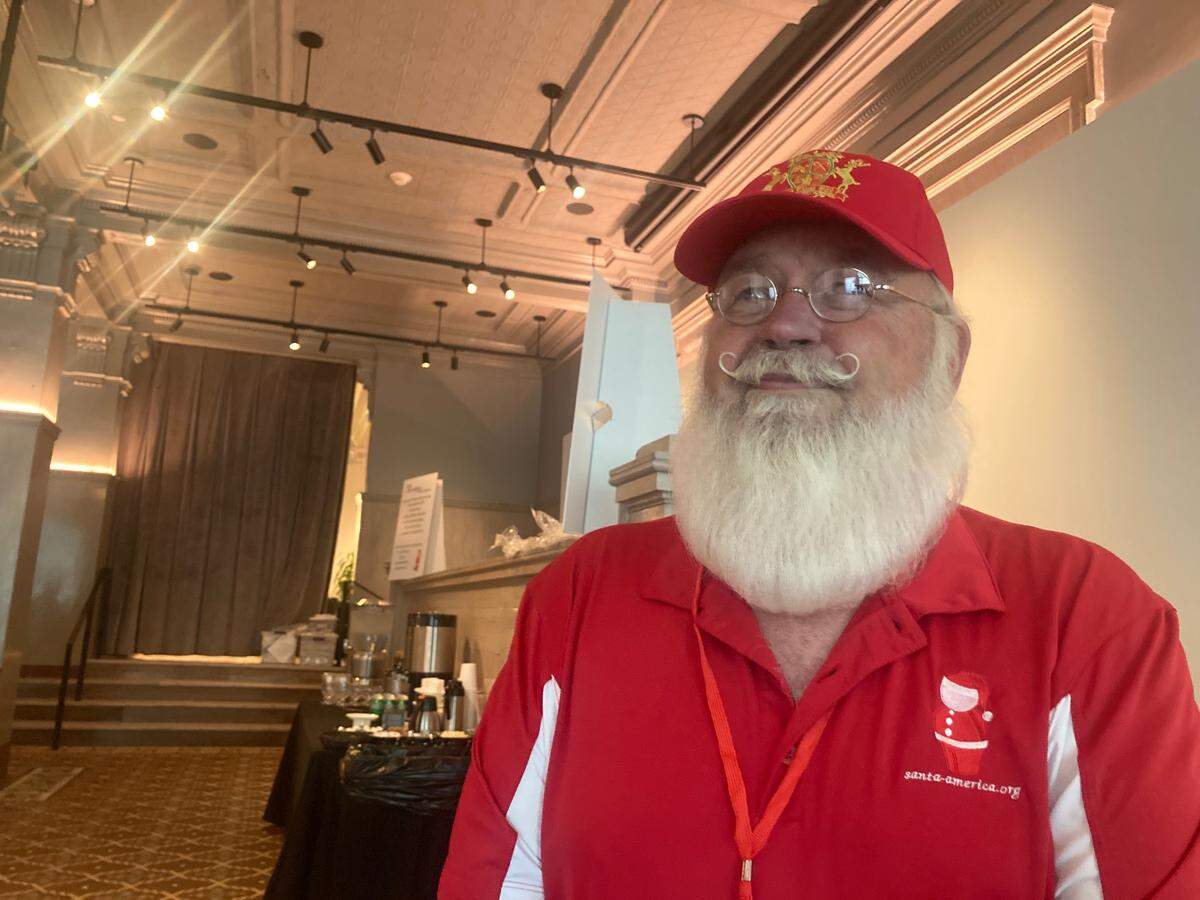
Kevin Boydston, a soon to turn 64-year-old Platte County construction worker, has for 25 years been a Santa Claus. The white beard, the twinkling eyes behind round spectacles, the mustache curled with wax at its ends are all real, all his.
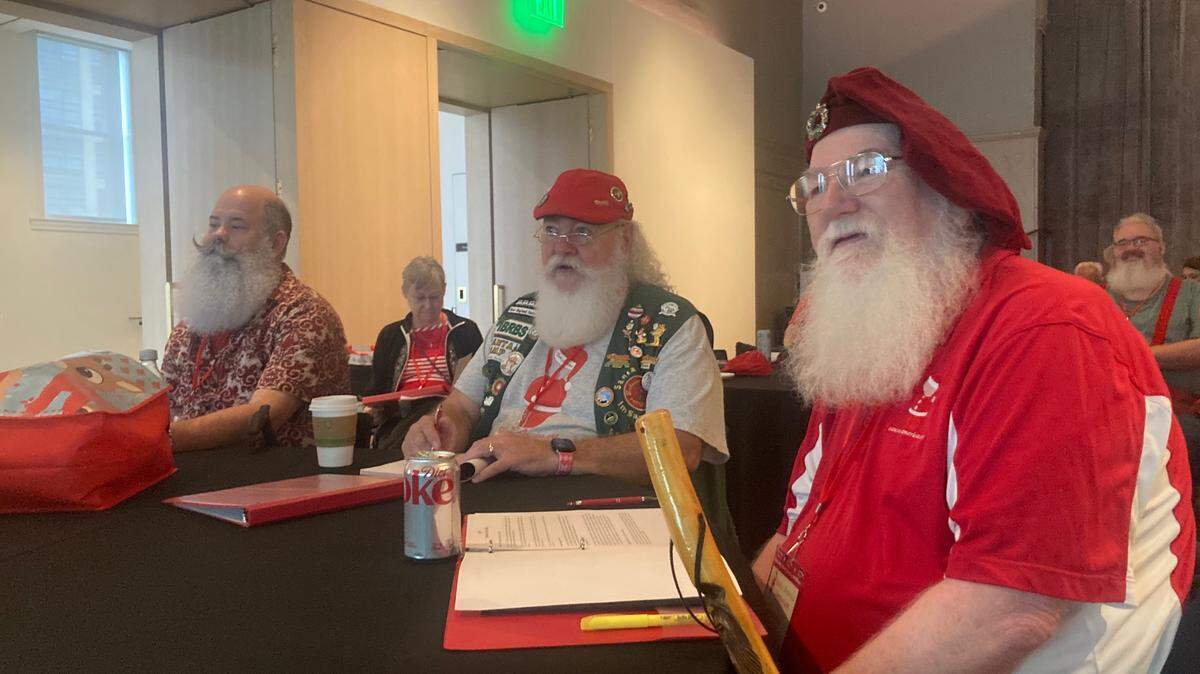
On Friday morning, inside a convention room at the Hotel Savoy in Kansas City, Santa pulled up a chair to tell a story or two about some of the children, and even adults, he’d visited to bring a last moment of joy. As he spoke, 21 other Santas, elves and eight Mrs. Clauses from Kansas, Louisiana, Idaho, Wisconsin, some 13 states took to other tables with coffee and muffins for a Santa America symposium about to begin.
“Not everyone can do a Santa hospice visit,” Boydston said.
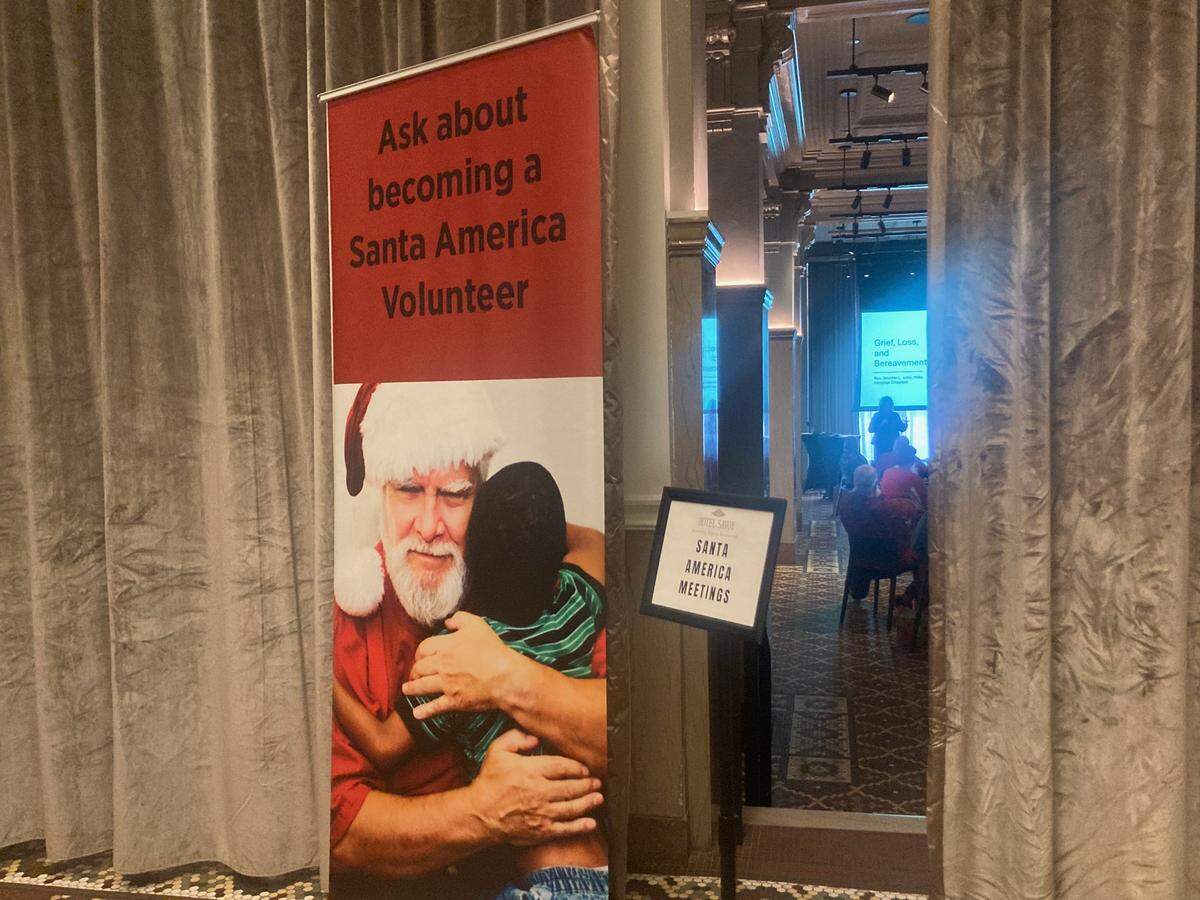
But that’s what Santa America Santas, with 121 of them around the world and seeking more, are all about. It’s not typical mall or Christmas photo Santa work, although many of the Santas do that, too, for pay. This is all volunteer.
‘The last happy moment’
“The difference going in,” said Boydston, the nonprofit’s current president, “we know what we’re going into. We know this is a terminal child. This may be the last time a family gets a smile. This may be the last happy moment.”
Or maybe it’s a visit to a parent who is in hospice, leaving a child behind.
Childhood doesn’t always glow.
In those sensitive moments when it doesn’t — or for sensitive children — these Santas show up, often at their homes: For a sick child, for a dying child, for grieving children or even worried children whose parent, in the military, may be headed off for deployment. They’re there, too, for neurodivergent children, meaning children on the autism spectrum who may need a quieter Santa willing to appear without a loud ho-ho-ho or jangling bells.
Sometimes Santa just needs to bring peace.
“We have two rules in our industry,” Boydston said. “Number one, it’s all about the children. Rule number two: If in doubt, see rule number one.”
Wrapped in Santa hugs
Boydston conceded, “When I was first approached to become part of Santa America, I thought ‘I don’t know if I can do this or not.’”
Now, after volunteering for 12 years, he has stories to share.
“It was during the Christmas season,” he said, which is an important dileneation because Santa America Santas are willing to show up any time — winter, spring, summer, fall — and for anyone of any faith. “We had a 9-month-old that was terminal. Born terminal. His little sister wanted her little brother to have one Christmas. So they called me to come in.
“I got attached to him, mom, dad, sister and baby brother.”
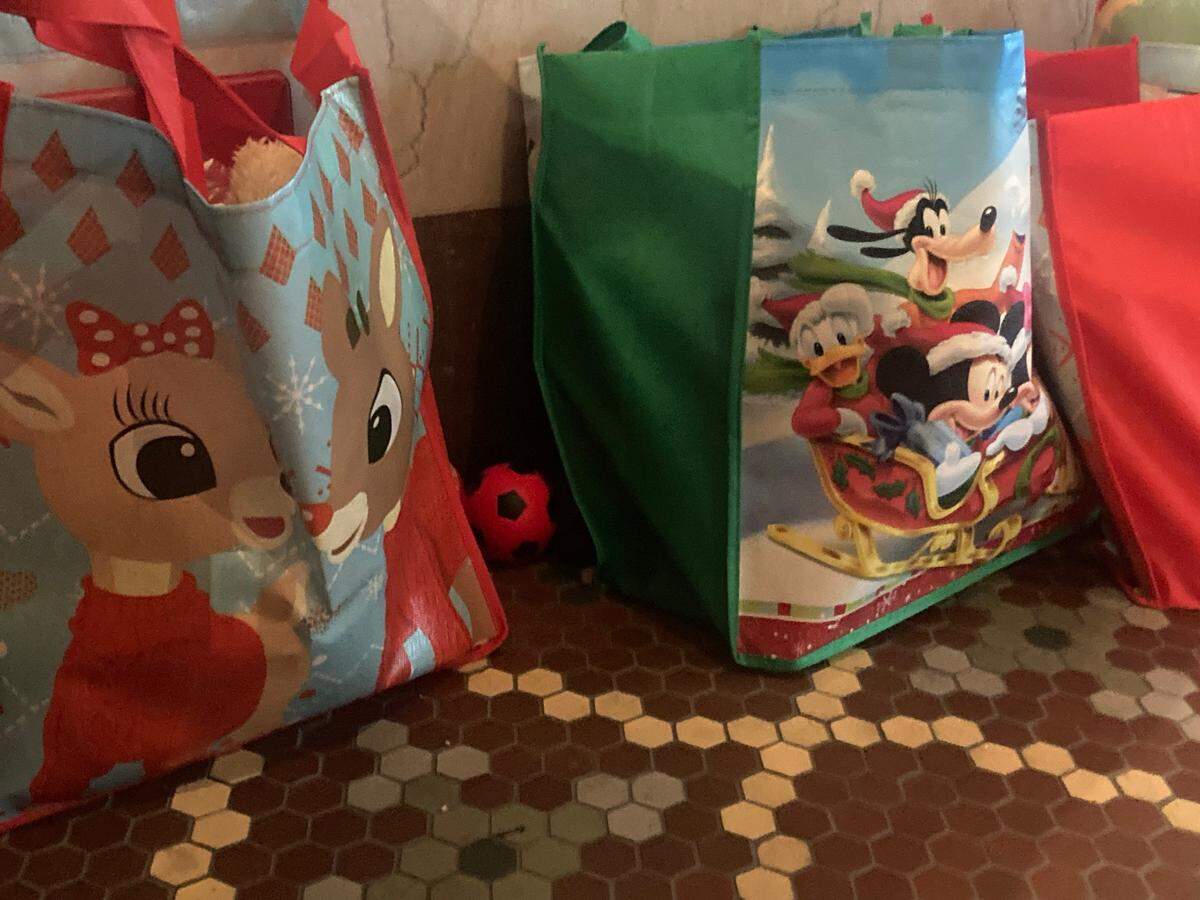
On the night he showed, he gave the sister an item they offer to children called “a hug.” It’s a long scarf with mittens on the end that a child can wrap themselves in. Tresa Boydston, Kevin Boydston’s wife and a Mrs. Claus, makes them for the members.
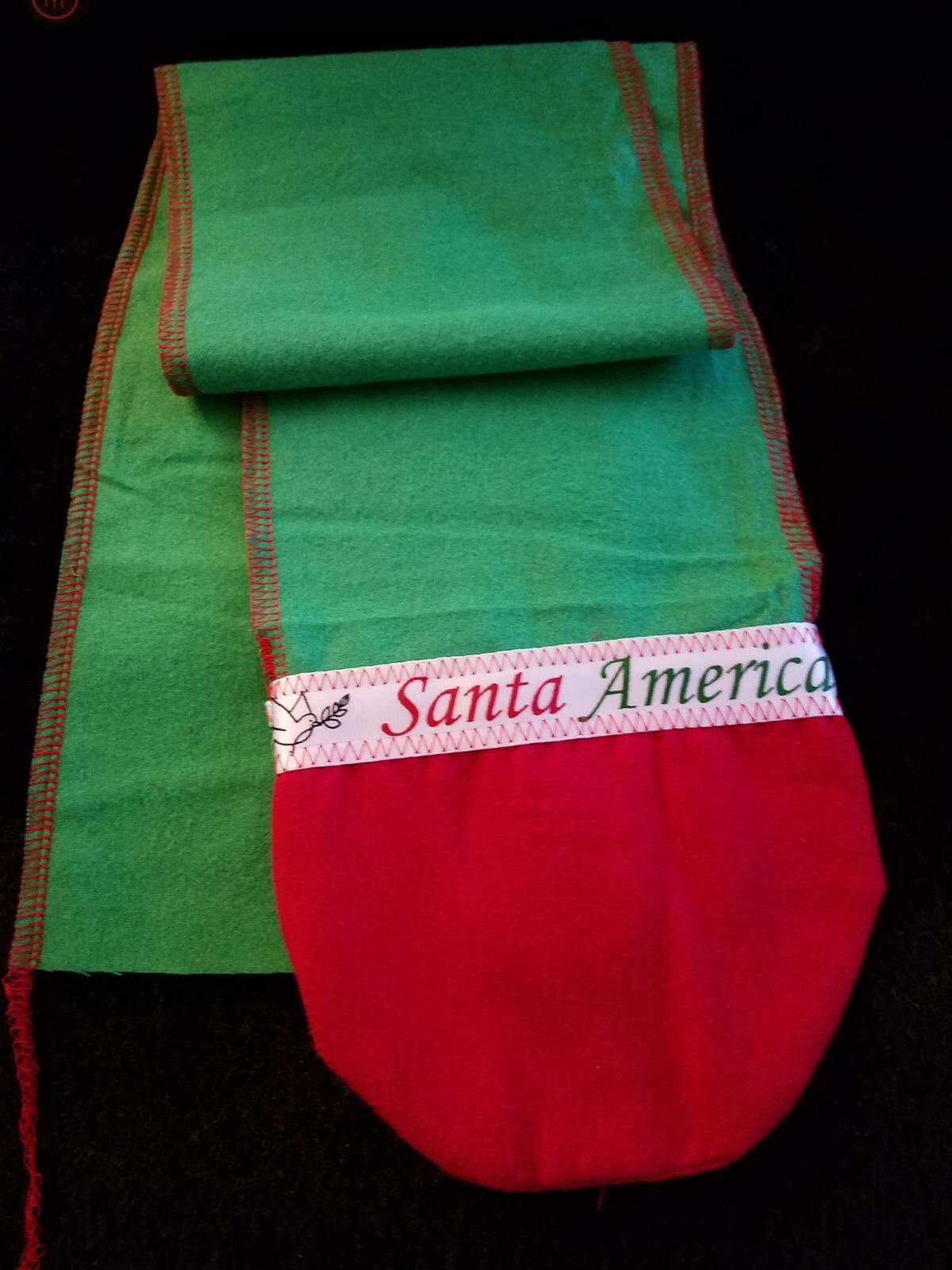
“When we give it to the child, we tell them, ‘This is so, if you ever need a hug from Santa, you can put this on and give yourself a hug anytime you want.’ And then we ‘charge it up.’ We have them put it on and then we give them a big, old hug. We ‘charge’ that hug up.”
Filling it with Santa love.
Boydston attended the 9-month-old’s funeral, although not as Santa. When he got there, the child’s grandmother approached him.
“She took me by the hand, out of the line, and took me up to the casket. The hug was lying on the casket. I had to walk out. I was crying.”
Another: A mother was in hospice. “She wanted to have one more Christmas with her two children,” Boydston recalled. “I got there and they had pulled the two kids out of school so they could visit with mom one last time.”
The children, a boy and girl, were in grade school, the oldest no more than 10, he said. Family told Boydston that the children’s mother was nearing the end. They shared time — he, the adults, the children.
“By the time I got out of the driveway and drove up the the hill about a half mile, my phone wrang,” he recalled. “I punched the bottom and they said, ‘She has passed.’ That’s heart-wrenching. I was just there.”
He had pulled over on the side of the road to gather himself.
Santa as grief support
The first seminar on Friday morning was titled “Death, Grief, Bereavement,” and was given by University Health hospital chaplain Rev. Jennifer Judd, who is also a school teacher.
“When Kevin asked me to speak at this event,” she said, “I have to admit it sounded strange to me — speaking to a group of Santas and Mrs. Clauses about grief and loss and death and dying. I shared this with my administrator at the school and she said, ‘That is the strangest PTO request I’ve ever heard in my life.’”
Judd also discussed grief, in general, how it is different for everyone. She spoke of the well-intentioned, but misguided, comments people sometimes make in the face of another person’s loss.
“One of the things I’ve done in grief support groups is I’ve asked them, tell me the stupid things that people have said to you when you’re grieving,’ Judd said. “And they’re like, ‘Oh, he’s in a better place now.’ Well maybe he is, but I want him here with me. ‘God needed another angel.’ Well, I need him here. ‘He died doing what he loved,’ Or ‘She’s with grandpa now,’ or, ‘At least she didn’t suffer.’ All these things that people say that don’t really provide a lot of comfort.”
In his time, Boydston said he’s learned the limits of what Santa can do. What if a parent asks, Santa, can you make my child better? Santa, can you save my mom?
“I say that, ‘That’s beyond my power, but there is a higher power you can go to,’” he said. “Generally we know what the religious backround is of the family. And I have sat and prayed with them.”
The titles of the topics at the symposium, which began Thursday and ends Saturday, were about as far as one might get from a Christmas list. They included on Thursday, one talk on human trafficking and another on abuse. Friday’s list, beyond Death, Grief and Bereavement, included talks on the basics of American Sign Language and autism spectrum distorders. Saturday’s titles were “Children and Trauma,” “Suicide Prevention,” and “Santa America and the Military,” given by Santa Steve Humphries of Leesville, Louisianna.
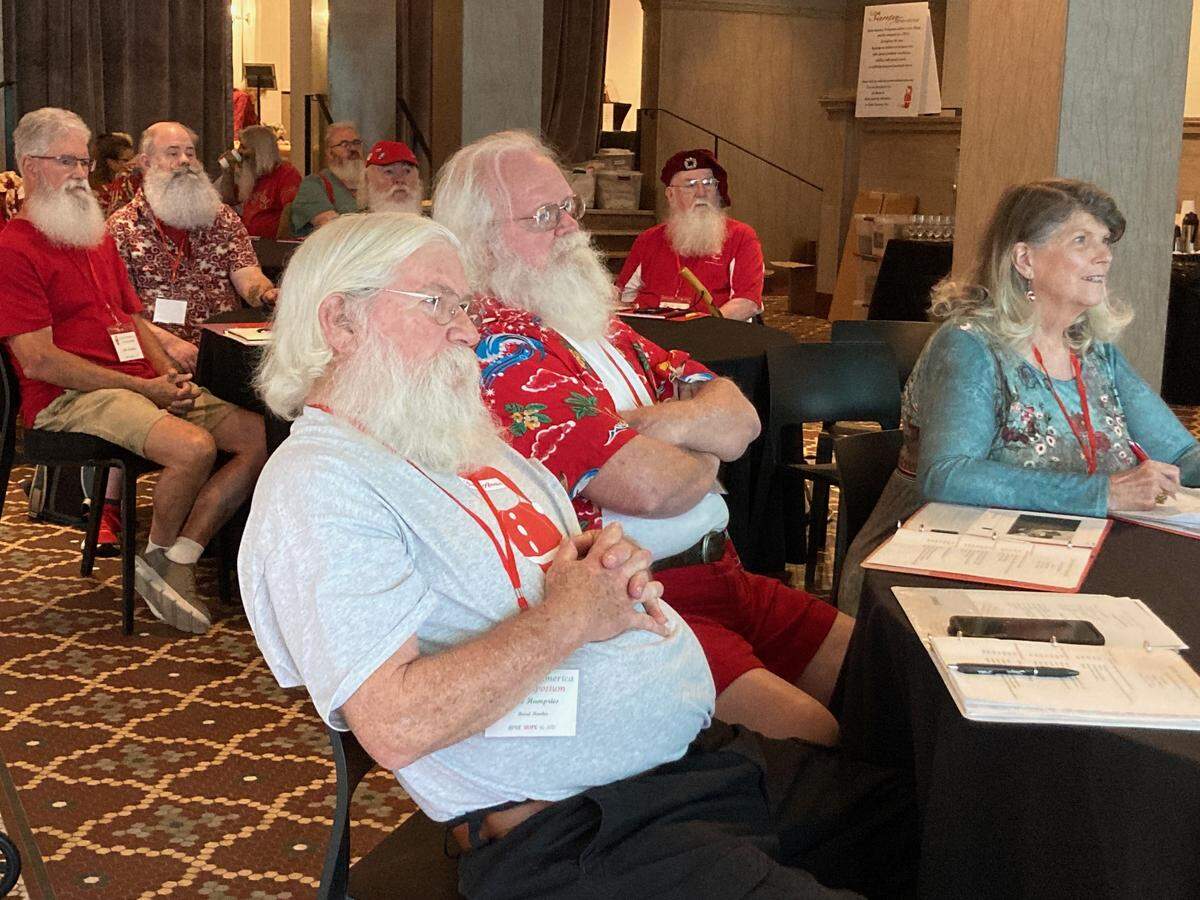
“Military kids are different,” Humphries said. He lives near the U.S. Army’s Fort Polk. “When a military kid says, ‘Santa when my dad PCSes are you going to find me?’ PCS is permanant change of station. Kids know that.
“Or, ‘Santa, my dad’s going to war and he’s always fighting. Does that make him bad?’”
He’s received letters from soldiers asking Santa to visit their chidlren while they’re away.
“We go see them,” Humphries said. Military children can move frequently, he noted. “It’s a big concern (among children), ‘Will you be able to find me when I go to my next place?’ The other issue that we’ve had to deal with is when their parents are separated. ‘While my dad’s deployed, I’m being sent to my grandma’s house. I don’t know how my grandma’s going to take care of me.’”
A network of Santas
There is no lack of Santa-based organizations: the IBRBS, The International Brotherhood of Real Bearded Santas, with the some 2,000 members; the Franternal Order of Real Bearded Santas, The Clan Claus Society, preserving the Scottish Santa Claus persona, Worldwide Santa Claus Network, the Wondrous Women of Christmas Society, which is holding a conference in St. Charles, Missouri in September 2026.
Santa America dates to 2003, founded by Ernest Berger, a Santa in Daphne, Alabama, who founded the group after spending time with his wife in the hospital while she was treated for cancer. He grew aware of the children in hospice and others with chronic or terminal diseases.
“He got the idea,” Boydston said, “that maybe Santa could be that one last smile.”
Santa John Scheuch of Overland Park became president in 2015. The title passed to Boydston last year after Scheuch, 70, died in February 2024. His obituary notes that he had been a Santa for more than 40 years.
Paul Smith, soon to turn 60, has been a professional Santa in Atlanta for four years.
“My dad did it for 30 years in Michigan. It just kind of runs in the family,” he said. New to Santa America (he had just submitted his application, awaiting the required background check) he had come to learn and listen, particularly about how to be a Santa to children with special needs.
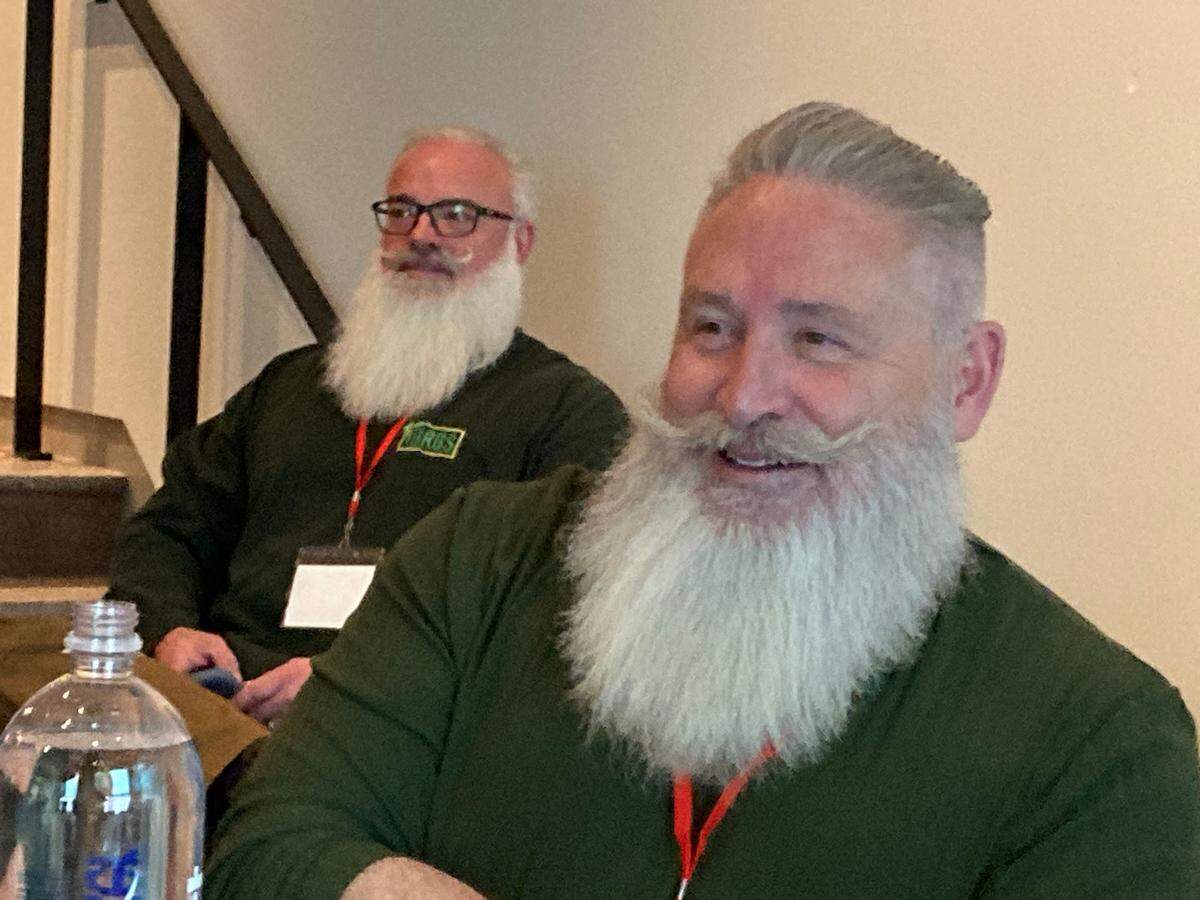
“I get emotional just thinking about it,” he said.
For him, being a Santa is a professional gig. “ I make money doing it professionally,” he said. “But when I look at donating my time, this is where I want to be, with people who truly need an uplift.”
As sacharrine as it might sound, Boydston said, the gift of being Santa, perhaps one last time, is also the reward. Boydston tapped his heart.
“Knowing that you’ve made that child happy, knowing that you’ve made that adult happy, one more time — or you’ve shown a little magic, that you’ve made their day or their moment — that, that is what it’s all about,” he said.
This story was originally published September 6, 2025 at 5:23 AM.