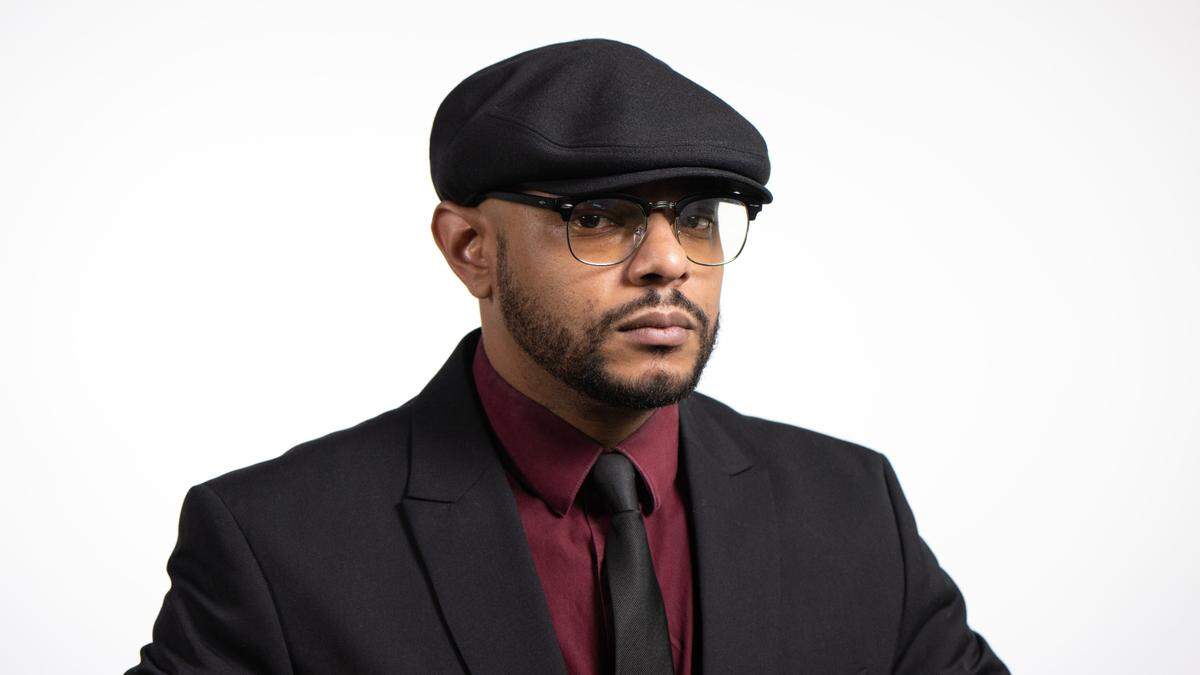
Performance artist uses music, writing and movement to make cultural experiences
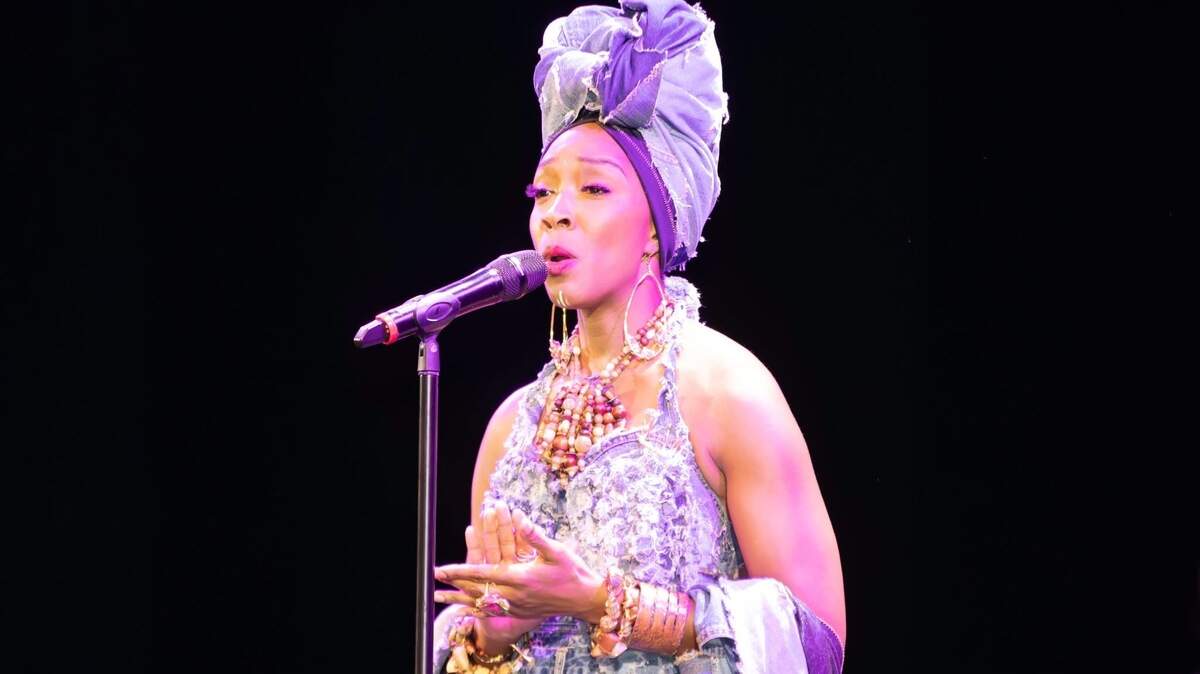
Angel Adams, known in Kansas City’s creative community as Myself Embodied, is a performance artist whose work challenges conventional boundaries between art, activism and spiritual practice.
Rooted in a deep commitment to Black liberation, healing, and self-actualization, Adams fuses movement and spoken word to build transformative experiences. Her performances don’t just entertain; they invite audiences into shared spaces of reflection, vulnerability and connection.
Originally from Nashville, Tennessee, Adams moved to Kansas City’s to re-invent herself and join the evolving cultural landscape of the metro. Since relocating, she has carved out a space built on connecting with people through her various facets that make up her M.E. (Myself Embodied) Brand.
Through her work, Adams blurs the line between artist and activist, performance and practice, making each appearance not just a show but a social and spiritual offering.
Recently Adams sat down with the Star’s culture and identity reporter, J.M. Banks to talk about her journey into rediscovering her artistry, being vulnerable in her creative space and helping inspire women to embrace their authentic selves.
Can you tell me about your early life and what it was like growing up in Nashville? Was there any part of your upbringing that led you on your creative journey?
Sure. My mother picked cotton down in West Tennessee and my father is also from that area, specifically Memphis, near the border of Southaven, Mississippi. My mother had high aspirations to go to college and be an active and engaged community member and that’s the kind of family I was born into, hardworking and deeply involved in community and family life.
I grew up with a big family, everyone was an auntie or uncle. Our home base, or stomping ground, was Nashville because my mother worked at Tennessee State University. She also attended TSU after leaving her fieldwork and she has a deep love for not just TSU but also HBCUs and Black culture at large.
I went to that same university and earned my graduate degree there to make her proud. I became a businesswoman with a degree in business and English. I also had a background in performing arts. As a child. was part of a nationally syndicated, award-winning TV series, it was called “The Write Club,” it was part of the Zoom-era education programming in the late 1990s and worked as a child model.
My mother was a single parent and couldn’t afford many of the opportunities I had, but I was awarded grants that allowed me to participate.
In high school, I was involved in sports and athletics. Initially, I wanted to pursue music, particularly music business, so I enrolled in a joint program at Belmont University. That steered my direction forward.
For my senior year business plan, I started a performing arts academy. My professor and peers loved the idea, so we brought it to life. I ran that nonprofit for 11-and-a-half years in Nashville. That was my way of giving back, my life’s service. While working with children, I started honing in on my own gifts and became both teacher and student.
Eventually, I earned a master’s degree and focused more on business. I also received a certificate in nonprofit management, which led to consulting for nonprofits and working with nonprofit and spiritual leaders. I realized that was my calling. I even worked with Vanderbilt University’s Provost Office and President’s Office. My last job before leaving Nashville was vice president of the local NPR station.
During the height of the pandemic, I co-founded an organization called Liberated Grounds with other creatives. I had always wanted to be a full-time creative. We helped artists get grants, housing, and space to simply be. I leased a space called Ground Zero that was open 24/7 to community members.
Eventually, we looked at expanding to sister cities like Memphis, Chicago, Atlanta and Kansas City. When I had saved enough and felt called to leave my hometown, I chose Kansas City, found a home, bought it, and initially continued my daily life while commuting.
So, I stepped away from the arts for almost a decade and worked as an executive director. I never thought I’d return to performing, but through Liberated Grounds, I reconnected with my artistry.
But then I felt spiritually led to live in the home I bought. When I moved, I made a decision: I wanted to be known only as an artist. I didn’t want anyone to know my past titles, just that I sang, danced, or created in whatever form felt right. That’s how I started embodying my true self. That’s been my journey, and I’m so grateful to be here in Kansas City.
What was your thought process behind choosing Kansas City as your destination to start your new life as an artist?
Honestly, I didn’t really choose it, it kind of chose me.
Liberated Grounds was a creative collective, and when we decided we wanted to establish connections outside of Nashville, about 15 of us got together and tossed around different cities, Baltimore, D.C., Chicago, Indianapolis, Memphis, Chattanooga.
We were focused on places where some of our members had roots. Kansas City came up because some of our charter members were from here or had deep ties here. So, we held what we called vision-casting sessions, essentially dreaming together as creatives about where we could expand.
When my spirit said, It’s time to move your feet, I was already in a leadership role with Liberated Grounds. I wanted to be, like Kendrick Lamar says, “sick enough to put it on yourself.” I didn’t want to just talk, I wanted to live it.
So, I looked across the country, trying to find a place where I could put down roots and buy a home. I had a one-year-old child, and I wanted stability. I had already visited Kansas City before. My dear friend, Eric Lynn Copeland, was born and raised on the Kansas side, in Wyandotte. When I was 18, he and I drove or flew here to audition for American Idol. He later went on The Voice, actually.
I even had a partner here for about 8 to 10 months, and I worked a part-time job in KC during the pandemic just to make ends meet. But when I returned home in 2020, I got more deeply involved in building up Liberated Grounds, and I started thinking more seriously about owning land.
My community kept saying, “We don’t own land. We don’t have gardens. We don’t have kindergartens.” That really stuck with me. I’d never thought about owning land before, but I started to dream.
I typed “1 acre or more” into Zillow and the only piece of land that showed up under my filters that day was here, in Kansas City. I had a real estate agent check it out, and they told me it was one of the most beautiful properties they’d ever seen.
I didn’t even tour the home, I just put in an offer and bought it that same day. I flew back home for a while after that, but I told the team at Liberated Grounds I wanted to give the home and the land to the collective. I wanted to put it into a land trust.
And I did. I opened up my home to strangers, community members, family, people have flown and driven in. We’ve held backyard activations, built a community garden and farm, and hosted retreats. We’ve had hard conversations on that land.
It’s taught me that building community doesn’t always require agreement. Sometimes people judge each other before even having a conversation. But Liberated Grounds is here to break down those barriers, how we talk to each other, how we show up as ourselves.
This isn’t some sanitized “safe space.” People say it’s safe, but I’m not in charge of everybody’s mouth or thoughts. You might still get judged or hear something uncomfortable. But what we do provide is space, space to communicate and express yourself based on your own journey toward liberation.
That’s what we’ve built. And I want to continue building, buying more land, creating more spaces of hope, healing, and shared community.
That’s why I’m so passionate about the M.E. Brand. It’s all about me, and I say that with intention. Because in your creativity as an artist, you have to be your biggest fan, your own advocate, your most authentic self.
The M.E. Brand reflects that. It’s rooted in change, growth, and embodiment. Whether it’s your role as a mother, artist, friend, you are all of that. The M.E. Brand is two years old now, just as long as I’ve been in Kansas City.
It rubs some people the wrong way. And I love that. Because the truth? Life has rubbed me the wrong way too. And it’s also rubbed me right. It’s made me think about hard things and beautiful things. Just going outside barefoot reminds me of my yogic practices, liberation, peace, meditation. But it also reminds me of the struggle, of protest.
My body is both a site of liberation and protest. Sometimes I’m tired of both. But I don’t always want to be in that space. That’s why Liberated Grounds is important. It’s more than a physical place, it’s a psychological sanctuary.
We need Black and Indigenous spaces we can step into and feel like we belong.
The name Myself Embodied, can you tell me the story behind that? What does that name mean to you, personally and artistically?
So I used to joke when people asked, “What do you do?” I’d just say, “I’m just me.
Then one night I woke up in the middle of the night thinking about self-actualization, self-awareness, the ego, all the psychological layers of what makes us who we are. That’s when the idea of Myself Embodied came to me.
It’s about embodiment beyond religion. It’s fluid, spiritual, psychological. It’s grounded in universal truths, whether that’s stardust, water, or just stillness. It’s about respect for all things and all parts of the self.
After a long night of study, research, and reflection, I realized I could be anything. And I wanted my little Black girls to know that too, that they could be anything. I wanted to be a living representation of that truth.
The name Myself Embodied is deeply rooted in those practices, embodiment, awareness, and freedom. The “M.E.” also resonates with the throat chakra (The fifth energy center in the chakra system, located in the throat area.)—the frequency of self-expression. The sound, the letters, they all hold meaning.
And of course, the “I Am” in M.E. is connected to the Great “I Am” the God in me. That’s what it means. That’s my home.
You label yourself a performance artist, meaning you wear various creative hats. Can you walk me through the different aspects that make up the full package of Myself Embodied?
At the top of the list is probably the internal process—the introspection, the thought, the breath. That usually starts with writing or journaling. Like the scripture says, “Write the vision and make it plain.”
So I’m a writer. A journalist. A lyricist.
Then I bring those words to life, so I’m a spoken word artist. Some people call it rap or hip hop, but I’m more aligned with what we call “Hilll Hop“ a term coined by my community in Nashville. It’s about healing through music and words. I speak over beats and rhythms, using language that’s both grounded in reality and rich in poetic lyricism.
My writing is also shaped by my English degree. There’s a Shakespearean quality to it, intentional language that makes people remember the words. I play with the dichotomies of language, formal and street, poetic and direct.
Right now, I’m actually going after a nomination for my branding and spoken word. Not because I need the title, but because I want to stand among my peers, not in a generalized poetry space, but in something we’ve created. Something new.
People call it neo-soul, I call it Black, but futuristic Black. Or what one of my brothers in Nashville calls “Black Future.” That’s the energy I bring into Myself Embodied.
It’s the truth of it all. And to another little Black girl out there, they get to see someone, to be something, you know? And that’s really important. We don’t all look the same, do the same, or be the same. You, myself, somebody, it’s the act of bringing a bunch of particles, things, together under one iteration, one type of arc.
And so, I really look forward to being the catalyst. Like, I performed for at 816 Day and I got a lot of good feedback. I think I do well at bringing community together through art. Because I typically get hired or brought on as a performer or creative, under those titles, then it’s easy for me to say, well, I’m a performance artist. People get to see the performance, but they’re truly a part of the greater performance.
At this point, we’re all performing. If we leave our house, we’re putting on fashion, listening to music, and walking down the sidewalk, you know, that could easily turn into a commercial or a full production if we allowed ourselves to be that free. And so, I’m looking forward to creating more activations around performance art and communal public art. That’s where I really land.
And then of course, my yoga practices, I would identify as a movement artist. I move people. I move spaces. I move energy. I find myself to be fluid. I think I can move in and out of spaces quite well. It feels really good to be a fluid human.
Can you give me the breakdown of what one of your performances generally looks like? Are there any specific themes or tones you try to hit with each performance?
My immersive experiences are done on land we either own or on Black-owned spaces, spaces where we have dominion, where people can bring their full authentic selves. We remind them that they are going to be invited, even asked, to participate in some form or fashion. It’s definitely an immersive experience.
We return together. We ride together. We’ve invited people to do yoga together. We share our creative outlets with one another. People have shared their practices, publicly or privately. We step into an immersive experience, like we did for 816 Day and that was tight. People brought their favorite songs, shared their bodies of work, we went around the room, did circle work, said our names out loud, honored our ancestors, honored the land, and honored ourselves.
The music is really secondary. Like I said, I make music for fun. The brand itself is about the art of creating creation, and bringing other creatives, people who typically find themselves in the audience, into the immersive experience. Come to the activation, and we do it. We feel good in the space. And every time we’ve done it, it has looked different.
I’ve shared my music, my writing, my poetry, my words, my journal. I had one immersive experience where I took all seven journals from the last 10–12 years and passed them around. People opened them, read them aloud, and shared their thoughts about me, how they felt about me. It was hard and also experiential and dynamic to hear what people thought, in a public-private space, I guess you could say. And I could take that home and really learn from it.
So that was really special. My music, like I said, may be secondary, even tertiary, to the self-embodiment practices. My music is just like, you know, I’m also moving energy. So if you need some positive music, just follow me on Spotify or Apple Music — wake up and listen to that.
It’s been a two-year journey for me, just two years and I’ve learned a lot. I’ve learned a lot of these terms, “break ground,” like other creators are doing. So to really hone in on it and make it a thing feels really special.
How has the community responded to your work? Have you received any kind of feedback that’s been particularly impactful?
The community responds exactly how they’re supposed to respond, based on their perception of reality, their environmental normality, their foundational roots, and frameworks around family and community. And what a sight to see. It is a beautiful and sometimes scary journey to allow myself to be so public-facing, to be scrutinized and potentially even manipulated in ways where people try to get the “enemy” brand, or me, to fit into a mold of what they think I should be.
That says a lot about how people treat our little Black girls.
I’m loud and proud of the M.E. brand. Loud and proud of what we’re doing as a people in this nation. Many of us are doing this kind of public-facing activism work.
So then there are activists, advocates, and champions of my art, my work, and my activism and they see it. They understand it. They get it. And they’re proud of me. They hold me accountable. They tell me right from wrong based on their foundational frameworks, formalities, and constructs.
And I listen. And I learn. I give them feedback in real time, in that moment. And if I ever find myself changing, because the only thing that ever stays the same is change, then I acknowledge that. I’m accountable to my change. I’m not unwilling to grow or be wrong in a situation.
I’ve had the opportunity to be put on platforms as a speaker and a leader, a Black woman leader. Black women are the reason I do this work. We’re here because of our voice — across the world.
So I lead. I lead in that. I try not to use the word “love” too often, but I’ll use it right here. I believe in love, when it comes to how I choose to show up for myself and for Black women. Because I do what many can’t even fathom, understand, or comprehend when it comes to the word “love.”
I want them to love themselves, you know, because I love them.
And so it’s been good. It’s been a beautiful journey here in Kansas City. I’ve had a lot of opportunities to release, to have an outlet, and to be respected and valued. I think every little Black girl should be seen, heard, and respected in that way.
With the work you do, it seems to dive into some pretty heavy stuff. How do you balance holding space for others’ healing while tending to your own growth?
Right. OK. So, the place that I would say people can come to, to cultivate their own growth and expansion, I’m going to take myself out of that particular question. Because it’s not, “What am I doing to help others cultivate their healing?”
That’s something they must do for themselves.
What I do is part of Liberated Grounds’ groundwork, where healers choose to be part of a collective. They say, “Hey, if y’all ever need me for this, this is what I do.”
Like I said, if we are in an immersive experience, let’s say there are 20 of us in a room and we start having deep conversations about healing, practitioners, coaches, and therapists, then I get to step out of the actual cultivation space as a leader or liberator and say, “Y’all now know each other.”
This person is dropping these gems, these resources. The root of community is: what is your common unifier? It is not my work to parent an adult.
It is my work to introduce, to be a champion for connectivity. Once the connection is made, people must take it upon themselves to cultivate their own healing processes. The resources are there.
Because this is national work, as we talk about the economic and political environments we’re in. And honestly, that’s not a world I like to talk about too much, because it’s strong energy over there. But I know people are dealing with it from every angle.
So the least we can do, aside from holding space, is to allow creators to come and share their gifts. They get to know each other, provide resources, and help others become activists or self-advocates in their own work.
What does it look like to work together? We use the term “collective work and responsibility” as a whole layer of how we create Liberated Ground. Because there is no liberation without Black liberation, not across the global South, not anywhere.
Do you ever face any challenges with how much of yourself you want to put into a performance or how vulnerable you’re willing to be with the material?
When I talk about people who might speak about me the wrong way, I want my intensity to really show. I want to be my most vulnerable self.
I’m not holding anything back. I want people to see me, like, damn near naked and that’s okay.
That’s okay. Because we can’t get to the truth of it all without vulnerability.
How do you see your art evolving in the years to come? Do you have any goals for the future that you’d like to attain?
I see my art as an act of liberation.
Because I’m an intellectual deep-diver, a critical thinker, engaged in global conversation, all of which lead to global impact and change. I continue to pray for rooms where I’m well received by my peers, on national stages, like the Grammys, where nominations reflect the art and the people behind the brand who support it and are also engaged in the work.
People joke about me being up for a Nobel Peace Prize one day. Peace and peace.
And I can see myself there. But I’m still very much attached to my childlike spirit. I like to have a good time, I love that playground energy.
But I know how to live, play, and work in more serious spaces as well. I just don’t enjoy them as much as I enjoy imagination and creative experience.
My work will look different in the future, but I see myself working with regional, national, and global leaders to help shape collective liberation and to profit from it, too.
Because that’s what we’re working toward. That’s the part I’m really connected to right now.
For more stories about culture and identity, sign up for our free On The Vine newsletter at http://KansasCity.com/newsletters.
This story was originally published August 30, 2025 at 11:07 AM.