KC’s $118M park to transform downtown, officials say. Why not before World Cup?
Deep into the night just before Valentine’s Day this year, a 12-inch pipe from an old water main set far beneath the sidewalks of Downtown Kansas City, cracked.
Water began to gush, and gush some more.
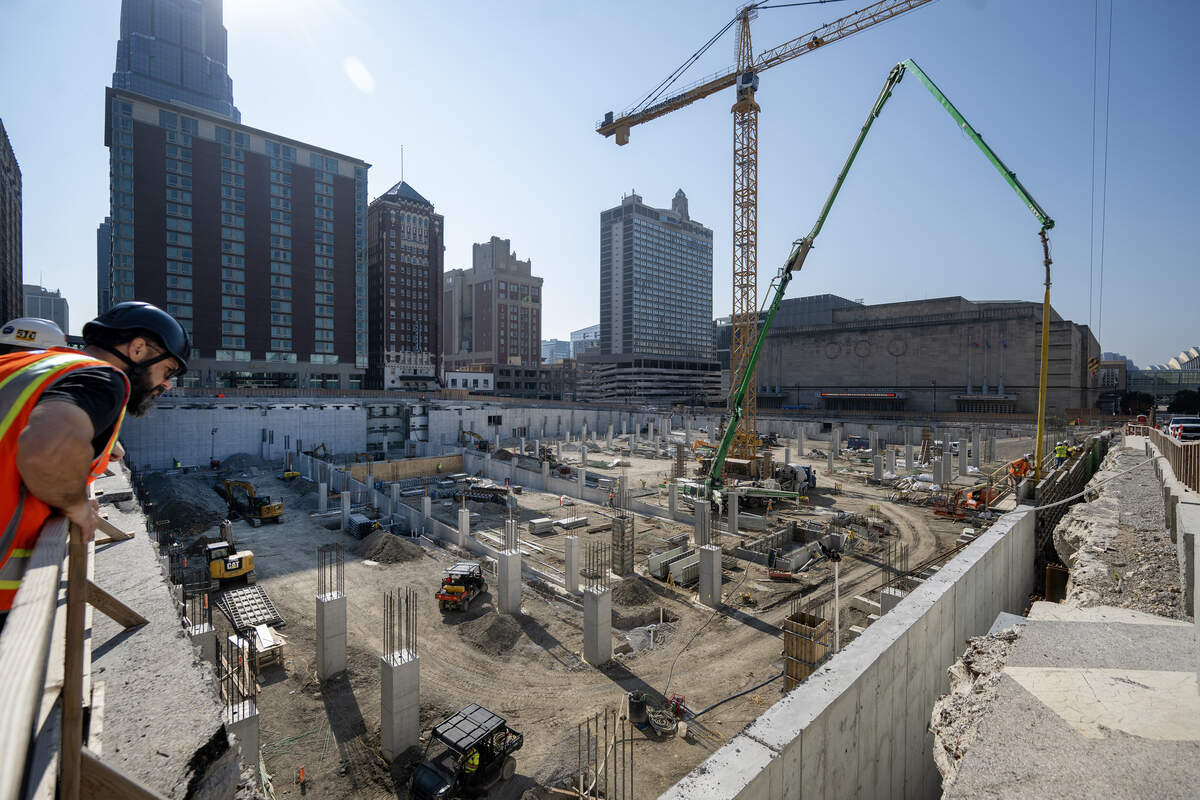
Unbeknownst to residents at large, thousands upon thousands of gallons of water flowed on Feb. 14 from the broken main and into the deep excavation pit where the city’s new $118 million Barney Allis Plaza — with a new underground parking garage, and above-ground modern park — are in the midst of construction.
The project now is moving forward at a heady pace. But it wasn’t on that day. And it won’t be done as soon as many were led to believe.
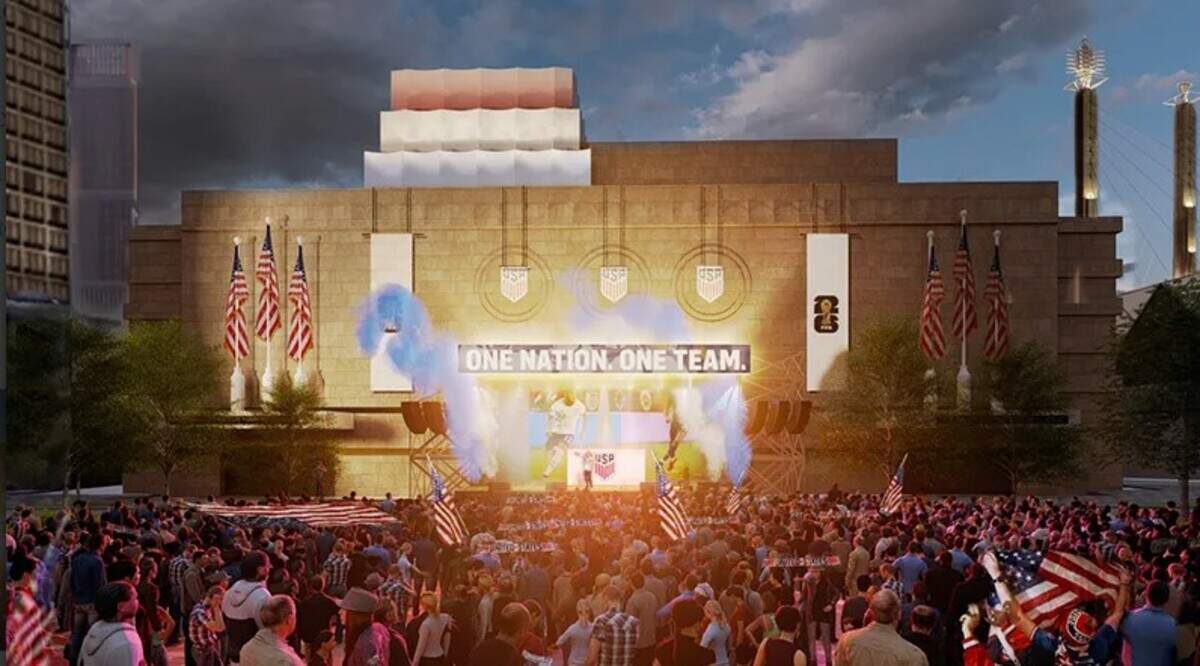
The city had announced that the downtown block’s transformation “aimed to be completed in the summer of 2026,” releasing renderings depicting the area as a hub of FIFA World Cup celebrations. But the builders say that pre-tournament timeline was never in the cards.
Water, ice, another delay
At 4 a.m. on that Friday morning in February, Ryne Hoskins, a senior supervisor for the construction company McCown Gordon, stood at 12th and Central streets in front of the Marriot hotel downtown. The air was freezing: 10 degrees. Over the next week, it would plunge to 10 below zero. Hoskins could hear the water below coursing into the construction site.
“You see that back wall over there?” Hoskins said recently, this time on an August day, when the air would reach 100 degrees. “The entire south half was full of water,” he said of the site. “We had like 10 feet.”
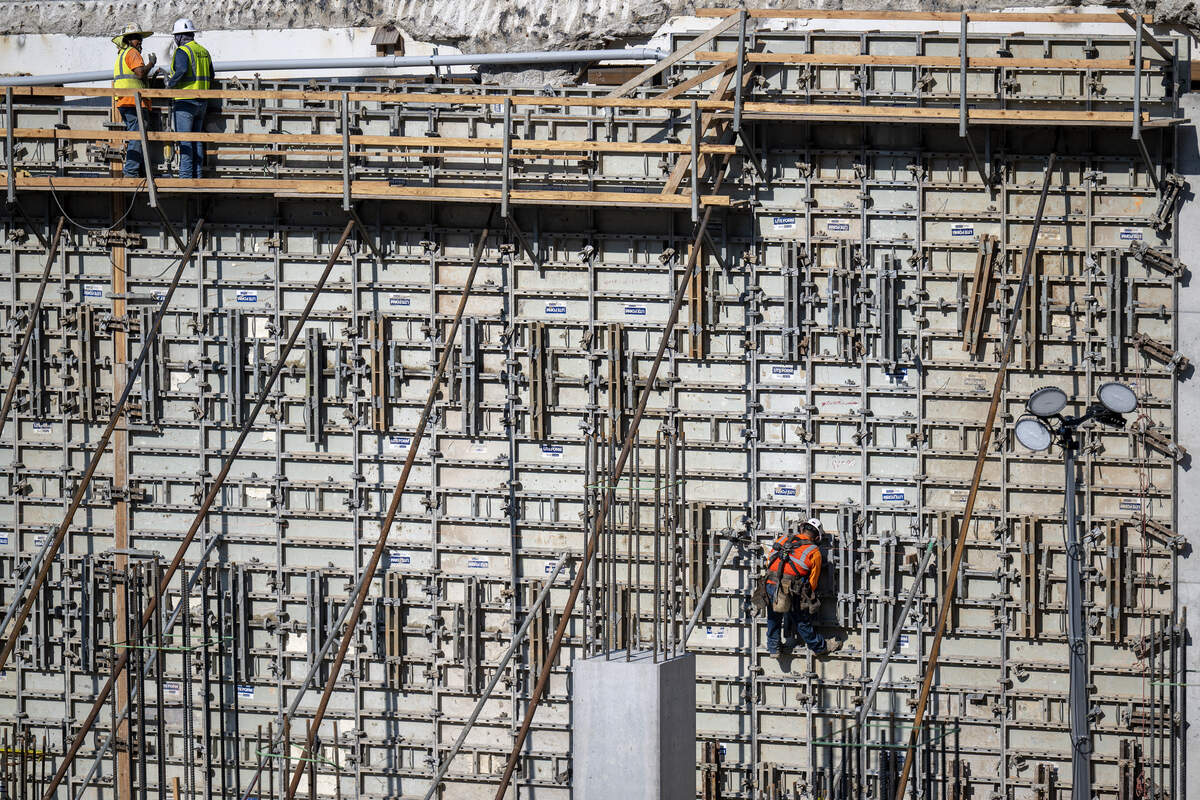
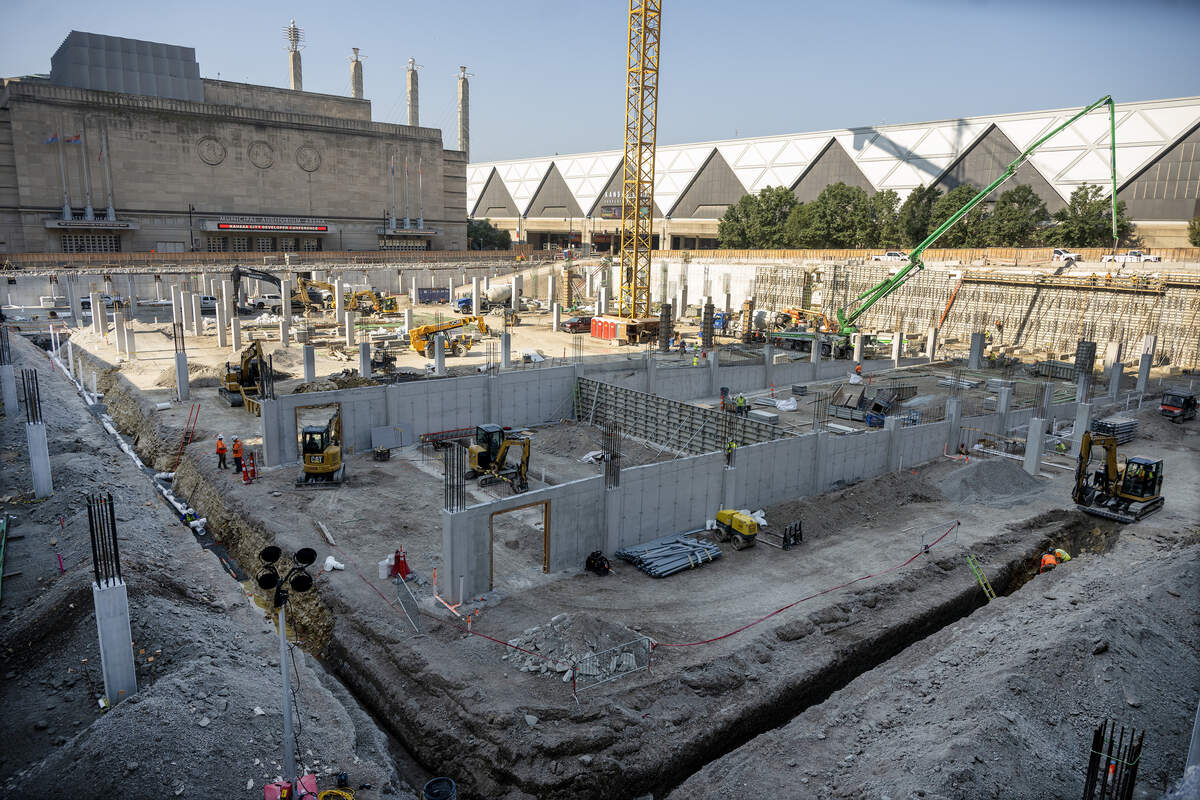
Hoskins stood at the northern edge of the excavation and construction pit, some 3.3 acres large, the size of an entire city block. A 34-foot-tall retaining wall lay below him, sloping south to an 18-foot wall far in the distance near Municpal Auditorium. On the day of the flood, heavy equipment, including a 9-foot-tall man lifter, became completely submerged.
Worse still was the cold.
“That evening, everything froze,” Hoskins recalled, “so it was solid ice.” Eight inches thick in places, he said. It would take two weeks to pump the site dry.
Won’t be completed by the World Cup
At McCown Gordon, Hoskins said, he and his bosses had already known, long before the flood, that the plaza (a 3.3-acre park, plus 2.5 acres of new streetscape) would not be completed in time to host a June 2026 World Cup celebration — despite what early renderings suggested.
“Our project schedule never had us open before the World Cup,” he said.
From the start, said Jeff Clark, McCown Gordon’s Barney Allis program manager, the company set the project’s completion time at 26 months. Even if it started in June 2024, as was originally envisioned, the new garage and plaza wouldn’t be completed until August 2026, a full two months past the start of World Cup action.
Then, because of an eight-week delay in city permitting, Clark said, the project didn’t actually start until August 2024, further pushing back the completion date.
Then there was the flood. Although February’s water main break was not at all caused by the work at Barney Allis, Clark said, “All told, it cost us about seven weeks.”
The completion date now? December 3, 2026.
‘This is the front yard of the city’
Yet recently, dressed in hardhats and safety vests, Hoskins and Clark, together with Mark Horne, a senior project architect at HOK Kansas City, and Jake Baker, the project’s designer at HOK, looked out on the site with satisfaction.
“It’s really starting to look like something now,” Baker said.
So it is.
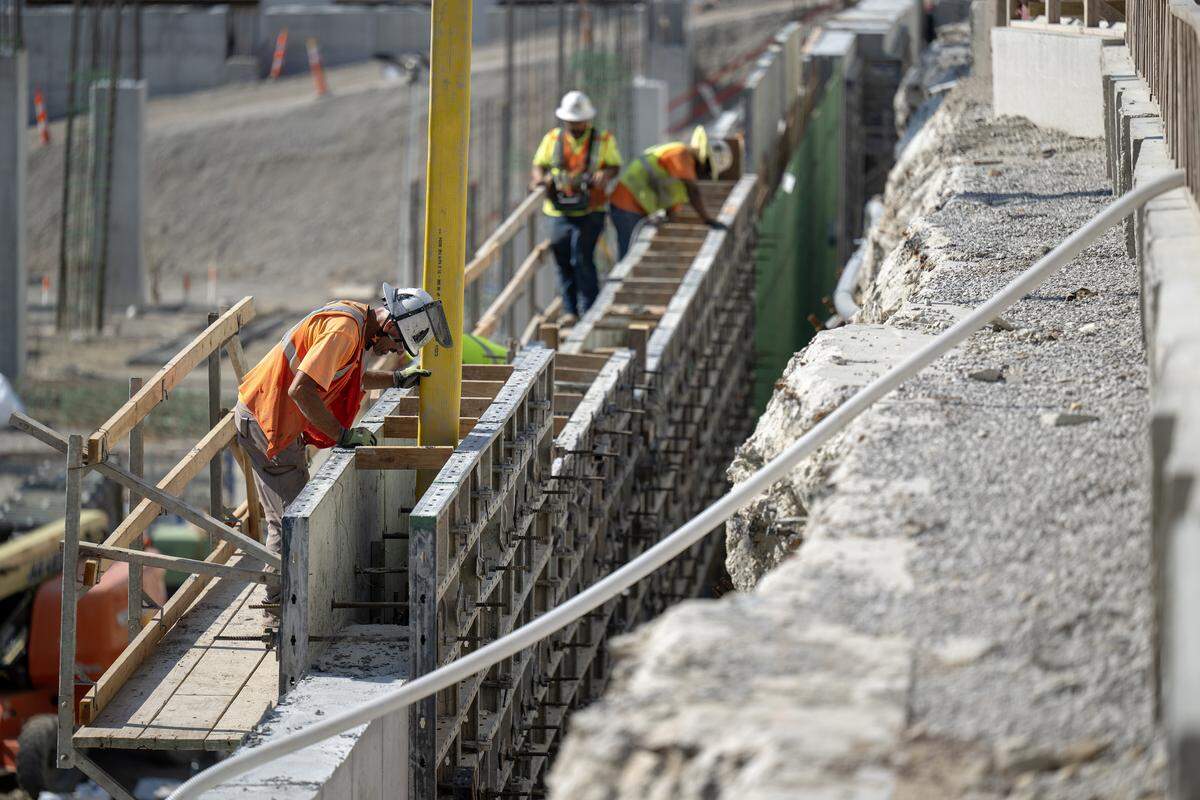
One year has passed since construction began last August. The former 70-year-old plaza, built in 1955, with its stark and austere concrete deck and its 970-space parking garage — one that was literally crumbling and had grown dangerous — has been completely demolished and removed.
Far below ground level, the new garage, with some 583 spaces, is estimated to be about 20% complete.
The redo of Barney Allis Plaza has not been one of most highlighted construction projects in the city, having gotten lost in the debates surrounding the Kansas City Royals and Chiefs stadiums, Country Club Plaza speculation and ambitious construction in the West Bottoms and along the riverfront.
Peter Sloan, HOK’s principal architect, believes that once the project is finished in the fourth quarter of 2026, the new city park — set between 12th and 13th streets, Central and Wyandotte streets — could end up being one of the most significant projects in the transformation of downtown, fostering and tying together events in a way unseen for decades.
“This is a really important project, in our eyes, for the city,” Sloan said. “Frankly, it has not gotten the attention that it probably deserves in terms of the impact that it’s going to make.”
For much of the last 40 years, the most vital part of the the plaza — before it literally began dropping concrete on car hoods from the ceiling — had been the underground parking garage, providing spaces for the surrounding hotels, Bartle Hall, the Folly Theater and Municipal Auditorium.
“Barney Allis Plaza was just a horrible space,” Horne, the HOK architect said. “It was not accessible. It was scary. People didn’t want to use it.”
Meanwhile, the outdoor plaza, itself — elevated from the street some 30 feet at its south end, like a concrete mesa or pillbox — had essentially become a city block of dead space, each year hosting one giant event, the KC Fiesta Hispana, but little else.
“It has never been part of the cultural fabric, but now it will be,” Sloan said, because it ought to be.
“This is the front yard of the city,” he said. “Anybody who is coming from afar, they’re staying right here, going to conventions right here. They’ll come from the airport, and this is the first thing they might see.”
A ‘bookend’ to Roy Blunt Luminary Park
When Kansas City City Manager Mario Vasquez and Kimiko Gilmore, the city’s director of conventions and entertainment, talk about the project, they speak of how, in the future, it will tie into what is currently the proposed 5.5-acre Roy Blunt Luminary Park over the south loop freeway.
.jpg "BAP park without center sculpture (1).jpg")
Formerly known as the South Loop Project, the park is to be a grassy lid connecting the separate parts of downtown now split by Interstate 670. Funding for the park has yet to be fully secured, but the project’s team already includes architecture, design and engineering firms HNTB, BNIM, Clarkson Construction and JE Dunn.
Vasquez insists of the project, “It’s going to happen.”
“We see it as bookends to the convention/entertainment facilities,” Gilmore said. “Barney Allis Plaza on the north end. Luminary Park on the south.”
“Between the two projects,” Vasquez said, “we’re hoping to add about 10-plus acres of green space into Downtown Kansas City.”
“It’s the civic fulcrum,” Sloan said of the plaza. “Once this becomes what it will be, this will become this vibrant, energized thing — no different than the center of a campus, the place where everybody gathers. It will be visible for the first time ever, really, in a material way.”
What will new Barney Allis Plaza look like?
What is certain is that the new park will bear no resemblence to the old. Horne laid out the plan.
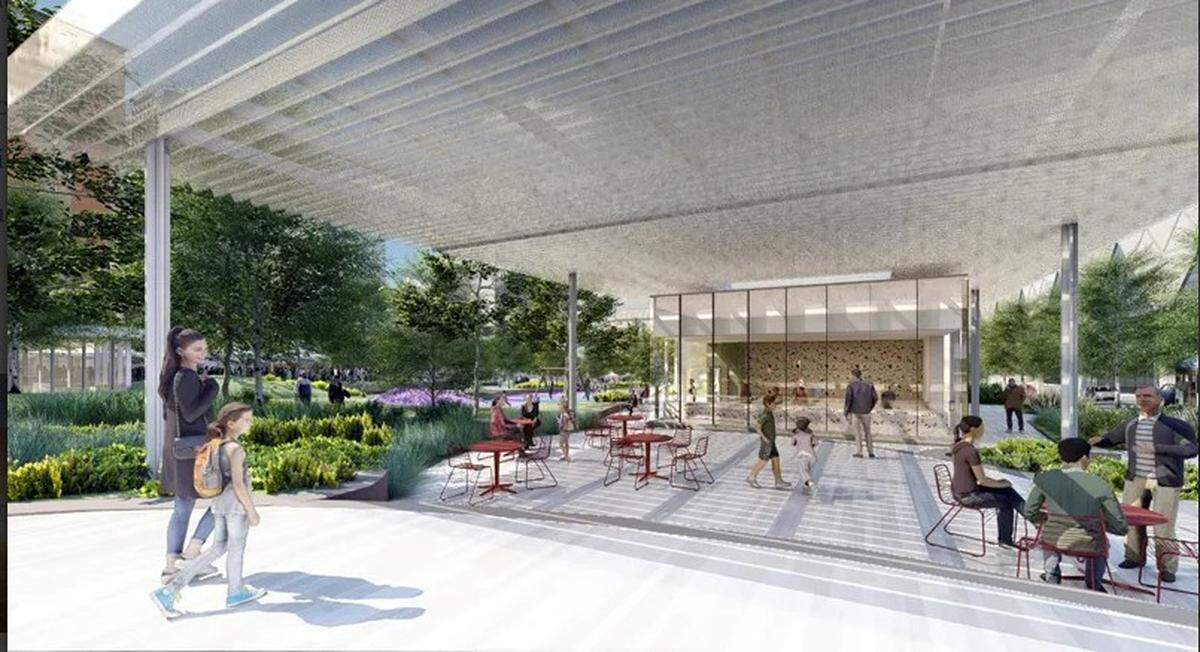
- In the northwest coner: A 2,000-square foot pavillion, covered by a 4,000-square foot shade canopy, with food and beverages. The tenant has yet to be name.
- It will feature a dog park and a play area.
- In the northwest corner, a flat, multi-use “flex space.” “We thought it would be a great place for weddings to happen.” Horne said. In the winter: “There is a proposal to turn it into a sheet of ice for a pop-up ice rink.”
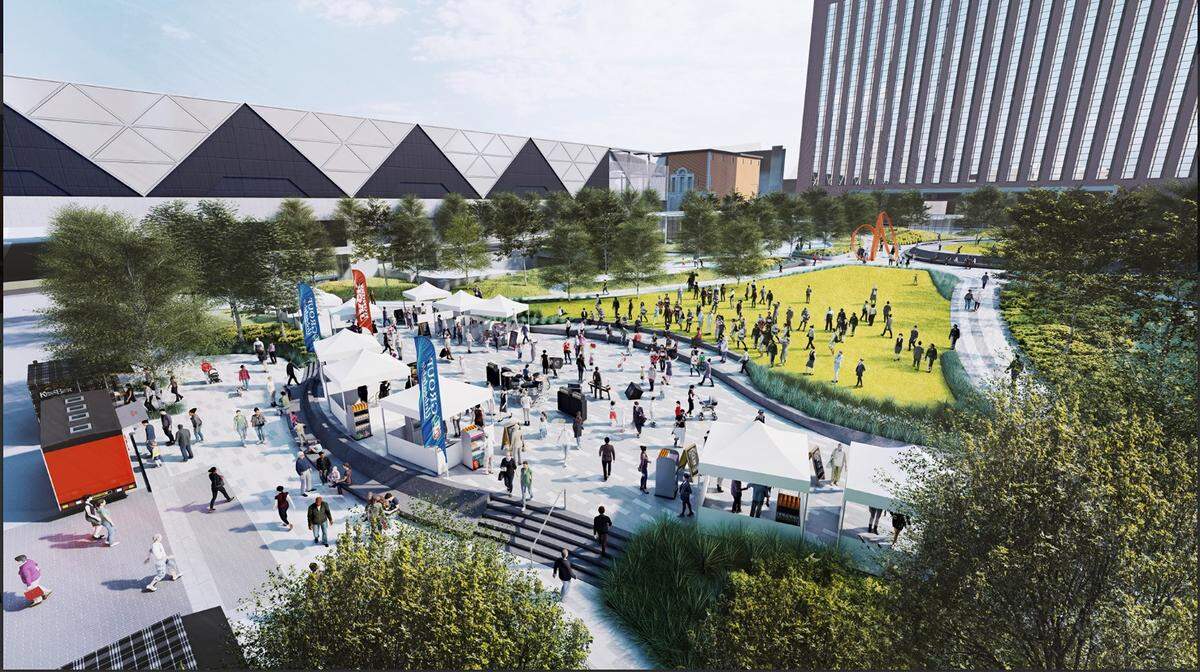
- At the south end: A large lawn dedicated as an “events plaza” for a farmers’ market on weekends or concerts. “We’ve designed the plaza so that 13th Street can be closed off, with the lawn acting as an amphitheater,” Horne said.
- Earlier this month, the city announced that the public art for the plaza would be created by Gijs Van Varenbergh, a company from Belgium named for its two artists, Pieterjan Gijs and Arnout Van Vaerenbergh. With a contract for $2.18 million, the duo will produce ghost-like structures, made of thin steel tubes, on the periphery of the plaza that evoke “the spirit” of the 1899 Convention Hall that once occupided the plaza, before it burned and then was rebuilt in 90 days.
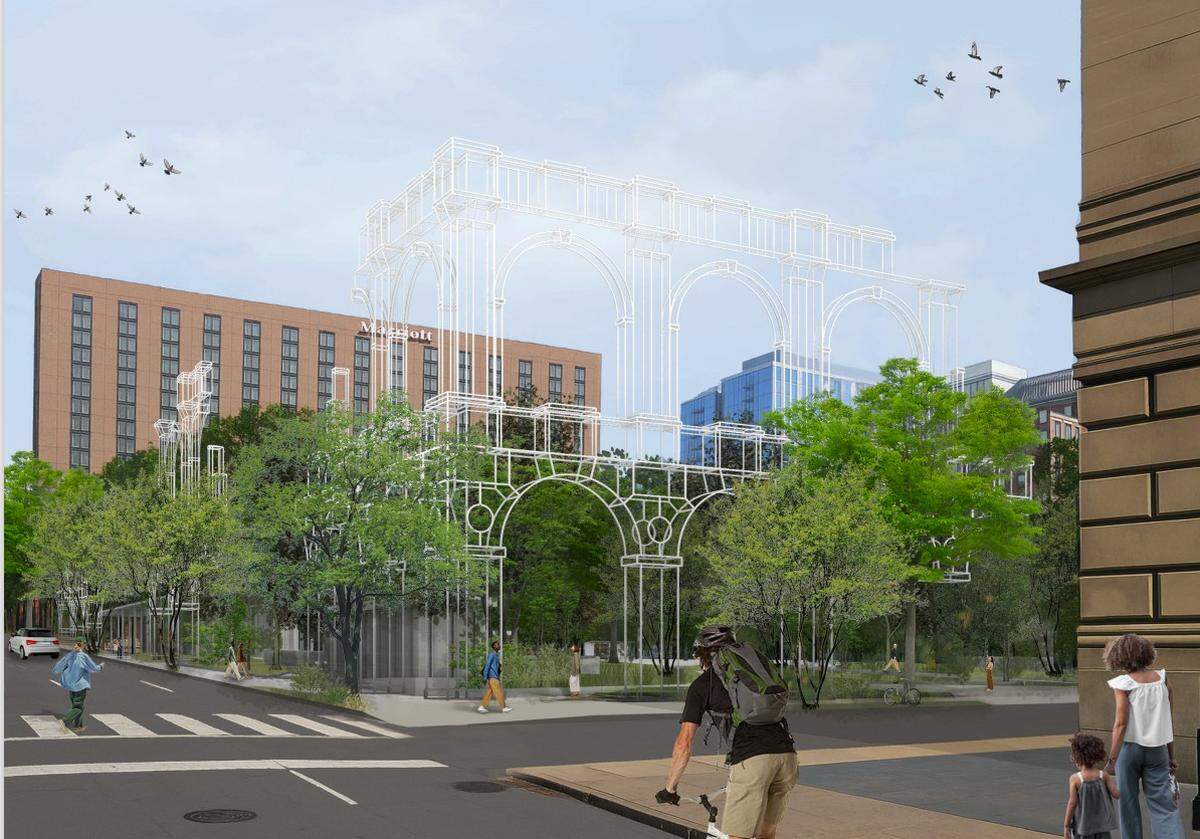
- Most significant, Baker, the HOK designer said, is that the plaza will no longer be elevated, blocking the view of surrounding buildings. It will be “at grade, meaning that pedestrians, instead of climbing stairs to access the plaza, will walk onto it from street level. For the first time in 70 years, people who stand along the plaza will have a 360-degree unobstructed view.
“If you were standing at the old Barney Allis,” Baker said, “you wouldn’t see most of the Municipal Auditorium facade. You can really start to get a feel for this being a connected part of the city, really creating what feels like a new park and a great, urban room in Kansas City. If you come out of Municipal, you’ll be able to see the front door to your hotel.”
- In the future, the western edge of the plaza, along Central Street, is also being constructed in a manner — with an elevator shafts and reinforced, thicker concrete columns — to perhaps one day accomodate a mixed-use, multi-story apartment or condominium complex, or perhaps, Vasquez and Gilmore said, a new entrance to an expanded Bartle Hall.
“One of the things we’re trying to explore, obviously, is what is the value of that real estate now that you, more or less, have it ready to be built upon,” Vasquez said. “It is definitely something we could lease or sell. We could create a condominium-like structure where we own the garage and the park, and somebody owns the airspace above it.”
Any such project, he said, would not commence for at least five years after Barney Allis is completed at a time when the land it occupies, used to underwrite loans for the previous expansion of Bartle Hall, is no longer encumbered.
“It can’t start for a little while,” Vasquez said. “It’s a complicated transaction.”
Collapsing garage? No. Urgency? Yes
Although construction on the new plaza began one year ago, planning, Vasquez said, dates back to at least 2017.
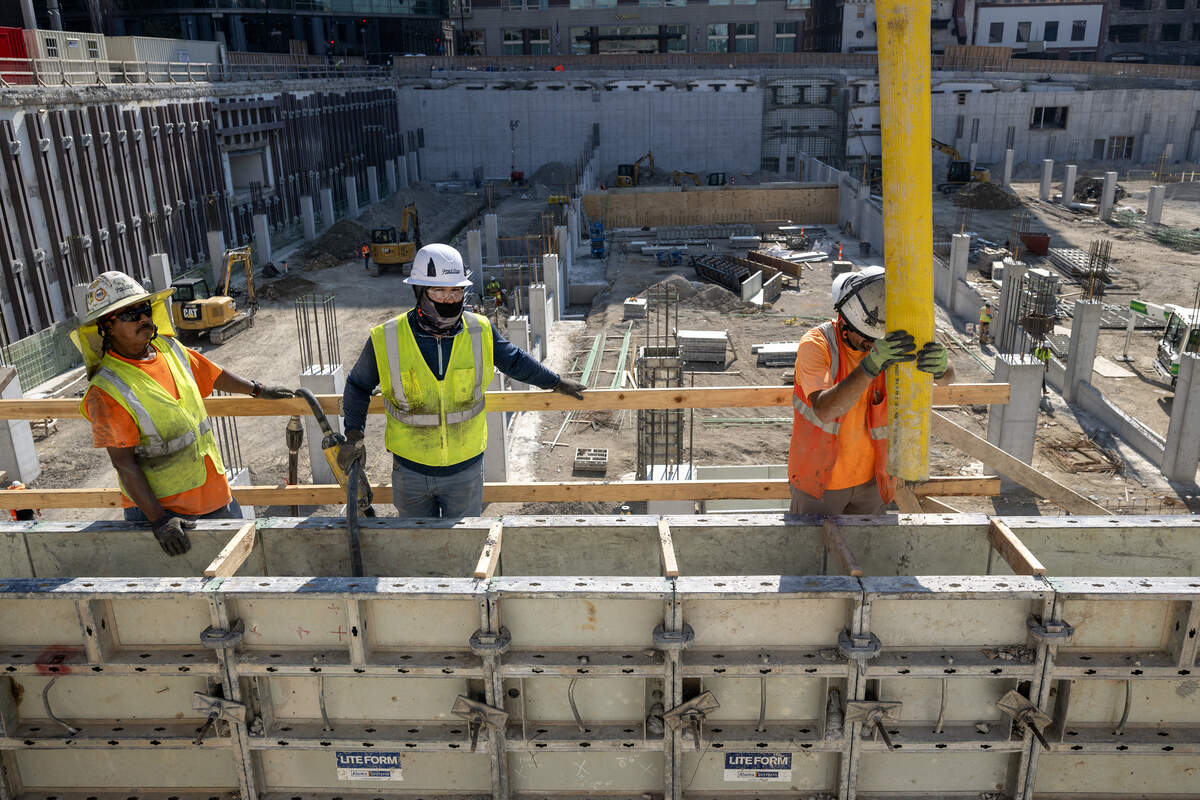
The old parking garage had been steadily falling apart. Every stakeholder in the area, from Bartle Hall to the Folly to the hotels booking conventions, insisted a new parking garage was necessary. By the time construction began last year, only 400 of its 970 spaces were being used. The entire lower parking level was shut down as unsafe.
“To say it was going to collapse, that wasn’t going to happen ever,” Sloan said. “But it was a real thing. . .there was this level of urgency.”
As years passed, Vasquez said, the price tag for demolishing and replacing the parking garage only continued to escalate. At one point, the city received an estimate for demolishing the old garage, filling the hole and, instead of building a new plaza, simply building a new garage on top of the site.
Cost: $70 million.
“Filling the hole and building a conventional garage on top of it was going to cost almost as much as rebuilding,” Vasquez said. “It was going to cost a lot of money. Then we’d have to lose the opportunity of having the open space.”
In the end, the Kansas City Council, urged on by Vasquez and Gilmore — “They were a dynamic duo, to be honest,” Sloan said — voted to approve the project.
The plaza is being built at a fixed cost of $118 million, secured through $120 million in special obligation bonds that will paid back through a city-wide restaurant tax as well as through funds from gaming revenue that currently helps pay for the parking garage at the Kauffman Center for the Performing Arts. Once that garage is paid off, the money will transfer over to help pay for Barney Allis Plaza.
“The City Council wanted guarantees that the project wasn’t going to keep ballooning with overruns, work orders, escalating costs,” Vasquez said. “You want to have certainty. This is the number.”
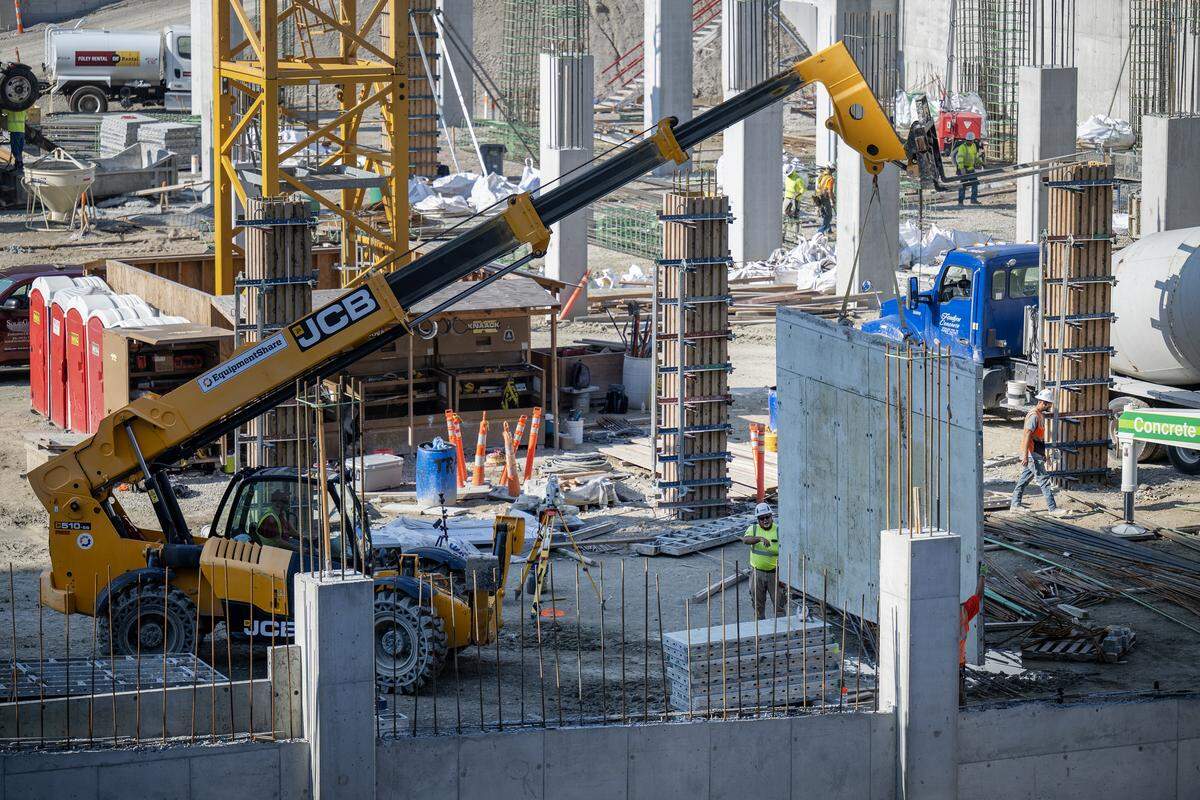
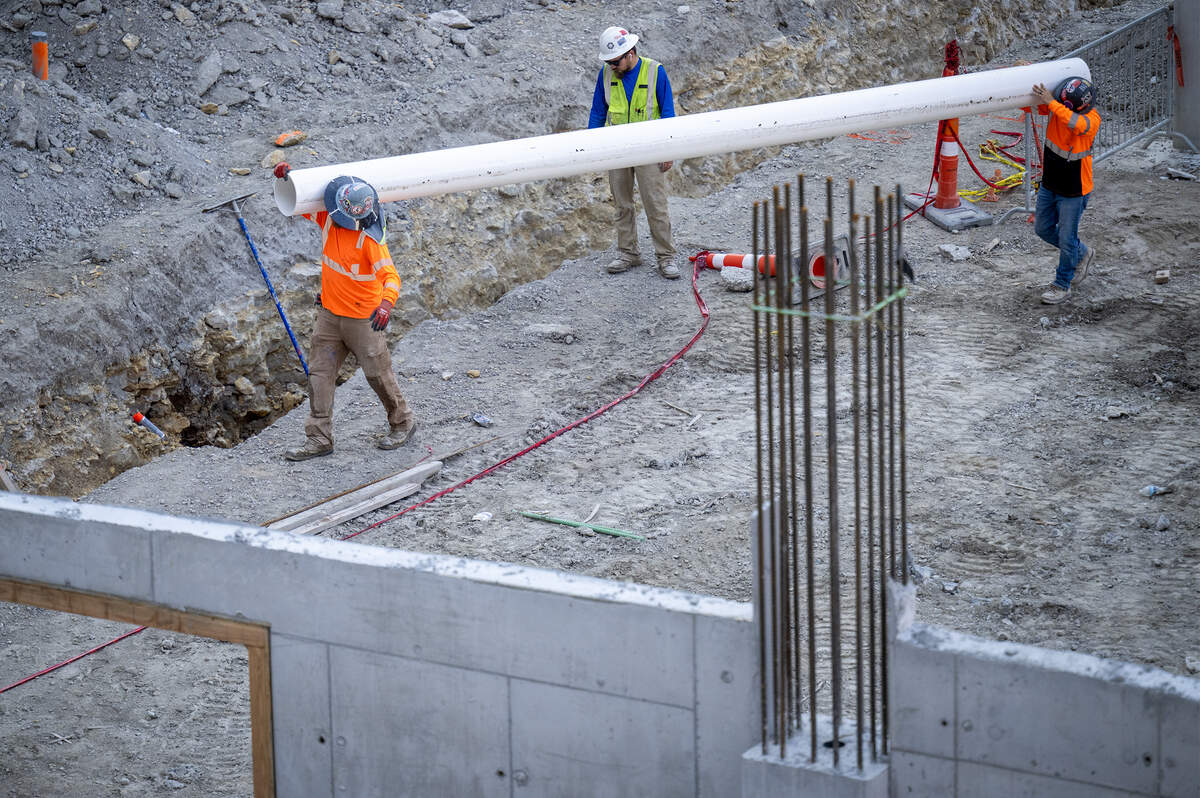
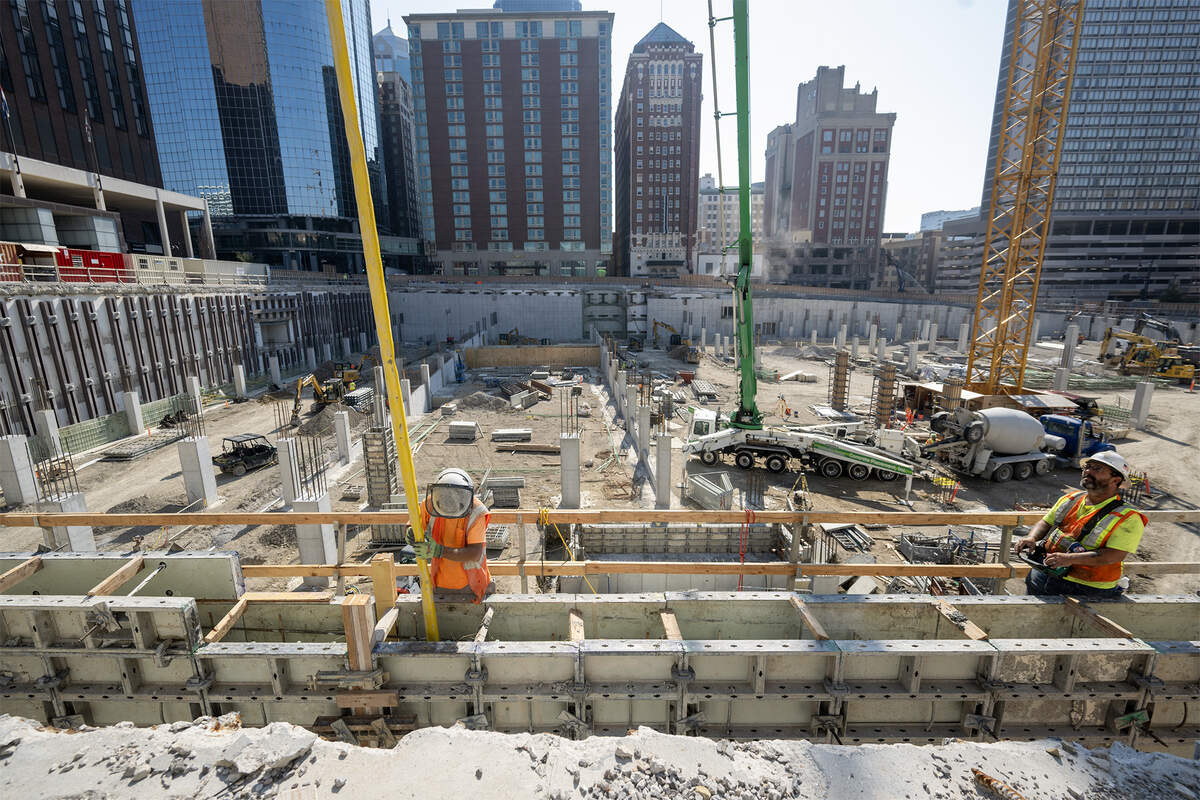
Twleve months down and the concrete walls of the parking garage are up. So, too, are walls supporting the parking ramp. Underground utilities are being set, including a 10,000 gallon retention tank in the southeast corner to control rain and drainage.
Clark, the McCown Gordon program manager, looked out across the site.
“When we were growing up, nobody lived down here,” he said. “They came downtown and worked. Then they left for the suburbs. But with the revitalization, with the younger generation that are living down here now, I think this will be focal point. It will be a place to come.”
“I’m looking forward to bringing my son here to play on the playground,” Baker said of his 2-year-old. “That’s like a moment I’m waiting for.”
This story was originally published August 21, 2025 at 12:22 PM.