Johnson County takes steps toward new 3,000-acre park on old ammunition plant
Kelly Force runs through De Soto’s Kill Creek Park almost every day. And if Johnson County’s new plan is successful, she may be racking up way more miles in the park in the future.
An ultra runner living in Olathe, she uses the county’s trail system to run 60 to 75 miles a week.
“I use every single Johnson County trail there is,” Force said. “All of the park employees know who I am because I’m out all the time.”
When Force moved with her family from Bentonville, Arkansas, three years ago, she and her husband hoped they would find ways to be outside as much as they were in that picturesque town.
Throughout the county, she’s found trails to run. She takes her kids mountain biking and brings the young children she nannies for to splash pads and playgrounds.
The parks are part of her daily life, and she’s excited about the possibility of one expanding.
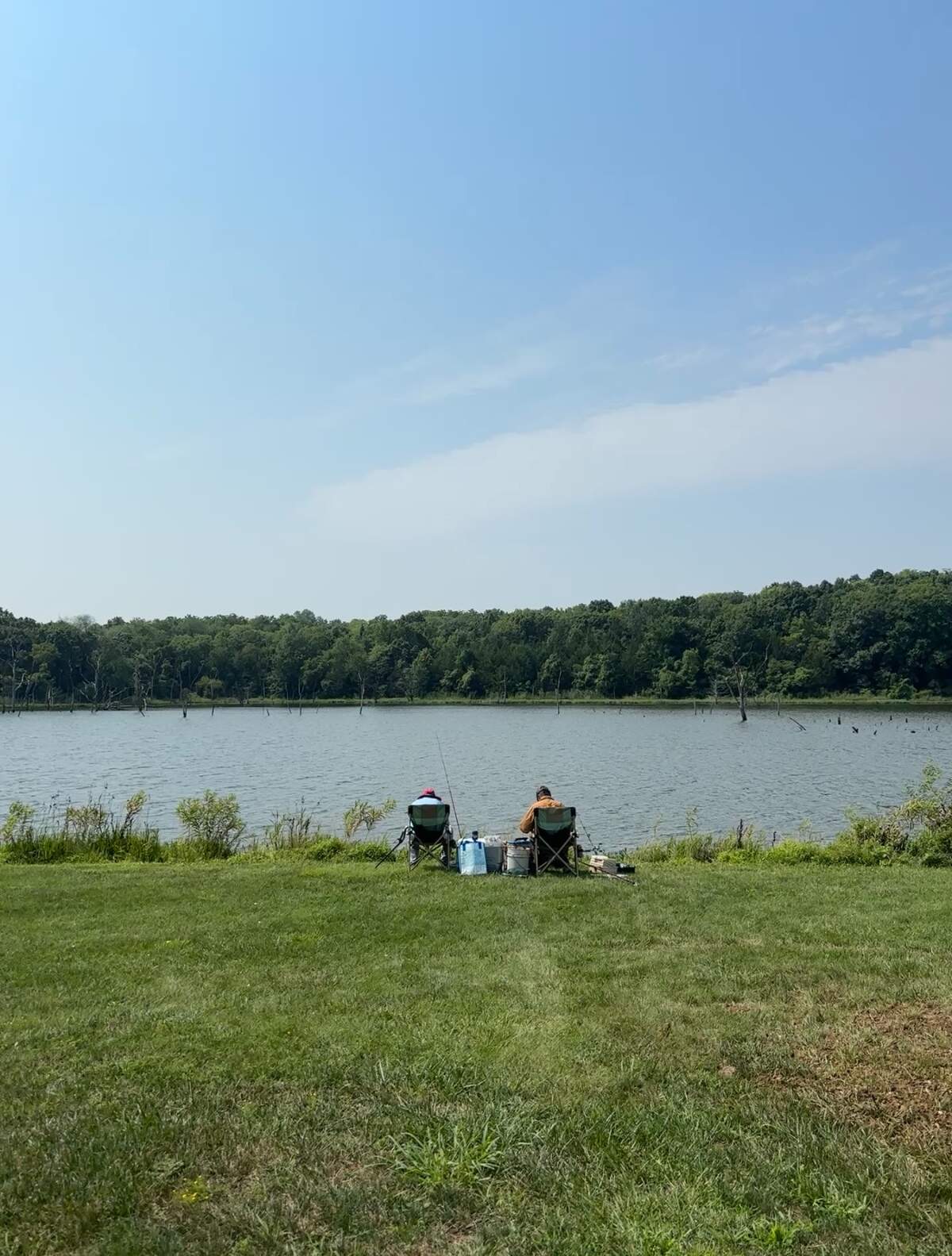
Just west of De Soto, Kill Creek Park is home to 950 acres of trails, open space, playgrounds, a lake and other amenities.
Now, the Johnson County Parks and Recreation District has an opportunity to add about 2,000 acres from portions of the former Sunflower Ammunition Plant through a historic transfer agreement between the federal government and the county.
Once completed, it would create the county’s largest park.
The 9,000 acre ammunition factory in De Soto has gone through a decades-long cleanup process, and dreams for development have been continually delayed.
While funding shortages and ongoing cleanup efforts prevent any big changes to the site, the Kansas Department of Health and Environment has recently deemed about 130 acres clean and safe for park use.
The next portion will transfer and vet 262 acres for use, which will allow Johnson County Parks to create a trail connection between the city of De Soto and Kill Creek Park.
There is no timeline as to when the entire project will be complete, but county parks officials anticipate the park’s master plan and the 130 acre addition will be complete by the end of this year, and the trail connection will be complete next year.
As some of the future park land is finally in play, the county parks department opened the project to residents for feedback in order to incorporate some ideas into its final plan.
“Preserving green spaces is a priority for me and my family and I love that Johnson County has prioritized that because it’s growing so fast,” Force said. “This is what’s going to keep it pretty and valuable, and mitigate all of that storm water and flooding.”
‘A generational opportunity’
As Johnson County’s population grows and more development comes in, the park’s addition is a chance for the county to keep green space, preserve native prairie land and enhance its trail systems, county officials say.
“It is going to take a long time but it’s exciting,” said Jeff Stewart, the park and recreation district’s executive director. “It’s a generational opportunity for Parks and Recreation Services and the landscape of Johnson County.”
Johnson County Parks and Recreation District was first established in the mid-1950s. It’s the only local parks agency in Kansas that operates with an eight-person governing board appointed by county commissioners.
The board establishes policies and oversees 18 developed parks and 150 miles of trails — spanning more than 10,000 acres total. Johnson County’s parks garner 7.8 million visitors annually, making it one of the most visited park systems in the region.
The proposal to expand Kill Creek Park will eventually have to go to the park district’s board, which will eventually have to accept the master plan and the proposal.
Sunflower Ammo
The additional acreage is home to several streamway corridors and former buildings of the Sunflower Ammunition Plant — once the world’s largest gunpowder and propellant plant.
The U.S. Army ceased its operations of the site in 1998, during which Johnson County Parks submitted its proposal for a no-cost transfer to the National Park Service to acquire some of the land.
In 2004, a private company, known as the Sunflower Redevelopment Group, acquired more than 9,000 acres of the former plant.
In 2005, the National Parks Service approved an agreement for approximately 2,000 acres to be transferred to the county for park land after site remediation is complete.
Once cleanup is done and the Kansas Department of Health and Environment gives its stamp of approval, Johnson County Parks will obtain property on the eastern ridge and southern boundary and some of the western boundary of the former ammunition plant.
As construction accelerates in De Soto and other western communities, preserving green space “in parallel or even in front of” development is key to success there, Stewart said.
“It is a very meaningful piece of land when you start to think about what could be restored, how it will benefit the community,” he said.
“It’s been a long, ongoing process, but we are starting to see movement so it makes sense to engage our community on this,” Stewart.
Community engagement
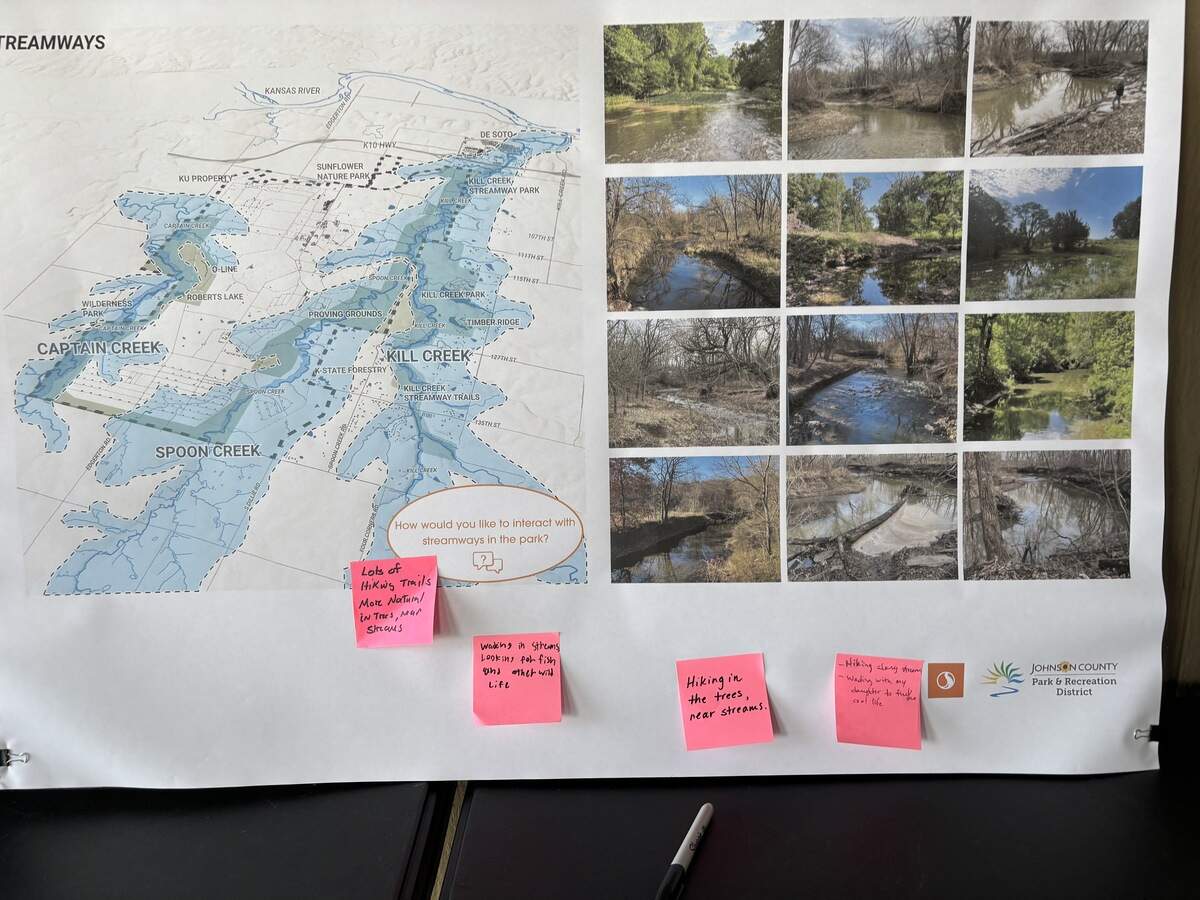
On a warm, sunny August morning, residents came out to Kill Creek Lake to look at maps of the land and provide feedback on what they’d like to see incorporated into the expansion.
Residents took multicolored Post-It notes and wrote down their ideas. Some wanted to see campgrounds incorporated at the historic sites. Others wanted trails alongside the streams.
Force said she’d like to see mountain bike trails, prairie restoration and an arboretum to preserve native species in a way that allows people to experience nature in an accessible way, she said.
Andrew Belt, a resident whose property bumps up against the proposed expansion, wants to see thoughtful development for the park moving forward.
“The biggest thing is they’re proposing a parking lot and a trailhead basically in front of my house, which I’m all for. It’s growth, it’s good for the community,” Belt said. “We’ll support it, but take care of us at the same time.”
Specifically, Belt said he’d like to see his access road paved as dust currently gets kicked up from users. He worries that could multiply as trail users go out near his property.
“I think it’s a great idea, I just don’t want my quiet enjoyment to be impacted negatively,” he said. “I think with this plan, by the time they get done with it, it will be the crown jewel of parts of the county.”
This story was originally published August 14, 2025 at 6:09 AM.